
The throes of spring are here. This world is whirling away so fast. Another sunrise. Another moon lilting through the cloudless skies. How much time will any of us even have here to chase our dreams and find joy? As we all make sense of this life, our place in it, and reflect deeply into ourselves asking what truly matters, the answers are simple. Love, without question, is the reason why we are here. In every sense of the word. This world asks that we be there for each other, take care of each other, and hold each other on high.
As for the rest of things, we believe the smallest moments are everything. The moments when the hustle bustle, the rote, the tail chasing, are awash in the ether, out of our minds, and we are absolutely present. We are here now. What gives us this state of "presence?" When our hands are held in another. For sure. And oh, damn, when our hands are around the neck of a guitar we cherish and know, with a few feet of cable leading to the amp we've had at our hips for decades, that aquamarine jewel light shimmering, the tubes basking in the incandescent orange glow of the heater elements, and yes, oh, yes, the notes pouring forth from our hearts through the speaker, filling the entire room and onward. This is why we write this issue. It is for you, our kindred souls. Our family in being present to celebrate the creative essence of all things music, all things wood, wire, air, earth elements, and the wickedly magical energy we are tapping into thanks to these instruments.
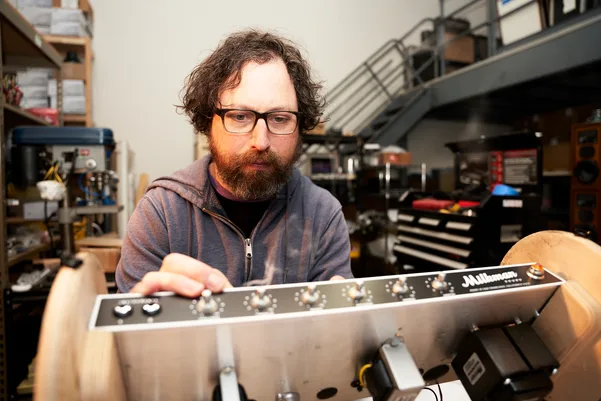
We believe an amplifier is an instrument, as much as an oud, bouzouki, or a Les Paul Junior. And what an endeavor it must be to dedicate your life to building them. Tim Marcus of Milkman Sound is one of the few. Having started near the Atlantic Ocean and ending up along the Pacific, he's most likely realized his path could not have taken him anywhere else. He hand-wires each and every amplifier that those of us fortunate enough to spend time with get to light up. It isn't an easy ride. It just can't be. All the parts, details, the nitty gritty of solder joint after solder joint, all while trying to keep the bills paid and the shop open, and most importantly, staying true to the reasons he is building them. Tim takes what those before created as timeless, Leo Fender in particular, and with his own savant talents, genius whims, and hard-earned wisdom, puts the Milkman stamp on them, thus raising the bar even higher. We understand. Why would we want to be here other than running full-bore chasing the muse? But you, of all souls, holding this magazine in your hands, know this already. You knew it long ago. Enjoy.
TQR: Hey now San Francisco! Tim, so good to catch up, brutha. Describe your first memories of music and guitars as a kid...lets go back.
My mom had a nylon string acoustic guitar from the 60s that I used to play around with. I didn't know anything about it, or even how to tune it so it was probably awful for anyone to hear. I grew up in the eighties and listened to a lot of guitar driven music. Hair metal was popular then, so I dreamed of being a shredder, ahaha! But I started going to summer camp around the age of nine and got introduced to the Grateful Dead, Frank Zappa, Lynyrd Skynyrd, the Marshall Tucker Band, Southside Johnny, Bob Marley, and that broke me free from the hair metal, thank goodness. I found rootsy style guitar by the time I started playing. My dad had a big record collection from the sixties and seventies and I remember my uncle telling me to listen to his Zeppelin records, which totally blew my mind and that fueled more guitar meanderings. I started taking lessons when I was ten and have been playing ever since.
TQR: There were some bands in your early years, we bet.
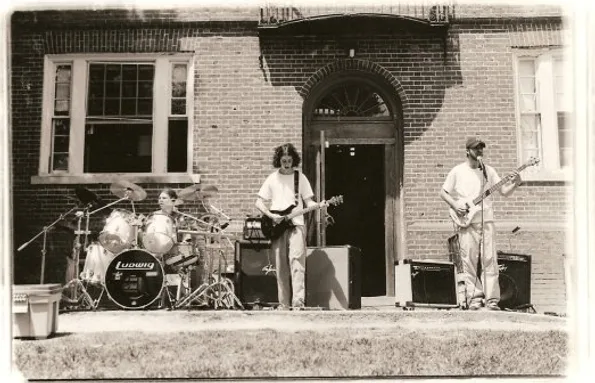
Oh, yeah. The first time I ever performed in front of people was a high school talent show. I was a freshman and the band crushed it because we got to play last since our drummer was a senior.
TQR: Did you break out the fog machine? We played our high school and the bass player's dad was a scientist at a university who loaned us an enormous industrial fog machine. Unfortunately, no one turned it off, so we couldn't be seen on the stage, but, oh, the mystique reigned supreme. Spinal Tap forever.
No fog machine! I have it on video somewhere, which is amusing to watch. The amp I was using was a solid-state Fender bought at Sam Ash. This was around 1993 or so in Danbury, Connecticut. Do you remember the huge music store there called East Coast Music Mall run by a guy named Eddie Roman, who was rather infamous? He sold me a guitar when I was a kid which I still have. The employees there didn't really understand some of the vintage gear they had, they were just focused on moving new guitars. I was able to go in there as a kid with pocket change and score vintage pedals, which took some of my early bands in interesting directions.
TQR: How did you initially become interested in electronics and amplification and how did that evolve into building your own amplifiers? Were there any mentors, or just a Jack Darr book or an old RCA tube manual you pored over?
I spent most of my life working in kitchens, because my family owned a restaurant and that's what I knew how to do. I got fired from a job managing a deli when I was just out of college, and I saw an ad for an electronics department at a place called Recycle North in Burlington. They were like the Salvation Army in a way because people would donate electronics, but they would teach people how to repair household appliances and refurbish them. I totally bullshitted my way into this job, and it was there that I got hands on experience with electronics, a crash course in repairing televisions and stereos. I met a customer named Vince Reh who told me to keep him in the loop on any tube stuff that came in. He thought no one there understood the value of the tube stuff, but I let him know that I knew what they were and only agreed to sell to him if he would teach me how to work on electronics with tubes. That was our deal. I'd bring over parts of organs, radios, test equipment and whatnot, and he would explain the circuits to me. Most of it would go over my head, but it was really cool to see this stuff come back to life. Vince recently moved from California to Wisconsin, and he stopped at my shop in San Francisco and got to see the seeds he planted years ago turn into the Milkman product line now. There was even stuff in my shop from back in those days, like an old Oberheim drum machine that he found at the dump that I traded a tube stereo for. Most of the stuff he said went over my head, but I must have retained a lot of it — I still hear his voice in my head when I am trouble-shooting something.
TQR: Full circle, how cool is that? Meant to be. The path is the path. We are glad you aren't at the deli making sandwiches. At some point, you started to make some amps. What were the first few builds like? What inspired them, specifically? Any major crash and burns along the way? A moment when the light finally shined?
I lived in Vermont for a long time and that's where I went to college, which is where I did the stereo repair job.
TQR: Did you get a gig with Phish over there?
In my mind I did. I was into the jam band scene and that's what most of my music and bands sounded like. Phish were the big cheese in Burlington for sure, but I had no connection to them. I moved here to San Francisco in 2006. A couple years later I had a friend who moved here and needed a place to stay so I rented out the extra room in my apartment. Max had spent a couple years learning how to build amplifiers with Bill Carruth. Bill is the tone guru of Vermont who voices amps for Trey Anastasio from Phish, so indirectly I gleaned some of that knowledge. At the time, I was working for this engineering company in the city building recording studios, museums, and theaters. Max encouraged me to build a guitar amp. I was game and we got all the parts and built it on the kitchen table over a couple nights. He could tell I had some natural talent and cheered me on to keep doing it. That amp was a tweed Princeton in a cabinet I found on the street that had been put out as curb garbage. From there, I built a tweed Deluxe from a kit, and then focused on designing an amp for pedal steel guitar. That amp eventually became my 85-watt pedal steel model. When I started Milkman that was the only amp model I made or offered. I thought it was good, and somehow the word about that amp got out to Greg Leisz, who is probably the top steel guitar session player in the country, if not the world. He was coming to San Francisco to record with Bill Frisell, and he emailed me out of the blue. Greg asked to try the amp. I left it with him for a week and got to watch him do a session with it. He asked to buy one and became my first customer.
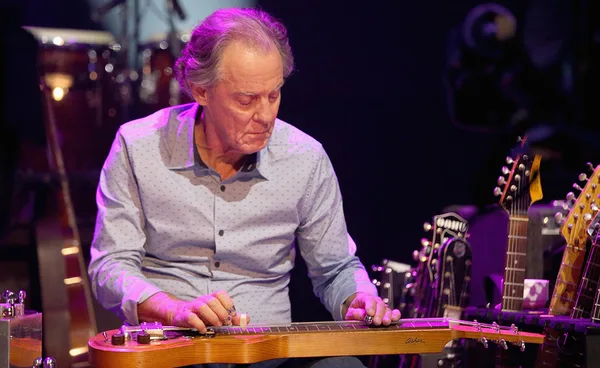
TQR: That's amazing. We play a lot of slide around here through tweeds and Echoplexes. The Steel Guitar Forum is very different from most of the absolute horrific internet guitar chatrooms. Those SGF guys are so supportive and knowledgeable. It was many years ago when we last checked it, but it was cool, good souls. A great place for guitar nerds and they were so willing to share, and to help other fellow musicians.
Oh yeah. I learned a lot from that forum about amps. The guys on there know their stuff, electronically and musically. One thing that keeps the knuckleheads out of there is that you have to pay to be on it. Which is rather brilliant. It's just a few bucks. Bob Lee, the guy who runs it, used to work at Mesa Boogie back in the eighties. He's running it himself with his own servers for the love of it. Bob arranged to have a bunch of steel players come and try my pedal steel amp out when I first started. He has an amazing ear. He knew something was weird about the reverb and he was right — I had totally wired it up wrong.
TQR: We will get into the Milkman amps in a bit, but tell us what your favorite vintage amps are and what tones you have chased.
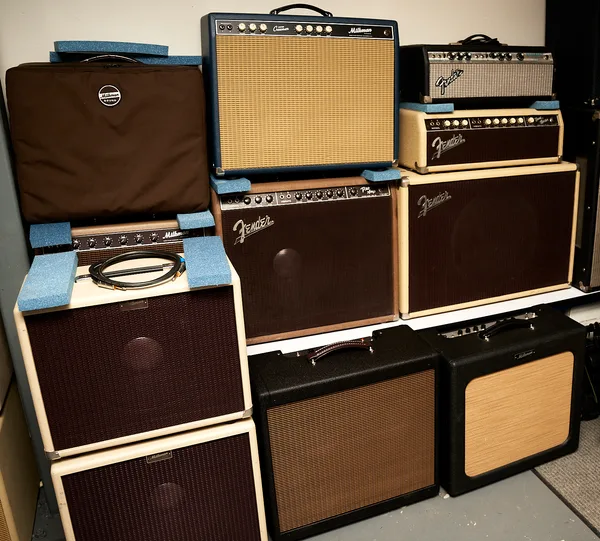
Anyone who looks at my amps can tell that the black panel Fenders are where my ears go to. The first amp that I really started tweaking and modifying was an ultra-linear Fender Twin that I kept working on to make it into a more pedal steel friendly amp. There is something about the way those Fender circuits are, the way they laid them out, everything about them. Becoming friends with Greg Leisz and listening to his vintage Fenders was great. His Twin is special. The amp I first built for him was just OK, and sort of noisy. When I visited him in LA at his studio, he cranked up his Twin, with the reverb all the way to ten, and it was still dead quiet. That was such an eye-opener for me because I wanted to make mine better.
TQR: Oh, we know. There are six vintage black panel Fender amps here at the bungalow. After all these years of playing music, these are still the amps that drive us wild, and they are so damn endlessly beautiful and inspiring. We've tubed them to perfection with 1950s RCAs and Telefunkens, and they all have old Jensens in them other than a couple really cool speakers we love in them for when we absolutely pour the coals to them with fuzzes and Echoplexes. The Jensen's would fry at some of the volumes we play, so we swap them in and out depending on gigs and vibes, how gonzo we are getting with volumes. We are really looking forward to hearing the Jupiter alnico in your HT15. There is nothing more satisfying and fascinating than changing speakers in the same amp. Of all the things a player could do to give themselves different flavors, feel, and colors to paint emotions with, speakers are integral backbones and engines. It is so critical. Anyone who ever rolls through to visit us just sits in front of those amps and gets really quiet after playing them, and finally simply says, "Oh, I get it. Holy amazing." Our Associate Editor and stellar musician Scott Ulrichs just got a vintage Vibrolux Reverb, and what a game changer it is.
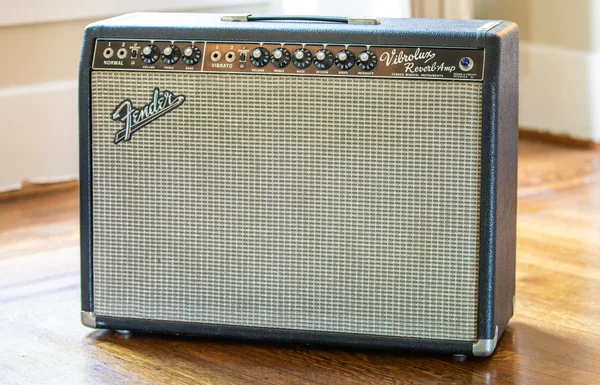
Scott has a great voice, too, and we know he is going to gig that amp all over Montana. A great amp can change your stars. It's also obvious and telling how each of the old Fenders we have ever owned or played is different from each other. The variances and the plus or minus specs, no two are alike. Which is fun. Some are out front, some are sultry and smoky, some are crystalline bell ringers, and some are middle of the road or duds that need work, for sure. The amps that have been played a lot often sound good, we've noticed. To us, your amps sound like old Fenders, just sagely maximized for tone, small batch, truly special, and seriously overbuilt, which is why we are talking together today. We believe deeply in your work, dig your deal.
Thanks! Yep, I've noticed how you can line up eight Deluxe Reverbs in a row and each one sounds different. That has always driven me to focus on consistency. Since the beginning, I strove to be like McDonald's as far as consistency. Big Macs aren't the greatest burger, but they sure stay right on track to what McDonald's set out to do. Wherever you are that Big Mac always tastes the same. That has been my goal — to have great amps that all sound the same from one to the next. Sometimes I get an amp in that I built nine years or so ago and they pretty much sound like the ones I am building now. That's a goal of mine. It can be frustrating as a working musician to get a backline amp at a gig and it is nowhere near the sound you need, not what you ordered for the stage from the venue. That's happened to me so many times when I used to travel and tour. I want every Creamer to sound exactly the same as any other Creamer as a baseline.
TQR: Describe the different models you build in terms of construction and tone, how they differ from the classic Fender style vintage amps or other custom-built amps, and what you specifically wanted to accomplish and/or improve on with each model.
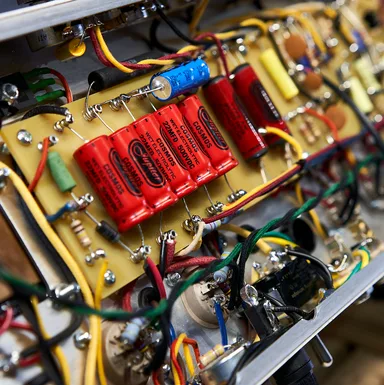
Sure. There are basically four different categories here. The first are my entry level amplifiers, which are hybrid amplifiers with a lineage that is straight up Jerry Garcia. The Fender style preamps with reverb that go into a hi-fi solid-state power amplifier. For him, it was the Mcintosh. For me, it's class D. Most of the stuff I'm selling are the under $800 AMP pedals, my 700-watt bass amp, and I have a steel guitar Half and Half that's around 300-watts and weighs like nothing. My goal with those was to make the smallest, lightest, most user-friendly thing possible that you don't even need a manual for at all. You just plug in and play and that's it, and no matter how hard you abuse the thing it never dies. The AMP pedals are something that I hope will become an iconic piece of gear. They are in the same price range as amplifiers from the big companies, but we build them in the USA, and they sound annoyingly good. Annoying because they hold up to the hand-wired amps that I obsess and dote over on my workbench and here is this two-pound miracle box that takes you ninety-five percent of the way there.
The second category would be the low wattage Milkman realm, meaning 5 to 10-watts, 15 or so. Most of that is class A, and that's designed to bring the cranked amp tones down in volume. My 5-watt amp is basically the same as a Princeton except that it has just one 6V6 power tube. It's also got a power attenuator. One thing I do that maybe is a little different than others is that I never put the power attenuator on a high wattage amp because I find that to be useless, but I put it on the low wattage amps where it's crazy fun. Guitarists know that 5-watts is actually really loud. When you drop it down to half a watt it can be great fun.
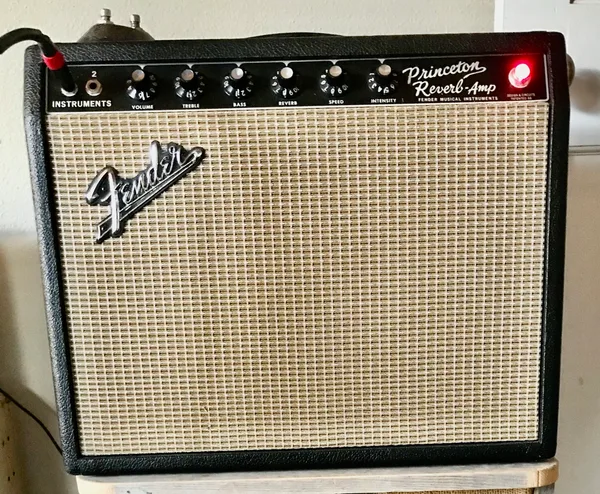
TQR: Absolutely. The 1964 Princeton Reverb we have with the vintage Jensen C10N is absurdly loud. We can gig that amp all day long. That speaker is gonzo, it just cranks it out.
That's right. That 12-watts can deliver. Power scales in a factor of ten, so that 12-watts is almost as loud as a 100-watt amp. On paper, it's just a decibel or two less volume. That's why power scaling in a high-powered amp is not what I am interested in. You can't hear it, except at the extreme where it no longer sounds great. I cut off power scaling at 20-watts, that's as much as I want to use it for. For all the amps in this class I use 6V6s.
TQR: Do you ever explore octal tubes?
They are just too noisy. If I had all the time in the world to play with octal tubes, I would find the ones that aren't noisy, but it's tough. The modern production ones don't sound much different than 12ax7s, the originals can be microphonic, and the heater element is not humbucking like it is on a 12ax7.
TQR: We understand. The new production tubes are such a minefield. Some brands claim to be making 5ar4 rectifiers and they are far from the NOS Mullards in how they operate. That should not fly. It doesn't here. Thankfully, we have a stash of about a dozen NOS 5ar4s we use in various amps. It matters. And to those who tell us they can't hear a difference in tone, sound, and feel with different brands of rectifiers, even when switching out great NOS tubes, we disagree. It is absolutely integral for those last few degrees of magic dialing these amps in. Ultimately, a great player can grab a Blues Junior and wail with it, we believe in this, but when you find your celestial tones, all of the creative songs inside our hearts soar, that's just all there is to it.
Yeah. Some of them are basically silicon diodes, like, a modern 5Y3 feels that way. But I build amps with all of this in mind because I know that our customers can put in vintage 5Y3s. I can't find enough of them to put into every amp, but the individual player can swap tubes to taste. I used sourced NOS for customers back in the day. I used NOS parts for everything. Now I focus on every other component but the tubes, so that when you do put in the old glass, you can really hear it. The modern tubes are pretty OK, and I am grateful we have them, but there was some next level chemistry happening back in the fifties and sixties that cannot be denied.
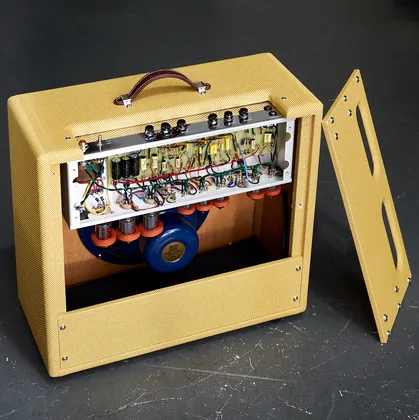
The third category of amps are what I would consider mid-range wattage from 20 to 40-watts or so. This would include the Creamer model. I'd probably lump the HT15 in there, and I have this amp called the Dairy Air, a 30-watt with 5881s that is a very small no frills Bassman kind of amp. These are big, loud clean ass platforms. Don Rich type stuff. Our last category would be the 50 to 100-watt models like the 85-watt pedal steel. That's the one based on my old Twin mods. That thing has crazy headroom, but it drives more like a low wattage amp than it does a high wattage Fender. That's the amp that John Mayer bought and put on Instagram that blew the lid off the whole thing for me back in 2014. That's when he was starting to get into Garcia. He calls that amp a "grail rig" which is pretty flattering.
Maybe another bucket would be, "Things that Fender didn't do that I wish they would have." I would put the Creamer in that category because that's an amp that is basically a tweed Deluxe, but I added the front end of a Princeton Reverb to it. Since the tweed Deluxe is the back end of it, you get the gnarly tweed breakup and that touch sensitivity, cathode bias, but you get the reverb and tremolo from the Princeton, even though the tone stack is different, but not too far off. The Creamer hasn't changed much since 2012 when I designed it. The other thing that Fender never did but should have is put their harmonic tremolo into an amp that had reverb, and in amps that were under 40-watts. I have a couple amps that I do this with, one is the HT15, which is very Princeton like in terms of the size and power, but it has the harmonic tremolo in it, like what I call the JFK era Fenders, 1961 to 1963, and it has reverb. The Super Creamer is off menu, but you can get it from us if you know to ask for it. Animal style. It's 2x10s around 20-watts with 6V6s and it has harmonic tremolo, reverb, and that's in more of a Deluxe size cabinet with a dwell knob for the reverb which can get you into less surfy zones. The reverb and the harmonic tremolo really interact with each other. The HT15 and Super Creamer are the only amps where I do the reverb after the tremolo. All of my other tremolo amps are like Fender did them, with tremolo at the end. I realized I have to do the harmonic tremolo before the reverb, otherwise it will sound terrible and swooshy.
TQR: Tell us a bit more about the HT15 you're sending here.
That is an amp that takes me a long time to build, and it took me about five to six years to get the formula right when designing it. I don't build too many of them because I can't, and it's also really expensive to make, but it's just fun, man! The way that amp has the Harmonic Tremolo in combination with how it breaks up can sound like Hendrix with a Rotovibe. Or even the Leslie Doppler effect. The reverb in there can be super surfy, and it has a double mid scoop, which is like nothing else I've ever built. The amp has a tone stack and so does the harmonic tremolo. It's so unique.
TQR: What speaker do you prefer in there, personally? We love alnicos unless we are playing a Marshall type amp. We think the alnico 12 in the HT15 would be more our groove than the ceramic, for what we do, and we intend to crank it.
The Jupiter ceramic gives you all of the low volume fidelity from the amp. That speaker is super-efficient, fast, and responsive, so you really get the nuances of the tremolo out of it. The Jupiter alnico tends to round the edges nicely, you get more midrange vibes, and a whole different experience, because if you are going to crank it, you'd want the alnico in there. For clean and sweet tremolo vibes the ceramic will shine, otherwise things can sound too gritty when you overdrive the amp at higher volumes.
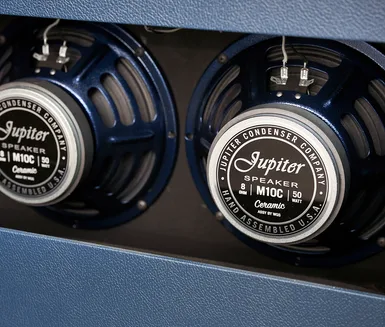
TQR: There is no best speaker. We've said that time and time again. We do love the 1959 Jensen P12N in one of our Deluxe Reverbs. Well, we love most old Jensens, unless they have been reconed poorly. There are so few good reconers out there, and even fewer use the right parts, the best parts.
That's right! There is no best. Although a JBL D120 kicks ass. Ahahaha! You can't get them anymore. That old Jensen you have is great. The Jupiter speakers I use are wonderful. When my friend Max showed me how to build amps years ago, he was doing Chris' website for him, so Chris from Jupiter sent me a bag of capacitors to try, and I am still using them to this day because they are awesome. He started making speakers shortly after that and sent some prototypes here, which I am still using. I want to hear speakers that are open and efficient like the vintage JBL D120 I referenced, because to my ear that sounds fantastic. It has the sparkle, a bit of mid-range scoop, and it is super-efficient and crazy touch sensitive. The Jupiter ceramics are the closest I've found to that, there is something magical about them. What's cool is when you take an amp like the Creamer, which is kind of slow with its laggy mushy cathode bias output like a tweed Deluxe, and you have this super-fast speaker, there is greatness there, versus a speaker that has a dB cut in it. I love Celestion speakers, too, I really like the Cream alnico in a high wattage amp, but for an interaction between a slow amp and fast speaker, the Jupiter has it.
TQR: We've had some fun with George Alessandro designed Eminence GA-SC64 ceramic in one of the Deluxe Reverbs. It certainly doesn't have the chime of a vintage Jensen, not even close to our ears, since he married it with a bit of Celestion vibes, but when we put that amp on 8 and fire a goldtop Les Paul through it, that thing hangs like a freak. That's what George was going for. As for capacitors and resistors, give us your wisdom and thoughts, everything in the chain, things you've learned. You like Jupiter it seems?
All my signal and coupling caps are Jupiter. For a while they were making electrolytic capacitors that I would use in the power supply, so there are a bunch of my amplifiers from 2022 that have them, those power supply caps are unreal. Unfortunately, something happened with the supply chain, so they are working that out. Now I'm back to using F & T which are really good, too. They are the best I've found other than the ones Jupiter was making. I typically use Jupiter's yellow caps in the preamp section and the Creamer has some of their red ones in the back end. The differences are the foil material, and they are all high quality and hand made here in the US. In the harmonic tremolo circuit, neither fit so I use Mallory which are small and sound great too.
TQR: Everything matters. Let's talk about transformers, tubes, and sourcing components...
I have been using Mercury transformers since the beginning. One of the worst things that recently happened to me was losing my buddy Patrick, who was my rep at Mercury for about a decade. He was my confidante, hype man, and could always get Sergio at Mercury to make me custom things and push me in certain directions that were further along than I probably would have gone if I didn't have an ally there. I found a compact transformer that worked in one of my mini designs, but it collapsed when the amp was cranked on 10. Patrick took the dimensions and convinced Sergio to design me an insanely compact transformer that was amazing. I really like Mercury, and I really miss Patrick. Sergio is a wizard, and their consistency is unreal.
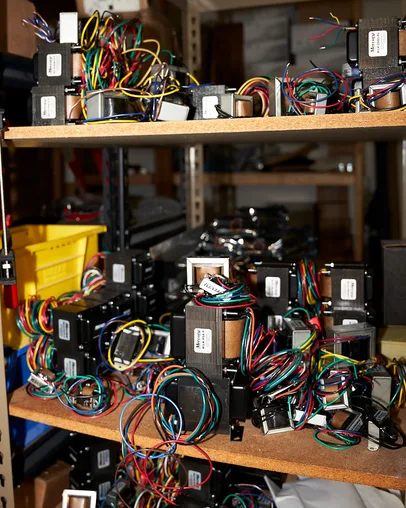
TQR: Sergio is an OG, he doesn't mess around. He has left his mark on the tone world, that is for sure. Great stuff. They walk the walk. Have you ever considered working with Brian Sours on a one-off transformer build? The Fretboard Journal and Jason Verlinde had him on their "Truth About Vintage Amps" podcast, and it was stout. That podcast is truly fantastic, kudos to Jason and Skip. We love it. We've had a lot of great hangs and suppers with Jason through the years and have written some timeless stories.
Oh, yes, of course. Brian and I have been working on a special project that I can't mention quite yet, but we will have some news soon. There is a collaboration in the works. It will be very cool. Mercury is integral to all transformer things we do, though, too. This will be a more of a one-off.
TQR: Tubes?
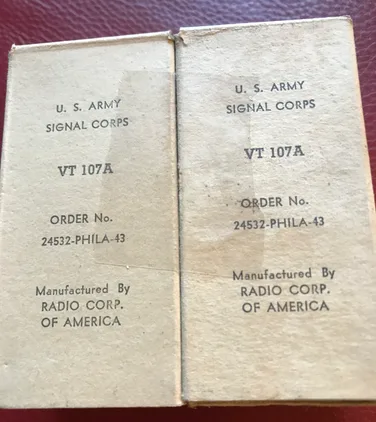
Right now I am just using new production tubes, because I build about 300 amps a year roughly and I can't source NOS for all of them. I've been using JJ. I was using Ruby Tubes because they were near me in Petaluma, after coming from a factory in China, but that shut down in 2019 for whatever reason, and Chris Benson of Benson Amps convinced me to go with JJ. He was right. They are really good and consistent. They sound a bit different than the Ruby did, but I like what they do. They are solid tubes. There is a place in Portland called Eurotubes you probably know, and they make these 6L6s and 6V6s with a double mica spacer in them that are amazing for combo amps. I try to get as many of those as I can. We think you'll be impressed with them in the HT15, but feel free to throw your preferred NOS in there to experiment. It's all good.
TQR: Yes, it is all good. Who is doing the cabinets?
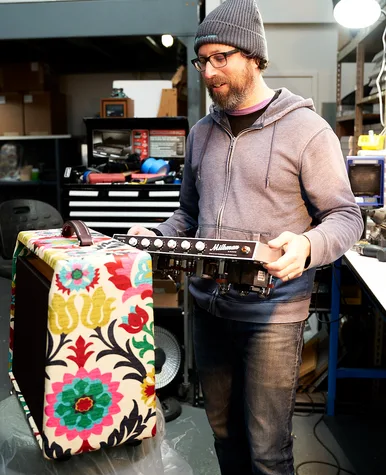
When I started, I had Peter Mather doing all my cabinets. He was based in Nashville then, and I quickly overwhelmed him because he is another one-man shop. Then I had various larger companies working for me with OEM stuff. They are made to my specs out of solid pine. I recently started doing high-end walnut cabinets with an oil finish that Peter was building, but I wore him out again once they got popular. Now Chris and I are doing some of those cabinets here and Peter is still doing some in Virginia. We are also doing floral fabric wrapped cabinets that I had been using a guy in San Diego for, but his business went under back in 2017. A big part of this gig is crafting and experimenting. I am loving building some of the cabinets in-house because we can really get wild with some of the finish combinations.
TQR: We know you don't care to talk about which artists are using your amps, out of respect for them, but it is fun to hear of some. We've seen plenty.
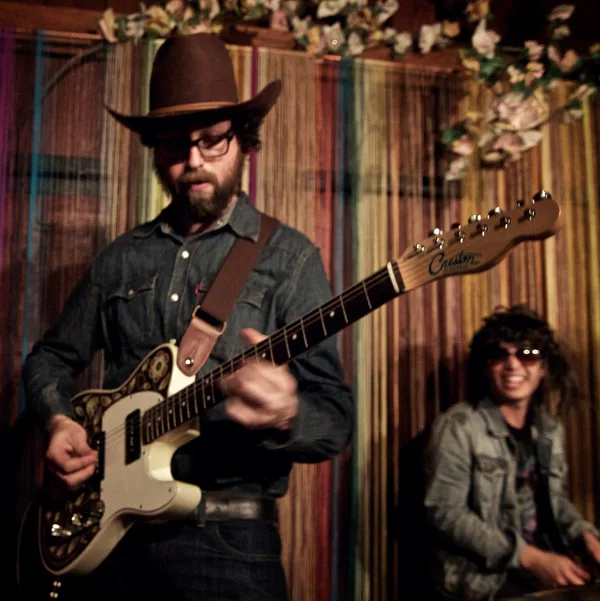
Ahaha! We don't kiss and tell, but obviously Mayer is one because he shared that on his social media back in the day, and of course Greg Leisz gets special treatment. Many people I am not even aware of. After Walter Becker passed away, there were five or six of my amps in his auction, so he must have bought some along the way. A few large touring acts have let me know they love my Amp pedal, like Fleetwood Mac. Nels Cline said the Creamer was "pretty much the best recording amp ever" on the Fretboard Journal podcast. Jeff Tweedy was an early adopter, he bought an amp from me in 2013 or 2014, long ago. He used it on the Pop Staples tribute album they did at The Loft, my tremolos are all over it. There are more, but I try not to focus on who is using them. I try to treat every player the same.

TQR: Sounds like you are sending a great range of your work this way, between the three builds.
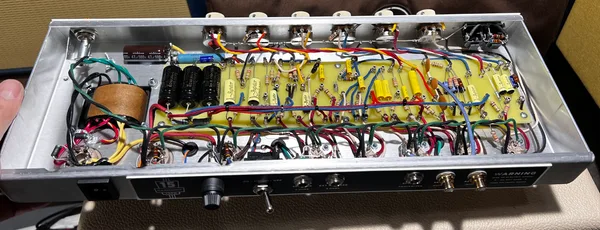
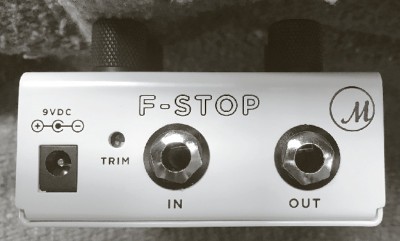
As far as the stand-alone reverb tremolo we are shipping you for review, it only exists because I had a customer who asked me to do it. I didn't realize it was going to be such an ordeal to design it. I looked at a couple of others who tried it but didn't agree with any of their schematics. I did my own thing and just kind of improvised it until it was right. It has four 12ax7s and a 6V6. The vintage Fender tank is such a tone suck, and that is in part because of the tubes they chose. It doesn't have the magic of a 12ax7. See what you think. The F-Stop Pedal you are getting is a VCA chip-based tremolo from Texas Instruments. Jon Erickson, who helped me design The Amp and all of my pedals, is a pro audio guy, and he felt this particular VCA would follow a waveform really well. The tremolo is analog, and it is really nice. A Fender tube tremolo waveform has kind of a weird peak and is not like a sine wave at all. It is more similar to a triangle wave. Like two little mountains on either side. That's the sound and of course, you have to have the reverb come before the tremolo like in a real amp. The F-Stop uses a lot of milliamps. Be aware that it needs 300 or so especially if you plan to run both effects simultaneously.
TQR: Are you still recording and cranking out your own music projects?

I play in a lot of country bands. Covers and old honky tonk tunes and things like that. There is a lot of country music in California. I bet people don't think about San Francisco that way, but we are the West and part of that tradition. For about ten or so years I have been playing with Kelly McFarling in various incarnations of her band. We started out as a more rootsy country Americana kind of thing, but the sound has really evolved into its own vibe. It's kind of an easy breezy pacific coast daydream. I get to play a lot of steel guitar in that band, but I also do some stuff on 6-string. We have a new record out called Bed of a River. Kelly and her husband Andrew wrote and recorded most of it during that lost year of the pandemic. I remember going out to their place in Bolinas and recording my steel parts in sweatpants and socks. It has that kind of laid-back vibe. Kelly made soup and the dogs were sleeping on the couch and I was doing steel guitar parts out of a 40-watt amp and pushing it with one of those Echo Fix Tape delays.
TQR: How was the pandemic for you?
It was hectic and bizarre for sure! I was with my kid a lot spending time with him since we lost our childcare. I was working half days at the start. I was worried about making it through, but people bought a lot of AMP pedals because everyone was stuck at home and wanted a quality headphone rig. Then things picked up. Patrick would sneak into Mercury and get things I needed even though they were supposed to be shut down. What a friend. Thank goodness Sergio loves guitar amps. Mercury mostly does government contracts, I think — I have no idea what they do but you cannot get a tour of the place. We are lucky he is into music. Things got a little dicey that first pandemic year, but we kept things flowing and I spent a ton of time with my family, which was fantastic. My son is four now and we bonded so much, and everyone made it through in our family. I'd just ride my bike around San Francisco and in to work and keep soldering away. It was a really strange time, but I am trying to keep some of the positive things that happened during it in place like spending a lot of time on my bike and also with my family.
TQR: How many workers in the shop? How long is the wait for your amps once they are ordered?
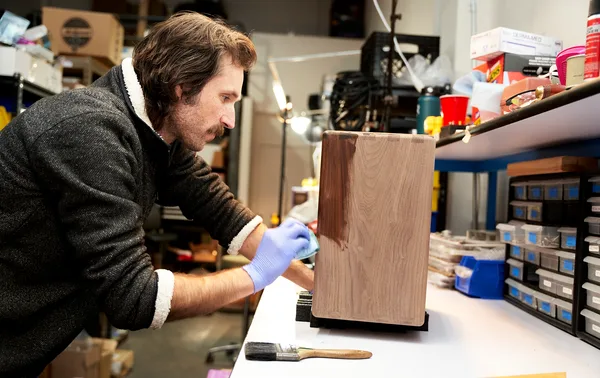
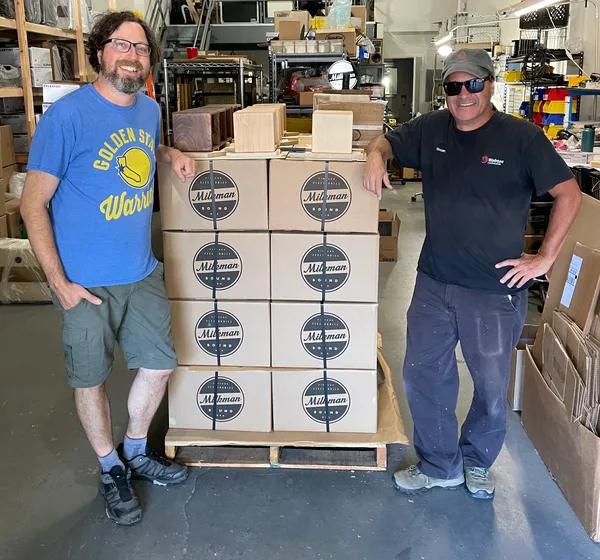
Besides me, just one. Chris, who has been with me since 2015. He is a great guitar player and has a band called Vandella that hasn't played in a while. He's taking a break from the road and gigging, being home instead of out there sleeping on floors and not making any money like my old bands did, haha. We've all been there, driving twenty-six hours in a van to play in Austin. I'm too much of a hippie now, I don't want to burn all that gas just to play a gig. There is plenty of music going on here in the bay area. I still gig a lot and Chris teaches guitar on the side.
The average wait for an amp is six or seven months. Unless someone wants some crazy custom thing, which can add time. I do have dealers out there and something like a blonde Creamer can be found. One of the main things with Milkman is that I choose to keep it small. Regardless of outside forces. It's just me and Chris, the two of us cranking them out. I like the vibe and the pace we have right now.
TQR: What is ahead for you?
I have some new things like low wattage mini stacks which nine years later are catching on, a new AMP pedal soon. Plus, the special Sours collaboration I mentioned. We are just chilling here right now, the vibes are so good. The pacing is just right after the past ten years. Luckily, I don't have to spend time doing a lot of repairs, everything is humming along. I like to think about some rad custom builds and taking it to another level. Ideally everything evolves into custom art projects. We will see what kind of wild things we can create for people to make music with. Thanks for having me in here! I have this old customer who always tells me, "You have to get into ToneQuest someday!" And now, here we are. TQ—Riverhorse
Milkman HT15 Amp Review
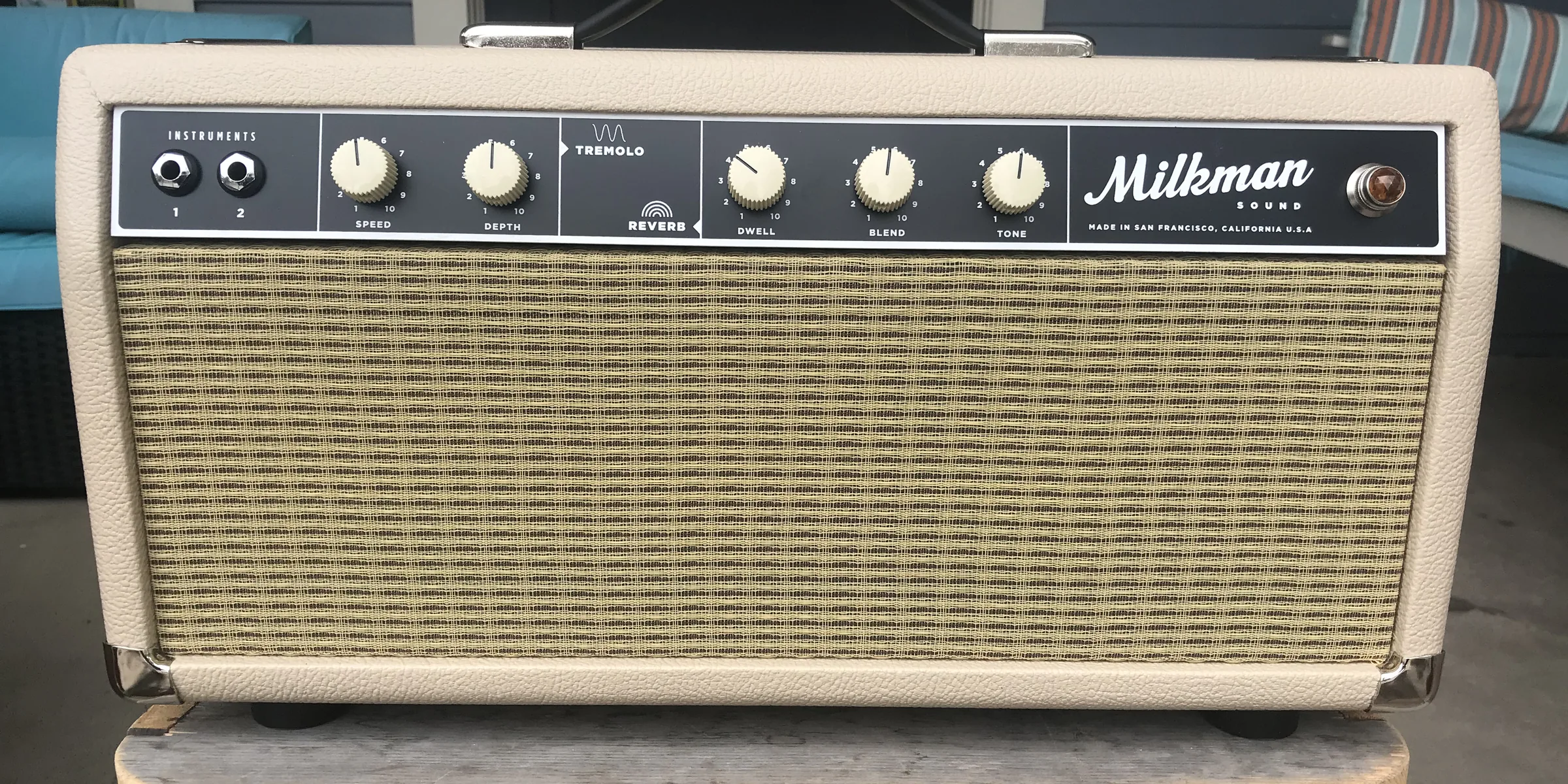
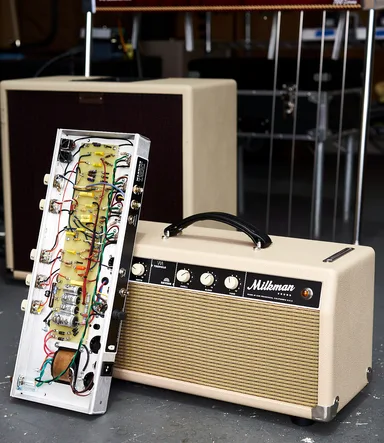
The blonde amps have a vibe. A sandy vanilla elegance that really sets them apart. The Milkman HT15, sitting on a 112-year-old tiger oak floor in the bungalow sure does. It has been speaking to us for days on end. And the neighbors. How lucky they are. It has a pair of 6V6s powering it and a 50-watt Jupiter alnico 12 we requested in lieu of the ceramic, which is also a fine option. The reverb and harmonic tremolo are one of the ways this amp really sets itself apart from simply being yet another copy of a vintage amp. Let alone the supreme build quality and design. What surprised us the most is that we were expecting to be able to categorize it in some way based on the mid '60s Fender designs, and that isn't possible. It is its own glorious and unique being. There are full, warm, scooped yet round mids from the brown era, and with his design that took ages to create, Tim loaded in the back end of a tweed Deluxe with it, along with some blackface vibes. It really feels as if three generations of Fenders all were birthed into one rare bird of an amp capable of taking full flight within seconds of lighting it up.
The first three or so notches of the volume are warm, clean, wide-glide, and gorgeous with single coils or buckers. From there as you make your way up in strength, it starts gushing with the most sultry, organic, woody, and syrupy brown sugar sweet notes, with chords that rise up, SWIRL and BLOOM, and offer the richest harmonic content. The natural driving gain is absolutely magical, with a compression that doesn't mire us down in quicksand, but instead inspires us to slow our hearts and take the ride with the amp together, so that we and the HT15 are a single living, breathing, creative body.
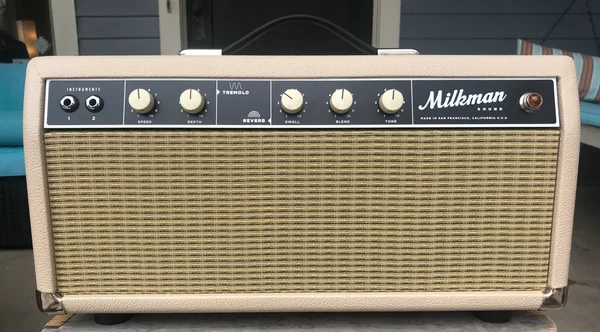
Amazing. When up near full bore, it has the wicked explosive kerrang of a tweed, exquisitely touch sensitive and just waiting for you to lean in and pour the coals to it. Which we did, again and again. The 2010 goldtop melted the house down with it. This is hands down the most vintage a new amp has sounded to us. Ever. The power range feels in between that of a Princeton Reverb and Deluxe Reverb, which makes it capable of being both gig worthy and lovely at home. We'll tell you more about the reverb and harmonic tremolo later, but suffice it to say, good luck finding a better current production version of them.
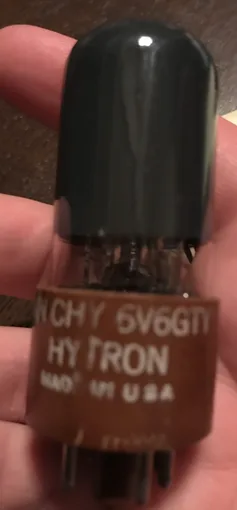
Although the modern production tubes that came loaded into it are excellent, we did find the time to crank it with a pair of mid 1950s RCA black plate 6V6s, which offered even more warmth and clarity, and a pair of 1953 Hytrons that gave us a big-legged back-alley juke joint rumbling swagger to the chords. My lawdy! We have these same era Hytrons in an old cherished Deluxe Reverb for a reason. RCAs in the other Deluxe. The speaker in here is absolutely stellar, which found us on the phone with Jupiter to find out how all of this happened, and that story follows.
These days there are certainly videos you can Google up to watch the amp being put through the paces, but it's not the same as being able to feel it from the guitar in your hands. Regardless, you can witness for yourself what the endless fuss is all about. We are still processing how crème de la crème special this amp is and have selfishly kept it here for months. It is that achingly, jaw-droppingly beautiful. 'Nuff said.
The Milkman Reverb/Harmonic Tremolo Unit and The F-Stop Pedal
As Tom Petty said, "Don't bore us, get to the chorus." This is the coolest damn sonically inspiring blonde box. Two of our favorite effects housed in an all-tube tank with two springs. The reverb is deep, smooth, and gorgeous. When the harmonic tremolo is blended in, we are able to even get mesmerizingly earthy Hendrix vibes swirling away from the amps. We ran it with a 1959 Gibson GA-40 we've had for twenty years, and it brought the house down. As much as we have loved that amp forever, having owned six of them and kept this one, the Milkman Reverb Tank transformed this Gibson into the uppermost ether. What a sea change. When paired with the tweed Deluxe, we were able to deliver heaps of searing Neil Young and Crazy Horse live vibes, in spades. Hot damn, this is what it's all about. We have owned a couple of vintage Fender reverb units, one was black, the other a mint blonde, and they were disappointing tone sucks. The onboard reverb and tremolo in our black panel amps are magical, indeed, but the old standalone Fender tanks have always been problematic. They got sold. To us, this Milkman tank one-ups them, and it adds the surreal and stunning harmonic tremolo. The first guitar input of the two has a sublime signal boost that's killer, while the second is simply level. The usability of the knobs is right on the money, especially the tone knob, which lets us dial in each guitar or amp the way they should be. The DWELL knob is as gonzo as you need it to be. We don't want to live without this, and we won't be shipping it back. We are more than happy to ante up for this one, as it has been everything we were hoping for, and more. And yes, it loves Telefunken and RCA 12ax7s in the preamp section. But who doesn't? The check is in the mail.
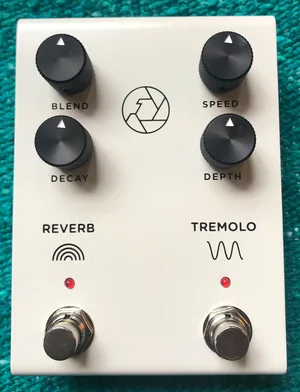
The F-Stop Pedal is a rowdy plug and play version of the standalone reverb tremolo unit, and for the money, it's a good one to check out. It is game on for fly gigs when you want to pull out surf instrumentals and old school grooves. It even has an accessible rear trim pot you can dial in tremolo output with. What a classy move. We found that it digs cleans, and the well fabricated casing feels bulletproof. It is just a hair on the bright side, which can be a good thing, so simply EQ it to taste. The spring portion of the circuit is digital, but the guitar signal path and tremolo are analog. Although on paper it has both effects, it is obviously different from the standalone unit, which is another world of tube driven warmth altogether. It is beyond fun to let rip with the F-Stop, indeed. We'll file this under, "Ace in the hole."
A Candid Encore
It seems like ages since the offerings from an amp builder have moved us so. It's about time. You should know that we have gotten quite a few from others through the years in for review, and we simply sent them back, not feeling they were up to par. Same with pedals. We just shipped a "famous" one worth hundreds of dollars back the same day it landed here. Too painfully digital and lackluster. No thanks. We are happy to shine the ToneQuest light on everything that sets the bar, although there just isn't as much out there as one might think. They are there, though, the freaks of nature, and we will find them to celebrate here, you bet your guitar cranking ass. As far as our final thoughts about Tim Marcus, we declare him up there at the top of the mountain with his work. Here is a guy who is getting everything right. Who rides his bike to work and makes truly special products that inspire musicians to be the best versions of themselves, and at the end of the day, he simply cruises home to the family he deeply cherishes. Through the night we bet he dreams of amps, of all that could be. And when the sun rises in San Francisco Bay, he rolls out to the shop and does it again. Quest forth... TQ—Riverhorse

milkmansound.com
pedalsteelamp.com
timmarcus.com