

Most moons that rise in the Rocky Mountains in September are brilliant, white, and big. For the three days previous it had turned from red, to orange then yellow as the smoke that colored the rising nightly orbs slowly subsided. Tonight, it was back to its typical glory, peaking through the Ponderosas and taking in the music as the Alpenglow from the day's sun fell off the face of the Absarokas. The smoke can, on occasion, get so thick here from forest fires as far away as California, that one's lungs may feel like they've been on a two pack a day Marlboro Red run for a week. But on this night the hack was gone as Cosmic Country, led by Daniel Donato took the stage at Pine Creek Lodge, a gem of a place, where Bobby Weir,
John Mayer and Dave Chappelle had entertained a full capacity, intimate 1,000-person audience over subsequent weeks earlier in the summer. If you're a fan of improvisational music that marries up-tempo old-school country vibes and psychedelic jams, this is right where you wanted to be.

Music found Daniel Donato at a very young age and at sixteen he was forced to hone his chops and stage presence playing with the legendary Don Kelley Band. Don retired in 2020 from his twenty-five-year run as the leader of the house band at Robert's Western World located in the heart of Nashville. Don's band included a revolving door of monster Tele players like Redd Volkaert, Brent Mason, Johnny Hiland, Guthrie Trapp, JD Simo and Daniel, who had the dubious honor of following JD. To see that band was an all-time experience. A Tele twangin', acoustic bass slappin' good time, full of fire and polish.

Wind him up and he'll go on for hours with his heady and unique perspective and observations of life, with vibration at its core. We didn't even get to his interview with Steve Vai, which took place under Daniel's side project called The Lost Highway, where he talks one on one with other guitar legends and influences. With Vai, they discussed guitar playing and life as one might expect, as well as a deep dive into the Urantia Book, which contemplates the influence and earthly guidance from celestial beings. Col. Bruce and his friends believed him to be one, but just don't call him an alien. Daniel is also right at home going long on his love for Jerry and The Dead, with Jesse Jarnow, author, DJ and co-host of the very well put together and entertaining Great Ol' Grateful Deadcast. When Daniel was really young, Bukovac taught him how to play Stones and Zeppelin licks the right way over a Jack Daniels or two. The pedigree is all there.
TQR: Let's start with how you end up on stage with The Don Kelley Band...

It starts with being persistent and wanting to learn everything I could about what they were doing. I was just in love with that band in a religious way. I was discovering quite a lot about life and music through them, and I was there all the time just taking it all in with my dad. From experience now I can say that when someone comes to our shows and they have that similar frequency that I had when I was a young kid, it's identifiable. You can tell because you see yourself in them. You want to see that their story goes well, and I think the guys in Don's band started to see that with me. I would record all the shows, listen back to them, study the song structures, what changed night to night, being all scientific about it. I would go and ask Don questions about things like that, and he was purely intuitive with his approach, not to say that his intuition was not informed by a well thought out strategy for what he wanted to execute. I'd ask him things like, "Why didn't you guys do that one last night?" He'd say, "Ah well you know, you just have to read the room." He liked that I was asking these questions and wanted to learn.
Then when the right place and the right time happened, which it did one day at 2:37 pm when the school bell rang almost at the same time as my cell phone. It was JD, he had cut his hand making a sandwich, had to go to the ER and couldn't make the gig that night. I drove home really fast, grabbed my gear, drove downtown, and played the show. That was obviously a big deal for me, and I remember Don offered me the next night too. JD was back for the weekend shows and then Don would occasionally play on Sundays, and he'd play bass. He was originally a bass player and was on the road in the '70s and '80s playing Texas swing, hardcore Texas R&B and Funk, where he was often the only white guy on the stage playing these heavy tunes. On that Sunday, Jon Radford, who produced Cosmic Country and Western Songs was on drums, Don was on bass, and here I was, this sixteen-year-old kid. We played from 10 pm 'til 2 am. I drove Don back to his car and on the way, he offered me the gig for Wednesdays and Thursdays as JD was transitioning out. I was just baffled because I had no idea it was coming, and once JD found his next thing, I was offered the full-time job. Four hundred sixty-four shows later...

TQR: What years were those?
2013 to the end of 2015. Not very long really and that's how it works with Don. Around that time too Artie Alinikoff, a fascinating character, Don's good friend and longtime drummer, decided it was time to retire. I think it began to be less enjoyable for Don at that point because when Artie left everything started to change. If we could explore Artie for a minute. He and Don were the heads of the band and they had been playing together since 1983. Bands are only as good as their drummers, right? It's the engine for everything. The pocket they had together was indestructible. It was like flying with real pilots in a real plane. They were so hard on me, especially Artie. He'd say, "Daniel, you're playing way too fast and I'm not moving, trust me, I know how this pocket goes and you're rushing me way too hard man." "No one knows what the melody is here. It's a Hank Williams song and everyone is forgetting what the melody is when it comes time for you to take a solo." He was approaching the music from the original recordings and not the interpretations with which I was more familiar. I thanked him a few years ago for all those conversations we would have almost on a daily basis before the gigs as we both consistently showed up early. Artie would practice rudiments every day and he was such a complete drummer. When he was young, he would jam with Bill Kruetzmann and was comfortable playing western swing, bluegrass and rock and roll. He would bring me recordings of Art Blakey and Thelonious Monk, Johnny Cash, Carl Perkins and then he'd turn me on to what Stewart Copeland was doing in The Police. On another night it would be Bernard Purdie or old Meters tapes.
TQR: Your dad played guitar?
My dad was not really a guitar player, and I wasn't the kid that grew up with the musical family where they showed me my first chords and got me started. He could play Guns and Roses "Patience" and maybe some parts of "Another Brick in the Wall Part 2." There was never any ambition there and it's not a slight, it was just something he liked doing. So, the musical family was not me at all. Music is something that found me in a really deep way on my own accord and what I will say is that my dad was bad enough at guitar to understand that I had potential, and he was really excited about what it seemed I could naturally do. With that he really supported me when I did show interest and aptitude. It was his idea that I go and busk on the streets. If he didn't have that idea, this conversation may not be happening.

TQR: What music were your parents playing around the house when you were young?
My dad would make tapes or burn CDs for my mom, and I remember that it was a lot of this early 2000 era adult acoustic rock type music like Dave Matthews and Train. My dad is from Jersey, and he was into Zeppelin, and that era of '70s rock. He also liked the early '90s Seattle sound, with Alice in Chains being his favorite. Interestingly enough in his CD collection he had American Beauty.

It was one of the only acoustic sounding CDs he had and one of three that he gave me to listen to. When I was five or six years old, he was transitioning into software and would work nights coding down in the basement where we had this old TV. He would put these VHS tapes of Stevie Ray Vaughan Live at El Mocambo and Dave Matthews' Listener Supported on, but with the TV muted, so I would just watch. It was fascinating to me and just attracted me in some way, and I was just mesmerized by things like how it was possible that the ash could be on Stevie's cigarette without it falling off for so long.
TQR: Or how much smoke he could blow out of his mouth and nose at the same time, while playing his heart out.
Right. And to see Dave Matthews and how young he and his band were back then, just discovering how well the audience was responding to what they were doing. It was like an athletic thing. So, there was always music happening, but it was never, "Hey Dan, come listen to this." None of that happened to me. It was more me at fourteen turning him on to Chet Atkins and Waylon Jennings as I was getting into country music. It was Willie Nelson, Buck Owens, Merle Haggard, then western swing, then bluegrass, then The Dead came in and it's some of those country influences mixed in with a different approach to life and therefore the music changes. The veil between music and life is thin.
TQR: Jumping into the gear...how many Teles in the stable?
Nine.
TQR: And why does the surf green one typically get the nod?
That guitar and I just have this connection. I got it when I was sixteen and so much of what I've done in terms of discovery of music and myself on stage and off stage was done with that guitar in my hands. It's somewhat metaphorical to a partner, the one that has been with me the longest, and it's an exceptional Tele. We were just out west playing with Brent Mason, and he picked it up and said something to the effect of "Man, this is a real deal Telecaster" and he was somewhat blown away by how good it is. It just has the vibe.

TQR: Fender has put out so many different Teles over the years it's hard to keep up. Yours is a custom shop, yes?
It started as a '62 custom shop, rosewood slab on a maple neck, ash body. I've made some modifications as I've had it for eleven years now. I changed the pickups, changed the frets, changed the saddles, the bridge and some components of the electronics. I changed the solder too. The solder used by the custom shop can't be what Fender was using in 1962 due to federal regulations and the use of lead. Back in the day it was 60/40 tin to lead, which takes longer to heat. It turns out that there is a tonal difference along with the longevity of the product, which holds true for amps, speakers and any old versus new internal wiring. It took me a while to learn these things. I had to go and meet the guys that have the knowledge, email them on their Hotmail accounts and call them on their landlines in order to dig out this information. But yes, it is a special guitar. The pickups that are in it were hand wound by Seymour Duncan in his garage. He told me that he had a dream that he saw this gig with James Burton and Don Rich. Buck Owens was the singer, and I was playing in the band with them. The next morning, he said that he went into his garage and wound them. They're insane. When you take them into the studio and put a mic on them, the overtones that are captured compared to stock Duncans are night and day different. He used one of the old winders that he's been able to find over the years.
TQR: It's cool how dreams inspire in different ways. With the solder, is your understanding that the tonal variation is due primarily to better conductance?

Yes, it seems that more signal gets through and with more signal I find that the harmonic overtones are more present. The thing about overtones for me is that it's a forever pursuit, and we are all affected by the richness of the sound with these extended frequencies even though we may not be hearing it directly. It's what I hear in the Europe '72 recordings or in the case of Don Rich with Buck Owens or with James Burton's recordings with Merle Haggard. To me, it's similar to looking at a Wassily Kandinsky painting where you're being affected by so many of the things of which you're unconsciously aware. Those are the things I'm after. In the Jerry tone in '72, you have this Alligator guitar that was modified after being gifted to Jerry by Graham Nash, you have the Macintosh pre and later in '74 the Wall of Sound, which was an engineering marvel. Old hardware with traditional wiring techniques. Those things in combination made for exceptional sounds that are difficult to capture today even with all the new technology. These are the things I'm chasing.

TQR: Well then, we've all ended up in the right place.
The thing that guides me. There's this amazing story of Chet Atkins that many have heard, but worth a brief visitation. It's the one where he was playing in Studio A prior to the session. Apparently, Chet was always early and always stayed late. On this occasion this young, bright-eyed kid working in the studio comes out and says, "Chet, that guitar and amp sound really good." Chet looked at him, put the guitar down and said, "How does it sound now?" And I think what this points to is that the true tone is born of the internal world, as opposed to the external. Especially today, the kind of mind that is like mine, where you can indulge yourself by testing out new pedals, speakers or tubes, any sort of external world hardware. But it's really the internal world hardware that creates the transcendent connection that we hear in David Gilmour, Billy Gibbons, Carlos Santana, Jerry Garcia, Trey Anastasio, anyone that touches you in that way. It truly is a human-to-human soul connection. These tools are necessary, but it's not where things are solidified.
TQR: There are many stories of Eddie Van Halen playing through rigs that were not his, like little practice amps and sounding just like EVH. Magic internal world hardware.

During Covid I obviously couldn't tour, and I had to generate income in some way. It was in a meaningful manner that I ended up giving about four hundred guitar lessons over a span of sixteen months. One thing I learned is that many are tortured by the conundrum of living in this world where there's so much gear. In a consumeristic manner they're led to believe that if they buy more things they'll sound better. You can't escape yourself. You can't buy a new you and no one can buy you or anyone else. Until we get Neuralink integrated with everybody there's no way you're going to change your psyche, unless you're doing the work inside you. I naturally lean that way, but many players don't. It starts with you and to me that's good news.

TQR: Yes, that speaks to the reality that a person is playing the music and emoting the lines that form the landscape for the audience. The gear is the medium and the player the painter. If we could all buy gear to sound like each other, what fun would that be?
It wouldn't and that's why we don't sound the same from the get-go, it's not even our choice. I'm very grateful for that happenstance.
TQR: Of the remaining eight Teles, which others do you gravitate towards?
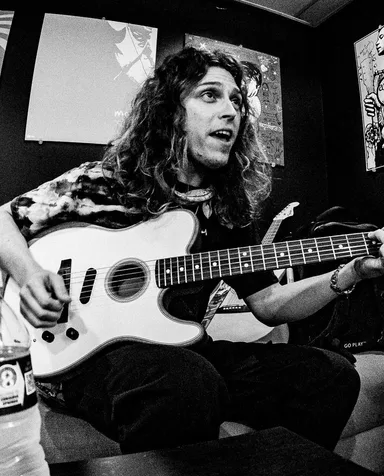
Right now, next to me in the van is this Fender Acoustasonic Tele that I've been messing with. I play this guitar all the time when I'm on the road. Also, Robben Ford gave me this Italian made Tele. It's a D'Pergo, a really cool guitar. The guy builds everything in his shop, the faceplate, the knobs, the tuners. It's a single coil humbucker guitar and I love it because when I play it, I think of him and Mike Bloomfield and the Chicago blues scene. I think of Haight-Ashbury when Robben was living there and that whole era of music and the different cultures that came together there. But there's three hundred percent more love that I have for my main Tele over all the others. I think maybe it's an unconscious thing that I'm not really aware of as to how or why that happened, but it's just the case that it is.
TQR: I saw recently that Lindz McKay was working on Robben's '60 Tele. He's a really talented tech and builder of amazing T and S style guitars. He sourced a pile of very old light swamp ash from a retiring luthier in LA and some of that makes it into his Bonneville Guitar builds. He's on the road as Rich Robinson's guitar tech. That must be a demanding gig.
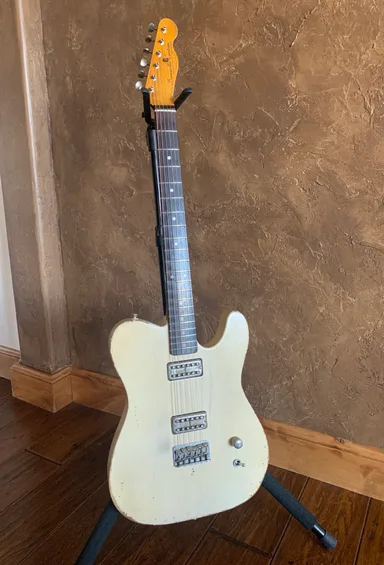
Yup, Lindz is great, and this is always a point of debate, but for me it's really about the wood as to where most of the tone comes from. The combination of the body, neck and how they're married, especially on a Tele, even more so than on a Strat. A Tele is so temperamental to any variable. I just put titanium frets on that guitar and the difference in tone was really obvious. Not just with say Audio Technica headphones through studio monitors, but simply direct through a Deluxe Reverb in a room. The wood is everything. One of my early mentors James Mitchell turned me on to that reality. He's not a household name in terms of fame, but in the session world he's one of the top guys. He's constantly trying different bodies with different necks, and he never changes the pickups so he can use that as the constant. It's amazing how different those combinations of wood sound.
TQR: Well that makes sense on the level where the pickup is there primarily to capture the vibrations coming from the strings, which in turn vibrate the way they do because of the wood. Others contend that with good pickups, a great harness, a plank of wood can sound good. It all contributes.
Those who discount the role of wood in my mind are disassociating from nature and trusting too much in the technology. It's the same thing with amps and old parts. People often overlook the wiring, the soldering, the old caps in favor of worrying more about the speaker and the tubes, and it's way deeper than that. With Leo pre-CBS it was cloth wiring and now for many production amps it's PVC wiring. Solid core wire versus braided, it all matters. I'm no pro on this and I may get some of my terms wrong, but I wish I had known more about this when I was younger. I've spent a ton of time on this recently. Another person mentoring me on this is John Grammatico. The dude just knows so much about the early era of Leo Fender and what was going on in his mind and why he made the choices he made and how those choices created the tones that we're still listening to and chasing fifty to sixty years later. I'm so interested in that stuff.
TQR: You and Brent Mason played a gig together, where he sat in with your band the entire night, not something he typically does...
Never.

TQR: It was a celebration of the Telecaster, right? How did that come together?
Paul Decker over at Music Villa had this vision of doing a night of the Telecaster and he had Brent in mind but didn't know who else might join and then I came along. I happened to get Brent a recording of us playing and after that he basically let Paul know that he'd come out if we were there to support. It took a little convincing with Brent because he comes from the community of studio players and the way that works is that there are years of vetting that goes into you as a player before you get to play on a session with him. I had great faith that he was going to hear our band and get where we were coming from, primarily from the fact that this band that we're presently stuck in traffic with, heading home from a four-night run, is really on to something. I've loved Brent's playing for so long and I had hoped that he'd feel we were on a similar frequency. In my mind that gig was thirteen years in the making in my internal world of dreaming and working and playing. It was a great thrill to be able to play "Alabama Jubilee," "Hotwired," "Sugarfoot Rag," all these songs I've heard him play for years, that I've learned note for note while trying to figure out what he does and why he does it. There were a lot of hippies there at that show, lots of heads and they bring a very specific and great energy. Brent doesn't know it, but he's a head. That's why we did Phish's "Get Back on the Train" into Waylon's "Waymore's Blues."
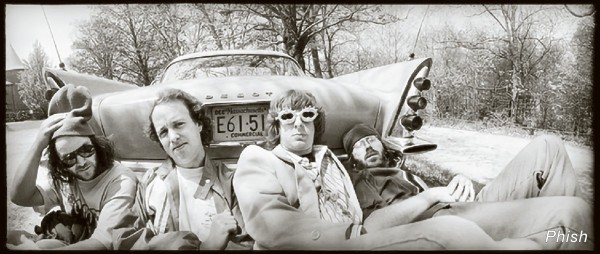
He loved it, but in the studio, things are very different. I always had the inkling that was the case with him, and it was solidified for me that night. There was a look he shot me, and I have it on video, when we got about four minutes into the "GBOTT" jam and started with this theme that built, this chromatic thing, he then heard the bass follow him and the keys fall in and rhythmically everything flowed. He's not used to that extended improvisational energy and he was able to give us something and we were also able to give him something. It was one of my favorite gigs that I've ever played in my life.
TQR: You all were laughing it up and seemingly having a blast.
It's like when Steve Parish talks about who was the boss back in the day with The Dead and it was the situation that was typically the boss. The way I can contribute to any situation is through the intention of my heart and soul and that's how you can, in a masculine way, be dominant in a musical situation. In a feminine manner you really need to harmonize, flow and allow whatever is happening to happen. It's like the surfer who rides the wave versus the guy who stands against the wave. You're gonna get knocked into the rocks, get saltwater up your nose and it's going to be unenjoyable. And that's the thing, playing live is so different from the studio. It's two entirely different career paths. They're in no way similar, especially if you're a studio musician that plays with a different band potentially every four hours as you go from session to session. There's no continuity for a communal connection to be established and that's cool because the business model for recorded music at scale doesn't call for that kind of thing. Playing live every night, you try your best to channel the same intention, try your best to stay on the same page with your bandmates. That's the thing with Brent, I knew he was going to love it. His wife Julie commented after the gig that she hadn't seen Brent play like that or have so much fun in years. No one expected it. It almost made me cry.
TQR: Following the Q&A session earlier in the day you had a chance to play a '51 Nocaster that was hanging on the wall. Did anything in particular come to the surface for you?

I wanted to take the ashtray off, but the owner didn't want that happening and the second I heard that, I was enlightened to the fact that this truly is a situation where yes, a guitar is a guitar, but if you look at the secret soul behind anything there's always a deeper meaning. For the person who owned it, it's not something they want out of its case and really worked. More an asset and a piece of art, so I couldn't really play it and get a feel for it, unfortunately. I'm talking to Bonamassa right now about a couple Blackguards that he may be open to selling. I really want one and then I'll get it setup by the Angry Luthier himself, Marcus Engstrom.

TQR: I never knew he went by that moniker. He's one of the most zen and least angry guys I know.
He is, but when you talk about his work and his craft, he can be pretty opinionated and has a stance made up in his mind about how things should go and how they shouldn't. Granted, it's worth it because he knows what he's doing. You put a guitar in that guy's hands and what comes back is a different instrument and it's for the better. That was a good question though on that Nocaster. Any time I can get my hands on one of Leo's early creations, I want to play it and take in the frequencies that it has to offer. It was cool, but I have to keep searching.
TQR: Which years are the guitars you've been talking to Joe about?
They vary. I would actually like to find a '51, a Nocaster if I could, primarily because of the history that was going on during that short period of time. The bridges are mismatched, and Fender was still trying to prove itself. You have the old staff of women that came into this country from Mexico to find a job and an honest living in Southern California. Working with Leo Fender, building one of the greatest musical empires our country probably will ever know. Those guitars are artifacts that have such resonance in them that I just know that if I was able to bring one to the stage that it would be a seismic occurrence.
TQR: I'm sure it would. Your touch on the guitar and style of playing leans toward the very clean and articulate. I would describe it as round and not just prototypically a spanky Tele tone. You made a point while answering a question about the importance of finessing a note as opposed to hammering it. I'm curious how you came to learn that and how long it took to work that out because it's hard when we wind it up, not to naturally want to play harder and really dig in.
It is. Learning is different than letting something emerge. I think we're born knowing things that we never learned and those are the things I'm really interested in. How are we born knowing kindness? How are we born knowing love? Even more importantly, how are we born knowing the need to communicate what we are feeling at any given moment in time? With the breadth and bandwidth of emotion that you have and develop as you get older through experiences it only makes sense that the way you communicate your feelings, whether through dialogue or through an instrument also increases. So, I think it's something along the lines of me busking on the streets when I was really young and working really hard to get on stage with players who were picking downtown in the early parts of the day, that when in their heyday were on the road with Johnny Paycheck, Merle Haggard, George Jones, and Hank Jr. All these cats now are done touring and they've made enough money to have a nest egg, but they still want to go pick and communicate. I wanted to be in that circle with those cats. I noticed that they didn't sound like young guys in the sense that being a young guy, which has its great qualities too, tends to lean towards trickster, predictable qualities that can get annoying after a while. Often a young player's intensity is at ten all the time, with lots of notes and a fast vibrato. If you were to translate that to a public speaker on a stage, that would be a dude using simple words that you understand but screaming at you the entire time. If you're anything like me, I can stand that for about thirty seconds and I'm on to the next.
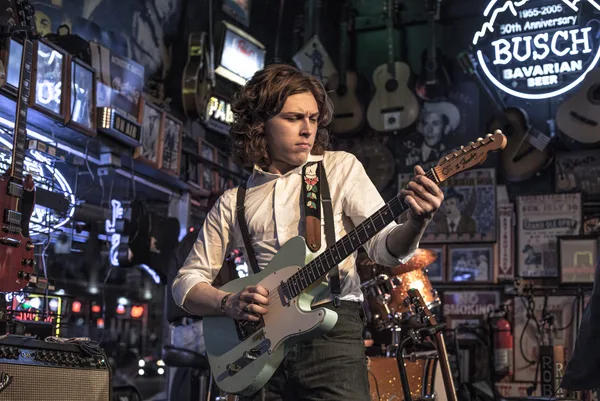
I feel like I've always been aware of that duality of being young, playing like I'm young, but not wanting to sound like it. Don really helped me with that. I remember one night, we were playing "Working Man's Blues" and I went to go start it and Don turned around to me, he actually stopped the song. Don was never afraid to stop a song. He turns to me and says, "No man, you gotta spank the intro and you gotta pet the rhythm." I didn't understand what he meant at first. This was a mid-week gig so there was no one in there. After stopping the song, he picked up his Tele and showed me and my god, yeah, that was it and I realized right there how important it is to channel what you play through the right intention. More mature players do this, and you can be old and play like you're young by the way and vice versa, it's not an age thing. I feel like the benefit of doing it every day for thirteen years has helped me develop what you described above. Sure enough, when Don showed me what he meant, it really taught me something that I don't have the ability to forget, which is that when you're trying to communicate effectively on stage, sometimes you have to add an exclamation point and sometimes it's a question mark or a comma. Sometimes when you're quoting somebody, you'll have quotation marks around it quite literally. These are all metaphors of written text that translate to a stream of consciousness when you're playing music. Words communicate feelings and notes communicate feelings. Really, all we're trying to get at is feelings. It's as simple as that.
TQR: Feelings and emotions. The audience doesn't always know why they're feeling a certain way. Perhaps it's agitation and maybe because the dissonant tension has been building for three minutes prior to the release.
That's the thing about the guitar in a live musical setting where improvisation is at the forefront. It hasn't been happening all that long. Sure, with jazz and blues, some old-time music had improvisational elements, but what Jerry and The Dead did was to take that improvisational music and plug it in in 1966 or so, which again, really isn't a long time ago and my god, you can communicate any emotion that you want with that music. People are open to it and the thing is, when the band is good enough and the audience is there enough, you get into this collective conscious and unconscious state where it's all one mind and everyone is feeling that and that might only happen for forty-five seconds of say Phish's "Bathtub Gin" twelve minutes in and that's fine. For those forty-five seconds, the emotional content that everyone got from it keeps them talking about it, twenty-three years later. Time means nothing when you have a powerful piece of music happening.
TQR: Let's talk amps for a minute...It looked like with Don Kelley it was a BFDR?

It's actually a Pro. As we know, the circuits on BF amps are similar and the size of the transformer, tube complement, and speaker configuration are what contribute to the differences in those models. The Pro is the perfect live amp because it doesn't break up early like a Deluxe, which can lose the tightness in the low end. This is also why I don't have as much love for the Brown amps or the Tweeds. To me those are more like Marshalls, and I love hearing people play through Marshalls who love Marshalls. I love hearing Eric Johnson, I love hearing Hendrix, I love early Clapton and the Beano record, but I've always leaned towards the cleaner, American voiced tones. Probably because I was born in America and the recordings I was listening to favored those sounds. I bought it from a guy who lived in Crossville, Tennessee and I remember he didn't have a cell phone and that made communication a bit tricky and he was moving. His wife really hated it. It was basically a piece of furniture that had been sitting in their living room. So, he sold it to me for $700. I tried giving him more money for it and explained what it was, but he said I "played pretty good" so I should have it, and they just wanted it gone. I was sixteen when I bought that amp and I've used it ever since. It's really funny, I've taken it to John Grammatico and he looked at it and it almost brought him to tears. He had never seen such a clean specimen. The solder, the wiring, the caps, all original and the chassis was still shiny. I've since then changed the speakers to Webers. Not sure the exact model, but their version of a JBL (California).
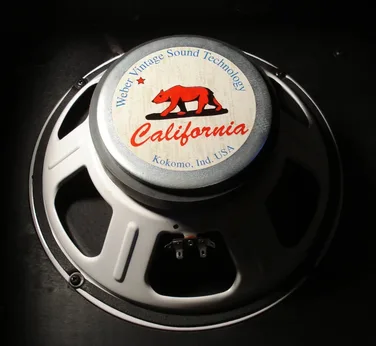
If you're going for that clean, high resolution 4K image, those are the speakers that will help you get there. They have a flat paper cone and the vintage magnet thing going on. You don't have the smaller voice coils or magnet. It's a heavy speaker and it's going to move a lot of air. A Twin can take your head off and drown everyone out. One of the only guys to me that seemed like they were able to be effective with a Twin was Roy Buchanan. When Danny Gatton played, if you watch those old videos of him playing, it's a guitar player playing over a band. It's not a band in the sense that their sounds are blending. You listen to "Sand" or "Morning Dew" ...those are band sounds. Every star in the constellation is shining. Leo made the Twin so multiple players could plug in and so you only needed to bring one amp to your gig. What I find interesting about the Twin Reverb is that originally it was supposed to be a single 15-inch and Ralph Mooney started playing one. I think he may have owned the first Twin Reverb. It recently came through Nashville for a brief stop at Carter Vintage. It was quickly sold to a private collector, but man, it sounded so different than a 2x12, even though it was only the speaker configuration that was different. The Pro is just so cool, and it doesn't seem to get the love that the other BF amps get.
TQR: Except the people that know, know. Over the years I think David Wilson had consistently called that one out as the sleeper. Like most 2x12s they're just damn heavy. Is that in your trailer right now?
It's in the trailer, yes. The Pro sits in the middle. It's my old trusty. I feel like I've told many stories through that amp.
TQR: Where are you right now?
Last time we stopped for gas we were in Sulphur, Kentucky, basically the middle of nowhere.

TQR: Where was your last four-night run?
We had a night in Mosinee, Wisconsin, which too is somewhat in the middle of nowhere and then we played a festival called the Blue Ox Fest in Eau Claire. It was bluegrass and Americana music headlined by Béla Fleck and Sam Bush, then onto Bloomington, Illinois, and finally Hamilton, Ohio.
TQR: That's some real estate to cover, a round trip from Nashville to Wisconsin and back.
Yeah, you gotta do it and it's easier when you're our age. If we were just starting to build houses and families with more responsibility it would be tough, no doubt. There's seven of us piled into a 4350. It's a band of brothers on the long white line.
TQR: All you have to do is look at the trajectory of really talented young bands like Billy Strings and Goose to see how precipitous the rise can be after years of hard work.
Yes. Goose is on tour with the Trey Anastasio Band this Fall after having played with him during their sold-out show at Radio City Music Hall. I'm aware more so than I've ever been as to the importance of the internal world over the external world because there's no way they would have gotten to RCMH if they had let those external world circumstances fog their vision of tomorrow.
TQR: How do you manage your live sounds/tone when it comes to playing clean through different gain stages? Any old reliable go-tos?
Yeah, one of the secrets I learned about gain staging that I observed in years of playing and watching and learning from others is that the best tones are those that lean towards the natural side of whatever signal you're using. I have two gain stages before hitting any type of overdrive, the first of which is compression and I use a LA-2A style compressor and that hits the front end of the amp harder and then I have a flat signal boost with no EQ followed by a single overdrive pedal. I am starting to conclude that I may want a second overdrive just to have another color. My whole philosophy is really to enhance the nature of the tone coming from the Pro as opposed to trying to do it all with just overdrives.
TQR: It's always interesting to me that the sounds/tones that we get from an overdrive, whether stepping on say a Tube Screamer or a Timmy with your guitar on ten will be a very different experience than what comes out if your guitar if the volume is at five and then across the entire range. Will you use overdrive that way, where it works in conjunction with your guitar volume?
Yup, one hundred percent. That was something I learned playing down at Robert's with Don. His whole thing was that you should just ride the volume knob all night and not have any overdrive pedal. And if you did have one it had to be an old 808 Tube Screamer. It was the only one he'd let me use. I see why now. When you play in bars there's something really special about the way the TS sounds. Conversely, I don't think it records well. I'm always riding the volume knob and rarely am I all the way up on the guitar. I'll find myself almost habitually now playing a phrase, then riding the volume up, playing something else, then riding it down. One of the great things that people should perhaps indulge in is the truth that when the signal is fully open, you're really hearing the overtones more so than just a louder volume, especially if you have good cables with good solder. The cable matters a lot, especially when your volume control is full up.


TQR: Which cables do you dig these days?
I went through a Mogami phase, then PRS for a minute. Our tour manager Joe turned us on to Asterope. They're really great if you like a lot of signal passing through the cable. We just tested a number of different brands of cables with John Grammatico, and the Asteropes really shined. No one seems to know that much about them. It's hard to beat Mogami, but I really like the Asteropes and they're pretty cost effective.

It's really all about how you sound when you're playing and if that sound creates inspiration.
TQR: That's a thing. It's hard to play well when you don't believe that you sound good.
For years I was working towards being a session player and the engineers would use 57s or condensers or ribbon mics on the amps and would mic them right on the cone and that was a difficult adjustment for me, because it sounded nothing like I was hearing when standing in front of an amp. Then I'd play a gig and would be OK, that's what I sound like, but what we sound like is something of an illusion. You never really know what you sound like and through the reality of relativity, what you sound like and think you sound like is not necessarily what others hear. If you're really wanting to behoove yourself, you have to go with what sounds best to you so that you perform your best.
TQR: Yup. At the Filler gig with Brent, I believe you had a backline Deluxe Reverb and your fly rig pedal board, which isn't really a board but rather the TC Electronics Plethora X5 and you mentioned that you thought it is a sweet piece of technology. Were you just using modulation effects on that?
I think I had some compression dialed up and maybe an overdrive, but with a DR I don't typically use anything more than just the volume on the guitar and the compressor, which can hit the front of the amp a little harder. Granted too, that gig was not overdrive heavy at all. I love that Plethora, as you said it's great for fly dates and it's a cool concept for people who love the H9 and the old Line 6 pedals. With that though, I primarily just use the reverb, delay and phase.

TQR: Speaking of phasers, you worked with Robert Keeley and released a signature phaser pedal called of course the Cosmic Country Phaser. What was most surprising about that collaboration?

When I started playing guitar around 2006 or so, I would hear about him when I was first learning about pedals. You learn that Hendrix used Fuzz Faces, Gilmour used Big Muffs and Eric Johnson used the B.K. Butler Tube Driver. One thing I found was that John Mayer used the two knob Keeley compressor on Continuum and that pedal was one of the first I ever bought and one of the last I stopped using.
I've been a fan of Robert's for a while and when we became closer...as an aside Robert bought me the van in which we are touring right now.
TQR: Wow, very cool.
Yeah, Robert's a hero. There's a dichotomy of innovation versus heritage and tradition and to me it's fascinating to look at how the phaser was historically used by guys like Waylon Jennings, where he just turned it on and left it on all night, versus how some newer bands like King Gizzard & The Lizard Wizard or Khruangbin are using phasers. It's very different. The modern-day use to me has this slurring word drunkenness, with plasticity meets gumby, type of tone. Kinda like that old grade school trick where you put the #2 pencil in your fingers and move your hand up and down in a way that makes the pencil look like it's made of rubber. I didn't find a phaser that could cop the classic sounds and those of today. Producers have been reaching out to me to tell me that they are loving using the pedal on keys for hip hop records and guitar players have been reaching out excited about the two-stage phaser setting which is more typical for guitar. Robert and I speak often about designing pedals together, so I anticipate that this phaser is hopefully the first of many. One of the things I want to get better at is not leaving it on all the time. [Laughs.]
TQR: They're hard to find.
We didn't make many of them. I like the idea of there not being too many of them out in the world, so that was somewhat purposeful.
TQR: With envelope filters it can be challenging to get the sensitivity and attack dialed across all the gain stages, which directly affects how it reacts. How do you deal with that?
That's another effect where I find that it's being used in both a traditional and modern way. I really love the traditional Mu-Tron circuit like how Stevie Wonder used it back in the day, how folks were using it on Clavinets and then of course how Jerry used it. I love that sound. I found the secret to be that you set the mix really high and then adjust the peak in the range of the sweep as those are the two temperamental variables that have to be navigated depending upon how hot the signal is coming into the pedal. There's this old video of Jerry back when they were recording In the Dark and he was chain smoking away. The engineer says, "Jerry your tone is peaking." Jerry says something to the effect, "Yeah, of course it's peaking, that's what an envelope filter does."

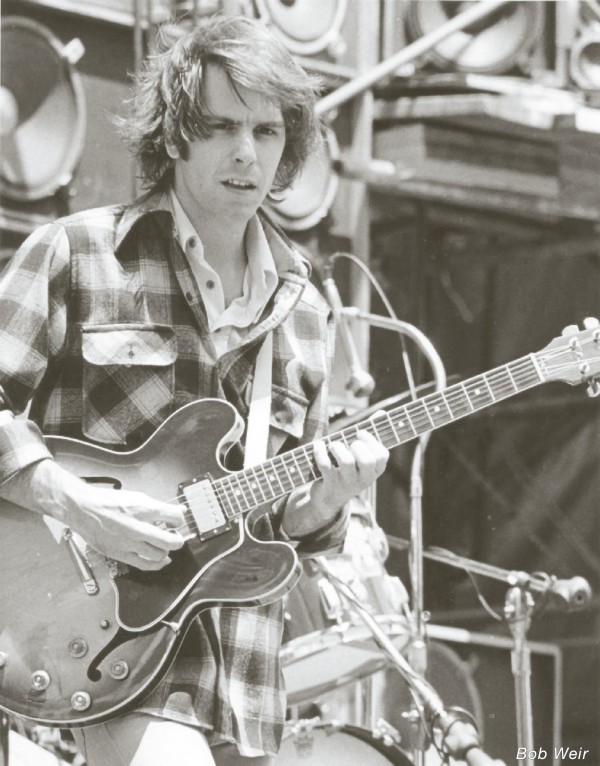
TQR: Bob Weir calls you and asks you to join him for a couple tunes during a Wolf Brothers or Dead and Company gig and he leaves it up to you, what songs do you pick?
Probably "Cumberland Blues" into "Deal" into "Alabama Getaway." And if we're going to do Bob Songs with Wolf Brothers, I'd say "Dark Hollow" into, no, no, "Sugar Magnolia" into "Sunshine Daydream" into "Dark Hollow" into "One More Saturday Night" back into "Sunshine Daydream." Yeah, that's what I'd do.
TQR: You and Billy Strings have shared the stage. What jumps out at you about his playing?
What I love about Billy, and I'd like to see more of this in myself, he is almost all feel. There's a lot of technicality going on there, but he can channel emotion amazingly well. And it's interesting, at this point he has more to say on the acoustic as opposed to the electric because he simply has had so many more years on that instrument, but you can tell that it's there and only a matter of time before that gap closes. The other thing that is very present is that he's a really gifted band leader. He is the captain. That whole band is absolutely dialed into his energy and where it's going, which is a surprisingly difficult thing to do, because when you have a group of talented players at the same level of horsepower, it's tough to get everyone on the same page. It's the same reason that Don was such a great band leader, the machine is so organized, everyone is so intentional and stays in their lane. They all know their roles. There's no mistake as to why regarding their meteoric rise. It's obvious. Any chance I have to share the stage with that guy, I'm in.

TQR: Any Jerry dreams that you're open to sharing?
Yes, well the thing that is always present in the shows that we play is that there is a lot of love for the guy amongst our fans and because of that the spirit that he channels is alive in everyone's soul that loves him. I did have one dream. It was weird. I was driving down this desolate highway in my Ford Ranger and there were all these storms starting to brew. I decided to pull a U-turn and at that moment there's Jerry sitting in the passenger seat with a glass of wine, you know that famous photo where he's holding the glass between his index and ring finger. I look at him, he says nothing, I speak with him, he says nothing, but is just nodding his head. All of a sudden, as I turn from him back to the road it splits into three roads, and they start vertically ascending up into the sky. I try driving up them, but this benevolent slow gravity takes hold like a father figure slowing his son down on a swing. I had nowhere else to go but back into the storm, and Jerry says, "All good things in all good time." I just kept driving and that was it.

TQR: I love it and there's a ton you can read into that one, but we only have so much time. You play a gig, and you know you killed it, everything was spot on, the sounds were inspiring, you go back and listen and it's just OK. Conversely you listen back to a show that was the opposite as to how you felt and it's much better than you remembered. Why do you think that is?
I'm always surprised that when I'm playing high up on the neck and just going for it and it's feeling good, that when I listen back it doesn't sound as good as it did at the time. When I'm not playing as much because I'm nervous or cold, it typically sounds better than I remember. The space always sounds better to me. The most important thing I find is to never take it personally, to never take the highs, the lows and the in-betweens too personally to where they start altering your center and bringing you to a certain polarity. If anything brings you too far away from the middle, you have to take a step back, breathe and observe. Etymology is something I'm really into lately and if you break down the word music, the "ic" means to take shape and "mus" is short for muse, so it's the muse taking shape. If you're a human playing music and you don't like it, who are you to say it's bad? It might feel bad to you on a personal level, but objectively you have little to say about that.
TQR: There could be someone there who needed the music on that night more than you can imagine.

I'll tell ya, we were just playing in Bloomington and there was this young couple there and they came up to us after the show and told us that in the middle of one of our songs called "Side Country" they started crying and there were maybe thirty people there. I have to honor my feelings as to how I'm reacting on stage, but I have to be careful to make sure that's not a definitive position for everyone else. That was such a reaffirmation of that truth. As I get older, I get better at not needing as much external world validation. If it comes from a fan that potentially drove a long way to see us and they're singing along and really into it, I will always take what they say to heart. TQ—Scott Ulrichs
danieldonato.com