
TQR: Hey Ron, are you staying out of trouble over there?
Ahaha. Yes, by keeping busy. I'm finalizing plans to retire from my day job, by the time TQR readers see this, I will be here at RE Pickups full time. It's been crazy trying to balance both my day job and the pickup business over the last few years that's for sure.

TQR: Oh, thank goodness, we thought you were bailing making your pickups altogether when we got a text that said you were quitting the gig. That’s a great move for all of us and you’ll be beyond successful. There are plenty of great players on board with you, that says it all.
Well thanks, running the business with my son Alan and our small five-man team still feels new to us compared to the many years working out of the garage. We have been crazy busy and we're at a point now in the business where we realize that you need to use the sources of the internet and the multimedia channels to reach people on various levels, especially for something so specialized as boutique guitar pickups. Each day we're learning something new about the ever-expanding digital world and moving forward. I've worked for Lawrence Livermore National Laboratories in northern California for over forty years. Most of those years have been at General Atomics here in San Diego working on the National Magnetic Fusion Program. I've worked in mechanical engineering, materials testing and diagnostic design, building diagnostics that views and measures the plasma shapes and temperatures within the reactor. It's been a great career working with brilliant people and I will really miss it, but it's time to retire and focus on the pickup business full time. Our business has grown a lot, we have direct orders and from our dealer base, with which we have great relationships, and with numerous guitar manufacturers including Collings Guitars.

We are slowly expanding our dealers here in the U.S. and internationally. Just recently Watchtower Guitars in New Jersey and 30th St in New York are new dealers for us which we are really excited about. We are looking for the right dealers who are passionate about the products that they carry. We have the pickups available either in stock or within a week delivery, and a good parts inventory in stock, so the days of long delays and backlogged orders at RE Pickups are over.
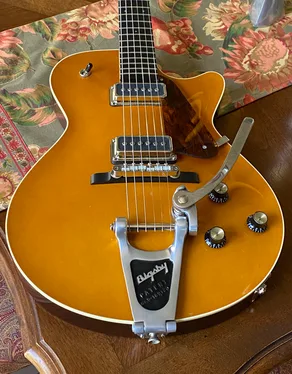
TQR: We have a pair of your LRP buckers that we've put in a few guitars. They were the collaboration with our good friend Lee Roy Parnell, of course. That bridge is so vocal, and the neck has such a big, woody, round, southern rock pickup that is pleasing as can be. Well done. I feel like I really understand this set after a year or so with them burning the midnight oil. There must be so much involved in a process like that.

It is a lot of testing, but so fun being involved with artists and people who really have the passion for these crazy endeavors. The LRPs work great for people looking for that Duane and Dickey kind of theme, and you just described them exactly as what they are, that's what we were after. There are two other models we offer, the Bettes, which are like the Larry Carlton mid to late sixties sound, and another called the Signature Set that sounds a bit more single coilesque, which is like the good old PAFs.

It is always fun trying new things. I'm always looking at the classic sounds of Eddie, Angus, Jimmy, etc., working on recreating those sounds. We know it's all about the player first, it's their hands, but the pickups are the platform which they play from. Over the years I have had the opportunity to work with so many of the top artists and their techs.
I've been recently working with various techs like Alex Alverez from Lenny Kravitz and John Mayer, Trace Foster for AC/DC and Aerosmith, and Rick Wheeler for Larry Carlton, Robben Ford, and Landau. These guys know what's going on behind the scenes, so it's great being able to work closely with them on getting the right pickups in these artist hands.

TQR: How cool is that? One thing founder David Wilson and I always felt after playing all those great actual 1959 Les Paul guitars and listening to some twenty late 1950s PAFs that we had on the table for weeks, putting them in and out of guitars with different amps, is that the toughest thing to even remotely get right in the best modern pickups is the clarity of the neck position. There are some good modern bridges out there, some I really love, but a good neck is rare. It can even be strange to explain what they do to the many people who have never even played one. They were all different, and all over the map, I can vouch for that, too. Some were not happening, but most all of them had a clarity that was shocking. With great PAFs you really need to step up and tote the note. But oh, lawdy, what a note. I appreciate having you out there to reference those points and get the winds where they should be.

Didn't you and David do a test some years back where you took three vintage Les Pauls and put the original PAFs in great versions of custom shop guitars and vice versa, the new pickups in the old guitars?
TQR: We did that numerous times with more than a half dozen excellent modern and vintage Les Pauls. We found that the guitars are responsible for a decent amount of the tone, not just the pickups. You can take a great set of PAFs from a true 1959 and they will sound really wonderful in a custom shop guitar, above and beyond most modern pickups, if not all, but ultimately the PAFs sound even better in the vintage guitars. I bought a set where the neck measured 7.2 and the bridge measured 8.23, out of the twenty that we had been shared that were not in guitars, just floating around for sale. We've done a lot with vintage Centralab Harnesses, too. Mr. Valco has made us a couple that we use, with NOS Sprague Bumblebees, and they are the bar. The tapers are supreme. There is something so reedy, vocal, airy, and woody, with a great neck PAF that is jaw dropping compared to modern. To capture that is a different realm.

I agree, it's so true. A good example of that is my friend Kirk Fletcher, great hands, he can play any style, has toured with Joe Bonamassa and they are good friends. They were at the Gibson Custom Shop years ago and Joe ended up buying or giving a Charlie Daughtry custom shop burst Les Paul to Kirk, and he also gave him a set of vintage PAFs to put in the new guitar. Kirk installed them but didn't care for the PAF neck, so he put in one of my LRP neck pickups that I had done a slight under wind for him, so he ended up with a PAF in the bridge and my LRP in the neck, that same set has been in that guitar ever since. The challenge most of the time is absolutely the neck pickup.

TQR: Charlie is a great guy, lives down the road from us and even once loaned us a 1956 Goldtop for a week, which was amazing. He's a true Texan and can play his tail off. The LRP neck of yours we have measures 6.8 through the jack plate, and it is absolutely one of the best I've ever heard. Do you make a set that you feel really captures the late 50s we write about?
Yes, Charlie is a wonderful guy! With the LRPs we tried to get as close as we could to Duane's Eat a Peach cherry burst vibe in that first proto—Lee Roy Parnell Signature Les Paul. Lee Roy is so in tune with the Allman Brothers sound and has played Duane's guitar many times, so he knows what that guitar actually sounds like. He said when you play it through a smaller combo amp like a Deluxe Reverb, the pickups are so clear and single coil like in sound and feel yet gets that familiar singing harmonic sound when cranked up. This is the sound we worked hard at nailing down for Lee Roy in the 2012 Gibson LRP Goldtop Signature Les Pauls. Our Signature Set is a bit different it's based on an original 1957 Goldtop that was here in my shop, and in IMHO, it was the best sounding Les Paul I have ever heard. The customer left it with me for a month while he was on travel. I was able to test the pickups with my LCR meter, O scope, frequency generator, gauss meter and gather all the details.

I also took the pickups to work and shot some photos of magnets, screws, pole shoes in the spectrometer. Interestingly, on this particular set both the neck and bridge pickups output were higher than what's considered typical, they were up in the 9k range. This means that the wire was on the thinner side. Gibson historically rarely changed from 5000 winds per coil on their P90s and humbuckers, that's what those auto winders were set to, so what varied was the wire diameter, this is what gives you the variance in output measured in DC resistance (ohms). There is a lot more to it than that, but just one of the variables we see in a pickup. So, I spent a considerable amount of time winding up proto pickups with different magnets, screws, wire, wire diameter, coil offsets, base plate materials and aging processes.

The Signature Set I eventually came up with sounded remarkably the same as that set in the '57 Goldtop Les Paul. I compared them in my Gil Yaron '59 LP and Marc Rutters old wood '59 LP swapping out pickups from all three guitars. Some people prefer what they consider THE PAF sound as a more bumped thicker single note mid frequency range sound, whereas others prefer a flatter or even midrange, with clearer single coil like extended low and high frequencies. In my humble opinion, there isn't a definitive PAF sound, they were in fact all over the map in sound and feel, some actually sound pretty dull, fundamental, and downright bad. It's just that they happen to be in sixty-five-year-old guitars that acoustically sound pretty great. This is why we settled on the three different styles and sounding humbuckers, the classic LRP to cover the '57–'60 LP and 335s, Signatures to cover the clear more single coil like PAF sounds, and the Bettes for the mid to late sixties 335s and SG's Patent sound.
TQR: Yes, exactly. And we both know Lee Roy would even sound good with a cheap pawn shop Hondo. A collector friend has a lot of old Telecasters, and the bridge pickups are so fat and warm and round even while having such great top end, and many of our favorite PAFs do the same thing as the vintage Telecaster bridges. I'm always taking the 1964 Deluxe Reverb over there to play his vintage bursts and Teles. Let's get that set of Ellis Signatures over here. Can't wait. Can you tell us about the Telecaster neck pickup Jedd Hughes uses?

Jedd got a hold of me a few years back about getting some pickups for one of his Teles. I know he's an incredible guitar player and has been around plenty of vintage Telecasters, recording with and on tour with many of the greats, including Vince Gill. I set him up with my 50B (Broadcaster) bridge pup and Standard T neck set. He loved it and after using it a few years he feels that the 50B is still his favorite Tele bridge pickup of all time. He has it in a parts Tele he put together with a Bender and seems to prefer that pickup over any other. Jedd always wanted the same type of sound and character of the 50B but in a Tele neck pickup. From what he described he loves a big, authoritative, open neck pickup with hair on it sound. He wanted me to make him a 50B bridge to put in the neck pickup location, but that would obviously take some modifying in the guitar to accommodate it. Instead, I made him a pickup the same size as a normal Tele neck, but with some of the same parts and characteristics of the 50B. We call it the "Killa" because Jedd says that when describing something very cool. I made it with the open top cover to reduce the natural attenuation of the upper mid and top end frequencies you get with a solid cover and allows it to be more open and interesting like the bridge pickup.

TQR: Oh, we've heard it, and have seen Jedd laying it down on a stage live. He plays some really complex chords with it, too, and they sound gorgeous. What is the problem with listeners out there? How is Jedd Hughes not at the top of so many lists of amazing players? What does the neck pickup measure?
The Killa measures around 6k, whereas the Julian Lage JL pickup is down at about 5.7k, which gives even more of the scoop in the mids, like a great Strat neck pickup. Traditionalists want a regular cover on the neck pickup, which we will do on request for the Killa, but it won't sound the same. Jedd is one of my favorite guitar players. I don't think people realize how good he really is. I became a fan of his right when he first hit Nashville, after I saw him out with Emmylou Harris. He opened for Rodney Crowell with Will Kimbrough and they did this cool acoustic Beatles set that was so freakin' awesome. Around the time of his first record, I figured he was the next Vince Gill, because he has the killer voice, can play his ass off, and writes great songs, as well as being such a handsome fellow. But unfortunately, his record company he was signed with folded, and Nashville was changing its focus to more L.A. pop crap. So, Jedd's solo career was put on hold. I've seen him with Rodney and Vince both, Jedd can go toe to toe with any of them.
TQR: We feel his first album was label manicured. It sure didn't sound like Jedd to us. That's what happens. We're glad he's far from that now. Ron, since David passed away, writing this magazine each month, it is our absolute mission to only put in world class artists and builders like both of you. We especially love finding off the radar underground savants and good humans. You guys are already big names out there, but this is why we do this. You won't see a bunch of ads in TQR with a "story" about the same lame gear right next to it. We get to be the only magazine in the world that tells the truth, for all the right reasons, and have a blast celebrating guitars and life. They can keep all their ad money, we're going to happily keep rolling along steady at the helm like we always do, for all the people who really care and get it. Ever see any guitar magazines or websites that don't have ads and aren't here for the money, only the joy? Just one. Nuff' said. These stories need to be told.

Absolutely, and we're honored to be mentioned in TQR! We believe so much in what you, Liz and Scott do and are here for you in any way we can to help to continue spread the word of ToneQuest Report. I would have loved to have met David—in our conversations we had always wanted to get together. We had plans to meet up, I sure wish that could have happened. He was such a wonderful enthusiastic guy and to carry it on the way you do is amazing.
TQR: David was the best. Fun fact about him, for twenty years, whenever he gave me life advice, it was always right. So many good times. And his homemade chocolate cake was legendary, too! On the LRP set we have here, the leads are so long, we can shorten them, correct? I'll admit it, I've been scared to cut them, they sound so good.
Of course! Builders like Collings make guitars for artists, for instance like Doyle Bramhall II, Julian Lage, Charlie Sexton, we leave the leads long, so they can work in whatever application or guitar they may go into. You can cut them down and it won't make any difference sonically at all. Speaking of pickups that you wanted to try, for that hardtail sunburst Strat you've mentioned, we're going to send you a set of our 64S and 50/60S Strat sets. The 50/60S are what I created as a custom calibrated set.

I use different Alnico magnets on the unwound treble strings versus the wound strings, I add winds to the bridge pickup, so they are perfectly balanced from E to E and neck to bridge. That set has the John Mayer's Continuum and Battle Studies sound. That big round note, bold and beautiful Strat sound. You should try the Bill Frisell Humbucker neck pickup as well. I met Bill with Julian Lage a few years back and Bill and I talked about the same things we have discussed, regarding great neck clarity instead of being over wound with too much mid-range which drives the front end of the amp too hard. He said he was always looking for something that was more articulate and spacious and clean on the notes.

It's so fun and rewarding to work with artists like Julian and Bill in developing pickups specifically for their own needs. For instance, when Phil Taylor, David Gilmour's tech and a ToneQuest friend, contacted me after reading one of the TQR issues. He asked if I could make David a custom set of pickups for a Fender Custom Shop baritone Tele they had just received. Phil said the stock pickups were unbalanced and just bad sounding. So, with some notes taken from David and Phil about the sound they were looking for and how each string sounded on the guitar, we made two different proto sets. It worked, they loved the sound of the set and David used that Tele on the album Rattle That Lock. On that tour Phil was so kind to comp me two tickets for the Hollywood Bowl in L.A. The seats were right up front, and the show was unbelievable. I'll never forget that show!

TQR: It's a small world. We love Phil Taylor, that's for sure. We've noticed Gilmour using the same Evidence Audio Lyric HG Cable we feel is the bar, too. They are playing for keeps. What a hoot to talk to you today, Ron, it never gets old. Did you ever dream you'd be making baritone pickups for Gilmour?
Heck no! TQ—Riverhorse
ronellispickups.com