
Tell me the cost
I can pay
Let me go
Tell me love is not lost
Sell everything
Without love day to day
insanity’s king.
—Robert Hunter
Happy New Year, friends. We surely appreciate you all and hope 2026 has already started to envelop your soul with the warm, earthly vibration of 7.83 Hz in addition to those you feed your mind and heart with when that cable hits the amplifier input.


We first plugged into a Komet Constellation sometime in the early 2000s or so, and it was then, along with the early Two Rocks, Trainwrecks, and Alessandros, all of which a buddy owned, that formed some very deep-seated "Holy What!?!" moments as to what an excellent tube amp was capable of doing. It was also around those times that we'd head to the mailbox with heightened anticipation, hoping that ToneQuest Report would be there, which meant on a daily basis, looking for the only piece of mail that we ever really cared about. The same that you may be holding in your hands right now. Always disappointed when it hadn't yet arrived, and equally or more so, once we plowed through it in 30 minutes the day it came, because the waiting period would then start all over. Those 30 minutes were definitely long enough to tip back a nice tequila or cold one or two that David often suggested we have by our sides to accompany the potential for discovery of something new or the unfortunate reality that we'd have to dip into the funds yet again to hear and feel for ourselves what was being profiled.

For this issue, we are so very fortunate to have had the opportunity to interview Mike Kennedy and Holger Notzel, the two who started and remain the sole artificers and heart and soul of Komet Amps. This conversation has been a long time coming for us, and we hope for you, too. Our dialogue began with Mike, once we saw that the Constellation, Holger's venerable creation, would be reprised with a limited release announced in December 2024. There was a period of time between that first email exchange during which we had been speaking quite frequently with Ron Ellis over our admiration and appreciation for Yaron guitars, the right Les Paul bridge, and the correct saddle material, and it was during those conversations that he mentioned his Komet KAC30. We recall the comment was something to the effect, "When you play this amp, you feel like you crawled up into the inside of one of the 12AX7s, and the sound envelopes you as if you were part of the circuit." We couldn't agree more with Ron's sentiment, so when Mike suggested that getting us a KAC30 might just work out a little better so he could make sure to get all of his patiently waiting customers their Connies [Constellations], the pivot took shape. It's safe to say that we've missed playing and hearing the Komet KAC30 every day since we shipped it back with tears in our eyes. Enjoy the Komet story!


TQ: Welcome to TQR, Mike and Holger. Let's start from the beginning. How did you come together, and what are the origins of Komet Amplification?
Mike: Louisiana State University
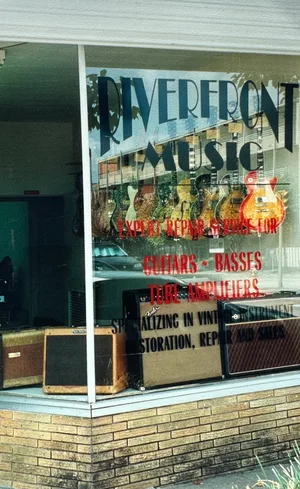
Holger: Right. I came over from Germany in '93. I had already started speaking with Ken Fischer on and off while I was still living in Germany, and of course back then it was like $2.00 per minute for long-distance calls. Those were expensive calls. I was on his waiting list for a Trainwreck, and it was pretty obvious that wasn't ever going to happen, just because his health wasn't good by then and there were like 1,500 people on his waiting list. I was always very intrigued by his amps, although at that point I had not played one. He was doing this thing with Kendrick at the time, the Trainwreck Climax. When that happened, Ken told me that this was the best chance I'd have, and so I ended up with two of them, sight unseen. I wasn't that blown away. They were good and had unique elements, but they weren't aligned with what I had in my head, given the numerous conversations as to what Trainwrecks were supposed to do. That project ultimately didn't work out, so he divorced himself from that situation. It got me started thinking that perhaps I could do a better job in designing something just for myself. Ken sent me some schematics along with what I could see in the Climax and all of the many conversations we had over the years. This was pre-internet, so there were no pictures to look at and I didn't have a computer. It was a shot in the dark, as I didn't really know how a Trainwreck was laid out, but I had a good idea as to what could be happening in there. The prototype came out really great, and I thought it sounded awesome. At that time, Mike and I had just opened up a guitar repair shop in downtown Baton Rouge. It was a small shop, maybe 700 square-feet.

Mike: That may be generous.
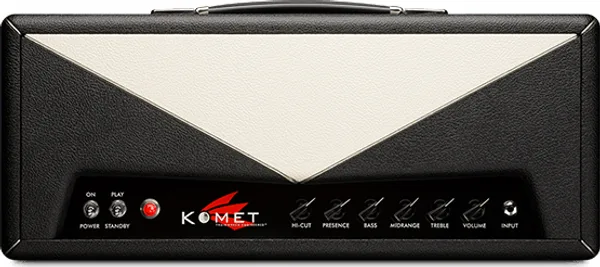
Holger: It was a small, little shop. We had a window up front facing the road, and folks would walk by and peer in. The prototype amp stayed at the shop, and when customers would come in to drop or pick up their guitars, I'd plug them in, and they'd end up wanting to buy it. "Where can I get one of these?" is what we'd hear all the time. I really had no intention of being in the amp business, but it got to the point where I called up Ken and said, "Hey, man. This is what's happening. Do you mind if we build these?" He said, "Well, send it to me and if I like it, we'll talk." So that's what I did. I made a head shell for the amp, as it was just a chassis at the time, sent it, and he actually liked it. He made some very minor tweaks to it, gave it a name, put his Trainwreck sticker on it, sent it back, and said, "Alright, go ahead." It was a total surprise, as we didn't expect that at all. I thought he was going to tell me to go pound sand. He was on board, and that was the Komet 60.
TQ: And you built that from what you saw in the Climax, the schematics he shared, and the knowledge gained from those conversations over the years.
Holger: Exactly. We spent long hours talking about circuits. Back then, Ken lived by the fax machine. It was his primary mode of communication. He would send these little hand-drawn schematics, and it was like a mentorship situation where he'd send me stuff with mistakes in it, just to see if I would catch it, or he would send these little stick figures that would be hanging off the drawings—quirky little things that he did like that, and sometimes he would just send a picture of two tube stages and say, "Try this and see what you think." The other thing that's important to me, as far as amp builders go, is what is it that they hear. Like with a chef, if you can't taste it, you can't cook it. Ken and I liked the same stuff. We were both fans of old AC30s, JTM45s, and old Marshalls in general. Tweed amps. We just heard things in a similar way. By that, I'm not attempting to imply that I had his ability to hear things, as he was on another level. We shared ideas as to how an amp should feel and react to the guitar, volume, player input, etc. If Ken were a metal head or a jazzer, we probably would not have gotten things off the ground. I could rely on the fact that if I liked it, he would likely like it, and vice versa. When I built that amp, I went through many, many tweaks, and Mike and I would be on the phone with him all the time about those slight adjustments. Sometimes we'd have to get him off the phone, because once he got rolling, it was on. It'd be hours.

TQ: I've read that he had a knack for hearing things over the phone. Were you able to ever be in the same room with him in order to dial in an amp together?
Holger: I went to visit him one time, and it was over two days. I was witness to some of what he could do that I almost hesitate to talk about because it can come off as truly unbelievable. For example, he could hear if you swapped the direction of a guitar cable. He'd have his back to you and could tell if you did that. I didn't hear it, but he surely could. The craziest thing that happened, which completely blows my mind, is when we had just finished the head box for what would be the production Komet 60. It had six machine screws that held the back panel of that head box in place. Ken had me swap out tubes, and we were adjusting bias and listening for what each change did. He could hear when the two power tubes were in different sockets. I put the back panel back on and was lazy about it, using only four of the six screws, and he called me out after hearing the difference. He wasn't going by what he saw. "Hey, did you put all of the screws back in the panel?" It was often like that. He had a knack not only for hearing things, but more importantly, knowing what it was that influenced what he heard. Back to your question, I'll give you an example. You have your power supply rail in an amp, and with that your dropping resistor in between each node. You have a 10k resistor that drops down the voltage for the phase inverter and then a 1k resistor that drops down for the next phase. I had been playing around with different values that were different than where we had left off, and I called him and played the amp for him over the phone. He immediately asked me if I changed the value of the dropping resistor. I was like, "How in the F did you hear that?" He was so weird with how he heard things and had strange beliefs about it. Color of wire was another thing.
TQ: It sounds like he had a heightened level of intuition that he developed over time.
Holger: For sure. There were some things he would tell me about the early Trainwreck days before we did anything together. He had one particular friend that he thought was able to sense magnetic fields. You could apparently spin this guy around with a blindfold on and he could always point north when you stopped him. Ken used to have him feel the magnetic fields of transformers and suggest which ones to pick—that kind of stuff. The proof is in the pudding, though. The abilities he had produced some amazing-sounding amps.
TQ: Let's get into the KAC30. I listened to an interview with Ken where he was describing the Trainwreck Rocket as a "High-tweaked AC30." Was the Rocket more of an inspiration for your KAC30, or was it a vintage AC30 that you used to voice the amp?

Holger: Both of them. I'm a huge fan of the Rocket, as it's my favorite of those Ken built, and they are incredibly rare. There's no consensus on how many were built, but my suspicion is that he only made four of them. Maybe five or six, but no more than that. Even if you have the scratch, you just can't find them. When I was up visiting Ken, he had all three models sitting there [Rocket, Express, and Liverpool] in his basement, where his shop was. I played all three and was most impressed by the Rocket. At the time, I was gigging with vintage AC30s and those were my favorites. There is a difference between the two, and when Ken describes the Rocket using the term "high-tweaked version of an AC30," he's not wrong. To my ears, the Rocket is essentially a hi-fi version of an AC30, which can be good or bad. For me, it was almost a little too hi-fi. I remember playing Ken's Rocket, which he named "Reality Check," and while I liked it most among the three, I wasn't initially blown away by it, as it was like playing a really great Martin D-28. Almost too pristine and not rock 'n' roll enough, and I told him that. He changed tubes out until it rocked more, and we got closer with just that change alone. That was my only experience with a Rocket in a room, but it left an indelible mark. About a year after that visit, he was kind enough to send me some pictures of what the inside of the Rocket looked like. This is still pre-internet. He also ended up sending me a pair of transformers and encouraged me to build one. I did and, I still have it and play it all the time. I use it as a yardstick because it sounds like Ken's did. I believe it was 2001 when I built that amp. Having said that, I would say that I love old AC30s more, in that they're less refined and maybe have a little bit more of a weird character. Ken tried to get the Rocket to not ghost note, and he was successful, but I happen to like when amps do a bit of that loose, slightly out sound that old amps do. I also kinda like single-coils that hum. [Laughs.] So, it's both. Mike is a huge Beatles fan and has old AC30s, one of which is an exceptional example. That whole project was somewhat Mike's baby, and we voiced the KAC30 with his AC30s and my Rocket build. Maybe not quite as hi-fi as the Rocket, but more so than vintage AC30s.
TQ: We made the mistake of playing a '56 Junior through a 1964 Top Boost Fawn Tolexed AC30 head and 2x12 cabinet with the original Celestion Vox-labeled silver bells back in 2007 at Emerald City Guitars. That combination turned up loud set the standard for the sound of rawk, as the kerrang left an impression that lives 'til this day. We didn't pull the trigger on the amp, but that's one that we wish we had. Luckily, we ended up with the guitar. To our ears, the KAC30 excels in that zone where it's set pretty loud, giving up the harmonic richness, guitar full up, with unbelievably beautiful and lush cleans when the volume is slightly rolled back.
Holger: Yes, and that was really the idea with that amp. Vintage AC30s are all a little bit different. They were made in two or three separate factories, and each used their own suppliers, so they'd have different caps and resistors, even in the same year. Add to that, they used a different wax in the transformers. They are a unique animal. Some are gain-y as hell while others are chimey and clear. That was one of the philosophies that Ken always had about repairing and even modding amps. His position was that you had to listen to what the amp wanted to be and then just help it along, rather than trying to make it something it's not. The Rocket leans more toward the chime with clarity end of the spectrum. He perfected that direction. Sometimes little flaws in a design can be good, as it can add character, like a mole, which can make someone more beautiful because it's what makes them unique. I find with modern amps that are trying to replicate the old ones, they're often too good, just too far away from what made the original so cool.
TQ: Mike suggested that we connect with Gene at Ultra Sound Amp Sales, and we did have a nice conversation. He mentioned that he thought the toggle switch for boost would be a nice addition, as the Rocket does not have one.
Holger: Correct. It does not. Nor did it have the three-way Bright switch.

Mike: The boost is a separator to give you two distinct channels, with the lower setting being more closely aligned to the normal channel you'd have on an AC30, and in the up position more like the gained-up top boost.
Holger: The name is more descriptive than technical, as it doesn't switch between a normal and top boost circuit, it simply simulates the difference in sound.
Mike: It's just a little resistor network that loads to ground.
TQ: The KAC30 is offered exclusively through Gene at Ultra Sound?
Holger: Correct. That's his baby.
Mike: He commissioned it and asked that we build it exclusively for his company.
TQ: Interestingly, Ken preferred solid-core wire with PVC insulation versus braided wire and cloth insulation, as we see in so many small-production amps. Was that decision based upon how it sounded to him?
Holger: I think there are two reasons why he liked solid-core. One, it stays put, and that's critical in the higher-gain Trainwrecks like the Liverpool and Express. You can move a wire a quarter-inch, and the amp can become unstable. Those circuits are designed to sound best right on the edge of stability, and it doesn't take much to push over that fine line. If you look at Trainwrecks, there is consistency to how he'd have wires cross each other. They make little arches, and that's easier to get right with solid-core. Secondly, he thought it sounded a little different. He liked a very specific brand of wire and a specific type of insulation. There's irradiated and non-irradiated PVC, and he preferred the non-irradiated, which is a pain in the ass to work with because as soon as you heat the wire, it shrinks back. So, you only have a short window to solder, and if you get it wrong, it looks horrible. When I built the first Komet, I wanted Teflon, as it's just easier to work with and it doesn't deteriorate like PVC does.
Mike: Or cloth.
Holger: Or cloth. I've been repairing old amps for a long time and have seen what happens when PVC becomes old and brittle. It just cracks and falls off. I wanted silver-plated Teflon wire, and I like stranded because it's not as brittle. If you bend solid core too much, it breaks. The original Trainwrecks also used very thin metal chassis. They're flimsy. He had to use dowels for support in the head cabs. He did that all for tonal reasons, as he liked the sound of those thinner chassis. This is no slight to Ken at all, but those Trainwrecks are not the most roadworthy. I wanted a thicker chassis and stranded wire—bulletproof, basically. When he first heard our prototype with the Teflon wire, he was bitchin' a little bit about it being brighter than the wire he used, so he made a few little tweaks to compensate for that, but we rolled with it and have used that combination ever since.
Mike: Keep in mind that Ken was using parts from brands that were no longer available. Much of it was obsolete then, so he was working with original leftover parts from the '60s and '70s, and I think that was a huge part of the magic. That old adage that they don't make things like they used to is very true.
Holger: Ken was a Groove Tubes dealer during a time when Groove Tubes still sold American tubes. That was in the '80s. The Groove Tubes' 6V6 was a Philips. They had the Mullard-made G.E. EL34s with the Groove Tubes label. That was his main reason for not really wanting to build more Rockets, as he was emphatic that the circuit was designed specifically around Vox Blues from 1963. Certain tubes and transformers and that, because they didn't really exist anymore, he didn't want to make them. That held true for all of the Trainwrecks.
Mike: Even with the vintage Voxes, there were three manufacturers of the output transformers, power transformers, and chokes. The Haddons, Wodens, and Albions, and those have three distinctive sounds. We never really found out which Ken preferred.


TQ: The iron is huge in the KAC30, and we imagine the transformers play a significant role in keeping the amp tight, punchy, and clear at volume with an insane amount of sustain and harmonic richness. Is there anything in particular in your custom-built transformers that differentiates them from others?
Holger: They tend to be overrated in their power specifications. Ken almost always doubled the requirement because he wanted them run cool and not strain. If he needed 6 amps of heater current, he would spec the transformer at 10 amps at least. Same with the rectifier tubes. If a GZ34 draws 2 amps, he spec'd it for 4 amps. We apply the same philosophy. I can gig my Komet outside in 100-degree Louisiana heat for four straight hours, touch the transformers and they're just warm, not anywhere close to hot. If you do that with an old Bassman, you'd burn your hand. On the output transformer side, that's a very hi-fi, very complicated transformer to make. The lamination material and core material are also typically used in hi-fi transformers.
TQ: Is that output transformer pretty close to what you used in your Rocket build?
Holger: Yes, very much so.
TQ: We noticed in your supporting documentation that you sent, there's obviously a ton of thought that goes into choosing the components:
- NKK switches (made in Japan)
- F&T filter capacitors (made in Germany)
- Sprague TVA series cathode capacitors (made in the U.S.A.)
- CDE "orange drop" polyester-film coupling capacitors (identical to the 1980s Mallory PVC polyester film capacitor specifications)
- N.O.S. Xicon coupling capacitors/circuit selection
- N.O.S. Cornell Dubilier silver mica capacitors
- N.O.S. Xicon carbon film 1-watt board resistors
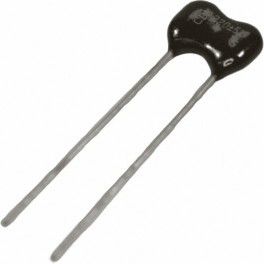
Mike: If I can find the supply, I try to install as much old, vintage stuff as I can, as it absolutely translates in the sound. There's no doubt about it.
TQ: How much time and exploration went into choosing the right brand and sizes of the components in order to optimally voice the amp?
Holger: A lot! That's what Mike does. Even different types of film capacitors placed strategically in the circuit have a large impact on the sound and feel. The caps Ken used in the Rocket are part of the reason that amp sounds so hi-fi. It's what we tried to dial out a bit, as we wanted to make sure it had some of the rawness and color of the old AC30.
Mike: Using certain caps and resistors for tone shaping is a challenge. You just have to go a different route often times, compared to what Ken used. The F&Ts are excellent but different. What he used is no longer around.
TQ: Is the 1/8"-thick laser-cut, aircraft-grade chassis contributing to the sound? We've not seen one that thick on any other amp.

Holger: Yes. There absolutely is. Ken was particular that he liked aluminum chassis. Steel interacts with the magnetic field of the transformer. Aluminum does not, and if you remember in the '80s, when Vintage Guitar Magazine was big, Ken had a monthly column. I wish someone would archive all of those articles, as it was really good stuff, often with his humor. He'd talk about how early Marshall JTM45s that had aluminum chassis always sounded better than the later ones with steel.
Mike: And some of the reasoning around our 1/8"-thick aluminum is that it acts as a fantastic heat sink, as well.
Holger: True, and from a manufacturing perspective, we get them laser cut, and it's not an issue. If you're building from scratch and doing your own welding and drilling, it's a far easier material with which to work, for sure.
Mike: We have those made for us right here in Louisiana, by the way.
TQ: They're beautiful. Let's talk speakers. We threw a number of cabinets and speakers at the KAC30, and while it stayed extremely musical with everything we tried, it really shined with the 30-watt Weber ceramic Bluedogs in a 2x12, both an EV12L and Fane Crescendo AE in an oversized Tonetubby 1x12 Pine cab and the Fane A60 in a Bartel 1x12.
Holger: I also love it with the EV and speakers, and I tend to lean more in favor British speakers for just about everything.
Mike: The EV is a great reference speaker.


Holger: I play a lot of vintage amps, as I really enjoy that, and I have Celestions in some of my old Fenders, and they do something really cool. Lately, as in the last two years or so, I've discovered the old EV SRO Alnicos, and I kinda wish I hadn't, because once you get used to those, all of a sudden the Celestions sound weird. [Laughs.] The SRO is a neutral speaker that just sounds so good. It doesn't have any annoying frequencies. It doesn't bark, no mid humps, just an ideal speaker to really let the amp shine. The big downside is that they don't make them anymore and there are no recone kits for them, either. The originals, if you can find 'em, are stupid expensive, and they weigh 500 pounds. You put two in a 2x12 and it's over. You can't lift it. If you ever get to try that speaker with this amp, it's a trick, a really great match.
TQ: We'll be on the lookout. EL84s often carry a prejudice for a tube that is all chime and pigeonholed into the sound of an AC30 only, but at Komet it appears that you use that power tube across your line more than any other power tube. The Constellation [commonly referred to as the "Connie"], which you first built in 2002, was discontinued for many years. What was the impetus to bring it back with an announced run in late 2024?
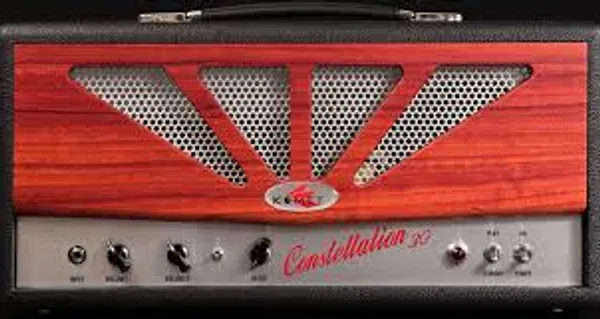
Holger: Because people keep bugging us about it. [Laughs.] I was done with it, but we get so many requests, and the original ones are starting to get expensive and hard to find. We run a business and have bills to pay, so if there's a chance for us to sell 30 amps, we'll listen to the market.
Mike: I was adamant that if we brought it back, this run would be built with the same quality, components and attention to detail as the originals. The front padauk panels are made in Denmark by our friend, Peter, and they're laser cut. There's a video on our Facebook page. We cut no corners, as that's been our ethos over the last 26 years here.
Holger: I was a little more hesitant than Mike because it's my amp, the Hogy signature amp, if you will. And I was happy with the fact that it's not a common amp. I have one and that's good enough for me. [Laughs.] Just too many people wanted it.
TQ: How would you differentiate the KAC30 from the Connie?
Holger: I grew up in Germany, and my SRV—my guitar idol—was Rory Gallagher. His playing was etched into my brain during my formative years and defined for me what a Stratocaster was supposed to sound like. It's all I ever played. I was completely influenced by his tones, and when he played live it was always an AC30 and a tweed amp. Often a tweed Twin and sometimes a tweed Bassman. They were rigged in somewhat of a strange way. He'd plug into the Bassman and go out from the second input into a Rangemaster, and that would feed the normal input of the AC30. What you hear is the combination of an American and British sound with the addition of the upper midrange thing that only a Rangemaster gives you. That was the idea behind the Constellation, as I wanted to design an amp that got the vibe of two amps running in tandem. It's still my favorite way to play, two dissimilar amps. To me that's the ultimate. In my mind, every single amp can be beat by adding another to it. The Connie is EL84-based because it's my favorite power tube. It gets a bad rap sometimes for absolutely no reason. People listen with their eyes a lot, and since it's a small, skinny tube, it's gotta be a small skinny sound, right?

Mike: How many times have we gotten calls from customers saying, "How do make an amp with EL84s that sound like EL34s?"
Holger: Yeah, right. All the time. It's because it's not a skinny-sounding tube. The British hi-fi and German hi-fi companies all used EL84s.
Mike: And in America, too. My '56 Fisher has EL84s.
Holger: As does my favorite Eico stereo. None of these sound small, and they all have plenty of bottom end. It's really a complete misconception and to some degree the way the internet works. Someone goes on the Gearpage and says, "I don't like EL84s. They're bright and thin," and people glom on and repeat it, and it's just not true. I can make an EL84 amp sound as big as anything. You can make a bass amp with EL84s that will blow your pant legs back.
TQ: The same thing happens with a bias that 6L6s are just big, clean Fender-sound tubes, and that notion was turned on its head for us the first time we plugged into some of the early Bill Krinard-built Two Rocks, which would crunch up and rock like most wouldn't believe.
Mike: I think they were using NOS Philips 6L6s back then, which have a unique and really great sound.
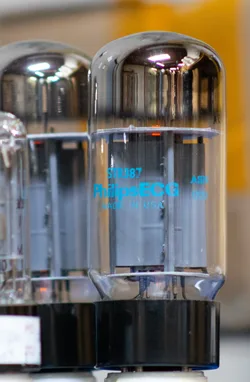
TQ: With your Aero 33, Komet 29, Komet 19, KAC30, and Constellation, the EL84-based amps, they all seem to share the Komet DNA, which is that they are at their best when you plug your guitar straight in, crank 'em up to their sweet spot, and use the controls on your guitar and your hands to milk the sound and feel that you desire—clean to mean, with harmonic bloom across the range.
Holger: Without a doubt. It's in my DNA as a guitar player. And back to the beginning of this conversation where I mentioned that a chef can't cook what they can't taste, I'm the same way. Don't ask me to make a drop-D chunk chunk metal amp. I don't play that way, and because of that, I don't have it in me. I'm looking for a touch-sensitive amp, one that I can control with my fingertips and that's what Ken liked, too. That philosophy is shared across the entire Trainwreck and Komet heritage thing. The amps want to live on the edge of distortion where, when you listen back to it, you don't necessarily know if you're listening to a distorted or clean amp. It's both at the same time, and I want the amp to transition in and out of that space without interruption. We don't want a jump from clean to overdriven, in favor of it being a seamless dance back and forth—completely gradual and shades of the same color, and that's something EL84s do really well, particularly when they don't have global negative feedback attached to them. That's what all of those amps have in common. We're limited in that way, I guess, but it's our core philosophy.
Mike: We've always leaned philosophically towards less is more.
Holger: And I agree with you, Scott, that these very simple, short signal path amplifiers always sound best when the pickup is directly connected to the input grid of the tube. Anything in the way takes away from that immediacy. Even the best-sounding pedals will still introduce some compromise to the dynamic range.
TQ: And it's such an easy amp to dial in. With just four knobs and two toggles, you can find your zone with any guitar right out of the gate. I would often find myself with everything right around noon with the boost off, Hi-Cut right around 1 pm.
Holger: That's a thing that Ken would always insist upon, and that was a good amp should sound right with everything set in the middle. If an amp requires extreme settings—and not to say that you can't get good sounds with extreme settings—but if required, that's not right.
TQ: Can you pull two of the power tubes for less wattage?
Holger: No. These amps are cathode-biased and share a cathode resistor. Some of our models have two cathode resistors, and in those cases, you can pull two of the tubes. If they share a cathode resistor like in an AC30 and you pull two tubes, the bias is cut in half on the other tubes, and they'll glow and fail.
Mike: I thought about putting a switch in there to possibly have that ability but decided that it was just too much to design in and didn't really add anything.
Holger: I've always considered the full- and half-power switch on amps as the good/bad switch. One sounds good and the other doesn't. If you're dropping the power by half, you're only giving up 3 decibels, which isn't that much, and now you have a transformer mismatch. You go through all of the work to carefully tune that transformer curve along with the tubes' operating curve to where they interact in the proper way, where the transformer starts to roll off unwanted frequencies. If you pull two tubes, you now have an impedance mismatch, which kinda defeats the purpose. What's the point, really? If you need less power, get a smaller amp or put an attenuator on it. All of our amps have two outputs for speaker cabinets, and one thing you can do if you have a resistive attenuator like an Airbrake, is to hook the attenuator off the second output of the amp. You don't have to hook it up to a speaker cabinet, rather just a parallel load to your speaker, which cuts the power in half without the impedance mismatch.
TQ: I've never used an Airbrake, but our friend Stephen just lent us his two-channel Fryette Power Station, which worked really well with the KAC30.

Holger: There's no shame at all in using an attenuator. I have a home rig that uses an attenuator that I play every night for hours. It's fine. Attenuators are good. There's nothing wrong with them. You lose some of the sonic impact, as the guitar won't interact the same way as when you have more sound pressure coming from the speaker, which agitates the strings and enhances the interaction. There's always going to be a perceived loss of something when you can't turn up to get the guitar and amp working together, but if you play at home, you don't always have that luxury. You'll kill your hearing in the process if you're playing a 30-watt amp for four hours set where it wants to be.
TQ: What's your favorite amp to gig live now?
Holger: Oh, man, don't ask me. That's embarrassing because they're not often Komets. [Laughs.] and it's a different amp every gig. I'm an amp collector, and I play 'em. In my own personal musical life, I play basic old-school blues, and I like the sounds that were originally used to record that music. Of the Komets, I play the Constellation fairly often, and more so lately. Other than that, it's old tweeds, old Gibsons, and AC30s still. Every now and again, I'll bring the old Marshalls out, especially with outdoor gigs. I like my Twin. I have an old black-panel with JBLs. I play everything. The variety is what makes it interesting for me. On the flip side, I have a little video camera that I setup for every gig, just so I can go home and listen back, in order to learn something. I probably have over 1,000 hours of gig footage. Every now and again, I sit down and go through them, and inevitably at the end of the listening session, I'll conclude that I sound exactly the same through all of these amps. [Laughs.] It's all completely bullshit because we sound like ourselves, no matter what we play through.
TQ: We've drawn the same conclusion. Lots of overlap, no doubt.
Holger: If you listen to recordings without the visual and just listen to the tone, I'd venture to say that more than half the time I would not know what amp I'm playing through. I can tell you whether it's a tweed Deluxe or a Twin, obviously, but whether it's a particularly good-sounding Deluxe Reverb or the Vibrolux Reverb, 6V6s vs 6L6s, 1x12 vs 2x10...most of the time. I would not be able to differentiate those.
TQ: The head shell appears to be covered in a tweed cloth-style covering. Chris Benson says he hates covering amps and cabs in Tolex and prefers fabric. Is that what you're using?
Mike: That's actually carbon-fiber tweed Tolex, as I was corrected by the manufacturer, so it's actually Tolex that mimics tweed, not like the reissue cloth type. It's hard to tell from a distance.

TQ: The way fabric is often lacquered, it can appear to have a certain sheen, so we just assumed it was lacquered or sealed fabric of sorts. It's a cool look.
Mike: And it's durable. We offer custom Tolex colors so that customers can choose what they want.
Holger: To your original question around head covers, with Ken and his position that everything mattered, we would often discuss this topic. When you look at an amp chassis, it's like a microphone. If you tap on it, you can hear it. The tubes are always going to have some degree of microphonic capacity—they'll always pick up some sound, as will the components. If you tap on coupling caps or grid wire, you'll hear that, too. It will come through, so to that degree the chassis is a microphone. The way it's mounted and to what it's mounted does make a difference. Ken really did believe that a Trainwreck in a cherrywood cabinet sounded different than one in a maple cabinet. It's one of those things where if you took the chassis out of the cabinet and put it on your bench to work on something, it will sound different when back in the cabinet, no doubt about it. And we're talking head box. Benson is right about that. In a perfect world we'd love to use hardwood head boxes, but it's cost prohibitive, and they'd get pretty trashed on the road. We want these amps to be used and not sit as furniture. Van Halen figured out that when you strip the Tolex off a Marshall head box, it will sound better.
Mike: [Laughing.] I'm not stripping my Marshalls.
Holger: And I'm not stripping my tweed amps, either, but man, as an aside, I'm a tweed Bassman fanatic and I finally found a 1960 that had been completely stripped and lacquered—no tweed on it—and it's the best-sounding one I ever had. I spent five years looking for an original cabinet for it and finally found a mint, all-original tweed Bassman cabinet at the Dallas Guitar Show from the same month as my amp. I was happy as a clam, put the amp in the cabinet, and it didn't sound half as good as before. Completely ruined the amp. I put it back in its ugly wood box. I don't know if it was the fabric or the wood. If you tap on them, they all have a different resonant frequency. No two pieces of wood sound the same.
Mike: Ken would say that each amp had a personality.
Holger: And he'd audition different head boxes to make sure the chassis was best aligned with each box.
Mike: And one thing about him that I don't often read when folks discuss him is that he had the most brilliant sense of humor. Incredible.
Holger: He was a funny dude.
TQ: Is Komet Amplification just the two of you doing all of the builds?
Holger: It's just Mike.
Mike: Yup, I do it all.
Holger: I have not built a production Komet in years. I do most of the prototyping and layout. Once it's done, I'm finished with it.
TQ: Anything new in the hopper?
Holger: There are a few things I'm working on right now. I used to hate reverb, but all of a sudden, I want to do a reverb amp. That might be next. With my personal evolution as a guitar player, which perhaps is because I'm getting older, I'm trying to get the volume down somewhat. I still like loud guitars—don't get me wrong—but I'm currently playing in a duo, just two guitars, and I take a little Ampeg Reverberocket 1x12. I'm enjoying that lack of sound pressure. The next amp may be a low-power Komet, and I'm talking 5 to 10 watts. It might even, God forbid, have a master volume. I'm not sure yet. [Laughs.]
TQ: That's pretty divergent from what you've done. I imagine if you do a small amp, it will maintain that same Komet touch sensitivity DNA.
Holger: Absolutely, and that would be the only point in doing it. Ideally, it will be like that Ampeg 1x12. It's about the perfect volume for those smaller gigs. I'm hoping to find something that's a little different from the other low-wattage options that are out there right now.
TQ: We look forward to hearing it, and we'd love to get closer to your Ambikab, as we've always been intrigued by that design.
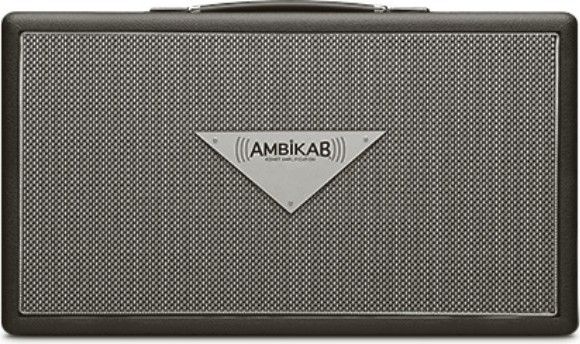
Holger: That cabinet flies way below most people's radar. It's a really amazing piece of equipment.
TQ: Sweet! Well, let's stay in touch on that... and until next time. TQ—Scott Ulrichs
kometamps.com
IG: kometamps