
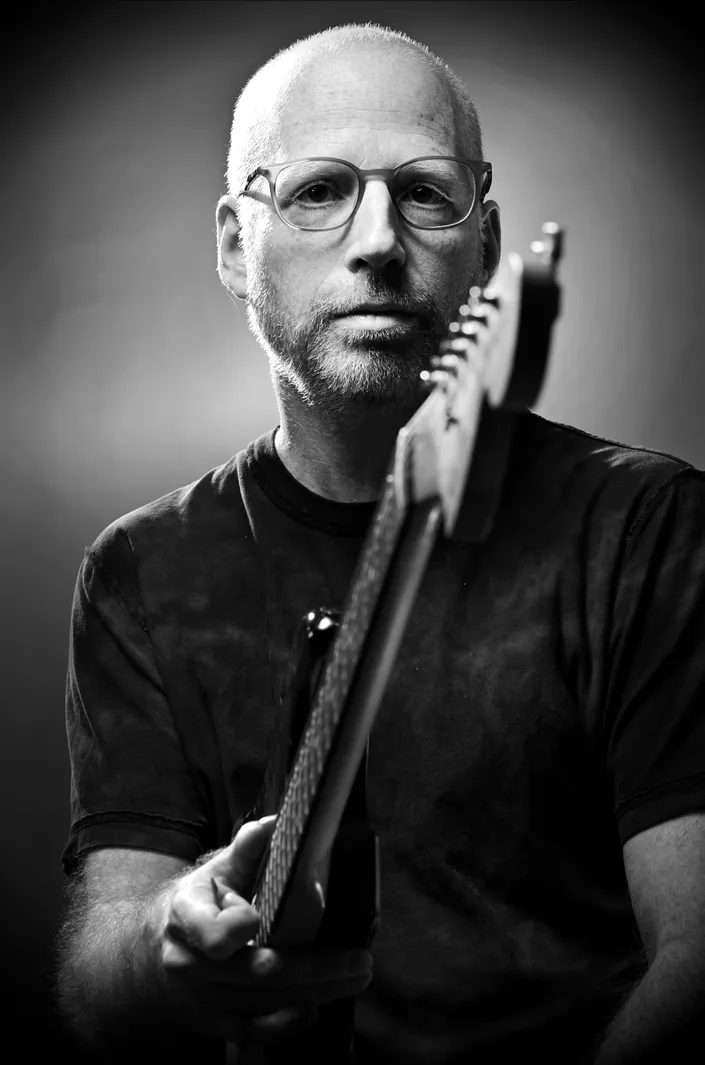
Oz Noy is one of those rare modern guitarists whose work dissolves boundaries rather than crosses them. His playing lives in the space between structure and spontaneity—where the harmonic language of jazz, the rhythmic design of groove, and the visceral punch of rock converge. Since his 2004 debut, he has released 14 solo albums, each reflecting a deeper evolution in phrasing, touch, and the lifelong pursuit of tone.
Our long-time friend Jay Jay French brought us the idea of chronicling Oz's remarkable journey—an artist defined as much by mastery and depth as by humility. What follows is a true musician-to-musician exchange: an exploration of tone, time, and the enduring artistry that continues to shape a life in music.
I met Oz Noy through a mutual friend about 15 years ago. He took me down to The Bitter End one night to see Oz play with the Oz Noy Trio. That first night, I left convinced I had just seen one of, if not the, greatest jazz-fusion guitarists in the world. His technical mastery was astonishing to witness. His phrasing and the transcendent blend of jazz styling with searing electric rock guitar tonality within a single composition make a strong case that Oz has truly moved the needle in what can be expressed through modern electric jazz-fusion music.
His band features an ever-changing lineup of world-class drummers and bass players. I've seen Anton Fig, Shawn Pelton, Dave Weckl, Keith Carlock, Dennis Chambers and guest guitarists such as Joe Bonamassa and Matt Schofield, Will Lee, James Genus, and Jimmy Haslip on bass. Oz regularly jams with Warren Haynes and Eric Johnson, as well—all world-class players.
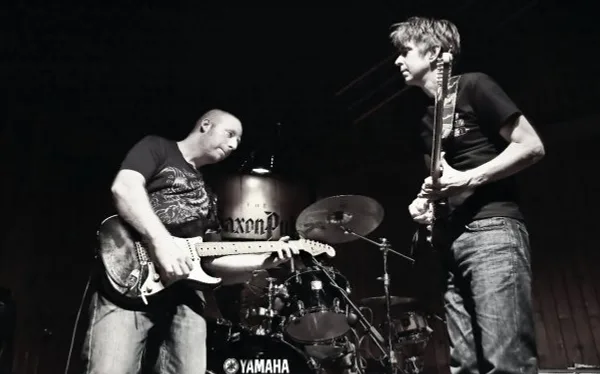
He has also backed Gavin DeGraw, Clay Aiken, Roger Glover, Idina Menzel, Allen Toussaint, Harry Belafonte, and Christopher Cross, to name a few.
"Oz is very special and unique, with a fresh take, both sonically and style-wise. Plus, I love him as a person. He's a fresh voice in all this modern guitar madness... Go see him ASAP!" —Steve Lukather
"There's not a guitarist in the world who isn't both inspired or equally confused by Oz's approach to the instrument. He has such depth of knowledge and a unique approach to applying said knowledge that it leaves players like me scratching our heads in disbelief. The result is guitar playing that is instantly identifiable and unquestionably original—something we all aspire to." —Joe Bonamassa
Join me for our conversation. Meet Oz Noy.
Jay Jay: We've been friends for a very long time, and I'm a big admirer of yours. I had you on my podcast, and we talked about the past a bit. Tell me how it all started, how you developed your style. How old were you? What was your first guitar? Give me some background.
Oz: I started playing in Israel when I was 10. What first drew me to music was The Beatles. I used to listen to Israeli pop on the radio all the time, and I still love it. When I heard The Beatles, I was like, "Oh wow, that's kind of cool." Originally, I wanted to play drums, and my mom was already looking for a teacher. Then a friend from school, who was taking guitar lessons, said, "Come with me." I went, but it didn't feel like anything special at first. I learned a few chords and simple melodies, but I wasn't really into it until my brother and his friend started a band. My brother began playing bass, and when they came over playing Beatles and Israeli songs, that's when I got hooked.
Jay Jay: What was your first guitar?
Oz: Some terrible classical guitar made by some Israeli maker. It was awful, and I still have it. The neck is very wide and flat, totally unplayable. Every time I go home and pick it up, I can't believe I was able to play chords on it when I was 10, it was insane.
Jay Jay: All right, when did it evolve past that?
Oz: A year later, a friend of my brother started bringing jazz records to our house, and I began listening to jazz. I don't know why; it was Chick Corea, John McLaughlin, Al Di Meola, things like that. My brother was playing bass, and we were both getting more into playing. I went to a teacher to study jazz, and he started teaching me jazz chords like minor 7s and 9s. That's when I really started to get into it. I got into improvised virtuoso music. I remember the first time I saw McLaughlin: It blew my mind.
Jay Jay: Wait, were you taking any theory at this point, or just learning by ear?
Oz: It was all by listening at first. Then I started to read a little music, but I didn't know much theory, very little. I listened to records and tried to copy what I heard but couldn't quite do it. Later, I went to my brother's bass teacher, who also taught guitar, and he introduced me to more chords, modes, and scales. That's when I started to get more familiar with everything. I was 12 then.
Jay Jay: The Beatles songs were pretty sophisticated—those chords and arrangements. Were you aware of that at the time?
Oz: Not at all. I didn't know anything about it. It just hit me emotionally. I liked the songs, and it still hits me the same way.
Jay Jay: What about other rock music? Were you listening to anything else then?
Oz: A little. I listened to what was popular—some Zeppelin, a bit of Deep Purple. My brother's friends were into jazz, so suddenly I had Steely Dan's Gaucho. I was about 12 when I first heard it, around 1984, when the whole hair-band thing was happening here. I was familiar with that stuff, too—Van Halen, the heavier bands. I knew your band a little, and I got into Steve Vai, Joe Satriani, Paul Gilbert, and Greg Howe. That was life-changing. By then I was 15 or 16. Guitar Player magazine was huge then, and I first heard Robben Ford on one of those little plastic records they used to include in the magazines.
Jay Jay: Oh, those came with the magazine.
Oz: Yeah, exactly. Same thing with Joe Satriani and Greg Howe. That's how I first got to know those players. I tried playing heavy metal—I didn't necessarily like the music, but I loved the guitar playing. At the same time, I was also trying to play jazz, so I had this split personality. I studied with another teacher, who was a Berklee graduate, and he started showing me more advanced modes and scales. Not super advanced, but enough to open the door. I wanted to play like the fusion guys, and around that time I discovered Pat Metheny, Scott Henderson, John Scofield, and Allan Holdsworth.
Jay Jay: So, you're hearing it, connecting with it—that moment when you realize, I want to do that. I remember hearing Mike Bloomfield for the first time and thinking exactly that.
Oz: Same here. I was about 15 when Pat Metheny came to Israel with his group. I saw that show and knew immediately I wanted to play like that. That was it—I decided school was over. I thought, that's what I want to play. That's how I want to be.
Jay Jay: So, tell me, what guitar did you get next? What did you do?
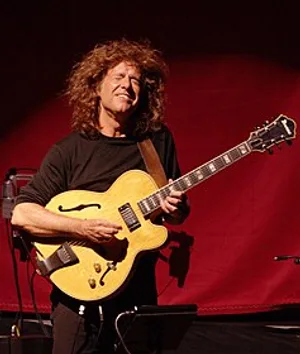
Oz: At the time, my first electric guitar was a Les Paul copy that completely fell apart. I'd been gigging since I was really young—by 13 I was already playing shows and one night it fell off the stand and broke into pieces. It was a Seville, a cheap Les Paul knockoff. After that, my dad bought me an Ibanez Roadstar, which I used for a while.
Jay Jay: That's a real guitar.
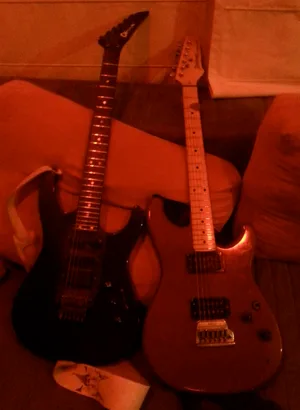
Oz: Yeah, not bad at all. One of my childhood friends still has that guitar. My first real professional instrument, though, was a Charvel because it had humbuckers.
Jay Jay: Right—the kind of guitar a lot of those guys were playing. Did it have two single-coils and a humbucker?
Oz: No, it had two humbuckers, and like an idiot, I took them out and replaced them with a set of EMGs, a humbucker and a single-coil.
Jay Jay: Let's stop there. That's where the crazy shit begins with guitar players. This was your first attempt to change your tone, right? You went to EMGs—interesting choice.
Oz: Yeah, that was the first time.
Jay Jay: I had a gold-top Les Paul and wanted to turn it into a sunburst. I ruined it when I put in humbuckers.
Oz: Mine had two singles and a humbucker, but I don't remember why I did it. Maybe because a good friend of mine was really into sound, and he told me, "Yeah, put those pickups in."
Jay Jay: What amp were you using then?
Oz: I didn't have any legit amps yet.
Jay Jay: But you were reading interviews with all these players, right?
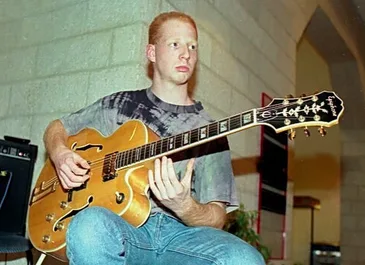
Oz: Yeah, but at that age, gear didn't really register yet. I started getting into gear when I was about 18. I had that Charvel, and then an Epiphone L5 copy because I was playing jazz at the same time. I was studying bebop with a jazz teacher, playing a big-ass L5-style guitar, and I was playing like Wes Montgomery.
Jay Jay: So, you were living in two different worlds.
Oz: All the time.
Jay Jay: So, Metheny was a guitar hero. What about Clapton and Hendrix?
Oz: Hendrix came later for me. Clapton was more of a pop star at the time, and there were a lot of pop songs. Back then, I was more into the heavy rock guys. That's where my focus was.
Jay Jay: Ever go through a blues phase?
Oz: Later, yes. Stevie Ray Vaughan was the one who really did it for me. His tone blew my mind, but also the whole thing—the music, the grooves—the whole thing.
Jay Jay: Stevie was a great player, and he had great vibrato. What about guys like Leslie West or Johnny Winter?
Oz: I didn't know Leslie West back then. Johnny Winter I knew a little, but he didn't really register until later. Even now, he's not a huge influence, though I like his playing. It started with Stevie Ray Vaughan, then Hendrix, and from there I got into older Clapton and the classic blues players—B.B. King, Albert King, Freddie King—and then Jimi.
Jay Jay: What was your take on Hendrix when you first heard him? I remember buying that album [Are You Experienced?] in '67, and I had never heard anything like it.
Oz: That wasn't my reaction.
Jay Jay: What were you hearing?
Oz: You have to understand, when I started getting into blues, I had already been deeply influenced by Pat Metheny, John Scofield, Allan Holdsworth, and Scott Henderson. Those guys had incredibly defined guitar tones—everything in tune, precise, and controlled. Then I heard Hendrix, and it sounded like garbage cans. The tones were amazing, but the quality of the recordings, not always in tune, sometimes quirky. It took me a while to get past that and finally listen beyond the sound and think, wow, this is amazing.
Jay Jay: The luxury was having a lot of friends who played instruments, and you could play all the time, right?
Oz: Yeah, I was lucky. I had been performing live and doing sessions since I was 13, and my first recording sessions were around 15. I've been doing it ever since. I played mostly with older musicians who would call me to sit in or join their bands, so I was always surrounded by good players.
Jay Jay: Do you remember your first paying club gig?
Oz: Not exactly. When I was 13, I had a kids' band with some friends, and we played original music. There was a musical director writing the songs for us, and we actually performed regularly at army bases in Israel. That was a great experience: suddenly you're playing for real audiences. My first recording was on a 4-track, maybe a Tascam or Fostex, at someone's house. I must've been 13 or 14. I remember playing a solo on it—I can still recall the solo—and that was my first real recording. After that, I started meeting older musicians who were already doing professional gigs. When I was 16, I started playing with a well-known Israeli artist. That was my first professional gig. I don't remember my first club gig specifically, but I did a lot of them. There were tons of small jazz gigs at the time, and I played as many as I could.
Jay Jay: There's absolutely no substitute for getting out there and playing. When young kids come to me and want to show how they play guitar, I ask, "Are you playing with anybody?" And they'll say, "No, there's no one to play with. I just sit in front of YouTube." I tell them, "You can get good that way, but until you play with other people and understand dynamics, you can't really advance."
Oz: I tell everyone that all the time.
Jay Jay: So, you were playing regularly. You basically said, "Screw school, this is going to be my future."
Oz: Pretty much.
Jay Jay: Take me up to when you were around 20 years old.
Oz: Between 16 and 20, after I stopped going to school, I was practicing constantly. I took private lessons and played a lot of gigs.
Jay Jay: Were you studying theory at that point?
Oz: Yes, I was learning bebop and jazz theory. At one point, I even tried studying classical guitar, but I wasn't very good at it. Still, I was practicing non-stop. I had a bunch of talented friends, and we played together all the time at people's houses, coffee shops, wherever we could. It was non-stop.
Jay Jay: What was your next guitar?
Oz: I still had the Charvel, but I started to get drawn to the Fender tone. I listened to Greg Howe's first album; he had this super Strat with a humbucker and two single-coils, and that was my next guitar.
Jay Jay: Was it an actual Strat, or one of those super Strat copies?
Oz: It was a real Strat. Fender made it with a humbucker and two singles. I used that guitar for a while, and it was a pretty decent guitar. I got another Strat like it with a maple neck, another humbucker, and two singles with a forward switch. That was a thing back then. When I got into Stevie Ray Vaughan, I started chasing that sound, and then I discovered Eric Johnson and Jeff Beck. The Fender sounds started getting stuck in my head. And then I bought an American Standard Strat with Lace Sensors, and that was my first guitar with that real, classic Fender tone.
Jay Jay: How hard was it to buy gear in Israel, to experiment and get what you needed?
Oz: It wasn't easy, but I managed to find most of what I needed.
Jay Jay: What gauges and brands of strings were you using back then?
Oz: Either D'Addario or Ernie Ball. I probably used .009s for a while, then switched to .010s. The biggest change came when I was playing all those super Strats and then moved to a guitar with Lace Sensors. When I got more heavily into Stevie Ray Vaughan, I bought a '62 reissue Strat that was yellow.
Jay Jay: In Israel?
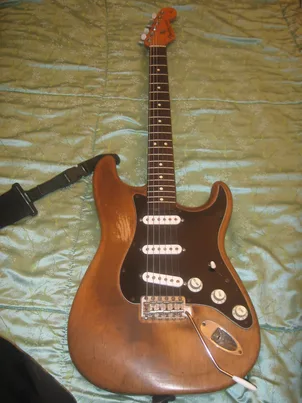
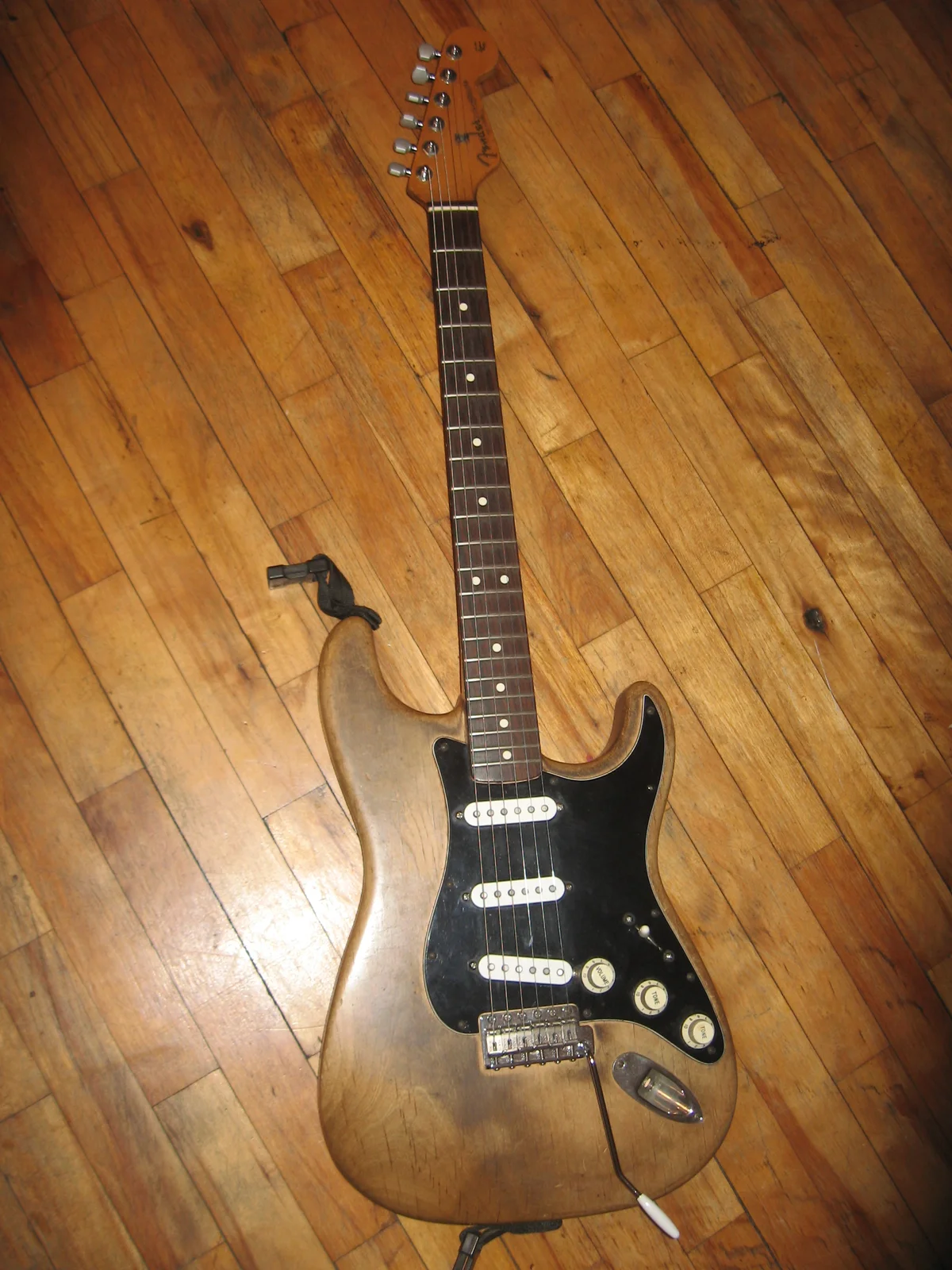
Oz: Yeah, it was a yellow guitar. My dad and I stripped the paint off, so it became a natural wood finish. That's the guitar on my first two solo albums. It had Lace Sensors on it, which I loved—two golds and a blue—and it was the most balanced set I've ever had, even to this day. I used that guitar from age 18 through my first 10 years in New York.
Jay Jay: Did you do any modifications—fret changes, tuning keys, anything like that?
Oz: I shouldn't have, but I put on Sperzel tuning pegs. It wasn't necessary.
Jay Jay: It's funny, we all do that—Grovers, Sperzels, Schallers, whatever.
Oz: I also put heavy frets on the guitar because of Stevie Ray Vaughan, and that was it. At the time, I was still using .010s. I started using .011s later.
Jay Jay: So, you wanted higher frets, to dig into the neck more?
Oz: I thought it would give me a fatter tone. Honestly, I didn't know what I was doing. People told me, "Stevie Ray Vaughan uses big frets," and I said, "All right, put your biggest frets in—maybe it'll change something."
Jay Jay: Did you have a lot of guitar player friends following the same trail you were on?
Oz: Not a lot, but a few. There was one guy who really influenced me: Ronnie Peterson. He's from New York, one of the best freaking blues-rock guitar players I've ever known. He's originally from Florida, and his brother, Ray Peterson, is a great bass player who's worked with a lot of people. Ronnie and Ray came to Israel to do a record with a big Israeli artist, and Ronnie ended up staying. He could really play—blues, slide, rock—all at a very high level. He was best friends with Mike Stern and Hiram Bullock. He was the real deal and the one guy who got me into all this stuff. I used to go see him play with a Strat, getting that Stevie Ray Vaughan kind of sound.
Jay Jay: At what point did you start wondering what a Les Paul or a Gibson would sound like? What would humbuckers do for your tone?
Oz: I was never into that.
Jay Jay: And none of your heroes were playing them anyway, right?
Oz: Exactly. At that point it was Clapton, Stevie Ray Vaughan, Jeff Beck, Eric Johnson—all Strat guys.
Jay Jay: They'd all switched over. They were all playing Strats then.
Oz: Yeah, and the guys I admired from the jazz world—Holdsworth, Pat Metheny, John Scofield, Mike Stern, Scott Henderson—they were all playing humbucker guitars. But that was just one part of my life. The other part I was doing regular jazz gigs, straight-ahead jazz, playing standards with a jazz hollowbody guitar. I was doing Wes Montgomery tunes and classic jazz for years. Basically, since I was 14, I never stopped. I always played clean, a jazz hollowbody through a clean amp. I had that Epiphone, and when I was 17, I got a Gibson ES-175. That was the only Gibson I ever owned.
Jay Jay: Gibson 175... interesting. At what point in your playing did you start thinking, wow, I really do have a good feel? You started to realize you really had those chops, because when I watch you play, I'm astonished by it. And I know that in a guitarist's development, there are breakthrough periods, real moments where everything clicks. Did you ever stop and think about that?
Oz: No, but there were a few things that made a big difference. For about two or three years, I was a Wes Montgomery clone. I could put on a Wes record and play the whole thing by heart, with my thumb, exactly like him. That went on for a while, and at the same time, I was trying to shred like Steve Vai. I just stopped doing that and got more into Jim Hall. He was the guy who really opened up the jazz guitar world after Wes Montgomery. I started playing with a pick again, and that's when I began thinking about not using the typical jazz tone, because I never liked that hollowbody jazz sound.
Jay Jay: It was dark, right?
Oz: Yeah, dark and not very responsive. I always liked how a Fender reacts better. Before I moved to New York, I started doing a trio gig in Israel at a bar. I'd been playing tons of jazz gigs, but the calls started slowing down, so I went to this guy who ran the bar and said, "Hey, man, can I come play blues here?" I went in with a couple of friends, and we played blues instrumentally. That was the beginning of something new. After a while, I got bored and started bringing in R&B tunes, like Stevie Wonder and James Brown, and I'd play blues over those grooves. Then one day I thought, What would happen if I played my jazz vocabulary over those grooves? And that's the thing that really opened up my musical world.
Jay Jay: And how old were you?
Oz: Around 22. That was right before I moved to New York at 24.
Jay Jay: Were you starting to be recognized at that point?
Oz: Yeah. Since I was 15, I'd always done jazz gigs, but I was also playing pop music with famous Israeli artists. I did recordings, played on some big records, and toured with major acts. That's how I made my money. Then I got a gig as part of the house band on a major TV show for two years. People started recognizing me on the street because I was on TV all the time. The funny thing is, we'd play the show's theme, and at the outro, I always had a solo. I'd wait all night just for that moment at the end to hear my solo.
Jay Jay: Any amplifier choices yet?
Oz: Marshall. It was easier to get access to. When I was 16, I had a Charvel and a few of those super Strats running through an A/DA preamp with a Peavey stereo power amp, speakers, and an Alesis Quad Reverb, all stereo gear. That went on for a couple of years until I moved to a Marshall 900, the only thing you could really get then. It was a 100-watt head with a single 4×12 cab that I used to haul around in my dad's car.
Jay Jay: We all used to do that.
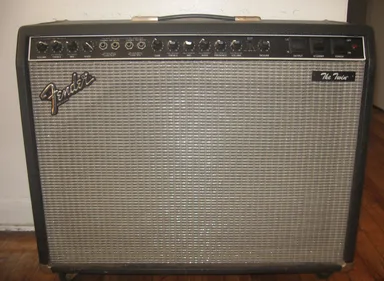
Oz: I toured with a lot of artists, and that's what I played. I ended up selling my A/DA and all that gear. The amp that came closest to what I wanted was a Twin Reverb. It was hard to find them in Israel, but I managed to get one. Remember the ones with red knobs? Mine had black knobs, same thing, just black. It was the last model they made of that amp, and it was a pretty decent one.
Jay Jay: Were you using outboard gear or pedals at that point?
Oz: Yeah, mostly Ibanez and Boss, a Tube Screamer, nothing special. I had a TS9, which was awful, and a RAT pedal. I also had a wah, probably a Cry Baby, whatever was around. No Morleys in Israel then. I remember having an Ibanez delay pedal my uncle brought from Japan, maybe a Boss, too, but definitely the Tube Screamer and the RAT.
Jay Jay: Here's what kills me, you were playing a Marshall 900 into a 4×12. How loud were you overdriving that?
Oz: No, I actually kept it clean, but I was playing big places. The artists I worked with were famous singers in Israel, and we played a lot of outdoor shows. So, you could crank it up. I think I was getting an okay tone; I was definitely pushing it.
Jay Jay: So, you land here. What happens next?
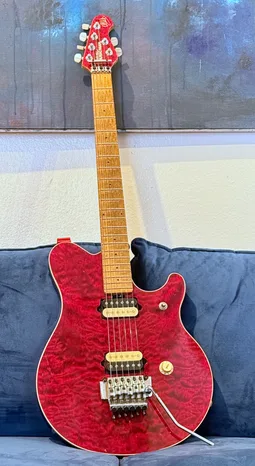
Oz: I moved to New York in 1996 with my '62 reissue Strat, which still had the Lace Sensor pickups on it. That guitar's gone now, but I still have a picture of it. Before that, back in Israel, I'd bought a Van Halen Music Man, the original one, and that's the only guitar I still have from those days, amazing guitar! When I moved, I brought the Van Halen, the Strat, and my ES-175, a '76 or '79, along with a few pedals. I don't remember exactly which ones, maybe the Ibanez delay and a Tube Screamer.
Jay Jay: And then you set up shop in New York City.
Oz: Yeah. I came with my gear, maybe brought it over in a few trips. A friend of a friend sold me a silverface '70s Deluxe amp with an EV speaker. It was heavy as hell.
Jay Jay: Very heavy, those magnets on the EVs were huge.
Oz: Yeah, they were. I think later I took the EV out and swapped it for something lighter. Then I bought a Twin Reverb reissue here. Those were my two amps, a smaller one and a bigger one.
Jay Jay: You bought that on 48th Street? What was your view of 48th Street when you got down there? You'd heard about it?
Oz: When I finally went down there, I thought it was great. What blew me away the most was visiting [Roger] Sadowsky's shop. He was building basses and guitars, and I had him set up my Strat. That was such a big deal for me.
Jay Jay: Was Norio the guy at the time?
Oz: I don't know if he was there or not.
Jay Jay: Because they were known for their fretwork.
Oz: Exactly. That was the big deal. I went to Rudy's, Sam Ash, Manny's, all of them. But yeah, I was broke. I didn't have any money to go around buying stuff.
Jay Jay: When did you start experimenting with pickups once you got to New York?
Oz: Not for a long time. I didn't have money to mess around. The first real gear move I made—actually, it was probably the most important one I've ever made—was when I started playing with Gavin DeGraw. Gavin was just starting out, and nobody knew who he was. We played every Monday for two years at a club called Wilson's, on 79th Street in Manhattan. I didn't have an acoustic guitar, so I took my ES-175 to Rudy's and traded it for a jumbo Guild that I still have. It's a great guitar.
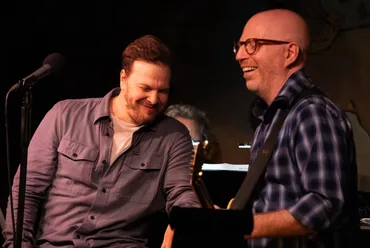
First of all, I needed a good acoustic for the gigs with Gavin because we used to do duos all the time. But it also meant I didn't have a jazz hollow-body anymore, meaning I was playing jazz, blues, rock and everything on a Strat. That was the most important great move I've done since moving to NYC.
Jay Jay: Did you ever see yourself as a rock star? Did you have that mentality?
Oz: No, I'm a jazz musician. I don't have that mentality.
Jay Jay: I'm serious...
Oz: No, no, no. After that, when I started making a little money, I maxed out my credit cards. Back then, you could kind of get away with it. I started buying pedals—compressors, delays, this and that. That's how I got into pedals. I realized, "Okay, you've got to get a sound."
Jay Jay: Rudy's used to sell a ton of crazy pedals too.
Oz: I don't think I bought much from Rudy's. I got stuff from 30th Street Guitars and, later, online when that first started. I remember ordering a bunch of stuff that way.
Jay Jay: So, you're playing in New York now, doing the Gavin gig?
Oz: I did the Gavin gig later. What happened is I came here, and about a year in, I met this guy named Frank Canino—a bass player who'd been working in New York for a long time. Really good bass player. He liked my playing and had a gig at La Barbat, so he called me to sit in. I went and played with his band, and the guy booking the club liked my playing. He said, "Let me give you a gig here," which was outrageous. Once a month, I got to play at La Barbat, and that's where he introduced me to [drummer] Anton Fig. It was the first time I played with a class-A player, and that helped put my name a little out there, because suddenly I was playing with a known guy. Around that time, I started going to jam sessions at The Bitter End, and eventually I asked the owners, "Hey, can I play here with my trio?"
Jay Jay: That was when Kenny Gorka was still alive.
Oz: Yeah. Kenny let me start playing at The Bitter End. I'd play there once a month and at La Barbat once a month, all instrumental, no singers. That's how things started rolling for me.
Jay Jay: When did you start using pedals extensively?
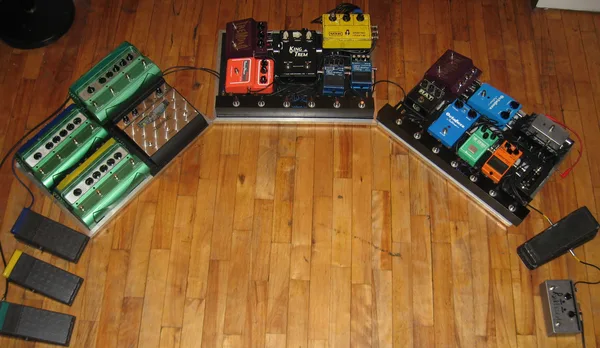
Oz: Pretty much as soon as I had my own band and was playing clubs in New York City. I've got a good pedal story for you. Around that time, Line 6 came out with the POD, and that changed everything. Suddenly, you could walk in with this little box and plug straight in. I really didn't have my game with my studio stuff yet. I had one or two amps, but with the POD, I could just plug in direct and get a sound right away. About the same time, Line 6 released the green delay pedal. That was a game changer because it had a looper, a reverse delay, and all these weird analog-style sounds I could never get before, all in one pedal. I started using it right away, and it made a big difference. At one point, that pedal broke, so I had to send it back to Line 6 to get fixed. I was friends with Jeff Golub, the guitar player, and he let me borrow his Line 6 delay while mine was being repaired. When mine came back, I asked him if I could hang on to his for a while, and that's when I started using two delays together. I could feed the reverse delay into another delay and get this psychedelic sound I'd never had before. Using two of those Line 6 pedals changed everything for me because suddenly I could create all this textural, weird sound.
Jay Jay: Since your quest for tone is so connected to your style, what are the most important amps and pedals in your arsenal?
Oz: For an amp, it's simple, I need a clean amp with headroom that when you crack it, it's on the verge of breaking up but doesn't. I just need that compression. Two Rock is the best amp platform for pedals I know! I also love Marshalls, but you need to play them loud. Old Fenders are amazing but don't always react great to pedals. They can break too early.
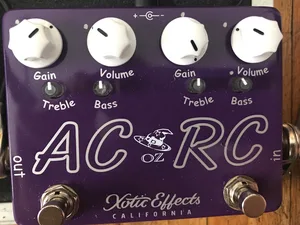
For pedals, the most important pedal for me is my Xotic signature "AC/RC/OZ" pedal. They made a limited run of those about maybe eight years ago, it's basically the RC booster into the AC booster. I used to use these pedals separately and then Xotic made them in one box with an extra gain to the RC channel. It actually sounds better that way—I don't know why. But it does!
The other gain pedal I use is an Ibanez TS 808—can't live without it. I have an old one that sounds godly, but I don't take it on the road, I had Mike at Analog Man do the brown mode on my newer TS808's. They sound very good. My other must-have gain pedal is my Vemuram signature Oz Fuzz.
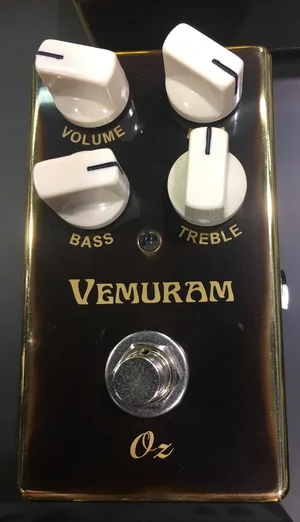
They made a limited run of those about eight years ago, as well. It's what I called a friendly fuzz. It's basically one of the versions of the Shanks fuzz, but with more gain. I can do a whole gig using just that pedal—it's a great pedal. Then there are other pedals that I use a lot, like the DLS Leslie pedals (Roto Sim & Roto Spin), and of course my Line 6 HX Effects. With the Line 6, I do all my pyrotechnics—looping, weird delays and tremolos, ring mod-style sounds etc. But at the end of the day, if you just give me any overdrive and delay pedal, I can do a gig.
Jay Jay: When you hear guys like The Edge, do you appreciate what he does with texture?
Oz: Yeah, I love it. It's brilliant. At the height of my pedalboard craze, I had three Line 6 pedals—one as a looper and two for different delays. That setup really changed everything because I could do so much more soundscaping and all.
Jay Jay: But did it really matter what amp you were using at that point?
Oz: It mattered. I was using new Fender Twin Reverbs. I needed clean headroom. The music I was writing then was for my first album, and those sounds were already a little weirder than a regular guitar tone. I was always focused on getting a good tone, but I had limited money to buy better gear. I couldn't just sell my Twin Reverb and get something new, so whatever I had, I had to use.
Jay Jay: Who were your inspirations? You mentioned Satriani and Vai. Did you look at those guys and think, that's what I want to do, or were you already comfortable enough in what you were doing that you just said, I'm going to be myself?
Oz: I always liked the rock guys for their technique and their flashy shit. I didn't necessarily love the music, but I respected their playing. I liked the jazz guys for the music and the musicality, but I didn't really like their tone as much. So, it was kind of strange—I was always more drawn to the modern jazz players that had a great guitar tone more than the rock guys, you know what I mean?
Jay Jay: Which makes sense because your leads are full of jazz riffs.
Oz: Yeah, exactly.
Jay Jay: Take me to when we started hanging out and working with Ira—our mutual friend and your tone and guitar setup confidant. My memory of you is as this obsessive tone guy. What are you chasing? You're such a chaser. When I told you that ToneQuest wanted to talk about your tone, you shrugged it off. I said, You're the most tone-chasing guy I've ever met in my life. You've gone through so much gear. You can hear differences between 0.1 and 0.2 volts on a pickup.
Oz: I can.
Jay Jay: Does that drive you nuts?
Oz: Not as bad as some people I know.
Jay Jay: Okay, I'm not calling you bad. [Laughs.]
Oz: No, no, no. But I can be very meticulous if I want to. What really changed things was when I sold my reissue Twin and started getting into vintage amps. That changed everything. I remember buying a Fender Bandmaster and having my guy, Ziv Nagari, who really knew how to work on amps, tweak them for me—and suddenly it started to sound like Stevie Ray Vaughan or Hendrix. It makes a huge difference when you have your old amp tweaked the right way.
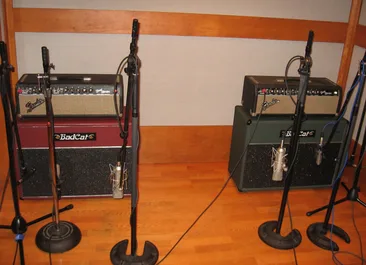
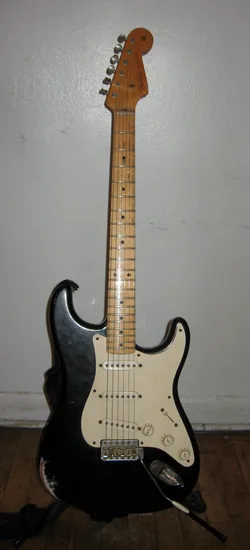
Then I got a 100-watt Marshall from 30th Street Guitars—a '73—and my friend worked on it. It sounded fantastic. Suddenly I was playing both Marshall and Fender amps, and I could finally get closer to those sounds on the records. Around that time, I swapped my Strat for a better one, a '57 Custom Shop. It just kept getting closer and closer to the goal, to sound like Stevie Ray Vaughan, Jeff Beck, Eric Johnson, and Hendrix. Those were the guys—the tone guys. To me, the jazz players were always more about musicality than tone.
Jay Jay: Musicality.
Oz: So, I was always chasing that kind of sound.
Jay Jay: So now it's around 2000.
Oz: Right. I recorded my first live album in 2002, and the first studio album in 2004. Looking back, I wish I could re-record some of it because I don't love the guitar tones. The guitar wasn't great, and the amps weren't great, but the music came through fine.
Jay Jay: What was your next move, guitar-wise—what took you up to the next level?
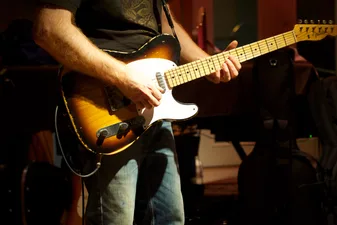
Oz: I kept trying to get as close as I could to a vintage Strat. I got a Telecaster, too, and started getting into that sound.
Jay Jay: I remember when we went to my friend's loft—the one with all the best versions of the most sought-after and collectible guitars one could only wish they could play—and he let you play every one of them. You could really hear the difference, right?
Oz: Yeah, none of the guitars I've owned sound anything like those. Even the ones I have now sound really good, but it's still not that, not like real old vintage guitars.
Jay Jay: What do you think makes them different?
Oz: Wood! It's the depth, mostly the depth and size of the sound that you can't get from newer instruments.
Jay Jay: I mean, wood is wood, and technically the electronics today are better than what they had back then—all resistors and capacitors.
Oz: True, but those guitars probably just had a tone.
Jay Jay: They did. You'll come over to my place, pick up a guitar, and go, "Wow, this is amazing." And I'll tell you, "It's only amazing because you don't own it right now." [Laughs.] But you get inspired instantly, right? You hear it. What's going on in your head at that moment? What are you listening for?
Oz: The main thing you hear is depth of the tone. Then there's the EQ—the color of the sound, like what the pickups bring to it. You can get a Custom Shop or a Masterbuilt guitar that gets the color of the sound pretty close, but it still doesn't have that same depth and size you get from an old guitar.
Jay Jay: That's amazing that you can hear that. I remember when I went to the Gibson factory—you were looking for a particular output level on a humbucker. They let me into a room with thousands of pickups. I found a box with the exact output you wanted, told them it was for you, and they gave it to me. You can hear voltage differences.
Oz: Well, you hear it because it's louder. But for me, one of the biggest things I've always done with Strats—and I don't know if it's different from other players, but it's huge for me—is I play a lot on the neck pickup. On a Strat, the neck pickup can sound pretty thin.
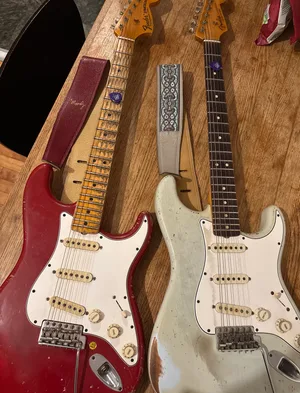
Jay Jay: Right, single-coil.
Oz: Exactly. And usually, when you play a Strat, switching from neck to middle to bridge, the bridge pickup can sound like the soul just collapsed. It's thin, no tone, very low output. When I was 18 and got my brown Strat, I had Lace Sensors in it—two golds for the neck and middle, and a blue on the bridge that was hotter. That way, the guitar was balanced across all positions. I've done that ever since. Every Strat I've owned, I overwound the bridge pickup. Maybe it makes it sound a little less "Strat-y," but the tone doesn't drop out—it stays fat and big. And when you hit it with overdrive, it can really sing. That's something I've always done. I'm very sensitive to the pickup balance in a guitar. If the neck sounds great but the bridge is too low or too hot, it just doesn't work for me.
Jay Jay: What about split coils—have you ever used them?
Oz: I never use them. Whatever flexibility split coils offer, I don't really care.
Jay Jay: Is there a brand of pickup that feels most suited to you? Not necessarily the best overall, but the one that works for you.
Oz: I've mostly used Fender and Gibson pickups. I've got a Les Paul, and for my Strats and Teles, it was Fender pickups all the way up until a few months ago. Bonamassa sent me a set of Seymour Duncans modeled after his green Strat—I know exactly what they are—and they're the best Strat pickups I've ever played. I've got those in my main John Cruz Masterbuilt Strat now.
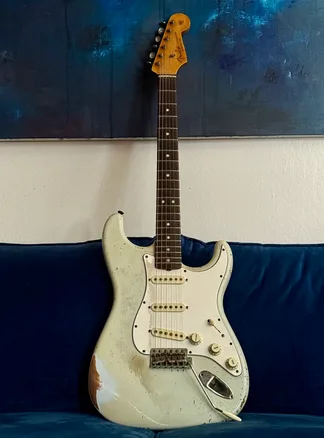
Jay Jay: Other than that, you stuck with stock pickups?
Oz: Yeah, but good stock stuff—Custom Shop and Masterbuilt. Back in the '80s, I changed a lot of pickups on my super Strats, but once I started playing vintage-style Fenders and Gibsons, I hardly ever changed pickups.
Jay Jay: I've always wondered about the cost difference in making pickups. When I was with Epiphone, I told them I wanted Seymours or DiMarzios—a specific DiMarzio model. They said, "When we get stuff from Korea, it costs $2 a pickup. DiMarzio will cost us $20 wholesale." And I thought, what really makes the difference? Is it the winding or the quality of the wire?
Oz: I think it's the winding—and the magnets, probably. I went from Lace Sensors to DiMarzios, the Quiet DiMarzio single-coils.
Jay Jay: Oh, those are potted, right? That's why they're quiet.
Oz: No, they're not potted. They're humbuckers, but single tones—just noiseless pickups that DiMarzio made. I tried a bunch of other noiseless pickups, but once I went back to regular Strat pickups with the buzz, everything opened up. It was like, Okay, this is the sound.
Jay Jay: The fidelity increased. The dynamic range.
Oz: Exactly. Before that, everything was compressed and just didn't sound right, but it was quiet.
Jay Jay: Did you ever use Samarium pickups?
Oz: No. That was a big deal at the time. When I got my first Custom Shop Strat, it had regular pickups, and I thought, Oh god, that's the sound. The only thing I've always had to do on my Strats, even now, is send them to either Lindy Fralin or Fender to have the bridge pickup overwound.
Jay Jay: Wow.
Oz: Now, with the Seymour Duncan set, it's amazing. I told them, "I love the set, but can you make me a bridge around 7.25?" and they said, "No problem." They made it for me, and it's perfect.
Jay Jay: So, you'll tell them how you want it to be?
Oz: Yeah, and they make it. It's perfect.
Jay Jay: Has your string gauge changed over the years?
Oz: Yeah. I don't remember when, but I started using .011s at some point, and I still use them today.
Jay Jay: .011 to .052?
Oz: Usually not. Normally it's .011 to .048, sometimes .011 to .049. For a long time—and I still do it—I'll go .011 to .049 with a .012 on top. That's kind of my thing.
Jay Jay: What brand of strings?
Oz: D'Addario—always. Since I moved to New York, I've been using D'Addario. They've got a great feel, solid dynamic range, and I really like the sound.
Jay Jay: And they're consistent. Amplifier-wise, now we're back to tone chasing—and that's important.
Oz: The next evolution in changing my tone came when I was introduced to Two-Rock. That completely changed the game for me. Before that, I was playing Bandmasters with 2x12 cabinets, decent sound, and a '73 Marshall with a 4x12 that sounded incredible. I shouldn't have sold that one; it was legit.
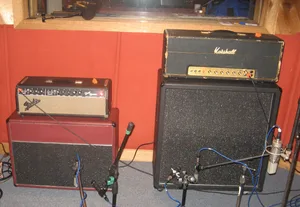
When Two-Rock came along, they were just getting started. I tried a bunch of their amps and thought, okay, this is really good, but not quite there yet. Then they built me a model called the Gain Master with a 2x12 cabinet. I used that for a long time and really liked it.
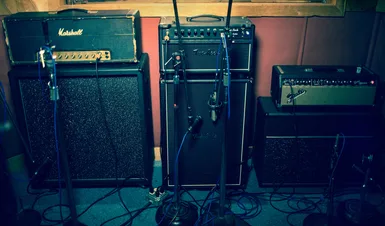
But here's where the tone chasing got whack. I went to their headquarters, and Bill Krinard, the guy designing and building the amps, showed me some of his handmade builds. He had made amps for Santana and Robben Ford, and he was doing copies of Stevie Ray Vaughan's Dumbles. It was the first time I'd heard Dumble-style amps that sounded legit. I plugged into those handmade amps and thought, this is what I want. That's the sound. While I was using the Gain Master, I'd send it back to Bill from time to time, and he'd keep improving it, putting in old transformers and swapping vintage parts, always chasing that perfect tone. It really did get better. It was a great amp, and I used it for a long time, but I always kept a Marshall, too. My live and recording rigs were always either a Two-Rock or a Marshall.
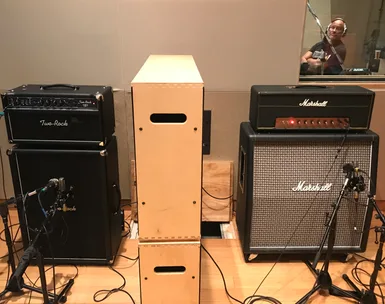
The Marshalls were always 50 watts. Later, I picked up a few other amps: a Deluxe blackface, a Princeton blackface, and a Victoria Bassman-style amp I really liked. I even had a Suhr for a bit. But live, it was always either a Two-Rock or a Marshall, and that's what I recorded with, too. I never got into MESA/Boogies or that whole MESA/VHT craze that was happening back then. At one point, Two-Rock got bought out and started going downhill. It looked like they might stop making amps. I still had my Two-Rock, my Marshall, and a Super Reverb that I recorded with. Then my good friend Eli Lester bought the company and started building them again like the ones Bill Krinard had shown me, handmade with new old-stock parts. That was a big game changer. The new Two-Rocks are unbelievable.
Jay Jay: So, what is it about Dumbles that makes them so special?
Oz: I didn't actually play a real Dumble until much later, but there's just something about the way they respond. It's like taking a Fender amp and magnifying everything. They're powerful, but every note still has color and dimension. With Fender amps, when you play up high, the sound can get thin—but on a Dumble, it doesn't. It holds on, and the color stays.
Jay Jay: And that's what no one else can seem to replicate. Everyone raves about Dumbles.
Oz: Yeah, it's the same thing with Marshalls—you can make a Marshall sound amazing, but when you go high, it can get brittle. The mids and lows are great, but the highs can fall apart. With Dumble-style amps, it's like the tone stays whole from low to high. He also built every amp differently. Each one had its own thing going on. I've played a few—maybe three—and two were amazing. One was okay. They're all unique.
Jay Jay: So, they're like a technicolor version of a Fender—super technicolor?
Oz: Not to me. They don't really sound like a Fender. They sound like a Dumble. But the idea, I think, was to amplify all the best qualities of a Fender circuit.
Jay Jay: What about Vox amps?
Oz: I love Voxes. They're amazing. I had a really old one that was unbelievable, but they're too finicky for New York—not realistic to gig with. I ended up selling it because I couldn't use it reliably.
Jay Jay: Ever tried a Trainwreck?
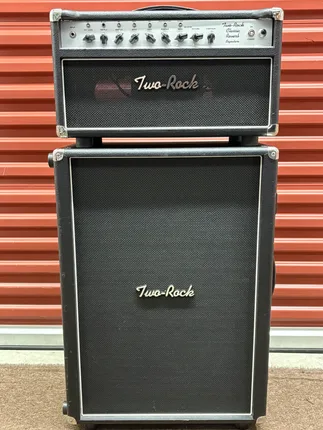
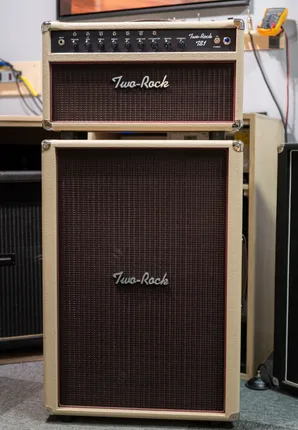
Oz: I never used a Trainwreck. I'm more interested in clean amps because I don't use amp distortion—I get it from pedals. So, I need really good clean amps that sound great and react well to pedals. Marshalls are really good and Two Rock amps are the best for that! If you use the Marshall non-master volume models, the clean ones, you get a really beautiful tone, and when you play them loud enough, they start reacting. That's the sound. Two-Rocks are the same way for me—super responsive and, in my opinion, the best pedal platform amps out there.
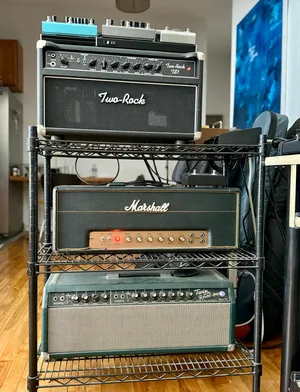
Jay Jay: I'll tell you my personal observation about amps and guitars—the synergy. Clapton took a Les Paul into a Marshall Bluesbreaker and created that tone. Hendrix ran a Strat through a Marshall. And the only time I saw Roy Buchanan—the master of the Telecaster—was at the Fillmore after it reopened. He was standing onstage with his amp on a stool right behind him—like a Deluxe. He's playing—great technique, amazing touch—but what got me was how the amp and guitar were speaking to each other. He was using the amp's tonality to push his phrasing. I remember walking out thinking, man, that guy really has his shit. Then I saw Jeff Beck at Les Paul's birthday party. He was playing through a Vox AC-15 and a Fender combo—two little amps in that room—and he was getting every sound imaginable. He knew how to make those amps talk—tone was all about the connection between the guitar and the amp. That's when I fully started to understand the relationship between them.
Oz: Yeah, but I come from a different school. Growing up in the '80s, I wasn't getting distortion from amps for a few reasons. I never had access to old amps I could crank up, and living in New York, I couldn't just turn a Marshall to 10 in a club. There was no way. You'd get thrown out. I didn't have attenuators back then, and the clubs wouldn't allow that kind of volume. So, I had to get my sound from clean amps—mostly lower-wattage ones—with pedals. That's been my whole thing since. My entire career, I've rarely had the chance to play somewhere I could really crank an amp loud enough to get those tones—Hendrix with his Marshall at 10, Clapton with his Marshall at 10, Beck too. That was your generation. For mine, we had to find another way to get it—in a fake way, through pedals.
Jay Jay: Okay, I understand. So, when someone comes to see you play today, what's your rig?
Oz: These days, if I'm playing in New York—let's say, my electric trio—you'll usually see me with a Two-Rock TS1 or a Classic Reverb running into a 2x12 cabinet and a bunch of pedals. If I'm playing with my jazz quartet, I'll use two Fender Deluxes in stereo. That's my current rig.
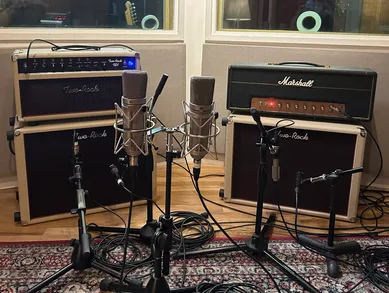
Jay Jay: At The Bitter End, though, you're almost always using a Two-Rock.
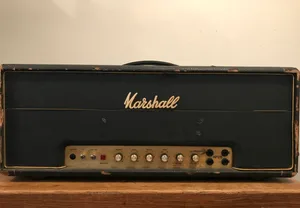
Oz: Yeah, exactly. I've got a couple of Marshalls—a 100-watt Plexi and a 50-watt Plexi. The 50 I use mostly at home for recording. I don't really use Marshalls live much anymore. I used to, and I probably should again, but hauling a 4x12 cab and a head around New York just isn't realistic anymore. Back in the day, I did it all the time.
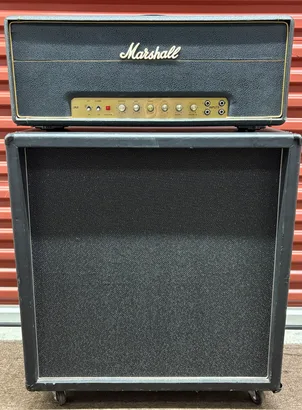
Jay Jay: You know, we still have Marshalls onstage, but we're not using them. They've got to be there, though.
Oz: There you go.
Jay Jay: We have to have them up, but we're using tone blocks now, and I'm using a Kemper. You use a Kemper, too, right?
Oz: I don't use a Kemper, but I know what it does.
Jay Jay: Same thing. Yeah, I just need to be able to reproduce the sound, but I'm done carrying all that gear around. Those days are over. So, tell me about Oz next year or the year after? What are your plans? Any touring plans?
Oz: I'm trying to tour as much as I can. In a perfect year, I'll do a tour in the U.S., one in Asia, and one in Europe. I still haven't made it to South America—it's tricky. So yeah, in a perfect year, that's the goal: Asia, the U.S., and Europe.
Jay Jay: And your fans around the world—they know your music from streaming now, right?
Oz: A lot of people show up. By now, most of them know the music.
Jay Jay: Okay. Who is your dream package? If you could go out on the road and pick any artist to tour with, who would they be?
Oz: You mean as a side player or on the same lineup?
Jay Jay: Yeah, either one—play or on bill with... who is your dream and what's your dream music package?
Oz: There are still a lot of people out there I haven't played with. Herbie Hancock would be amazing. Michael Brecker's gone and if I had to call out the ultimate gig for me to play, it would be with Miles, but unfortunately he too is no longer around. There are certain bands I've always loved like Tears for Fears. That would be freaking amazing. I just like those songs.
Jay Jay: My friend's their producer.
Oz: Really? I'd do that tour just to play those songs. Same with Bryan Adams. I love those records. The guitar parts are great. I don't think I could do them better than his guys, but it will be close enough, I love that stuff.
Jay Jay: So, who are the guitar players you admire most these days?
Oz: There are a lot. Some of the new jazz guys are unbelievable—there are so many, I don't even know where to start.
Jay Jay: Steve Lukather's pretty amazing.
Oz: Fantastic.
Jay Jay: Tommy Emmanuel?
Oz: Yeah, of course. He's incredible.
Jay Jay: Warren Haynes—you've played with him.
Oz: Yeah of course, but in terms of the rock and blues players I think Derek Trucks really opened the doors for everyone. Then there are the usual suspects—Vai, Satriani, all of them.
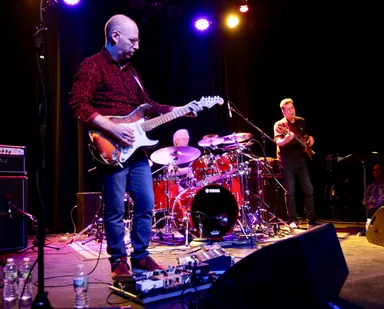
There's also this whole R&B and neo-soul scene with players like Isaiah Sharkey and a bunch of those guys. They're mostly studio players, but they're really amazing. It's a whole style of its own. I can't really play it, but I'm aware of it. And then in the jazz world, it's endless. The older guys like Pat Metheny, George Benson, and Scofield are still around, but now you've got Kurt Rosenwinkel, Adam Rogers, Nir Felder, Gilad Hekselman, Mike Moreno, Jonathan Kreisberg—a whole new generation coming up.
Jay Jay: What about that gypsy player from Brooklyn?
Oz: Oh, I know who you're talking about. I'm not really into gypsy jazz that much. I like it, it's impressive, but I don't listen to it a lot. It's never really affected me too much. To me, it sounds more like European jazz—almost like the wrong kind of jazz. Sorry, I grew up on bebop, and that's not really bebop. It's not that I don't like it—it's just a different thing.
Jay Jay: While I know you go deep in jazz fusion with your trios—I have seen you play with Warren Haynes, Joe Bonamassa and Eric Johnson. Give me a brief description of the way you play with each of these other master players.
Oz: Well, it's challenging, but in a good way—and very inspiring. Joe is a very adaptive kind of player. He knows what he can and can't do. So, he just does his thing and lets the music happen. It's amazing. We have great interaction, and it's always very comfortable to play together.
Playing with Warren is like playing in your living room. Once you're on stage with him, it's so relaxed, with no ego—it's very musical. He's so great at what he does. It's kind of funny, because before you go onstage as a guest in this kind of situation, there's always a little bit of tension—but once you're up there, it all goes away.
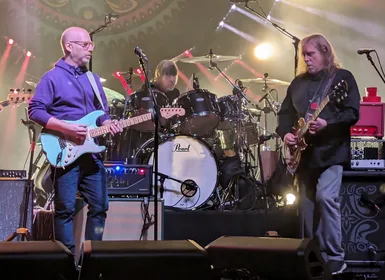
It's like magic. Playing with Eric is a trip for me because I listened to his records growing up, and that feel and tone are unmatched, of course. The first time we played together, I was a bit freaked out—but again, once we started playing, it all went away, and you're just having fun and making music together. Playing with him is intense—he comes in really close when we play. The first time he did that, I was looking at his left hand right in front of me and thinking, wow—it sounds just like Eric Johnson! [Laughs.] It's wild. I really love playing with all these guys, and they've been so kind and generous to play on some of my albums. It's pretty amazing when your guitar heroes become your friends.
Jay Jay: I watch you playing. When I watch you come offstage at some of these gigs, it's technically astounding. I don't get it. And you walk off in the most nonchalant way and say, "Yeah, it was all right." I can also be blasé about what I do, I guess, and relate to that because sometimes people will say, "You must be thrilled to play in front of all those people," and I'll think, Yeah, it's a job. Is it just your personality? You don't seem to really get emotionally caught up in it.
Oz: I don't remember many times I've walked offstage thinking, wow, I played great tonight. I've had gigs where I thought, Yeah, that was pretty good, but never one where I thought, man, I was killing it.
Jay Jay: I sit and say, "Man, that was great," and you're very nice and you'll say, "Thank you, it was okay."
Oz: There's an old joke—someone once told a famous sax player, "Man, what you played tonight was amazing." And he said, "You should've heard what I wanted to play." What's in your head sometimes that doesn't fully come out. That's how it is sometimes. You're aiming for something and what actually comes out is different. Then you go, "Oh, man, that's not what I meant to play," or "I'm just playing the same shit again."
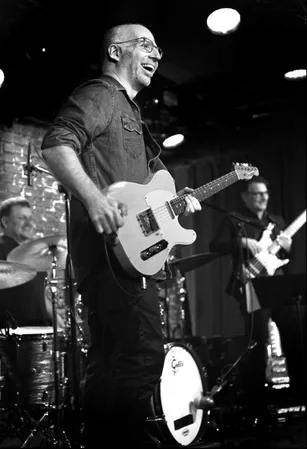
Jay Jay: That reminds me of something Jack Bruce once told me. I asked him what the difference was between Jimi Hendrix and Eric Clapton. He said, "Well, on any given night, Eric could be the cleaner guitar player. But Jimi was the only guy I ever met whose brain was wired to his fretboard." So, is your brain wired to your fretboard? Can you pretty much express what you're feeling when you want to?
Oz: Not fully. Let's just say, if I have ideas in my head or things I'm hearing, maybe 60 percent of it makes it to the fretboard.
Jay Jay: So, it's not like everything you hear in your head instantly transfers—you're always chasing it, never fully satisfied?
Oz: Yeah, probably.
Jay Jay: Well, you know what—to me and a lot of people who know your playing think you're one of the best in the world. You know that.
Oz: The reason people like what I do—from the blues and rock—is because I learned two languages and found a way to blend them. You know what I mean? I've got more harmonic and melodic facility than someone who only plays rock or blues.
Jay Jay: Wait, let's talk about that. You and Joe Bonamassa—when you play together, it feels like you pull each other in opposite directions. You push him into your harmonic world, and he pulls you into straight blues. Is that about right?
Oz: Yeah, it's awesome.
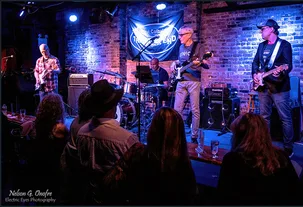
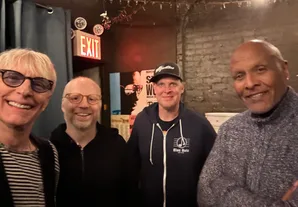
Jay Jay: You bring him into more complex phrasing, and he forces you back toward the blues roots—you meet in the middle. You guys seem to have a great rapport.
Oz: I do that with a lot of different players from different genres, like Matt Schofield, Adam Rogers, Andrew Synowiec—all of them. It's always a give and take. I love it!
Jay Jay: Yeah, I've noticed that. They pull you one way, and you pull them another.
Oz: Yeah, of course. I have the ability to move between both worlds because of my upbringing—in my childhood I learned two languages—blues and bebop. You know what I mean? Most rock guys don't know jazz, and most jazz guys don't know rock and blues. And a lot of jazz players don't have what I'd call the approach for rock and blues guitar tone. I might not be the best blues player, or the best rock player, or the best jazz player, but I figured out how to mix it all together.
Jay Jay: Yeah. Boy, you've done a great job. Thanks, Oz. I really appreciate it. Thank you, buddy.
Oz: Thank you. TQ—Jay Jay French
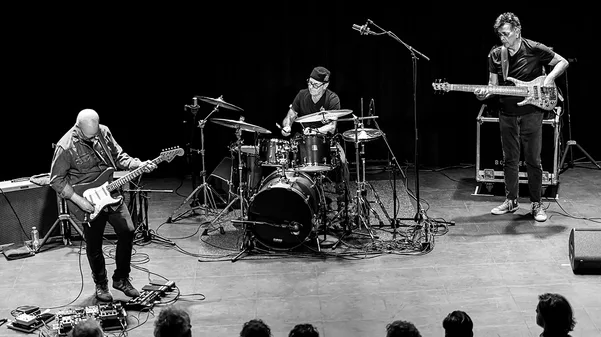
The Oz Noy Trio tours frequently around the world, so be sure to check Oz's social media pages to see if he's performing near you. Experiencing the Oz Noy Trio live is always well worth the trip.
Tour Schedule: oznoy.comLabel: abstractlogix.com
IG: @oznoyguitarz