
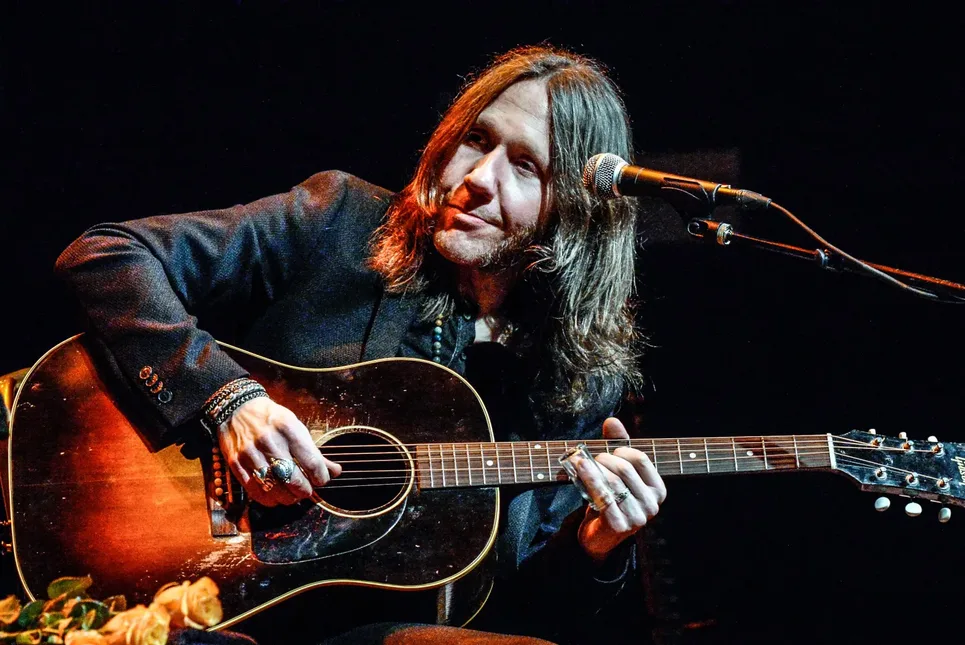
A Les Paul Junior in the hands of someone who has spent the time and knows how to masterfully work two knobs and the fretboard through a pair of beautiful tube amps with its bottles glowing is about as primal as it gets from stages these days. We were excited to go with Charlie Starr for rounds two (electrics and amps) and three (acoustics and the painful reality of trying to make them sound good when amplified). Like most of us, he's always tweaking, questing, and learning. And to have Blackberry Smoke here in town at our favorite music venue (The Elm) made it all the more special. Of course, we selfishly felt compelled to bring our '56 Junior, hoping to get him to plug it in and have a go. This would give us an idea as to whether ours stands up as a representative example of just how magical these guitars can be.
When we went back to ask Charlie if he knew how many single- and double-cut Juniors he's played that were built between 1954 (first year of single-cuts) and 1961 (last of the double-cuts), his answer was, "Man, I wouldn't be able to guess how many Juniors I've played...probably more '50s than '60s over the years." And that doesn't include the most excellent SG Juniors that would follow. Over the course of three minutes of his playing during the tail end of soundcheck, which highlighted riffs from Aerosmith's "Adams Apple" and "Little Dreamer" off Van Halen I, we couldn't help but notice a couple head nods in our direction as if to say, "Yup, this one can hang." It seemed, too, that he was having fun, with yet another fan's request to dance with a familiar yet unknown entity. A rollback of the volume for some spanky clean chords and then back to full roar with a Sunface and a note held for what could have been an eternity was all we needed for confirmation.
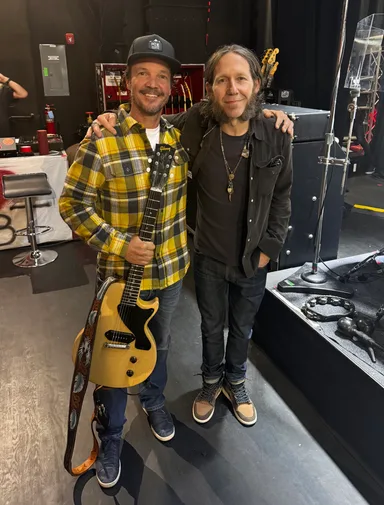
We know we're well past the hint at this point on the potential greatness of the Juniors of this era, but we'll remain committed and unapologetic for the push. Like always, we get deep into it here. Enjoy!
TQ: Welcome back, Charlie—great to have you. We had a great time at the show on Saturday and it's been almost nine years since we last connected with you (TQ, November 2016). What guitar players have your attention these days?
Laur Joamets, Sturgill Simpson's guitar player—"Little Joe," they call him. For my money, I don't know if I've heard a better player. That dude is just absolutely the total package. He's like the Lex Luger of guitar, comes from a metal background, and can play anything. The story goes that he learned how to play in a country style by listening to a few albums Sturgill gave him to listen to during a long flight. Okay, well, there you go. You did it. Another guy who never ceases to just really thrill me with his melodic choices and the parts he writes is Oliver Wood of the Wood Brothers. His new record, Fat Cat Silhouette, has many examples of that. He's so tasteful and reminds me of Big Al from NRBQ in that it's very rhythmic and the parts just stick to your ribs.
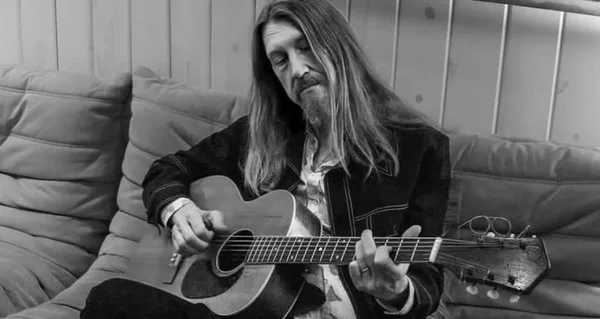
TQ: We used to love seeing his brother Chris back in the Medeski, Martin & Wood days.
Right. And of course, just about everything that Derek Trucks plays is perfect. [Laughs.] He's just the best guitar player I've ever seen up close. His playing really speaks to me.
TQ: And that he's just a guitar and cable, straight into the amp, that makes it sound so pure.
And always open E. I got to sit in with him on tour quite often, and it's always an honor. I learned quickly not to look at his hands if he called out a song I hadn't played before.
TQ: Susan (Tedeschi) is no slouch, either. A double threat.
She's fantastic.
TQ: You've admitted to being on quite the amp bender as of late. Let's get into it.
Well, I recently got a 1960 Fender brown Concert. I played a great one at Greg Germino's shop. It's an early circuit, and according to Greg, that amp might be Leo Fender's greatest gift to guitar players. I immediately understood what he was talkin' about. I told Benji [Shanks] about it; he made a mental note and got one, too. It just has everything we look for in a great amp. When we were making You Hear Georgia with Dave Cobb, he had one that he wound up giving to Bob Weir, funny enough. A killer 1965 Vox AC15 Twin came into my life, which is, I mean, wow! I could do everything with those two amps, the Concert and the AC15, but then I came to my senses, "C'mon, what am I sayin'?" A Tweed Bandmaster is new to me, and if you're looking for the sound of Who's Next, which, as we know, was a Gretsch 6120 and a Tweed Bandmaster, both of which Pete [Townshend] got as a gift from Joe Walsh, that's it. And then just recently I got a 1994 Matchless Clubman 35. What do you do? Oh, and a few months ago, right before we left for Europe, a good friend gifted me an amp. To back up, I have an Echopark Vibramatic 23, which I run live in tandem with my Germino LV55, and one day Benji said, "Put that Germino on standby." Once I did, it became evident that the Echopark needed to be retubed. While being serviced, that friend gave me a Satellite Atom, which I put up on the cabinet where the Echopark lives, and it was magic. An amazingly simple two-knob 36-watt amp with four EL-84s and two 12AX7s, and you can switch between a GZ34 rectifier and solid-state.
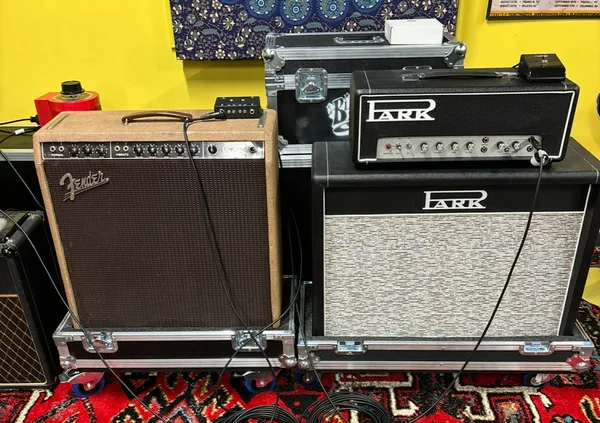
TQ: And a Park 1800?
Oh, yeah. I met Mitch Colby several years ago in NYC while we were there to play the Beacon, and I needed some amp work done. I jumped in an Uber and headed over to his shop. He got me all fixed up, and I noticed a few Park amps there that all looked brand new. I asked about them and he talked me through how he had revived the brand and was building these new Park amps. Fast-forward a handful of years and my buddy Keith Nelson from Buckcherry, who had initially brokered the intro to Mitch, called me and said, "Hey, have you played one of Mitch's Park 18-watters?" I said, no, but recalled seeing them in his shop that day and was intrigued. "Call him," he said, "because I don't think he's going to make many more of them." So I did and put an order in. Mitch is such a lovely human. It's just unbelievably good and I'm going to bring it out on the road as well.
TQ: And your Germino LV55 has been onstage with you for many years. You're only going into Channel 1, not jumpered?
Right, I used to jumper all my non-master-volume Marshall-style amps because they all had a bright cap, and it helps to bring in a little low-end beefiness when you bring in some from the normal volume side. I did that by force of habit with the LV55 early on. Greg came to a show and said, "You don't have to do that, because there's no bright cap in Channel 1." And he's right—there's plenty of low end and one less short cable to worry about. I can't say enough good things about what Greg does, and he's so humble. I've never heard him speak disparagingly about any other builders, which unfortunately can be typical within the industry.
TQ: Have you played around at all with 12AX7s in V1?
I have not, but I'm curious.
TQ: Our eyes were wide when we went from an expensive audiophile-grade Mazda silver plate, which we had mentally categorized as dimensional and hi-fi to an Amperex Bugle Boy. The Amperex was far more pleasing in the breakup, and the notes hang with more velvet. Very addictive, and a change in V1 in these Marshall circuits can be enlightening. That led us down a rabbit hole with others, but the Amperex remains.
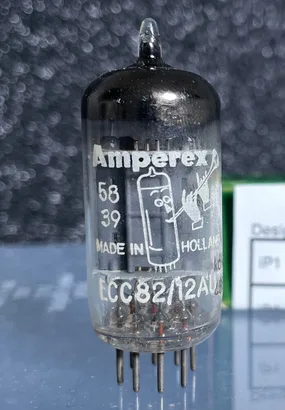
I have tinkered a little at home with some tweed amps, especially during Covid, and I did go down a rabbit hole. I spent several hundred dollars on NOS tubes, and I had a really good time going through those in my amp room. But for whatever reason, I've not brought any of those tubes out on the road. I guess I probably should. I pulled the Mullard XF2 EL-34s that Greg originally shipped with my amp, just so I'd have them preserved. I'll use a variety of current-issue power tubes, most often JJ EL-34s for the Germino, and change them out about once a year because of the hours on them. They start to fade and lose a little sparkle. Knock wood, that amp has never gone down because of power tube problems.
TQ: Tell us more about the Echopark Vibramatic as a complement to the Germino. Do you run it dirty or clean?
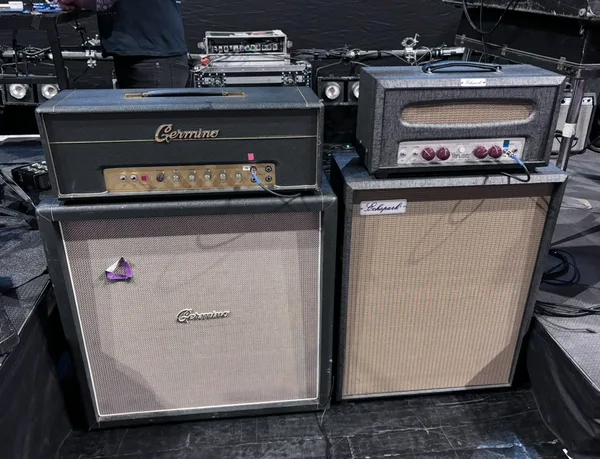
Well, it's a little of both. That amp is like a great big tweed Deluxe, to my ear. It's a 23-watt, 6V6 amp. The speaker cab is tall birch with a single 12 and two 10s. It has that creaminess, but some heft for the stage. Our FOH guy mics the 10s and he tells me that when he pushes solos, that's what he's pushing. Of course, the Germino is giving that midrange Greenback sound that we love. That cab has two G12Ms and two G12H 55 Hz speakers, and he'll mic one of each. I've gotten so accustomed to hearing that soup that if something is missing, I'll notice immediately. There'll be occasions where we're asked to play smaller, listening-type rooms, where it makes much more sense just to have one amp, and I miss having both. It becomes a tough choice with what to bring. We did a show in a casino with a dB limit. I was told it had to be one amp, so I pulled out the Concert and our FOH guy said, "That amp's louder than the other two combined!" [Laughs.] I said, "Sorry, you said one amp, and this is one amp."
TQ: Do you find the Concert is a bigger Super without reverb?
Yes and no. It sounds big with the open back and it's got this breakup, too, that is unique to those brown amps, which lean a bit more tweed to my ears than black panels. It's a marriage.
TQ: What do you like to record with? Is it essentially your live rig?
It varies, and I have brought my touring rig into the studio on occasion and used some of it. I have a really good '65 Deluxe Reverb that I've used on tons of records. Not only ours, but as a guest of other artists, as well. It's just a fantastic amplifier. For our newest, Dave Cobb called me during pre-production, which is just the two of us on the phone, and said, "Hey, man, don't bring anything bigger than a Princeton. Let's make a little-amp record." With previous records, we brought a ton of gear, and Dave has even more than we do. I said okay, cool. He wanted to put every piece of gear in the big room in Studio A—drums, everything. I loved that idea because recording then just felt like a big jam. I wound up using a little '64 Champ on most of my guitar tracks. I did end up bringing a ton of small amps, and there are some classics that I didn't have, like a Supro Super, so I went and found and bought one at Mike's Music in Cincinnati. I brought a couple of small Gibson amps and a little Rickenbacker, and I'd play through 'em all. Dave was like, "Nah, nah, nah, next." I laughed and said, "You told me to bring little amps." I then landed on this Champ, and he agreed that that was the one. That amp won the day. You just hear the paper of the speaker. It's this magical sound of Sticky Fingers. I don't know. There are so many recordings...like on the Layla record, where you're hearing more of the actual speaker itself.
TQ: Signal path—any words of wisdom, and what have you found to work best for you?
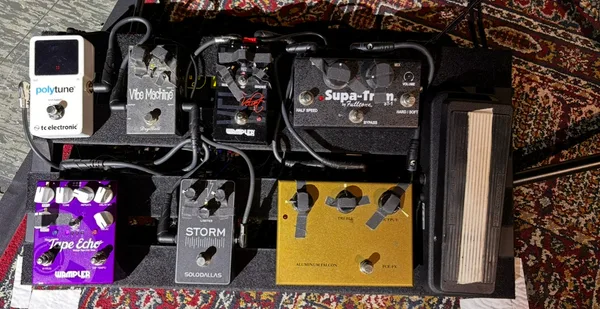
It's just been trial and error and learning from other people. Mike Piera [Analogman] has given me some ideas over the years about what to put where because, like everyone, I'm changing things out and around from time to time. Just recently we, along with my tech, were talking about where to put the Aluminum Falcon [Klon clone] and the Sunface and in which order would be best. Mike suggested that the Sunface go first, then, as is typical, the modulation pedals after drives and delay last. And I don't know if there's consensus with any of it, as I have player friends who would do it entirely differently, and it works for them. I've moved things at soundchecks before. I've never really taken the buffer influence into account as much as I likely should. I typically only have about six or seven pedals on a board at a time.
TQ: And you don't run them in individual loops, just chained together.
Right. A couple of years ago, Jason Isbell suggested that I run the pedals in a rack tray and just use a switcher on the floor. He said, "If you ever do this, you're going to love it because you'll get everything out of each one of your effects." I'm still toying with that possibility. He asked me, too, if I'd ever used an effects loop on my amp, and I told him I never had. He responded that he hadn't, either, until recently and that he loved it. Here I am, 50 years old. Do I want to start changing the way I do things, or keep on going the way I always have?
TQ: Marshalls and Fenders in the '60s and '70s didn't have effects loops.
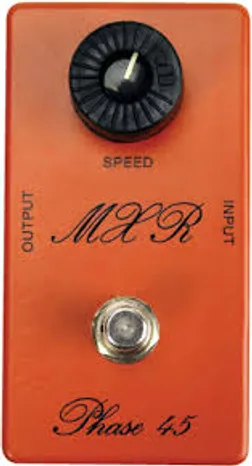
Exactly, so here you have a player like Jason, who I respect and whose playing and opinions I love and appreciate, and then I have a buddy who was talking to Pierre, Keith Richards' tech, and Pierre told him that Keith has two effects on the road, a fuzz for "Satisfaction" and an MXR Phase 45 or 90 for "Shattered," and neither of those pedals are allowed to be in the signal chain if one of those two songs is not being played. As soon as either song is finished, he has to take it out. [Laughs.] I'd offer, too, that using in-ears [monitors], really puts you very close to what's going on, and it's pretty consistent night to night—more so than if you were just relying on the room and your wedges. In my opinion, it's a big help with regard to what we're talking about here.
TQ: Les Paul Juniors.... We didn't see your #1 Black '56 until halfway into the second set. You said you have 10? What sets the great ones apart?
Man, I don't know. It's definitely not weight. Like that '56 of yours, which I really like, it's not exceptionally light or heavy—just kinda hangs in the middle. My best Juniors are heavy. It scoffs at the idea that light guitars will typically sound better. It's similar to the argument that wood doesn't matter that some try to make. Resonance is a thing. How many times have you picked up an electric and strummed a big open G chord and you just know? Almost every time that happens, I'll plug that guitar in, and it will be amazing.
Over the years I've learned that when I have a dud guitar, just a dead one where I think, I'll put in some new pickups in it, and it doesn't help. So few times have I been able to make a shitty-sounding guitar when played acoustically sound better with different anything. Sometimes they're just not good. I've sold Juniors that were like that. They looked good and they were clean because, apparently, no one loved them. The beaters, the ones that look like they've been dragged behind a truck, are almost always the better guitars.
TQ: We spoke a bit about setting pole height on the dogear P90s. If you were to look across your Juniors, is there any consistency in the way you like them adjusted?
It seems that it's guitar to guitar for me. I've seen online where many have come forward with a recommended pole height diagram and it's like a funny-looking EQ line. I've tried that with new pickups and tried to recreate it, and I came away with the idea that, okay, that's pretty good, but I don't know. When I have a great-playing and -sounding one, I don't feel the need to tweak it further. I haven't run into a situation where my ears tell me that things are out of balance and that perhaps my D string isn't prominent enough in the mix. Back to Jason: He asked me one day if I ever had anyone dial in the polepiece heights on any of my humbucker guitars. I told him no and he said, "I have a guy that can do it." We never got past that part of the conversation, but I am intrigued by it.
TQ: You're a big proponent of riding your volume and tone knobs up and down most of the night. Where do you live, typically, and do you ever ride 'em all the way up?
I play at full bore quite a bit and then bring it down for quieter spots. I'm not nearly as active with it as some players. Duane Betts and I talked about this because his dad and Duane [Allman] had no pedals in their chain, so it was just down for quiet rhythm and up full for solos. I guess what I do is based on that idea, but I probably don't go to the extremes that they did. My guitar leads the charge on most of our songs, so it's the main riff guitar and out front of what's happening more so than if it was a B-3 song. I've seen some players not ride their volume at all, and when it comes time for rhythm to support a lead they'll just be strumming and attacking it like an acoustic, and I'll think, "Oh, you should probably stop doing that." [Laughs.] There are times when it doesn't make sense, like you wouldn't want Johnny Ramone turning his guitar down 'cuz there's no need for it. The music often calls for the appropriate approach to using your volume knob at any given moment. You never saw Malcolm or Angus [Young, AC/DC] move their volume knobs that often.
TQ: How would you say the SG Juniors compare to the '50s Juniors?
Well, I love 'em. The pickups are typically hotter in a different sort of way, and as soon as I say that I'll pick up a '50s Junior and think, "This is hotter still, but there's a different voice there." It may have something to do with the magnets. Maybe it has to do with the thickness of the body. I have three: two '62s and a '64. They're a little brighter, a little hotter, and a little heftier somehow, and my tech, Tuch, and I have marveled as to how this little, thin, light guitar sounds nastier than their '50s counterparts in some ways. They have more snarl—maybe that's the better way to put it.
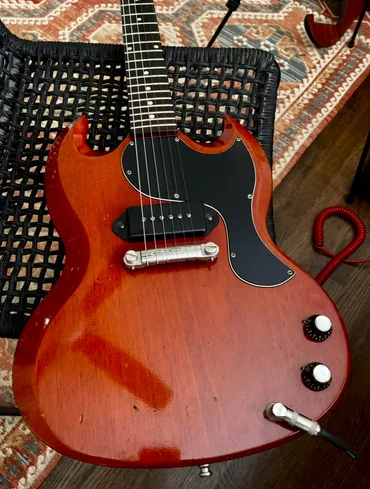
TQ: Which year is your white one? It's incredibly light.
That's the '64. And I'll say too that the SG versions clean up differently. When you come down on the '50s Juniors, they get very Tele-esque, whereas the SGs seem to have more chime. And it always makes me think of Live At Leeds, the way Pete would come down. I think he was playing an SG Special. He had those Hiwatts dimed, but man what a beautiful tone when he brought it down. So plucky and chimey and pleasing to the ear.
TQ: It's always a good trip down "re-memory" lane—my son Jack would combine "remember" and "memory" when he was little—to turn our amps all the way up, dial in the EQ for that ripping sound, and then back way off on the volume and simply ride it up and down between 2 and 8. It's the same thing as rolling back our guitar volume when using a good germanium Fuzz Face circuit and yet we almost talk more about that with fuzz than doing it with our amps. If you take your favorite guitar, that has a great harness with the right taper on the pots, and good caps, well-matched pickups that translate what the guitar is doing, and a killer tube amp, you're there. The old pots and caps are different animals.
Oh, God, yes, they are! I got a '57 single-cut Junior several years ago. Good lookin' guitar and it initially sounded just as I like. Again, with in-ears, I started to hear this thing that was going on with the guitar and it had a replaced wire harness, one of those newer pre-wired deals. It had an orange drop [capacitor] in it and I knew that wasn't right, and I just figured we'd deal with it later. As I played between 9 and 10 on the volume knob, there was something I didn't like. It was getting bright and weird, and a bad high mid frequency was being boosted that shouldn't have been happening. Everything else about the guitar was stock. I called my buddy and explained what was up, and he said, "Well, think about it: There are so few components to this guitar that every little thing matters so much." He went on to find me a correct harness, which immediately fixed the issue.
TQ: There you go. You've had Duane's '61 SG in your hands. What jumped out to you about that guitar?
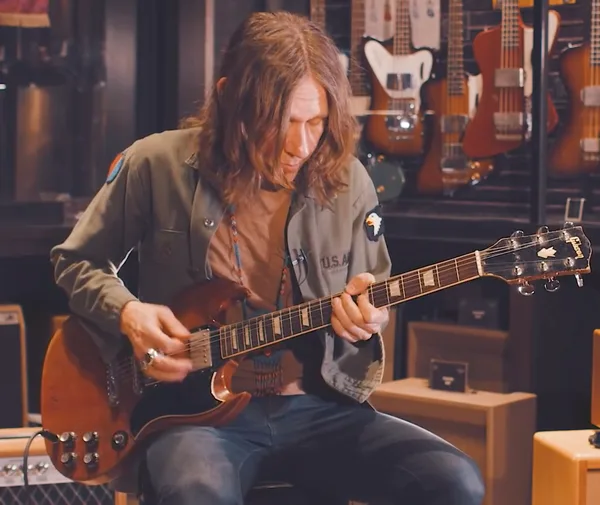
If I remember correctly, I was playing it through an Overdrive Special [Dumble]. It was a good setup, a good situation. [Laughs.] It's hard to beat that. It needed a little love, needed a little setup work, as I think it had been sitting for some time. It was a great-feeling guitar, had a nice, wide neck, and just felt like it should.
TQ: Tell us about how the Gibson Charlie Starr Les Paul Junior came to be.
It was talked about years ago, probably like eight years ago. I remember sending my #1 with Edwin, who was at Gibson at the time. They scanned it, and there was talk about doing a short run of them; this was at the end of the Henry Juszkiewicz years. Instantly, the conversation turned to aging the guitar to the degree that it needed and the challenge of pricing it cost effectively. I agreed, as the wear is ridiculous. It looks like it's been in a fire. They didn't know what to do with it, and the idea of a signature guitar just faded away. Fast-forward to the current Cesar and Mark Agnesi regime, and they revived it. We had spoken about it for a little while and Cesar asked about why it didn't go forward. I explained the series of events, and that's when he suggested that we go with one that wasn't aged at all. I told him I'd be honored either way. I think they did a nice job. How fancy do you need a Les Paul Junior to be? They're a simple animal. I love that it's just a matte black or the walnut brown finish with no aging. I play one every night.
TQ: Given what Gibson is doing with the Murphy Lab and the direction these days of companies doing limited runs of iconic guitars, 100 of your Black '56 #1 that aesthetically look identical would sell quickly.
I think so, and I've spoken to Tom Murphy, and he said he would love to do it and that it would be no problem. I've seen fans that are guitar builder guys do them, and they've done incredible jobs. They look just like it.
TQ: Have you ever found a Special with a magical Soapbar P90 that rivals your favorite dogear in a Junior?
No. I haven't personally. And I don't know why. I guess it has to do with the way that it's mounted to the guitar. It seems like every time something like this is brought up, there'll be those on the internet that call BS on it and start talking about physics and this or that. It could be as simple as the day the pickup was wound. Billy Gibbons tells a good story about that, where there's a moving image in his mind about the lady who was winding the pickup in Pearly and how she gave it a few more turns because someone distracted her by asking a question and she didn't take her foot off the pedal in time. It could have been like that day to day. Not an exact science at that point, but that doesn't answer your question. I do think that the way dogears are mounted to the guitar contributes to the difference. And it's never extreme. It's subtle, but certainly to where I conclude that I prefer one over the other.
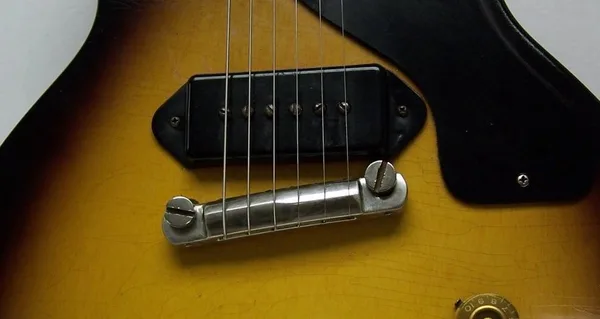
TQ: You've got several different wrap-tail bridges on your Juniors, some of which are after-market and some original to the guitars. MojoAxe on some of them?
Yes, I was turned on to MojoAxe by Jimmy Vivino. We went to play Conan years ago during the time that Holding All the Roses came out, and I played a '59 Double Cut on the show. Jimmy came running over and said, "Whose guitar is this?!?" I said, mine, which was followed with an "Oh my brother..." We became fast friends. He said I needed to get the MojoAxe bridge because they intonate. I put one on, and he was right, especially with the B and E strings. I didn't put them on all of my guitars, as some are perfectly fine and I don't want to change anything.
TQ: Pedals...We saw that you set the gain on your Aluminum Falcon Klon clone at only about 9 o'clock, which means that the germanium diodes are not factoring into the sound you're getting. All that lore about what differentiates the real thing from the clones is those mysterious diodes and what Bill Finnegan used.
Right. Well, I use it as a lead boost to get above the band. I like gain but feel like I have enough coming from the amps to where it doesn't need too much of a push. I don't play with as much as, say, George Lynch, but I'm not playing clean for most of my settings. I've never come across a clean boost that I like and never considered a Klon because by that time, they were already so expensive. When I met David, the guy who builds the pedals, I explained what I was looking for and he said, "I think this will do what you want," and he was right. Tone knob at noon, volume almost all the way up, because it brings it above the band, and yeah, the gain right around 9 o'clock. I've brought the gain up to noon and it's too much. I don't need that much.
TQ: Do you ever run the AF with the Sunface at the same time?
No, that is always an either/or situation. I do have some guitars that are a little cleaner inherently, like the Fenders, where, to fill them out a bit, I'll run this little Chase Tone Secret Preamp, which is like an Echoplex preamp boost. It just adds a little punch. Gain isn't the right word to use. It's more like a little sweetener that you get when playing with an old Echoplex. I'll kick that on for certain parts where I may be playing the Esquire and where I don't want all of the Falcon. I probably don't have to have it, but rather something I want to hear.
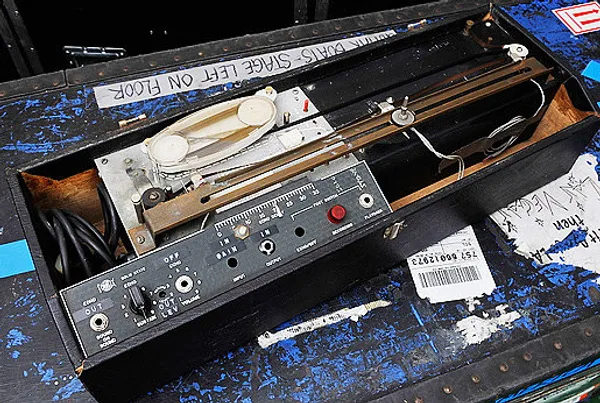
TQ: You used to tour with an Echoplex, but the overhead of keeping them running became too much. We loved an answer you gave to an interviewer who asked if you thought the audience could tell the difference between the real thing and a pedal that attempts to approximate what the old ones could do. You said, "They don't know that they do," which is perfect.
Exactly. Nothing sounds like the real thing, and if I had my druthers, I'd use the old ones. Folks get close, and it's just like any other grandpa statement I can make about how it's not the same thing. Years ago, when I first got the Fulltone tube tape echoes, JD Simo was out with us. I think it was about 2014 or so. He said, yeah, those are so good, in referring to the Fulltone. I had a pedal, too, and we A/B'd them and it was no contest. The tape echo was so much more real. Not too long after that, I realized that I needed a full-time person to babysit this thing and even that's not a guarantee that it's going to be consistent night to night. I have, what Dave Cobb says, is the world's greatest Echoplex, and I decided that he was right and that I wouldn't take it out of the house and on the road any longer. They're not that easy to find anymore, and those that know how to service and repair them are dwindling. We used my Echoplex on the vocal tracks for You Hear Georgia, and we left it on for hours and it died. I took it to this great repair guy in Georgia named Spencer Pope, and he said, "Hey, man, your motor is worn out and it just so happens that I have one here." So, effectively a donor transplant. He got it back running and asked if we were leaving it on for long periods because this thing is old and was built in 1971. When we confirmed that we had, he said, "Don't do that anymore." He didn't know we were using it in the studio for mixing, where it would be on for like seven hours. "No, no, no. This gets turned on for soundcheck, then off until the gig, then off after the gig." He asked me if I wanted to have him adjust the echo repeat range because mine starts to self-oscillate pretty early, and that was a hard no. I'm not changing a thing on what Dave calls the greatest-sounding Echoplex ever. [Laughs.]
TQ: Right. They all seem different. Our friend in town has a mint, later EP-2 with the Sound On Sound, and his is super quiet, but the range on both his echo repeats and volume is entirely different than ours. We wish we could justify having a second.
Ha! Well, you do need two, because you need a short-throw one and a long-throw one so that you don't need to move that record head. Have you ever seen those pictures of Brian May using two Echoplexes strung together across two chairs that are many feet apart? He did that so that he could run the delay out like a minute. It's crazy. If you think about it, the only thing that is limiting is that you only have those seven inches of distance. He needed it to be longer.
TQ: With your Wampler Tape Echo pedal, do you have it set where you can go back and forth between a slapback and a longer Gilmour-like delay setting?
Yes, basically two settings, exactly how you describe it. I'm barely scratching the surface of what that pedal is capable of doing. I should probably dig in more, but basically just short and long delays and that's it. You know what I'd like—and it's probably out there and a function of me not looking hard enough. I made a demo years ago of a song called "Medicate My Mind" from the Find The Light album, and I used Logic for the demo. I used a setting called Reverse Tape Delay, and I played the solo and it was the coolest f'n thing ever, so when we were making the record, I couldn't get that to happen obviously with my Echoplex. I asked the engineer if he knew of a backward delay, and we tried this one plug-in, but it wasn't as good. I'm on the hunt. Someone told me that the old green Line 6 pedal could do it, the one that we all tried not to like until we saw Mike Campbell using one.
TQ: Line 6 re-released that one a few years ago, so maybe that's the answer. The Leslie effect on "Be So Lucky"—is that a real Leslie that Dave has, or a pedal?
Dave has a real Leslie, but that's not it. Crazily enough, that's the Neo Ventilator pedal that our keyboard player Brandon has. We were tracking with the real Leslie, and Dave's went down that day. As mentioned, we were all in the same room and trying not to create overdub situations, so we just used the pedal. Dave said, "I'll be damned; that sounds better than the real Leslie." This is the one Brandon has had for years that he uses as a backup in case his Leslie goes down. It's covered in beer and dirt, as it sits down by his feet. Lo and behold, it saved us that day.
TQ: When you play that song live, what do you do since you don't have a Leslie sim pedal on your board?
I use an old "script logo" Phase 45, and I'll either use it or the Drybell Vibe Machine and speed them way up. They're similar but also very different, and on any given day and room, I'll go back and forth. I should get myself a Ventilator someday.
TQ: Tell us about the SoloDallas The Schaffer Replica pedal.
The only thing I know is that it's a replica of the Schaffer-Vega Diversity wireless systems that were being used by bands like Kiss, Van Halen, and AC/DC back in the '70s and '80s. A similar thing happens with today's offerings where you can gain them up and deliver a hotter signal, compared to a cable. The story that Fil, who started SoloDallas, tells is that Mutt Lange was recording Highway To Hell with AC/DC and asked that they bring their exact touring rigs to the studio. When the amps didn't sound right to Mutt's ears, he again confirmed that they had everything they used on stage. Angus called out that the only component missing was the wireless system. Once added, Mutt's response was, "That's it!" It adds something. It adds a little sparkle. In addition to the pedal, I have one of the tower replicas at home that I never really use. It's a little unwieldy. When SoloDallas made the pedal version, I put it on my Europe board, and it's the same idea as the EP-3. It just gives it a little sweetener. We just updated our wireless packs with Shure, and it can get out of hand. You get into the pack settings, and you can ruin your tone if you're not careful. Too much signal is not a good thing.
TQ: I guess it's somewhat like boosting a signal with a variable buffer.
Yes, and I bucked against it for a while. I didn't want yet another variable that could mess with my hard-fought tones onstage, and I had to be talked into it and shown what it would do before I agreed to it.
TQ: Do you leave the pedal on all of the time?
No, it's just there when I want that little something.
TQ: Let's get into acoustics. You've seemingly owned all of the major food groups. Which are getting the most play these days?
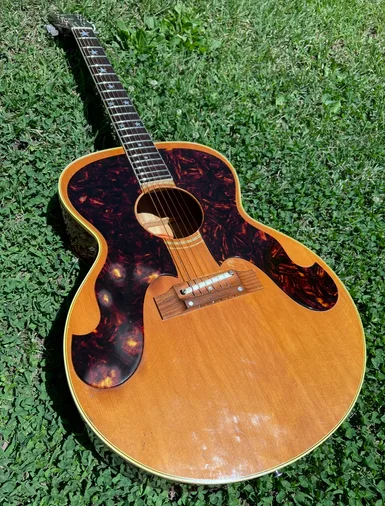
Yes. On the new album and the one previous, I relied heavily on my 1955 J-45 that Benji lovingly refers to as the second-best one ever. He believes, and I don't disagree, that Kristian Bush [Sugarland] owns the best example we've heard. We've used that one in the studio, as well. It just has that perfect "thud" that we love. J-45s are such a dead-string guitar to me. That's the tone I prefer on a guitar, where the strings haven't been changed in years. I prefer that to happen on a J-45, and they seem like they were designed to sound excellent in that condition: old! They don't need to be bright, but rather low end forward and "thuddy"—that traditional slope shoulder sound that Lightning Hopkins would get. That being said, I also used a 1950 [Martin] D-18 on the last record. It's an ugly guitar. Someone tried to refinish it and didn't do a good DIY job. It almost looks like they went at it with a paintbrush. I had a buddy get as much of that finish off there, where he just kinda cleaned it up a bit. I took it to the studio, and it just has the sound. Somebody was telling me, I think it may have been Jerry Douglas, that 1950 was a particularly good year for D-18s, also considered so by purists who always refer back to the '30s as the golden era. I can't argue with that, as I have a 1950 D-28, as well, and both that and the D-18 are pretty damn stellar. When I first strummed a G chord in front of Dave [Cobb], he gave it an "Oh my God!" I said, yeah, look at this ugly thing, and his response was, "Who gives a shit? We're using that." Another funny little thing I have is a 1964 Gibson LG-0, and when I first got it, it had the plastic bridge with the screws, absolutely just crap. A really good repair guy in Atlanta put a rosewood bridge on it, and it's a fantastic little animal. All mahogany. I've used it, which started back with the Holding All The Roses album, when I've needed a sound other than something that sounds big and glorious. Like a percussion instrument. That's the guitar I'll go to.
TQ: When you record acoustics in the studio, is it just with a mic?
Yes, I'll never use.... I'm not a fan of acoustic guitar electronics. I've yet to find anything that sounds pleasing. An interesting story: We were in Australia at the Byron Bay Bluesfest, in 2017. My live acoustic guitars were then outfitted with L.R. Baggs Element pickups, although I've started recently transitioning to the Baggs HiFi pickups. They're not horrible and in fact, you could say they're good—and I'm not throwing shade at L.R. Baggs, but rather casting light towards the idea that no one has quite perfected the amplification of the acoustic guitar in the absence of a microphone. It's such a problem and a difficult thing to accomplish. That's why these companies are still coming out with new products in an attempt to get closer. And, by the way, so far, I do like the Baggs HiFi better than the Element, but that's not the story. I was using the Element during the first day of the festival and was playing my J-200 with that pickup and a Radial DI [direct box]. That's as simple as our FOH guy has been able to get my acoustic over the volume of the band.
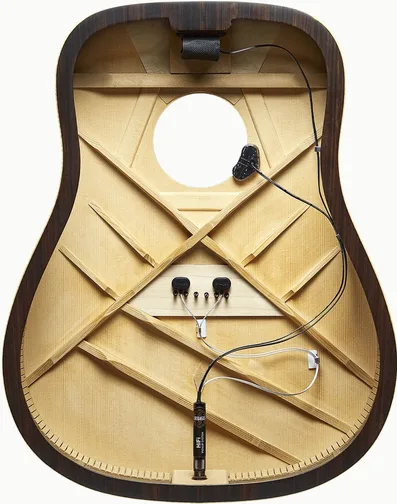
Jackson Browne and Greg Leisz were there and took in our set. I was honored to meet them, and afterward, Jackson said to me, "What's going on with your acoustic guitar?" "What do you mean?" "What are you using?" And before I could answer, he said, "It's the best amplified live acoustic tone I've heard in years." I went on to describe how simple it was, and at that point he said, "Well your FOH guy is a genius. Do you know how much money I've spent on my live acoustic guitar signal?" [Laughs.] He said, "I yearn for my acoustic to have that kind of presence and size." It was good to hear, but I always work towards the sound of the guitar in a room and find it exceedingly difficult to attain.
TQ: With all of our experimentation, which has included a whole host of different guitars, preamps, and pickups, we've wholeheartedly concluded that 90+ percent of the equation is the guitar, which was the only constant during our changes. To our ears, some of the best-sounding, airy, full-bodied, resonant guitars are the hardest to get to sound right when amplified. Our 1950 J-45 and Kevin Kopp K-35 are both outfitted with Baggs HiFi pickups. They're identically dimensioned mahogany back and sides, spruce topped, same scale length guitars, and where we have to set the volume, EQ, high-pass filter, midrange boost/cut on the Grace FELiX acoustic preamp, where each guitar sounds best, couldn't be more different from one another. A real eye-opener and testament to the above conclusion. The Kopp is a beautiful-sounding and -playing guitar, but it does not like being amplified.
Yes, we've lived that same struggle. In the room, a guitar will sound great, and you put your setup in it and it's not. Back to the drawing board.
TQ: We wanted to acknowledge that you all lost Brit Turner, your original drummer and brother to Richard Turner, your bass player. We know Brit played a motivating force role in your band and are sure it's still raw and emotional. When losing a friend and spirit like that and when the dynamic changes in your rhythm section, it goes well beyond the music.
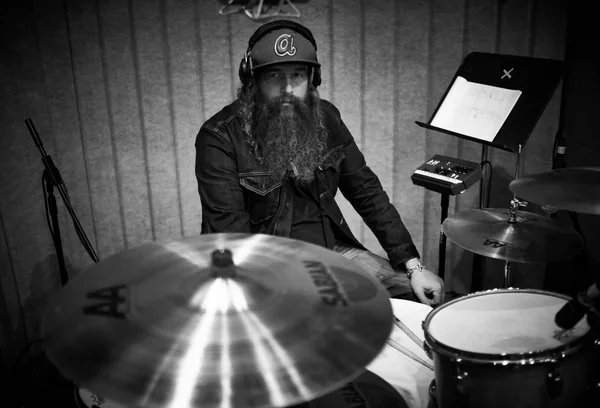
Well, yeah, it's so surreal. This many years with someone, and it goes beyond this band, as Richard, Brit, and I were friends and playing together back in '97. He was my best friend and such a strange thing to experience, and it sounds crazy to say, but to watch it happen and be helpless. Cancer is just so relentless, and it touches almost every human on the planet. We all know someone who is or has been in the fight. I think we are all still somewhat numb to it and we look at the calendar and think, wow, six months ago...and we continue because that's what we do. I was speaking with a journalist just the other day and commented that for years I wondered how it was that the Allman Brothers Band was able to perform at Duane Allman's funeral, and now I kinda get it a little more. It's what we do and know how to do as a collective. To make music and tour it around the world, and Brit was such a part of that. In some way, we continue doing it for him as much as ourselves. I know that sounds corny, but as you just said, he was such a motivating force in the old days. When I was not sober, he was the one to get me off my ass and say, "C'mon, we got a gig to do." He and Richard are from a military family, and their dad was an Air Force Colonel, so that's where that comes from—"the show must go on" mentality. He was a tireless human, and we worked well together, the way we pushed this thing. When I'd write enough songs for a record, he'd get excited and say "Okay, this is what I think it should look like." And he was talking aesthetics because he did our album artwork and merch designs. That energy was infectious for all of us. He'd always push us to have a plan and he'd ask that question of others, like different managerial options we'd have over the years. The way we do business in this band was created by Brit. As we move forward, we do it his way because his way was the best and he was quick to figure it all out. He was a natural businessman, and as a drummer, he was such a song drummer. He and Richard came from a speed metal band when they were younger and he loved that, and he loved New York hardcore. But in an equal sense, he loved Elton John—songs and aggression, although he never played aggressively in this band. If you saw him in the '90s, it was dual kick drum speed metal, and he abandoned that. While he could still do it, because he maintained those chops, he fell much more into a Levon Helm style of going about it. His approach always served the song. Lots of ghost notes and he was a snare stick dragger. He played what I wanted to hear, always. Catchy choruses would always get his attention, like Oasis. If I came in with a song like that, he'd always brighten and say, "Yes!" He could play to that and had such a good feel for that kind of thing. Kent [Aberle], who is with us now, has been with us for over a year and a half, as Brit was going through treatment. He'd been shadowing Brit and had to play a few shows when we thought Brit might be able to go but couldn't. Kent is a renowned drummer, especially around Atlanta. He's played with a ton of our friends, and we've known him for years. He's got chops all day long and good feel. He plays with songwriters, as well, and shares that mentality that you play for the song. The first show he played was seamless, as he had been watching Brit and taking in what he was doing. That made the transition a lot easier, meaning that we could work to feed our families. I think Kent saw that he was not going to come in with this gargantuan kit and change the vibe. He's a smart guy and saw what was there and the way Brit did it. I'm really proud of him—what a tough situation to have to come into.
TQ: With his brother.
With his brother. I can't imagine what that's like for Richard, and he's the quiet one. I think Brit is the only drummer that he ever really played with, and I think this speaks volumes about both of them.
TQ: Thanks for sharing that, and we all know that music is a healer. As Blackberry Smoke is a three-guitar band, how much time and focus do you, Paul [Jackson], and Benji [Shanks] put on creating parts that are complementary to each other, whether through rehearsal or conversation?
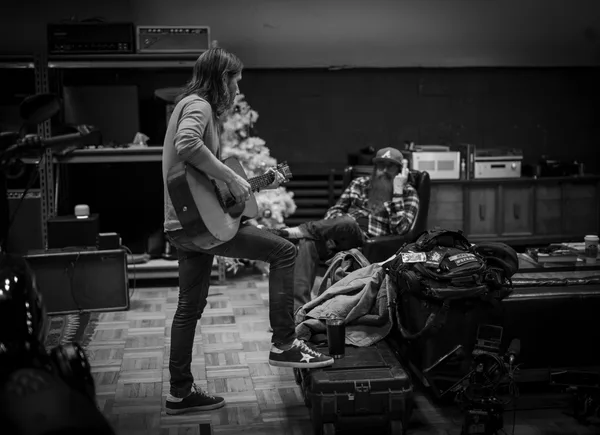
We do. Some of it's a feel thing and it really happens organically, especially with Benji, because up until You Hear Georgia, we were a two-guitar band, although Benji did come and play on a couple songs on Like An Arrow and Find A Light. It was a natural thing because he and I had been playing in an acoustic duo for years. Brit was the one to say, "We gotta keep that dude up here because he's making it sound like the record." Filling it out. It's been my closet dream to have a Skynyrd setup, guitar-wise, since I was a damn teenager. I like teams. I can still sit down with Second Helping and be floored with the way they operated that band, guitar-wise, especially with headphones on. Al Kooper mixed that, as far as the stereo layout of Gary being over here and Ed over there and Allen's over here. Dave and I really nerded out on that, as far as how we mixed this last record. A song like "A Little Bit Crazy," which is this three-chord Chuck Berry-type "rucka rucka" thing, forced us to sit down and map out what the guitars were doing. All three of us playing the same thing wouldn't have worked. I'll bring up Skynyrd again here, as for me, they were the greatest three-guitar band, with possible exceptions being Moby Grape or the Outlaws. On the back of the first Skynyrd record, it breaks down the personnel on the songs, which was just so cool. Fills: Ed King. First Solo: Gary Rossington. Second solo: Allen Collins. As a kid, I recall marveling at that level of detail.
TQ: I wish that were still done. We used to stare at the back of albums and sleeves, reading the liner notes and lyrics. It's a bummer that's all been lost. How cool would it be if they also captured and published a list of all the guitars, amps, and mics used on each track.
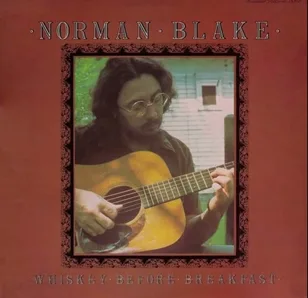
Right. There's a Norman Blake record called Whiskey Before Breakfast, where he lists his string gauges. We should do that with our next record. Back to your question, at this point we all know how to stay out of each other's way and lane, and just listen. That seems to be the most important.
TQ: And the flip side of the coin is, and I hear and see this with Tim and Greg from the Mother Hips, as well as Drive-By Truckers, where the guitars will play the same fully loaded bar chords at the same time, and it just sounds massive.
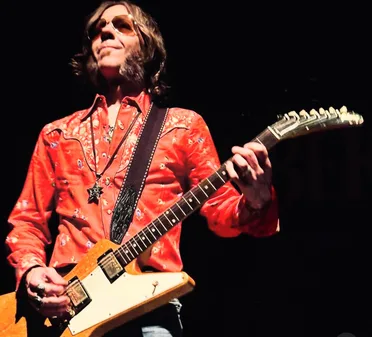
Yup, we are doing that from time to time, as well. "Waiting For The Thunder" has us all playing the same thing with certain riffs in the song. It does make it sound like a wall of sound.
TQ: We have to mention, when you played your Explorer the other night, it just sounded so huge.
That's a Max Baranet. He built the famous Hunterburst, which Steve Hunter owned and Slash now owns. Steve played that guitar with Alice Cooper and Lou Reed. The other small builder Les Paul that Slash owns and famously played in the "Welcome To The Jungle" video is the one Kris Derrig built. Kris was based in Atlanta, and I have a buddy who knew Kris and told me that Kris was building these out of his house, and he'd order the bridges and tailpieces from StewMac and simply put them up in his gutters and let them get rained on for weeks in order to age them. [Laughs.]
TQ: We love that when your band covers a song, it pays tribute to the song, and it seems as though you try and get as close to the original as possible. What song have you not yet covered that you'd like to?
Oh, my goodness. Hmmm. Nothing comes immediately to mind. Some of it has to do with my vocal range—and by the way, I never set out to be the singer. I simply wanted to play guitar, and me singing was the result of me no longer wanting to deal with the frustrations and craziness that comes with other singers. I got to the point where I had to do it, and I don't have an amazing range. High A is my ceiling and maybe Bb on a lucky night. Many of the songs I wish we could cover are songs I could never sing, like Humble Pie or The Faces or Zeppelin songs. Brit was always pushing for certain songs that I clearly couldn't sing, and he'd suggest we change the key or something. Imagine "Whole Lotta Love" in C? We did, however, record "The Rover" a step down because we were approached by a magazine who was paying tribute to Physical Graffiti's 40th anniversary. I think it was Mojo magazine, and they were going to release a record that was attached to an issue. I knew, just thinking about it, that we'd choose "Down By The Seaside" because it was the only one I could sing. Of course, that one was already taken and the only ones available were "The Rover" and "Houses Of The Holy," so it became obvious, because I definitely wasn't going to hit the notes in the latter. It came out great. We stretched and jammed it out a bit at the end.
TQ: Last question. You've been gigging for 30-plus years. What are a couple things that you've learned along the way that you don't hear many talk about when it comes to playing live and getting inspiring tones?
Hmmm. That is an excellent question. The conversation comes up more now with more people, but making sure that you have the correct power. When I was coming up, there were no mentions of variacs or Brown Boxes. There were rooms where I'd notice that my guitar rig sounded like shit and I'm sure it was because I was throwing 128 volts at my amps.
TQ: We hear that there are some rooms in Nashville delivering 127 volts.
I've heard the same thing, and Benji told me that for years he hated his tone at Blackbird until he started lowering the voltage with his Brown Box. My house in Atlanta is about 124 all the time, which is way too much. It gets bright and harsh. That's the only thing I can think of that is an obvious one for me. I never would have known and now I do. I don't leave home without it. Do you remember the interview with Danny Gatton where he talks about trimming your fingernails? He said nothing can screw up a performance more so than unruly fingernails. [Laughs.] There's nothing worse than the unwanted "clank" when your nail catches a string, so I've taken that advice to heart and stay on top of it every day. TQ—Scott Ulrichs
charliestarr.com