
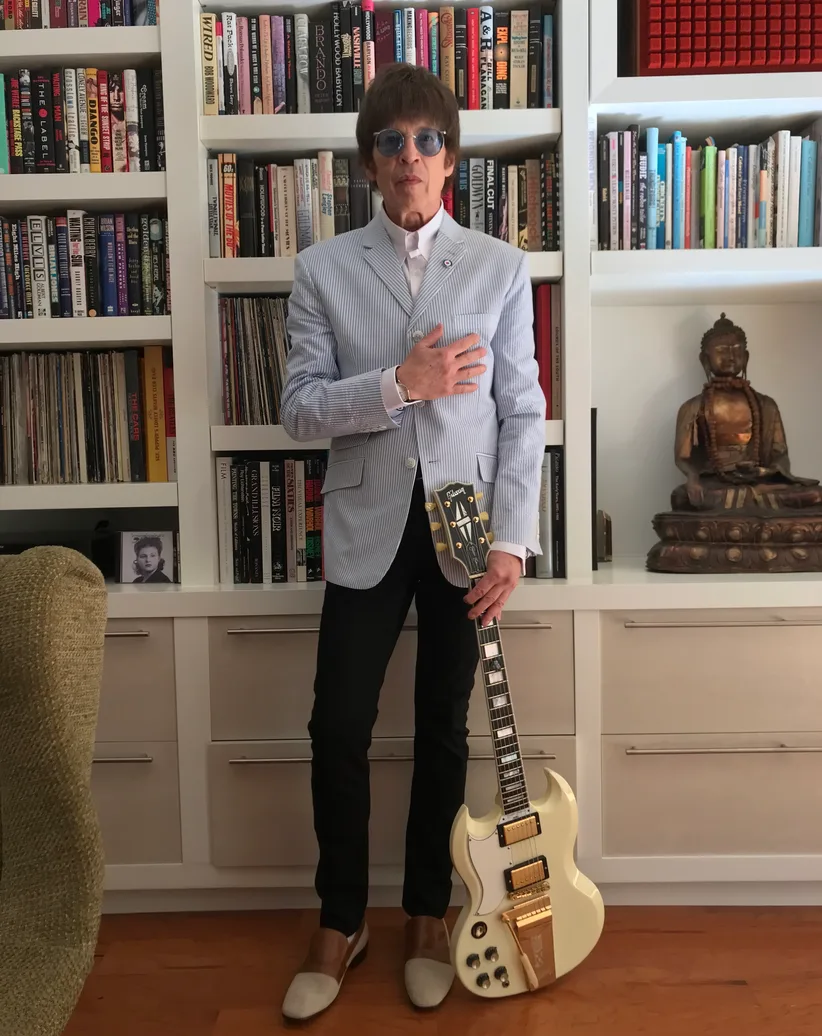
Rock And Roll Hall Of Famer Elliot Easton is one of those rare guitarists whose singular focus has always been to play for the good of the song. Through his well-constructed guitar parts, this founding member of the Cars brought taste and melody to some of the finest written songs in popular music, in a similar fashion to what George Harrison brought to The Beatles. Tom Guerra of TQR recently caught up to Elliot as he was preparing to join the second leg of The Immediate Family tour.
TQR: Hi, Elliot. It's an honor to chat. I first saw you in 1979, when I was 16 years old, in the Yale Bowl right after The Cars' second album (Candy O), and I was just hooked!
Oh yeah, we were with The Beach Boys and Eddie Money, and I remember that, it was like 95 degrees that day. I remember talking to Brian Cohen [owner of Brian's Guitars in New Haven], who was there backstage, and I had on some cool thrift-shop-like 1950s pink loafers. Brian said, "Man, I wish I had a pair of shoes like that." I loved him so much. I was going to take them off on the spot and give them to him, and then I said, "What size do you wear?" and he said, "12-1/2 triple E"—and I knew they'd never fit. [Laughs.]
TQR: You were born in Brooklyn and then moved to Long Island, correct?
I lived in Brooklyn until I was three. Then we moved to Forest Hills till I was six, and we made the move to Massapequa [Long Island], where I spent most of my school years.
TQR: At what age did you start playing guitar?
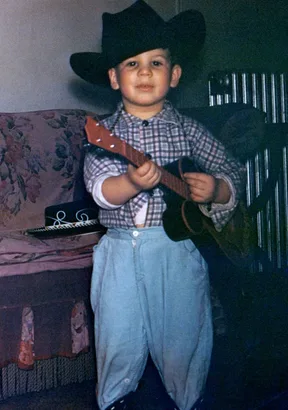
I'm gonna say I was nine or ten when I really started trying to play. I had a guitar since I was three, but when I got a little older, I actually got into sitting down and trying to play chords and stuff like songs from The Ventures, surf songs like "Wipeout" and "Walk, Don't Run." This was right before The Beatles hit.
TQR: Do you remember what was your first good guitar and amp setup?
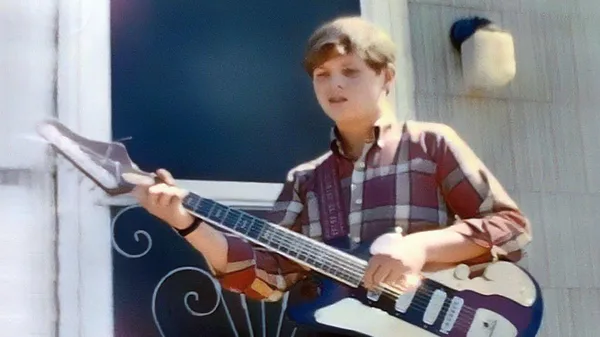
Absolutely! My first good guitar was actually an acoustic, an all-mahogany Favilla that I worked to earn the money for. I ordered it as a left-handed model. My first good electric was a Fender Telecaster that I washed dishes in a restaurant to buy. I ordered it custom, a left-handed model. Both of these guitars I ordered from Gracin's Music in Freeport, on Long Island. My first good amp was a Traynor, 2x12, and it was one of the first amps with a master volume. I was in high school at this point, playing in a band, and shortly after our band came in second in a Nassau County-wide Battle of the Bands. The prize was a $500 gift certificate to Sam Ash Music. Since there were five of us, we all got $100 each. Because I was really into guys like Mike Bloomfield at the time, I started thinking about getting a Les Paul.
But since I could only afford one guitar at a time in those days, I sold my Telecaster for $150 in the Buy-Lines, a local classifieds paper, and then took the $100 gift certificate and got my Mother give me $50, and I was able to get a brand-new 1971 gold top Deluxe with the mini humbuckers for $297, case and tax included, out the door at Sam Ash. And for another hundred, I could've gotten a lefty black beauty Custom that they had. They also had a lefty SG Standard and a lefty SG Special, too.
TQR: That's cool because you didn't really see a lot of left-handed guitars back in those days.
Right, but Sam Ash had a good selection of left-handed guitars.
TQR: So, at some point after this, you finished high school and you and the Les Paul Deluxe found your way up to Boston.
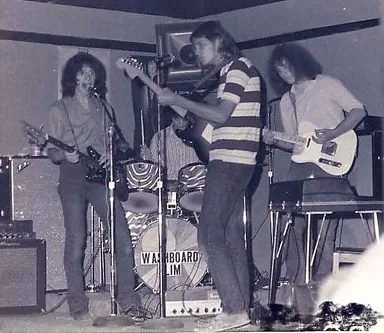
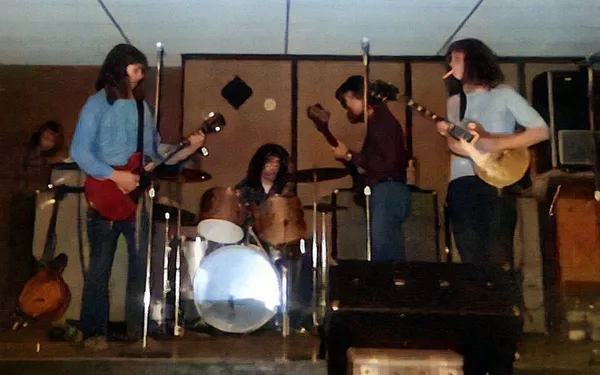
Yes, I had decided that I wanted to go to Berklee [College Of Music] to study music, but I couldn't get the funding together initially. But I really wanted to get out of my parents' house, so I went to upstate New York to a college called SUNY Brockport. What happened was this: I was jamming on my guitar along to some records one day—I had just gotten there, so it was like September and my window of my dorm room was open—and these guys playing out on the quad just followed the sound up the stairs to my door. I hear a knock at my door, and they listened to me play and said, "Hey, you wanna join our band?" They were already together and working and had a Hammond player, a Leslie [rotating speaker], full gear, and a truck, so right away I joined the band and hardly ever went to classes because I was really just buying time to go to Berklee.
Around this time, I learned of something called the National Defense Student Loan, where if your parent had been in the armed forces, you could get a student loan for college. Berklee was $5,280 with the dorm and meals for the year, so I got that loan and then went up to Berklee.
It was really funny because they gave me this big book of coupons and you had to mail $10 back each month to pay it off. I still hadn't paid it back even after The Cars did the Candy O album (1979), so at that point I just gave the book to our accountant and said, "Can you pay this off?" [Laughs.]
TQR: So how long were you at Berklee?
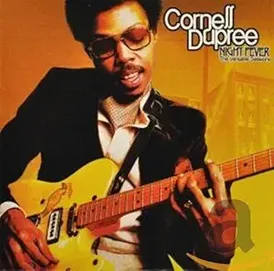
Two years. I had taken an Advanced Placement test, so I took an accelerated course of study where I did two semesters in the space of one. When the regular students were taking their midterms, I was taking my finals and moving on to the next semester. At the time, there were two courses of study at Berklee: you could either major in instrumental performance, which focused on playing, or you could study arranging and composition, which focused on writing and theory and music, and I opted for that because you still got a private lesson every week anyway. I did that because I was already coming along good on guitar, as I was learning a lot from records, and I didn't wanna spend $5,000 a year for guitar lessons. That turned out to be pretty funny because I still had a lesson each week, and one day I started playing some R&B, some Cornell Dupree electric stuff, some funny bends and two-string bends, and the teacher said, "Hey, can you show me some of that?" It started out with him telling me I was holding the pick wrong and ended up with me showing him some licks.
TQR: So, at this time were you starting to get into the Boston live music scene?
After that first two years, yeah, and I didn't so much drop out, but just stopped going. I had a real disappointing experience on a final: I had done an arrangement of Billie Holiday's "Lover Man," and the teacher didn't like it—put a big red circle around the whole chart and gave it a "D." And I was just done after that. So, this was like 1974. Roll ahead to 1982, and I see this teacher walking on Newbury Street, and I'm in my claret-colored Jaguar on my way to our recording studio on Newbury Street, and I offered him a ride. I said, "Hey, you won't remember me, but you flunked me out, and now I'm in a band called The Cars," and he laughed. I still resented him.
TQR: But in some ways, that could have been a good thing.
It could have been, you know, the "butterfly theory"—just change any one thing and the whole outcome is different. But after Berklee, I'm sharing an apartment with friends, and I started playing in a country music band way downtown in the area they called the Combat Zone. It was like the 42nd Street of Boston: strip clubs, criminal element. We'd play from 8 till 2 in the morning, $25 per guy a night, and you know that was like $125 a week, but with two roommates you could live pretty well.
TQR: Were you still playing the goldtop doing country at this point?
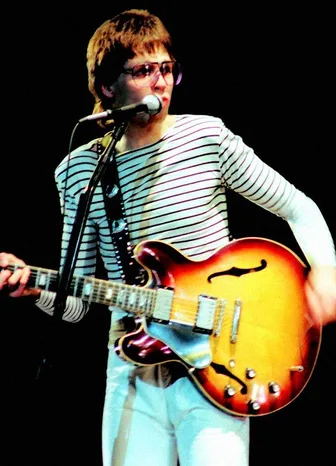
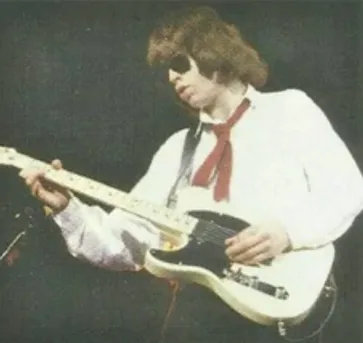
Before I left Berklee, someone wanted to trade my goldtop for their lefty ES-335. It had a "2" over the serial number, meaning it was a factory second, because whoever did the final assembly drilled two screws for the pickguard on the wrong side, and then corrected it. So, it had these two tiny holes. I loved the idea of getting the 335 at that point because I was very aware that my guitar didn't have the full-size humbuckers, as it was a Deluxe, and it wasn't really "the one," so I swapped for the 335 and soon got another Telecaster, which I played with the country band. And then our apartment got robbed and they stole everything: the 335, the Telecaster, and a Twin Reverb. I mean, we were poor—at one point, I was collecting food stamps—and we were broke. So, I went back to 48th Street with my dad, and got a natural-finish, bulletneck Strat three-bolt and took it back up to Boston and played it for quite a while.
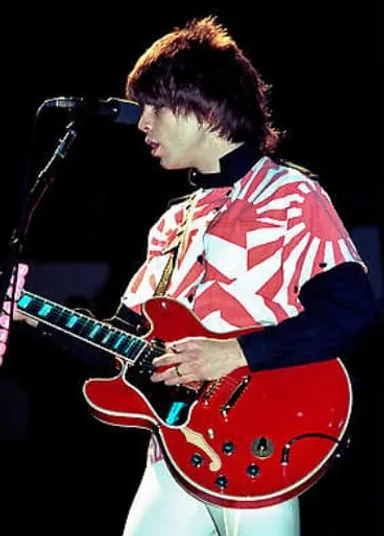
My roommate at the time, Allan Kaufman, known as "AK," wanted to be a sound man and mix bands. He saw a little ad in The Boston Phoenix [newspaper] for "soundman wanted," so they invited him to come check out the band, who were doing a gig. I wasn't doing anything that night, so I went along for the fun of it, and it turned out to be a Warner Brothers party for Foghat at this place called the Bal-A-Roue ice skating rink outside of Boston. The entertainment for the night was a band called Richard And The Rabbits, and in that band was Ric Ocasek, Ben Orr, and Greg Hawkes. So I was listening to the band and I thought "these are great songs and we could make records out of these," and at the same time I felt like I had a better clue as to what the songs needed than what I heard the guitar player in the band doing, which is just typical guitar player stuff [Laughs], like "How many guitar players does it take to change a lightbulb? Fifty! One to change the bulb and forty-nine to say I could do that better!" [Laughs.] These were solid songs and the guitarist had a fusion thing happening, but I thought it needed a more poppy kind of thing and I thought I would be able to do it. So, Alan got the job as a sound man, and Richard And The Rabbits eventually broke up. So Ric and Ben started singing as a duo in a little pub in Cambridge called The Idler, with Alan sitting in on percussion. He'd set the sound and then join them on percussion, and he got to be closer, better friends with them. So then he started hyping them about his friend Elliot, really sort of overhyping things: "You know, you gotta hear my friend here. He's an amazing guitar player, so great." Eventually, I was invited to go over to Ben's house to play with the two of them. So, here we are: I'm sitting across from Ben with my guitar, and Ben folds his arm, and says, "Okay, play something amazing." So naturally, I froze up and was paralyzed. But eventually I relaxed and started playing, and they liked what I was doing.
TQR: Did you immediately add a third vocal or did that come later?
No, just playing guitar, so I started sitting in with them at this pub, the Idler, and Ric started getting the idea for another band, so the duo sort of evolved into a band called Cap'n Swing. That band consisted of Ric, Ben, and me. Ben was not playing bass in that band; we had a bass player named Todd Roberto, from Brooklyn, and a drummer called Glen Evans, and Greg [Hawkes] had gone off to play sax with Martin Mull's Fabulous Furniture, so our keyboard player was Danny Louis, my old friend from Berklee, who is now in Gov't Mule. What happened with our friend group was when one guy got into a band, he'd try to get the other one along with us, and that happened here.
Todd the bass player was into Jack Casady and Phil Lesh, so he sent his Guild Starfire bass to Alembic to have the filters put in, he had like three Alembic cabinets and a McIntosh power amp, and the drummer was playing like Billy Cobham. Anyway, that band went to New York to do a showcase at Max's Kansas City, not for record companies, but for managers. In fact, we had Leber and Krebs, who managed Aerosmith, and Bill Aucoin, who managed KISS and Angel there. So, they saw the band, and after the show, they gave us some really constructive criticism and they weren't unkind, but they were very serious. They said the songs were great but not quite concise enough as some of the solos went on a little bit too long, the bass player looks like he should be in the Grateful Dead and the drummer should be in a fusion band. And Ben, who was just singing, was wearing a silk karate Gi that his wife had made him as he wore these Vietnamese slippers, so they pointed out that our image was all over the place. So, we went back to Boston kind of with our tails between our legs and really took their input to heart, and that directly led to getting rid of some members and bringing in others and forming The Cars.
Todd left, we got Ben back on bass where he belonged, and we got David Robinson from the Modern Lovers to play drums, which fit perfectly because all we really wanted was a big rock beat. Danny was still on keyboards for a while, but then Greg came back on keyboards and that was The Cars.
We were playing clubs like The Rat and started getting a following, and we made a live 2-track demo in a little studio called Northern Studios, in Maynard, Massachusetts. "My Best Friend's Girl" and "Just What I Needed" were on there, and then, thanks to our angel at WBCN, DJ Maxanne Sartori, WBCN started playing "Just What I Needed" in heavy rotation. This was incredible, as it was a demo tape. We weren't on a label, we didn't have a record deal, and back in those days, all the radio stations subscribed to these radio tip sheets which were like the Billboard magazine for radio stations. These were distributed nationally and showed what all the major markets were playing that week, so the secondary and the tertiary markets could see what they should get on the radio, and what was going to be a big song that week. Soon, record companies were asking, "What the heck is going on in Boston, who are The Cars, and why are they're getting reported nationally?" So naturally, they started flying up to Boston to check us out, and it led to our record contract with Elektra.
TQR: How did you guys pick Roy Thomas Baker as the producer, or did he pick you?
The label had Roy check us out. He'd been really hot with Queen and they suggested he check us out, and so Roy came to one of our shows. It was a snowed-out gig in Worcester, at Holy Cross [College], and it was like a student union dance, with maybe a dozen or fewer people there. So, our manager picked up Roy at the airport and drove him all the way to Worcester, through snowbanks, to see our show. Even though there were just a few people there, we put everything into our performance. Of course, you can't get the same electricity and feedback, but we were trying to play our butts off. After the show, Roy came right up to us—there was no backstage. He just walked up to the stage because it was so empty, and in his sort of Monty Python voice said, "Would you like to come to England to make a record?" just like that. I'd never been anywhere south of Maryland, and this was an opportunity to go to England to be produced by Roy Thomas Baker at George Martin's AIR Studios in London!
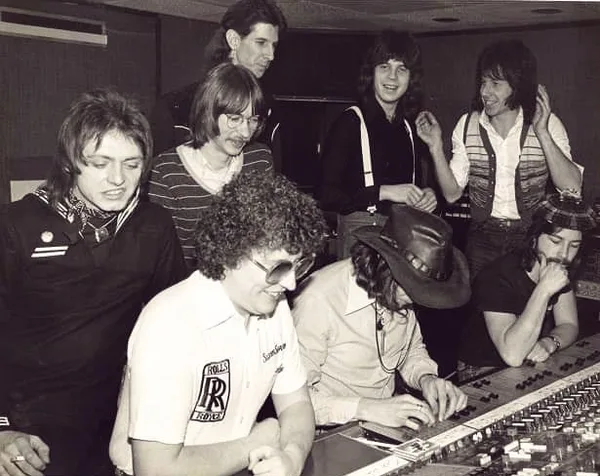
They put us up in a house in Mayfair that was run by a Malaysian couple, who took care of us. They gave us a Jaguar and a Range Rover to get to the studio and wherever we wanted to go. We hadn't even sold one record yet! How did this happen? It would never happen today.
They gave us a good budget, but it took us only 12 days to record the entire album and then nine days to mix, as Roy mixed only a song a day, to save his ears. I did all my guitar parts in a day and a half! That's one day and a half!
TQR: The Seventies was truly the age of the lead guitarist, and the thing that really grabbed me when I heard the first Cars album back in 1978 was the great guitar on it. Of course, you were playing over some incredible compositions, but you were not just doing pentatonic riffs like everybody else was doing at that point, and you had some incredibly varied tones. Did you have a guitar collection at this point?
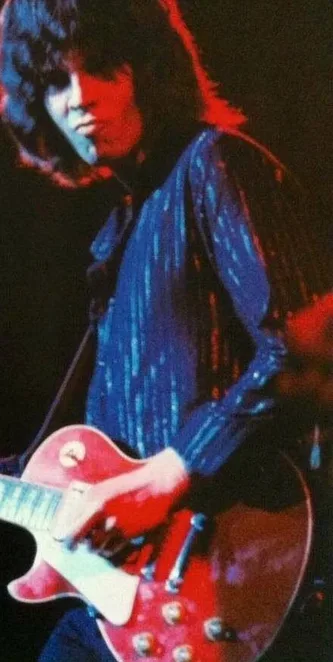
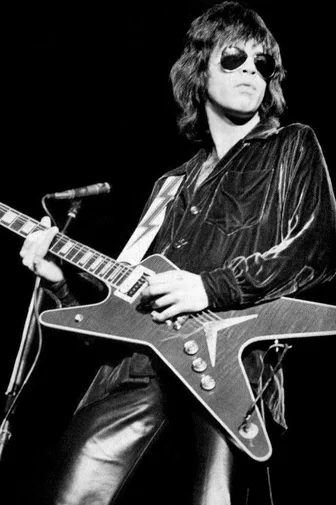
I had two electric guitars: a Les Paul and a Telecaster. For the single-coil stuff, I used the Tele, and for the humbucker songs, I used a Les Paul Standard with DiMarzio Super Distortion humbuckers. It was a dark tobaccoburst originally, but I had Ed Murray, who worked upstairs from Wurlitzer Music in Boston, refinish that Les Paul. I wanted a Chinese red lacquer top and a black back; I saw somebody in Boston had a guitar painted kind of like that and I thought it was a great look.
TQR: How about the effects on that album?
I only owned two effects at the time, a Roland Chorus pedal and a Morley Echo Volume, which worked on a magnetic disc.
TQR: Was that the echo you use on the solo in "I'm In Touch With Your World"?
No, that's studio echo with a Studer half-track [tape recorder].
TQR: And we can hear the chorus pedal in songs like "Bye, Bye Love" and "Don't Cha Stop"...
Actually, Roy said, "You don't need that. We're going to do chorus the right way!" And so, anything that needed chorusing, I would manually double-track with a slight detuning from the Varispeed [speed control on the tape recorder] to give it that cool wobble, like the ADT [automatic double-tracking] thing that Ken Townshend did on John Lennon's voice.
TQR: How about distortion boxes? There are some nice raunchy tones on that album.
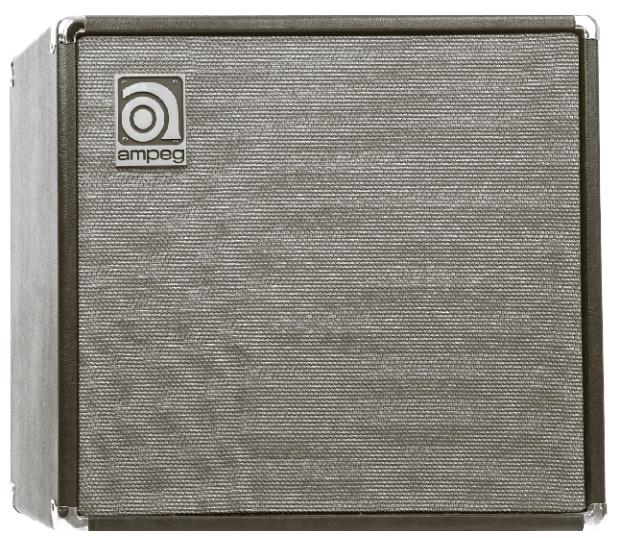
We had gotten a deal with Ampeg, so Ric had a VT-22, I had a 4x10 VT-40, and we also had a V2 head and some Ampeg and Marshall cabinets. Before that, I was using a Lab Series amp. We also used a Twin Reverb, which was Ric's, so I used the Twin for clean things with the Tele, like "My Best Friend's Girl." We used the Ampegs with the Marshall cabs for the rest. I used very little in the way of effects but did do a good amount of doubling which really tightened me up.
TQR: The thing I always liked about your solos was that they were like a song within a song. They always told a story, went somewhere. Had you worked all of these out beforehand, or were some off the cuff?
By the time we recorded the first album, almost all had been worked out already, since we'd been playing these songs live for a while. The solo on "Don't Cha Stop" was spontaneous. I just sort of ripped that one off. But for most of my solos, I'd usually sit at home with a cassette and compose something by working it out.
TQR: A lot of guys at the time were playing solos just based around a simple blues scale, but yours were different, as they tended to be more melodic and maybe less pentatonic.
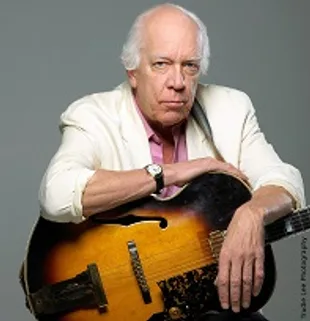
I think that might be because I had some really different influences than most of the guys in my generation who really were so into Page and Beck and Clapton. And I loved Clapton and Beck, too, and some of Page's stuff, like his work on The Yardbirds' Live at the Anderson Theater, but I had some really different influences, like a lot of Tele players, including Jesse Ed Davis, Cornell Dupree with King Curtis, James Burton, Roy Buchanan, Clarence White with his pedal steel licks, Steve Cropper, Reggie Young, Robbie Robertson. Because so many guys I so admired played Teles, that was the first guitar I really wanted. And of course, Amos Garrett, who was in Paul Butterfield's Better Days and before that, with Geoff and Maria Muldaur in Jim Kweskin's band. He played incredible, unexpected guitar parts with two-string bends in different directions, forming tritone resolutions, trombone licks—he really influenced my playing a lot.
TQR: Throughout your career, you worked with some of the greatest producers of all time, including Roy Thomas Baker and Mutt Lange. What did you learn from them?
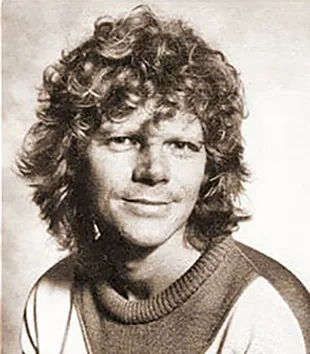
From Roy, I learned so much about the mechanics of making records and playing precisely. Mutt tightened up my time to the point that I felt like I was living inside the hi-hat with those eighth-notes. I also learned so much from Roy, how he stacked vocals for that huge vocal sound, and also how to get a great guitar sound. He always had three mics on my amp—one close, one a little higher and about three feet away, and one at the other end of a big room, on a big boom. He'd blend them to get the ambience of the room and the immediacy of the close mic.
With Mutt, we'd play with a simple LinnDrum part, and then he would record the finished drums last, after we recorded the whole track, which made things a little strained for [drummer] David Robinson in working that method. Mutt wanted the option to insert the fills where he wanted to put them.
TQR: Of course, nowadays, that's sort of standard operating procedure for a lot of folks.
Exactly. It was a precursor to the modern way of recording.
TQR: If you could sort of name the definitive or archetype Elliot Easton guitar solo, do you have one of yours that stands out in your mind that's your favorite?
I think maybe "Touch And Go." I really worked on that one, and I stretched myself a little bit on that one and extended myself a bit. I'm proud of all of them, though.
TQR: What were you playing on that one?
I was playing a Fender Lead I. I wish I still had it. It was such a great guitar. I was playing this through a Boogie head and a Marshall cab, just cranked, in Cherokee Studios in L.A.
TQR: In terms of broadening the scope from that question, do you have one all-time favorite guitar part or solo?
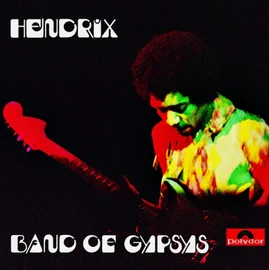
Jimi Hendrix's "Machine Gun" with the Band Of Gypsys.
TQR: That's actually hilarious—I ask everyone that question, and you are at least the fourth person who has said the same thing.
Jimi Hendrix was my first concert. A friend of mine had tickets to see The Monkees at Forest Hills; he had an extra ticket and asked me if I wanted to go. Nobody knew who Jimi Hendrix was. This was before we'd heard "Purple Haze" or anything, and if you said he was dropped in from another planet, it would have been easier to believe than what we saw and heard that night.
TQR: The Cars were inducted in the Rock and Roll Hall of Fame in 2018. What do you feel is the band's ongoing legacy, now that we've lost two of your bandmates (Ric and Ben)?
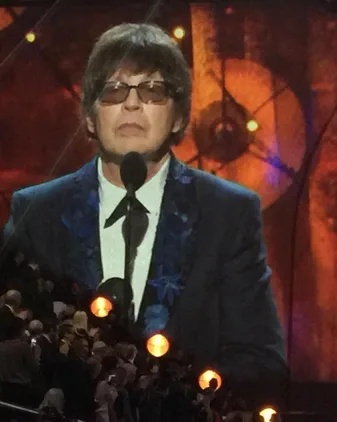
I think the music has held up amazingly well, with new generations discovering The Cars. I get a lot of messages from contact with young people who love their Cars. The other thing I think about the band, in terms of why it's been able to sustain popularity and have longevity, has something to do with Ric's lyrical content, which always sort of explores the dark side or the darker side of the human condition. "I guess you're just what I needed, I needed someone to bleed." "Who's gonna hold you down, when you shake." Universal topics that haven't changed for young people today. It's still just relationship stuff, but it's darker. I always laugh when people put us in that "New Wave" bag because I like to say we definitely weren't "Walking On Sunshine." [Laughs.]
TQR: You've worked with Gibson Guitars on a couple of Elliot Easton models, most notably the Tikibird. Tell us about that experience.
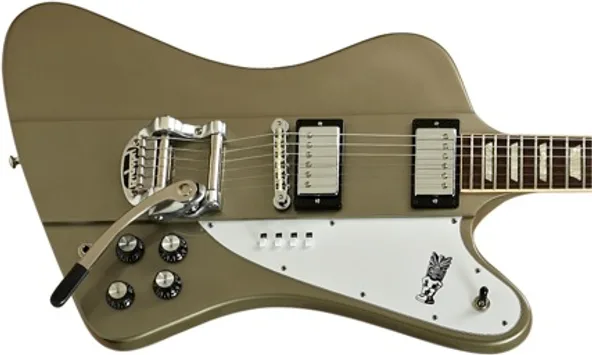
With the Tikibird, I just wanted to fix the Firebird. I knew from experience that the original banjo tuners and the ones they were currently using were not great tuners, but they were very heavy, and it made the guitar neck dive. Also, the Firebird case didn't lift the headstock from the floor of the case, so the tuners would sit on the bottom while in the case, as the neck rested on them. So, I put Steinberger keyless tuners on it. I also suggested '57 Classics, full-sized humbuckers, as they gave a fatter and sweet sound, and a B7 Bigsby for good string tension. We also put four mini-toggle slider switches on for coil splitting, out of phase, and a blower switch that bypasses the volume and tone controls and goes straight to the output jack for soloing. You know that on Tikibird, the MSRP was only $1,999, and you can see them on Reverb for over $6,000. They sound great, they play great, and they don't neck dive, either.
The other was the two-pickup SG Custom, which came in Vintage White. That was just my idea because I felt like the original white SG Custom was one of the sexiest solidbody guitars ever made, but a lot of people gravitated to the Standard because that middle pickup of the Custom seemed to get in the way.
TQR: You've been playing out with The Immediate Family, but what is next for you?
I am doing some sessions right now, and there is actually some potential for some new Cars material, but I just can't talk about it right now. I'm also working on a television show for J.J. Abrams that's gonna be coming out on Netflix, but I can't say much about that, either. I'm doing some music supervision there. I'm also working on a blues album with Barry Goldberg at Johnny Lee Schell's studio that also has Rob Stone on harp.
And as long as Waddy [Wachtel] is out on the road with Stevie Nicks, I'll be doing The Immediate Family. They have been great, like my big brothers, and they've been so welcoming and kind to me. They told me that when they found out Waddy was leaving to tour with Stevie, that I was the only one on their list, and they didn't even consider anyone else. They've told me that they love what I'm doing in the band and value my input, and we're actually doing four Cars tunes. So, I tell them that I'm the Immediate Family Car! [Laughs.] TQ—Tom Guerra
https://www.instagram.com/ellioteaston