
"If you have good thoughts, they will shine out of your face like sunbeams, and you will always look lovely." —Roald Dahl
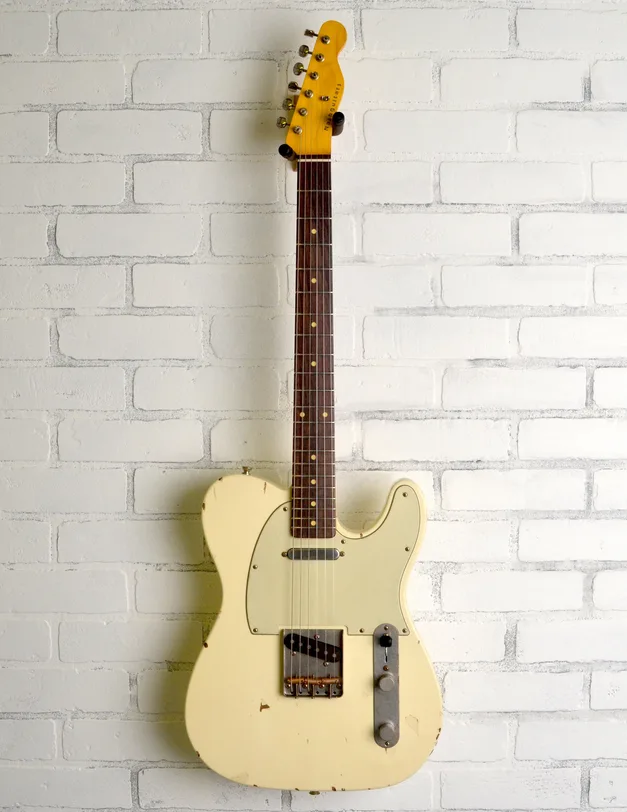
We first profiled Bill Nash in these pages in August 2004, when David Wilson found someone clearly looking to improve upon Leo Fender's designs, given what was available in the market back then. Bill was on to something in that his guitars sounded and played great, were set up well, sported top-shelf hardware and Lollar pickups, and were finished in a way that removed any concern about that first ding. Sure, some of the relic work could be considered a titch over the top, but 30,000 guitars sold later, and with Nashes on stages and in studios with the pros, there is validity to the intention. We jump ahead 15 years from that conversation to understand that his quest is never over. Nashguitars' patent-pending Nautilus Neck is something to behold, so obvious as to why it works and a reinforcement for how something that is right in front of our faces every day is not necessarily easily seen. Bill saw it, and because of that, we benefit.
TQ: We've been enjoying the heck out of the T-63 (alder body, slab rosewood fingerboard, Lollar Special T Bridge, Lollar Vintage T Neck). It's an incredibly good-sounding and -playing guitar. We feel that our sample size of Teles is well into the couple of hundreds, given how often we like to stop by Music Villa for a play, and this one produces head nods and smiles from every player who's hands we've put it in.
Well, thank you. I appreciate you saying that.
TQ: Let's talk about your patent-pending Nautilus Neck.
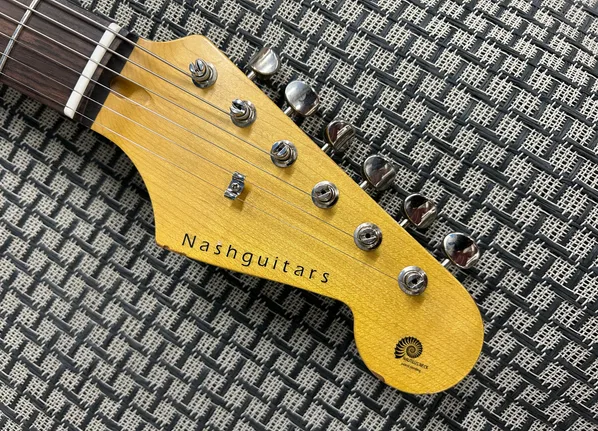
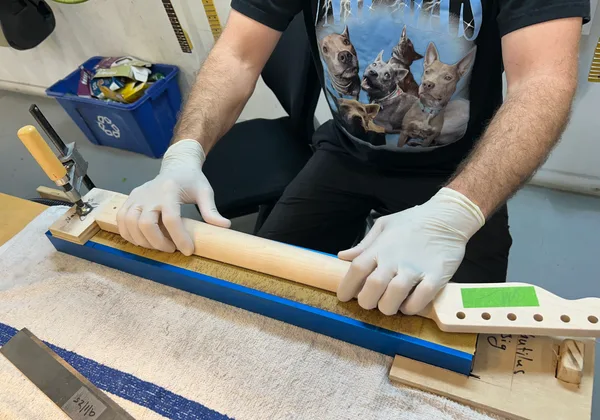
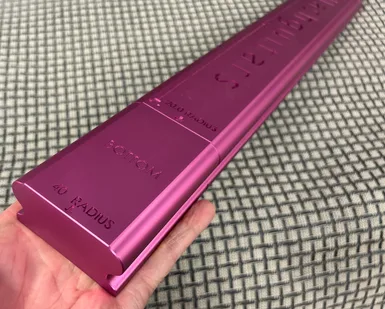
I made two of these about 20 years ago in my own quest, as I'm the laziest guitar player in the world. I was always a tinkerer and was constantly trying to figure out the absolute best way to get the action, not only lower but consistent, where the pressure you play with at the 1st fret, mirrors the pressure at the 12th. I think we've all trained ourselves to work with a guitar that typically has action that gets higher as we go up the neck, that it feels different and often more difficult to play up higher in that register. I'm not sure what happened, but there was a point where I had an "ah-ha" moment. I was looking deeply into the Rule of 18, which is the basis for how frets are spaced between one another up the neck. Every fret is 1/18th closer than the last. It dawned on me that if I made every fret 1/18th flatter than the previous as I went up the neck, I would then theoretically or mathematically have a perfect situation. Though we are still dealing with music physics and other things, it may not be absolutely perfect, but I feel as though it's far better than anything else when talking action and playability. I shelved the idea because Nashguitars took off so fast in our early days that for 20-plus years we could not get caught up with production. COVID then happened, and like many we figured it would be tough for our business and a good time to revisit the design, but as we all know now, it became quite the opposite. We had five times the number of orders that we were struggling to keep up with previously and we hired more people to get through it. Post-COVID, once things settled down a bit, I found myself with a little more time to contemplate what I had done decades earlier. I reinvestigated and worked the idea more, knowing that I would not be able to do it by myself with the tools that were available. The first two were very difficult to build because I pretty much did it all by hand. I knew what the goal was, and I didn't care how much money and time it took back then. One of those guitars still exists and it's in L.A. with a studio musician/score writer friend of mine. Coming back to the idea... It was a two-and-a-half-year process of figuring out what machines we had that we could use and what we needed to design and build in order to manufacture these at scale with a viable process. During this time, we also wrote and submitted for the patent, and now we are moving forward. It's been great. We redesigned the sanding machines, the sanding blocks, belt sander trapezes, and some other tooling to get all the math we need.
TQ: Okay. Before we go there, how did you go about building those first two? Did it start with getting the neck or the frets right first?
It was more about getting the neck correct first. I planed and sanded the neck to where the starting radius and end radius were mathematically where I wanted. From there it was about getting each fret curved to match the exact radius of the corresponding fret slots.
TQ: The frets then simply follow the radius of the fretboard.
Right. You still have to bend frets to get them where you want them, but yes, it's much easier to adjust the neck as a starting point. On the original two, I used lasers pointers and cones that allowed me to measure and get the neck and frets to line up perfectly with the strict math. The frets actually need less touch-up and dressing work, compared to your standard approach because the attention to detail and precision with which we make the necks and frets gets them near perfect before they ever see a sanding block. I have to tell you, too, that this would have been impossible to do at scale without the amazing work, input, ideas and attention to detail from the team here. These are the guys who have been doing fretwork on over 15,000 or so guitars in the last 10 years. They've become experts at what they do, and most importantly it's repeatable with great accuracy.
TQ: Shifting to playability, do you feel as though the guitar rings better with superior note definition and separation because of the neck design?
Yes, absolutely. Not only do notes ring better because they have the space to do so, but they're more consistent throughout the fretboard. Every time you fret a string on the Nautilus Neck, the fret that typically can be the problem—the next higher fret—is no longer an issue, as it is flatter by the perfect amount. You not only get better sustain with that fretted note, but with bends, too, you actually increase the sustain with more clearance, which is that exact opposite from what you get with standard radiused necks—where they often choke out with low action. I can bend strings now until they break without choking the notes.
TQ: That is very noticeable.
That was a big goal for this design, and interestingly enough we've found that the guitars seem to play in tune better, and I believe it's because we can now play the guitar with a consistent touch up and down the neck. You don't have to press harder as you go up the neck on a Nautilus design. If you like to play complex chords up high, perhaps you shied away from doing it because it was too tough to grip or wouldn't play in tune. With this neck, you begin to build a confidence in what you play and where you play. Our goal here has always been to remove any obstacle and free up the player so that the guitar is out of the way. We feel that with this neck design, we've taken a significant step towards that vision. I must point out, too, that setup remains critical. If you're heavy with your attack, versus a someone who is lighter in that regard, you will still set up this guitar to complement your style. When I setup my guitar I'll have the neck dead straight with no relief and I can still set the action very low. I am okay with some small amount of fret rattle when played acoustically on the low E and A, as you won't hear it through the amp. When we prep guitars to ship, we set them up just a bit higher than that because my team tends to complain about my setups. I'm not the final setup guy anymore. [Laughs.] They'll say mine's too low.
Another unexpected benefit was discovered by Tim Pierce. He pointed out that the .010 gauge strings bend as easily as .009s. Tim was very helpful in the final testing of our prototypes, and we gave him the very first production guitar. As much testing as we did here, Tim found some ways to test and how to interpret results that we had not considered.
TQ: It does play slinky and feels good. Where do you set the radius for the strings?
If you imagine the conical shape where the fretboard radius starts at a small radius and increases as it goes further up the neck, you just set the bridge as if the conical shape continues. Just looking at the string height overall (and playing the guitar) will tell you where the bridge should be set.
TQ: Chording low on flat necks is not comfortable.
I agree. Some of those super Strats of the shredding '80s were very difficult to play down low. Of course, the nut with the Nautilus is less than 6-1/4", so comfort is very noticeable.
TQ: It dawned on us that with a Nautilus neck, one can't go about a fret level, crown, and dress in the same way you would if working on a neck that has the same radius across the fretboard. How will that work, and do you envision using titanium or stainless-steel frets to minimize wear?
You're right in that we have designed and manufactured the blocks that need to be used for fret leveling, etc., on a Nautilus neck. Small touchups should be able to be done by a good tech without using the tooling. We are still working on which dealers will be able to fully service these necks, versus offering the refretting, fret dressing at our facility. One way or the other, there will be a way to service these for all clients.
We have never used the titanium or stainless-steel frets. This is more a result of our own personal tastes than anything else. I know they last virtually forever, but to me they feel harsh.
TQ: What nut material are you using?
We use what we've always used, which is the GraphTech TUSQ. They start as blanks, and we cut them the way we want them.
TQ: Has anything changed in the world of wood sourcing for you?
No. Surprisingly, that has stayed pretty consistent over the years. Gotoh makes a lot of our hardware. Lollars go out on about 98% of what we build. Their pickups have remained very consistent over the years, and we've shared a great relationship. We use the same nitrocellulose lacquer that we've used for the last 23 years, the same grain filler on ash, and very little has changed in those elements of the business.
If it works... There are some things that exist in the business where we have to keep an eye out. Rosewood goes through availability cycles or there may be a problem with getting good ash, and in those cases my life becomes one of working around supply problems. With importers, sometimes your guy doesn't have the wood you need.
TQ: Are you sourcing blanks and cutting your own or do you buy the necks and bodies?
We buy necks and bodies from a business partner here on the West Coast that does all that for us. I purposefully chose not to be in the wood business, as it can be a bit of a nightmare. We have CNC machines to cut our own plastics, and we will cut our own bodies if, for example, we need to make prototypes of new guitars or if we want to experiment with a change. It's not so much that we can't do it, it's just that, like some things in business, you're better off outsourcing some elements for economies of scale and accessibility. Wood is a crazy business, and dealing with wood suppliers is like dealing with a cartel in a way. [Laughs.] They have to deal in such an unsure world, and you have to often buy a lot of what you don't want in order to get what you do want. And then of course you'd have to introduce warehousing into the equation. Ours is a component business, like many, and it works for us. We sell to dealers and not direct to consumer, and that's another thing. I worked in music retail for a time and really feel there is no reason for a dealer to carry our guitars and be enthusiastic about them if I'm also going to sell directly to their clients, but that's a whole other conversation. Protecting our dealers is a top priority.
TQ: Our memory of the Lollars, in this case in a previously owned Nash T-52, was that they were very rock. Not a twangy Tele. With the T-63 you sent, we found a very different experience, especially again with the Special in the bridge. It feels and seems to behave differently than we remembered. It can compress and rock, but it also can twang and bloom without being too strident. Very flexible in what sounds you can mine.
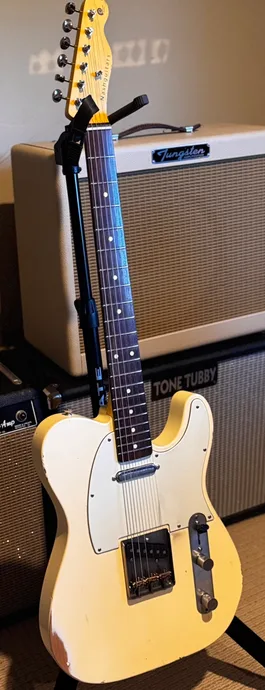
With the Lollars, we've always found them to be incredibly dynamic pickups and they react to the wood they're in and the height at which they're set. To us, the perfect Tele pickup can do P-90 but can also do classic Tele in that sense. We do feel that we've dialed it all in pretty well. I always say, with the right Telecaster and Princeton Reverb, you can do anything you want. As a player, back in my early days I was easily annoyed by many traits of new guitars that I'd buy and that constantly drove me to finding solutions. One trait that always bothered me was how unbalanced the pickups are in so many guitars as they were made. It's crazy. We love the combination of the Special in the bridge and Vintage in the neck on Teles. If we have a customer request DiMarzios, we'll work diligently to deliver that same balance.
TQ: The guitar came with a treble-bleed cap, in this case with no resistor in parallel, as you often see with treble bleeds. What are your thoughts on that?
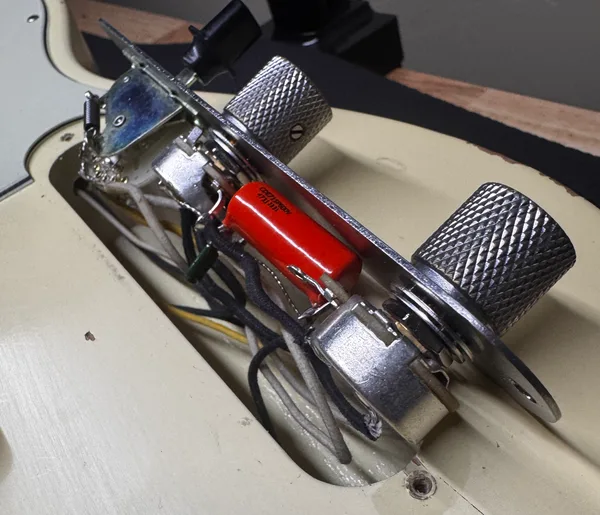
I went around and around on the treble-bleed cap in the first few years of building. There are so many opinions about the best ones, but I always came back to the simplest .001 cap. It was all we ever used in the '70s and '80s, and I think my ear was just used to that. I know many prefer the cap/resistor combo, but I wanted to offer the most common, average, and easy to either clip out or replace.
TQ: With necks, what optional shapes are customers offered?
We make a medium "C" on most guitars, which is a very standard-feeling "C"-shape neck, and our boat shape, which is maybe a hair thicker than 1" with a very slight "V" to it. I prefer it, but I have big hands. Most go with a "C" shape.
TQ: Where do you want to go with this technology? Do you envision licensing it to others?
I think that I would probably license it, and I could supply them not only with the information, but equally important, the tooling and knowledge with how to use it. If that happens, per your earlier question about fret work, they'll be able to take on that work, too. Ultimately, the more players that are happy, the happier I am, and Nashguitars is not in a position to fulfill the desire on our own if it's what players want. We can produce about 150 guitars a month. We'd love to see this be successful for players, for our dealers, for us and perhaps there's a second step where perhaps we sell just the necks alone. Our first step here, and we just started, is shipping product to dealers. They're just getting their Nautilus builds now.
TQ: Any feedback yet?
A few of our top dealers received samples a couple of months back, and they were all really happy with the initial experience. It's been nothing but positive feedback thus far.
TQ: What you've done is so logical that it's surprising you're the first to think about it.
Part of the patent attorney's job is to do very thorough research to ensure what you're proposing to patent has never been done—and we could not find anything out there.
TQ: Last and somewhat random question. How do you recommend to your customers that they take care of the back of the neck where you've got this really smooth and slick feel to it, where the nitro finish is removed?
It's really easy. Every now and again, take 1000-grit sandpaper and lightly go back and forth lengthwise. It will smooth it right out. If you want, you can take a touch of black Kiwi shoe polish and put that on there first before sanding, and that will actually help with the wood. It will absorb less moisture and it really slicks it up. TQ—Scott Ulrichs
nashguitars.com
IG: Nashguitars_Official