
TQ: Hey now, Mike! You keeping busy these days when not on the track? What's going on in the shop—any news? How many people work there and what is a regular day like?

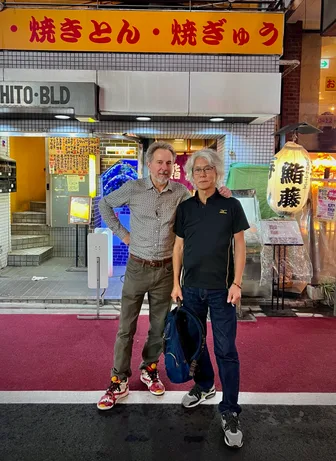
We have been pretty steady since the end of the pandemic, when orders went crazy, though most of our guys are still primarily working from home, as it seems to work better. I like to give them a lot of flexibility and reduce their travel time. My shipping guy gets there early every day and our shop manager, Amy, does some work at home and then comes in the afternoon. I come in the mid-afternoon after doing some work at home and usually work till pretty late at night, when the shop is empty, so I don't get disturbed. After our great collaboration with MXR and the Duke of Tone, we have one this year with Chase Bliss, which is really exciting. I had an amazing trip to Tokyo with them to do the Tokyo pedal summit and some video filming for the new Brothers AM release. It was released today, and I've never seen anything like the commotion it has caused. There is also a new Analog Man movie being produced now, which I hope will be out this year—some of the interviews have been going on for a few years now.
TQ: Have any especially cool vintage or rare pedals rolled through?
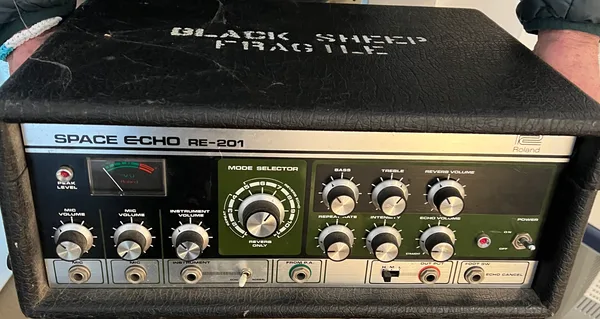
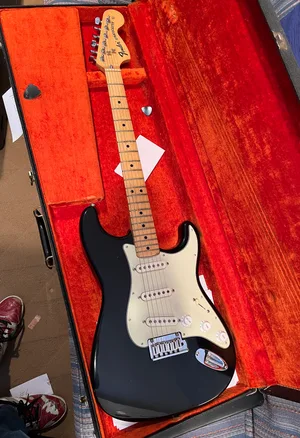
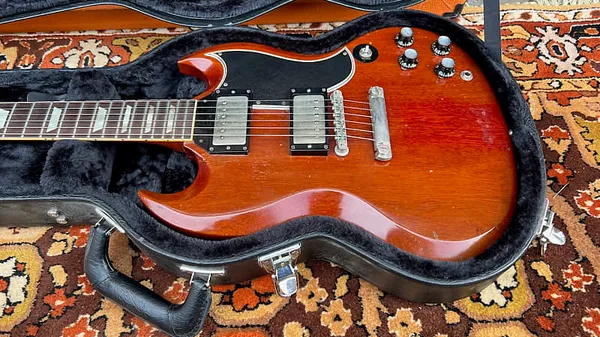
I have acquired most of the things I wanted years ago, but there's always something that I still need. Recently, when checking out a vintage car, I asked if he had any musical gear, and he had a ton of guitars and equipment. So, I picked up a clean Roland Space Echo RE-201, which I haven't had for decades, and some cool guitars. I found a Stratocaster parts guitar with a late-'70s neck which I could date, but the body looked older, though refinished. I pulled it apart and found it had a couple of 1964 pickups and a '78, and some other vintage electronics. I'll probably part it out, though one of the guys at work wants the refinished black body that looks like it might be from the '60s. He also had a 1960 Les Paul Standard/SG. It was missing the vibrato tailpiece and had a few modifications, but I'm going to try to restore it as close to original as possible, with its PAFs! They made very few of these before 1961, and this one—and several others I have seen—starts with a "C" serial number instead of zero. At least they look like a "C." (You can find pictures I posted on my Facebook Analog Mike page). I also grabbed from him a Rickenbacker 360/12, a Gibson J160 E custom shop (for my Beatles itch) plus a 1970s Martin D35. Always ask about guitar gear!
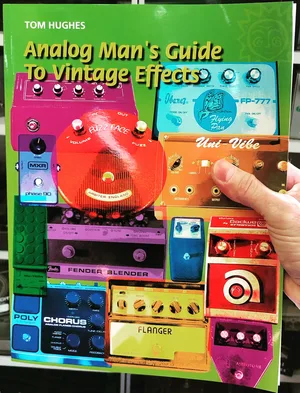
TQ: Thanks for the quick ship of your Analog Man's Guide to Vintage Effects book. It is still timeless and amazing. We dig ours and bought it as a gift for a friend. Readers should know they can still get it directly from you. It is so darn good. Let's talk about your mods and pedals. Through the years, are there any that you are really proud of, feel went above and beyond in how they turned out? The King of Tone has to be on there—it seems like it's gotten "modern" legendary status.
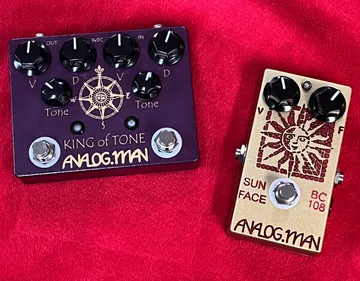
Yes, the King Of Tone has gotten ridiculous. I never advertised it or publicized it but there's a lot of other videos and whenever one comes out the waiting list gets longer. We came out with the Prince of Tone a while back to help, and now they are available pretty much every week from us. And then we did the collaboration for the MXR Duke Of Tone, which should be available at your local music store. It was the best-selling Dunlop pedal of 2023. We hope the Chase Bliss pedal will continue making people happy with their overdrive sounds, with even more flexibility and programmability plus the added Beano Boost-type circuit. The Sun Face fuzz has also been an amazing seller and close to legendary status, especially the older models which are no longer available due to the transistors being unattainable. Our other pedals are continuing to sell steadily—the choruses, fuzzes, compressors, boosters, buffers, analog delay, and of course the modifications are going very strong, especially the Boss GE-7, which we probably do a dozen or two every week. We started modifying the KLON Klones with new old stock germanium diodes a while back and that has also been very popular. I never thought it would make a big difference, but it really makes the pedals sound better, as Bill Finnegan always said.
TQ: We are fuzz freaks here, always flying the flag and on our boards. Is it still worth trying to find a vintage fuzz for a player who might be able to afford one? We know they are all over the map, so many are just so-so, and only a few are great. What is that ratio of great, in your experience? We know Hendrix even went through batches back in the day searching, like others, César Díaz for Stevie Ray, etc.
Anything based on a Fuzz Face, like the Diaz Square Face, is hit or miss, and almost always a miss with the older ones. I have probably about 15 original Fuzz Faces, and none of them sound good, I just collect them when I can get one at a decent price and eventually, I will tune them up and make them all sound good. Other fuzzes can be pretty reliable, but even things like Big Muffs are a bit risky because no two really sound alike and a lot of them had issues due to poor manufacturing. We also get in a lot of Maestro brown-wedge Fuzz Tones to tune up, mostly sounding terrible but we can usually get them to sound better. But it's really hard to make one sound outstanding.
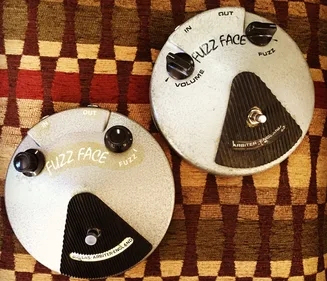
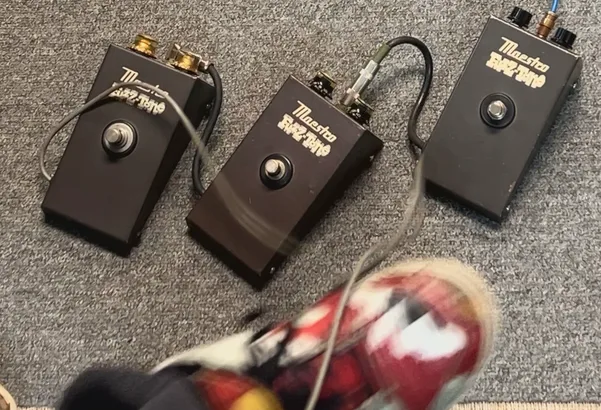
TQ: Speaking of fuzz, are you able to source cool vintage parts for yours if you wanted to? Are NKT275s [transistors] still available out there? Even worth it... or go modern? What have you learned after building so many stellar versions and great ones? Tough and bizarre question, but if you could have just one—Germanium or Silicon—and what/which/why?
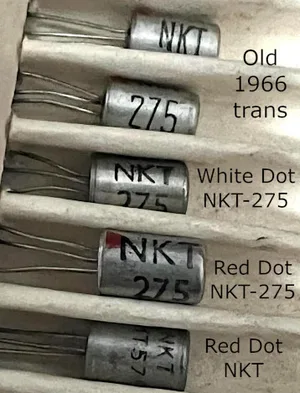
There have been no authentic NKT275 available for decades. People continue to sell fake skinny ones on eBay that don't even look close. Even the old Japanese 2SB transistors are tough to find nowadays. We have been using old Russian germanium transistors for a while, but since the war [in Ukraine], we can't get them from Russia. We can find some in Ukraine now, but not in the quantities and prices like before. I really like our germanium Russian BART Sun Face, and the RCA/BART hybrid, which cuts great and is not temperature sensitive. I also like the BC183 silicon a lot.
TQ: Looking back after decades of being in this field, what are your favorite vintage pedals?
I love the EHX Electric Mistress, 9V x2 version, we don't build anything like that. The Boss CE-1 chorus ensemble is also great after a few guitar mods, but it's too big for most pedalboards. It's not really vintage, but I love the EHX C9 pedal for getting killer organ sounds. Of course, I like my EMS Synthi Hi Fli! I lent it to The Musical Box for several world tours playing original Genesis music, and it was great to see and hear it onstage.
TQ: Are there any off-brand sleepers of great pedals we can still look out for and try to find?
I really like the old Multivox Big Jam pedals. They are Japanese, super low-profile, and sound great, but the battery covers are pretty much impossible to find and they're a bit cheaply made. I also like the Japanese Pearl and old Ampeg pedals.

TQ: Any final words of wisdom you've garnered?
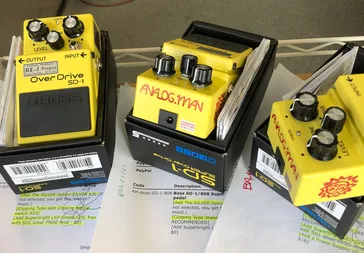
Lately, a lot of people follow the crowd and will get something because somebody famous is using it. But there are many pedals like the Ibanez TS10 that sound good, but they are made really poorly, with fragile parts—pots, jacks, switches—that can't be replaced with the standard high-quality parts we use to make handmade pedals, so they should really be avoided. We have been rehousing TS10 pedals lately for people who want to make them reliable and true bypass, but it does make them larger.
TQ: What's ahead on the path for you guys?

I have several prototype designs I use and have let friends use, and I would love to build some, but it seems like I can't finish critical jobs until 11 PM, and at that time I'm too tired to work on something new. I am also working on a new collaboration to keep an old brand alive that hasn't made pedals. You need to produce products to keep the brandname trademark. I am looking to slow down my work hours if possible, but it's very hard to have other people do the things I do. For example, finding parts is really difficult as they keep discontinuing the through-hole parts we use for handmade pedals. We could just have one of the big three factories that build almost all the "boutique" pedal brands automate new versions of our designs, but I think the handmade aspect is why people buy our pedals—for the quality, easy repairability, and sound. TQ—Riverhorse
analogman.com