
"I shoot the puck, I score the goal." —Boom Boom Geoffrion
Amazing how even a decade ago can seem like another lifetime. But in that timeframe, we once had a 1953 Goldtop we loved and cranked. The neck P90 was a whopper and measured a staggering 11.3 ohms, and the bridge 8.23. Through the years we also had Gibson Custom Shop R4 and R6 Goldtops, both with pairs of P90s. But things come and go. And sometimes, when you luck into vintage gear, it gets to a point where it is worth so much, it makes sense to part ways and move on, do things for your home or life, or get a few guitars and amps simply by selling an old one. We have always missed having P90s, and since we picked up the 1955 Junior, it sent us down the path to diving into them again.
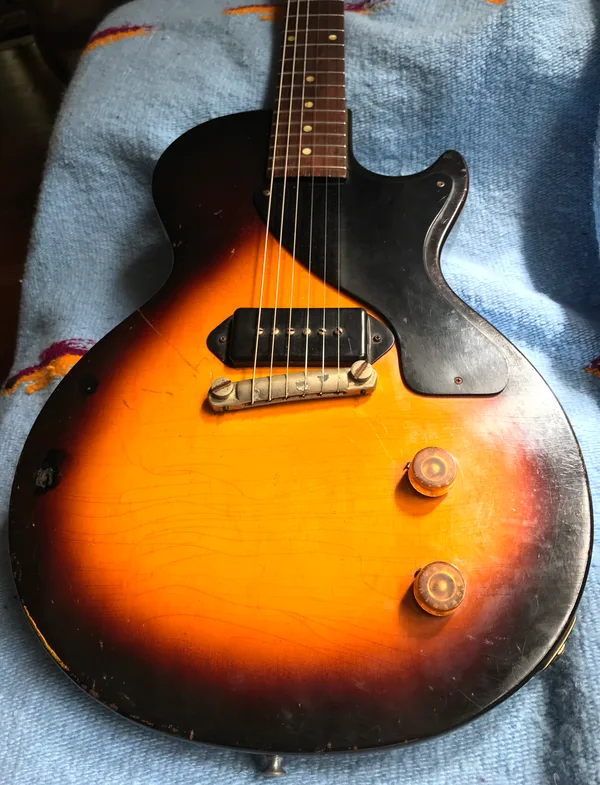
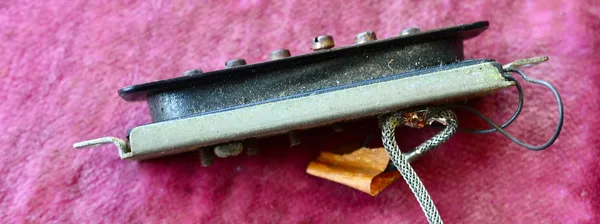
Our vintage Junior has a dogear that measures 7.62. [Ed. Note: "Dogear" refers to the protruding "ears" at the pickup's ends that are screwed directly to the guitar's body.] We had another '55 Junior years ago we wrote about in ToneQuest Report we called Double Nickels. It was simply a bare original body with no parts, completely ragged out, and the neck had been broken off and reset. We took a chance on it for low dough, found a vintage harness, wrap-tail bridge, a '50s P90 that was in Florida from Kim LaFleur at Historic Makeovers, threw on new tuners, and that guitar absolutely wailed—partly because the pickup we put in measured 8.23, which we never forgot. Kim just left us this year, and we will miss him.
With our latest 1955 Junior, the owner who had it in Lubbock, Texas, his whole life and played the heck out of it, must have at some point clipped the dogear flaps on the baseplate so he could lower it into the body more, because when we got the guitar, the studs from the wrap-tail had given way, and the bridge was fully leaning over. We are guessing through the years he needed to do something to give him space between the strings and the poles, or it may have been too wild and rocking for him, but who knows?
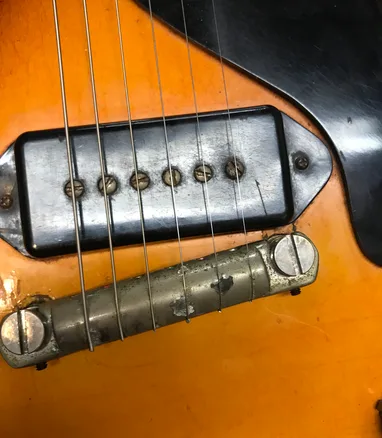
And knowing how both Gibson and Fender had boxes of pickups sitting by the workbench when guitars were assembled back in the day and simply tossed them in each guitar randomly, what are the odds the pickup in our '55 Junior is the preferred one? Maybe it is, maybe not, but why not give the guitar a chance to decide what heart goes in it? Either way, putting other pickups in a guitar can teach us what the actual guitar in our hands is all about, and at the very least, offer us some flavors. So, we went looking for a vintage dogear.
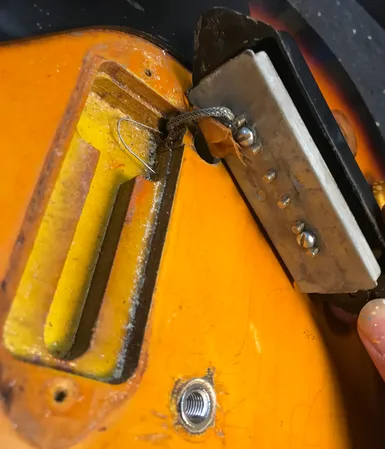
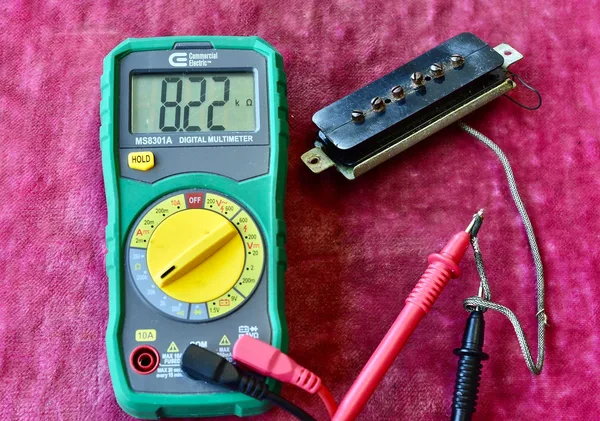
It takes time. There are all sorts of strange things out there. Buyer beware. Nevertheless, eventually we found one from a vintage parts dealer in Illinois who had a few of them up for grabs. We had a conversation about what we were looking for. He has played and tested all the ones he has for sale and steered us towards one measuring 8.22, which is close to the ol' 8.23 we threw into the first vintage Junior. But loose P90s are serious bucks these days, from the '50s, anyway. We would say the average is $800 to more likely an even grand. Then we have to ask ourselves, why is it even out of a guitar? Just to part it out and make some dough? The seller might know, but either way, all that matters is if it walks the walk in the guitar you want it for. We went for it.
Five days later, after paying for it, it still hadn't shipped. We had another chat with the seller. He had boxed it up and put it in a UPS drop-off box sitting on the corner of a small-town street in Illinois, and when he checked on it, the container was overflowing with packages that had never been picked up. That's not how to treat a vintage pickup. Nevertheless, the seller called UPS, got someone over there, and it started tracking towards Texas.
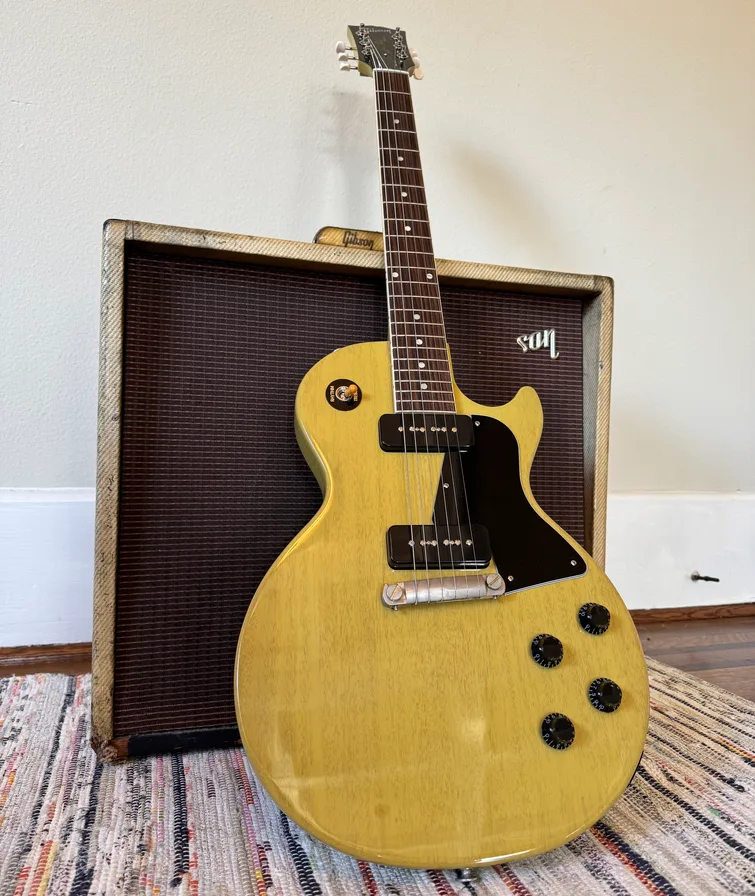
While all this was going on, we decided to look for a TV Yellow Les Paul Special. Why? We love wraptails, deeply believe in them, and the stout necks on these can be lovely, too. Plus, how cool is the finish on them when done right? There are enough sunbursts and flametops out there, so imagine how fine, fine, superfine it will look on you while you play your Saturday-night gig in Indiana bars, where the stage is protected by chicken wire like our main man Mr. Valco does. TV Yellow is righteous.
We found a few Gibson USA Les Paul Specials, one even in Austin nearby, but the seller seemed clueless, and not able to share much info on perceived resonance and weight. Oh, yes, it would have been nice to drive over there and get it, as well as stop in Luling City, Texas, for some brisket and a cold bottle of Shiner Bock, with German-style potato salad and pecan pie to boot. But thanks to the seller not communicating very well, a polite "no, thanks." Why not a Gibson Custom Shop version? Oh, we could buy three or four of these for the price of one of those, and we knew if we took our time, we'd find the right guitar. Gibson USA Specials list new for $1,799 with hardshell case. That's amazing. Word on the street is that Gibson USA has been kicking major ass with builds recently, as far back as 2019, with new leads and direction over there. We believe it.
Brent Hamker, a longtime friend and professional player who works at Guitar Riot in Cleveland, Ohio, checked one out for us that weighed 8.3 pounds and reported to us that it was a "7 out of 10. Not the liveliest we have had, but pretty good." Again, a polite and appreciative "no, thanks." We conversed with a few more sellers on Reverb and just weren't feeling it. Some of these were listed at about $1,250 to $1,350. Great prices, though. After doing searches around the country for a while, we found four for sale in Wisconsin and called Dave Rogers of Dave's Guitar Shop in Madison. Dave goes back with ToneQuest, as Founder Emeritus David Wilson got quite a few great guitars from him that were celebrated in ToneQuest through the years. When he heard who we were and what we were up to, he agreed to pull the specific Les Paul Special that we were interested in because it weighed just 7.3 pounds and the grain on it looked killer, top to bottom, front and back. Dave and the boys reported it was indeed a great one, and we bought it.
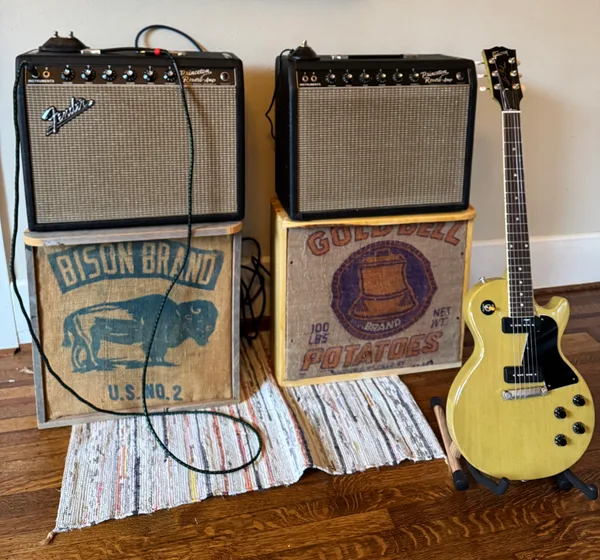
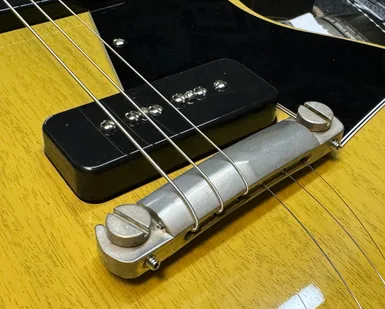
What to do next? Oh, just a quick call to Joe Glaser in Nashville to order the modern version of their Music City Bridge for wrap-tails we recently reviewed. This one is called the Savvy. It is for most guitars from 1961 on. We had Joe lightly age it and also send the locking studs to go with it, which is a must-do if you want it to do the maximum, as well as not have a bridge that tilts. It got here in three days; they are not messing around.
The Special arrived from Wisconsin and we had it delivered to the local UPS store, since we were on the road. When we picked it up, they let us know there was a $25 holding fee, before we could have it. We thought of a few things we could tell them in that moment when they were sticking it to us, but just threw a twenty and a fiver on the counter and shouldered the box out to the car. This seems to be the way of the world these days, so duly noted. We love when the big brown truck pulls up with new gear, but how lame is a bonus charge. *&*^*! Dear local UPS strip mall store, kiss our tailpiece.
We let the guitar acclimate a bit before opening the case and, yes, what a beauty. The neck is a good full-bodied '50s "C" shape. The frets, fit, and finish are all spot-on. Perfect grain, bold lines. The fretboard was a good-looking rosewood, but dry, so we pulled the strings and put some lemon oil throughout, which gave it a rich chocolate velvet vibe. Out with the .010s, and on went a set of .011 to .052s. Why? Because 11's roar. Trust us. And if you feel like they are tougher to play, you can always drop down a half-step, which we absolutely love doing with our Strats, and even Gibson guitars can sound so good this way. If it worked for Hendrix, Stevie Ray, and many others, it might be good for you, too. Simple to try.
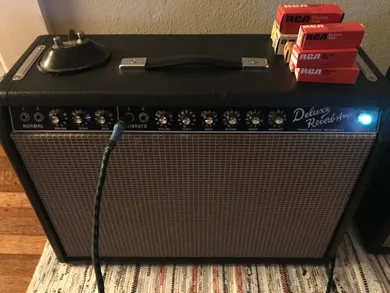
The guitar was all there. The setup from Dave's was great, and the truss rod didn't need any tweaking yet. We spent a couple weeks enjoying it through the Deluxe Reverb, as well as our 1959 Gibson GA-40 amp with an old Celestion in it. You could absolutely roll this guitar as-is and have a natural ball. Well done, Gibson. As for us, when have we ever left anything alone? That's why you are here with us, for we are all one and the same, dear TQR faithful freaky brethren.
Why are we into P90s? They are such a definitive rock and roll sound. Originally, when designing humbuckers, Gibson wanted the same sound as P90s, just without the noise. Their goal was for the eventually named PAF humbuckers to be sonically similar to P90s all the way. We believe great vintage bridge P90s can be like vintage PAFs. Not exactly—there are true differences—but you get the idea. Neck-position P90s, when done right, can also sound like huge Strats, which is also why we love the neck pickups on Jazzmasters. Leslie West loved his '50s Junior bridge pickup, which he told TQR Founder David Wilson was bright as can be. You know the solos

David Gilmour played on the song "Another Brick In The Wall" we can all hum note for note? That was not his Strat; that was a Goldtop with P90s.
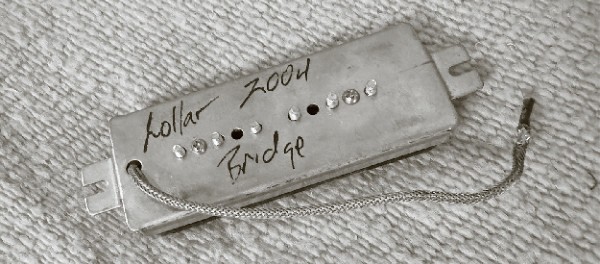
We got on the horn and called a couple of our aces, Ron Ellis and James Finnerty of ReWind. We've cheered on both of their work with major features this past year but have never heard either of their P90 offerings. We don't have any soapbars here in Texas other than what is in the Special already stock from Gibson. We do have a 2004 Lollar dogear he made for us two decades ago that we aren't letting go anywhere. It was in a Gretsch Junior we have loaned out for a European tour a friend is on now. If you find a 2004 Lollar anything, you'd best grab it.
We ordered up a set of Ellis Classic P90s, and James said we absolutely must hear both his '52 and '59 sets, and we agreed. Both gentlemen were game for interviews, so we will let fly with them here after spending time with each set.
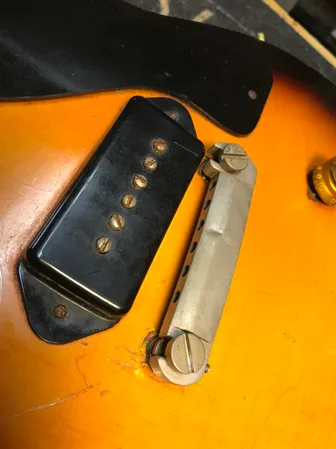
First things first: We threw on the Glaser and Tom Bukovac-designed Music City Savvy Bridge, and the Special was all about it. While we were happy with the stock Gibson tailpiece, the Glaser bridge added heaps more resonance throughout the entire body, which surprised us, because with the one we put on our vintage '55 Junior, that was decent, but not as much a difference as it made on this new Les Paul Special. Case by case, as always. The aging looked good, too, instead of the naked-at-the-crowded-beach/towel-just-fell-off-us bright nickel chrome from the original. This Savvy repro bridge will stay on for the life of this guitar.
We soldered in the Ellis Classics. The fidelity and power of these is jaw-dropping. They throw huge ropes. These would be absolutely killer in the studio for how quiet they are and also live, since they just deliver in spades. There is something seriously 3D about them, and inspiring. There is zero harsh treble spike, either. They are beyond well balanced. If we use the mid position and roll off the volume on the bridge, we can do vintage Bob Marley reggae, but mostly they just sound pretty damn unbelievable, with cleans from the Deluxe Reverb or with a tweed.
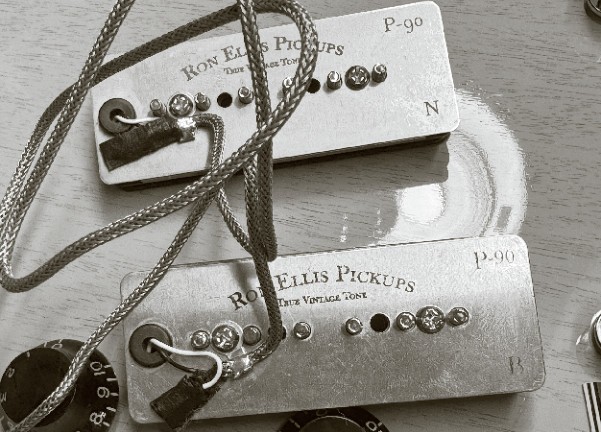
They are much louder and stronger than the stock Gibsons. We don't know how he does it, but there is something proprietary he is doing we haven't figured out, horsepower-wise. We feel the same when we play both the Ellis 5060 and '64 sets of Strat pickups. All of his builds are awake. And how smooth they are. Pleasing as can be, and absurdly stellar. They measure 6.82 in the neck and 7.63 in the bridge. We were fine with the stock Gibsons, especially the bridge, which measured 8.03. The Gibson neck was nice but a bit woofy, muddy, when we were driving the amp. Fun to play, though. We wonder if they pot them lightly. It measured 7.96. But they pale, compared to Ron's work. Still, we will happily admit we enjoyed the stock Gibby's.
As for this Ellis set overall… good gosh, so good. These pickups sound like Mike Campbell on all of the classic Tom Petty recordings. "American Girl," "Breakdown," you name it. Campbell used a '68 Les Paul and a Broadcaster, among others, for them, but these nail it, among many other tones they get. You just don't know until you know. Mike even used a 1962 SG Junior for the solo on "Running Down A Dream." What a timeless scorcher. This must be why Jedd Hughes holds them in the highest regard and named one of his Ellis pickups "The Killer," as do other pros in Nashville and on.
Ron Ellis Interview
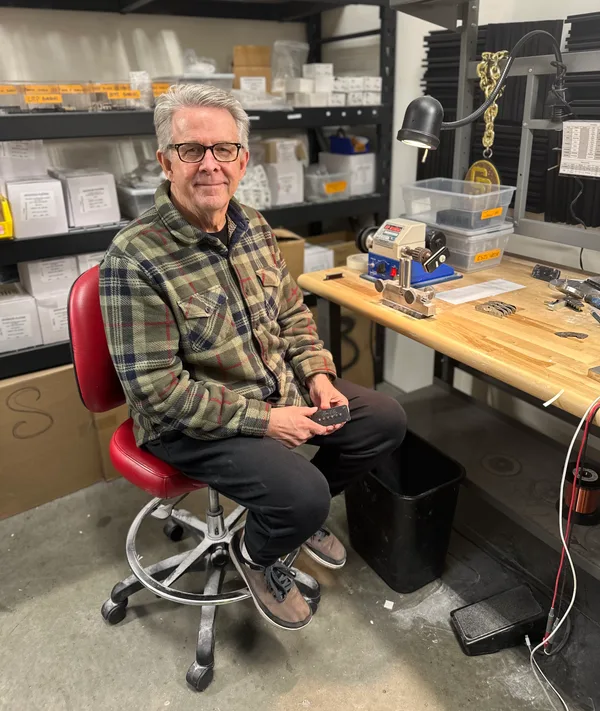
Hello, Riverhorse! How are you doing?
TQ: Best day ever, buddy. P90s are your favorite pickup?
Well, P90s are definitely one of my absolute favorites. Of course, here at RE Pickups, we make an assortment of pickups—humbuckers, mini humbuckers, Strats, Teles, Jazzmaster, the JL Ellisonics, P and Jazz Bass, and custom designs, and I love all of them. We just build and voice the pickups how I personally like them. I find that P90s are probably the most challenging pickup to get right in a particular guitar, for a particular player, but when you get it all right, it's a pretty magical sound. We all love the old '50s-era LP Juniors and Specials—something really amazing, tonally, in those old guitars. I have these great discussions frequently with good friends, like Julian Lage, David Grissom, Joey Landreth, Ariel Posen, Jeff McErlain, etc., and this topic about P90s comes up all the time. When made correctly, there is something special about the way these pickups deliver such a wide range of beautifully spaced and balanced notes, and the way the harmonic hair floats around the fundamental notes. It's that cool signature old P90 sound. Definitely with P90s you can either get it really right, or really wrong. I feel that the great sound of P90s we love and refer to are from the lower-wind '50s era. Into the '60s the pickups were wound hotter with more winds and stronger magnets; this changes the sweet-spot inductance, bumps up the midrange frequencies, and you lose some of the nice tight lower and sweet higher frequencies.
TQ: Agreed. We had a '53 Goldtop, along with other mid-'50s and later guitars with P90s we have owned or played, and we have always felt the early to mid-'50s, say 1951 to 1957, were more wide-open and clear, with more character than the later P90s. Tell us your thoughts of the early P90s and how they evolved through the years.
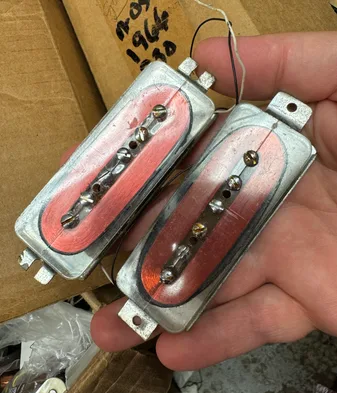
The P90, or the first examples of that style of pickup, goes way back to the 1930s. During the evolution of single-coil pickups from the '30s on, there were all kinds of crazy designs that emerged. Alnico magnets came along in the early to mid '40s, between the various manufacturers there was a lot of competition going on between Gibson, Guild, Epiphone, Silvertone, etc. All of the early- to mid-'50s P90s I've heard, repaired, rewound, and measured, have been relatively low winds, with DCR [DC resistance] output all over the place. And that's potentially confusing, because you can have a thin wire like a 43-gauge that can read 8.9, even 10k, and that can match the same sound as a thicker 42-gauge wire around 7.5k. The thinner wire raises the resistance readings. I've rewound some of the P90s that read high, but when you measure the wire, you see they are thin wire. The DCR resistance really changes due to wire thicknesses, as it does in all pickups. What we do to be truly consistent, is take a multitude of measurements on wire, with all of our pickups. This is very critical with the final sound of P90s. We try to shoot for 7.5 to 7.7k for the bridge pickup with a 42-gauge enameled wire, and anywhere from 7k to 7.2k for the neck pickup, and have this process be repeatable. We do get calls from players who want the midrange more out front, and it's easy for us to custom make that, too. But when you bump up that midrange too much it can take away some of the good frequencies, you can lose lows and highs. It is such a balancing act, the number of winds, tension, scatter wind or more of a layer wind, and on to the variation of magnets. A3 magnets were most of what I have seen tested in the '50s era, and then more A5 magnets were used by the early '60s, same as the humbuckers. For some reason in the '60s they started pumping up the output.
TQ: Yes, the older pickups have the output and midrange. The set you have sent here seem modeled after the mid-fifties' pickups we have loved. We think that era is fantastic. Things get too compressed, and they are missing bandwidth by the '60s in general, although plenty of '60s P90s are wonderful and a joy to crank, too.
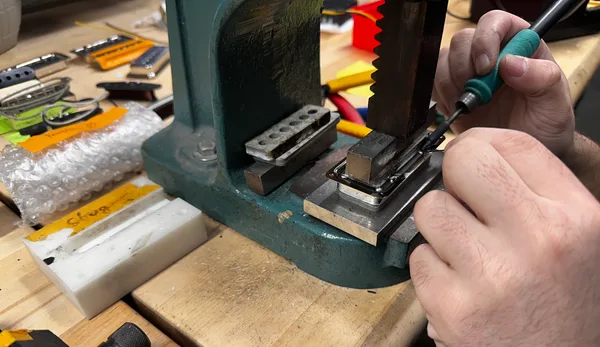
Yes, it's true. If you overwind the coil and use Alnico 5's, that just is not the sound we are looking for. With our P90 pickups, we use a variety of different magnets and winds to accommodate a particular player's specific needs, such as working with Joey Landreth, Jedd Hughes, Ariel Posen, and Matt Schofield right now on some fun projects. Or with Lee Roy Parnell, when we did the pickups with him and Gibson on the LRP Les Pauls. For instance, slide players really like A3 magnets on the bridge pup because they have a cool compression and release/bloom on the notes. This is why I like talking with customers and asking them what they are looking for in their sound. I like to talk to a player on the phone to know their styles, influences, and how they play, and we can custom-wind what they need.
TQ: What do you think about a possible difference between soapbars and dogears, since one attaches to the top of the guitar and the other sits in the body. We think dogears react differently; they feel the vibrations of the guitar's wood top and come out of the blocks kicking more.
It's essentially the same pickup, but the way it mounts into the solid mass of the guitar wood [soapbar], or mounts to the top of the guitar [dogear] changes the sound. Getting the height correct with a dogear can sometimes be a challenge because of the top of the body mount, but the old '50s Juniors sure have a cool vibe about them.
TQ: Any preference or wisdom on the height of the pickups? We feel P90s in particular love to be jacked sometimes. But you have to listen to them at many heights to find the tone you prefer.
The overall height—and pole heights—depends on what type of magnet and the amount of DCR output. For example, with weaker magnets and/or lower output, you will want the pickup or pole screws up a bit higher. I tell the customers to take the time, get a screwdriver in their hand, and spend about 30 minutes listening to them, adjusting the poles high and low, and you will find the sweet spot for you and that guitar. For my own humbuckers and P90s, I put the screws a little bit lower in the bridge pickup, then I raise up the whole pickup. Then, with the neck pickup, I raise the polepieces and lower the overall pickup height, so in the neck, it tends to give you a cleaner and cleaner single-coil-like sound, and in the bridge, more shoulders and fullness. There can be dramatic differences with the pole heights versus the overall pickup height. Alnico 2, 3, or 5 makes a difference in sound and feel. Alnico 5 bar magnets are not twice as strong as Alnico 3s, but they are markedly stronger, so you can lower them down further. A3's can be jacked up closer to the strings.
TQ: We have played and own your 64S and 50/60S Strat sets, both your LRP and Signature humbucker sets, and now your Classic P90 set, and we can tell there is an absolute distinct Ellis sound to your work. We can't figure out what you are doing, and we wonder if you somehow supercharge the magnets, or something, but all of your sets have a tremendous fidelity, fullness of body and shoulders, are wide awake, beautiful, and connect so directly with the amps. We are sure if you put us in a room with a blindfold and handed us each guitar with different builders' pickups in them, we would know yours immediately. You don't have to tell us anything, but we know your work immediately—it is a signature sound and vibe, and simply wonderful.
I appreciate that, Riverhorse, especially coming from you, since you have heard and played so many vintage instruments and an immensely wide range of new pickups from various builders. You get to hear all of the vintage and new stuff, so your comment means a lot. There are so many great pickup winders out there, like Lindy Fralin, Jason Lollar, Seymour Duncan, Thro-Bak, and many others. I view it as we are all restaurants: You don't go to the same place to eat every night. Sometimes you want to go somewhere where it can be more affordable but consistently great food, and other times you may want to go somewhere that's really expensive and you have to make a reservation to get in, but it is worth the cost. We all just have our own recipes for our pickups. Like I said earlier, I just make what I personally like. Not all vintage Fender or Gibson pickups sound great, but the good ones, in the good guitars, are musically life-changing! I have done my very best over the last 20 years in developing and recreating the sound of those old, great pickups we all talk about, like the '50s-era P90s that started this whole conversation. I will be right up front: My pickups maybe aren't for everyone. There are so many good pickup makers out there, at different price points. Pickups in general are pretty simple devices; the chosen materials and a bit of physics come into play. We are just wrapping wire around some magnets and screws, with polepieces, but it all has to come together correctly in that perfect recipe to sound right. I have been very fortunate to be able to work with so many of the top pro touring and studio players out there. Their feedback is so important to being able to produce the product that we make.
TQ: One of my favorite things about this set you sent is that they have a lovely balance of lows, mids, and a great top end, but with zero harshness or unpleasant treble spike. They are so "in the zone." I have run these clean and also with the Deluxe Reverb on 8, pinning them to the walls. All of your pickups have such shoulders and heart.
We get a lot of calls and feedback from customers who say that our pickups have a definite signature sound, which is so cool to hear. I don't like having any shrill or hard brightness in the high E or B. No one likes that; none of our pickups have that. We have turned down customers who ask us for a brighter, more fundamental-sounding pickup. I just have to be honest with customers: It's not what we make here. I think we are all pretty much looking for the same thing, the nice, tight, solid, crisp acoustic bass response, along with balanced separation of the notes throughout the whole frequency range, and with clear and sweet highs.
TQ: We had the tube EP-2 Echoplex and the Deluxe Reverb firing in full flight with these in the TV Yellow Les Paul Special, with the tremolo throbbing, and it was something. Can you tell us about the Collings 290 you have?
I have a TV Yellow 290, like your Associate Editor Scott's and it is a great guitar. Kirk Fletcher had it for about a year and a half, and played it on the Bonamassa Blues Cruise, and after Collings got it back, they let me use it for a demo, and it feels like an old Les Paul Special, a great one. Pickups are only as good as the guitar; let us keep that in mind. We ask customers about the acoustics of their guitars all the time, does it sound good and feel good unplugged? Great pickups in a not-so-great guitar equals mediocre results. And the inverse, I have had guitars that were so good, you could probably put a pickup in made by Kmart and they would still be great, since the particular guitar is so good. We are blessed and fortunate to have all these great guitars, which can take some time to find and acquire.
TQ: Well said. Was there a specific vintage guitar in your hands that you modeled the Ellis Classic P90s after?
I was lucky to grow up in a musical family. My brothers were all older. Hanging in their rooms upstairs were '59 Les Pauls, Les Paul Juniors and Specials, Strats, and Teles, so I've always been around these great old guitars and their sounds. Along with so many southern California friends of mine who have great old Juniors and Specials. One of my friends has a really great '57 TV Yellow Junior that is really amazing. The dogear pickup that was original to it sounded pretty good, but had some issues, so I installed one of my '50s P90s, and that guitar is so good, you could almost put anything in it. But it sure sounds amazing with my pup in there! I had a '56 Junior that had an amazing bridge pickup in it, which I took the inductance and other readings from. I have notebook after notebook filled with the details of all the guitars I have been able to play throughout the years.
TQ: This does not surprise me. We have about 30 hours of playing time in with these and they are sweetening up even more. Same as our Bryan Sours Transformers and the Evidence Audio Lyric HG guitar cables we love. They all sweeten up with time, even 10 hours in is a big deal.
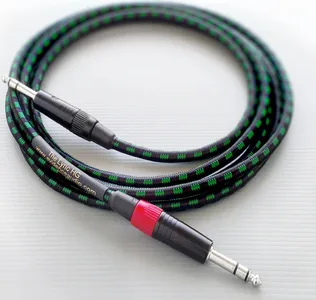
Yes, they sound better even after a couple hours of playing them! The P90s are the most challenging to get right. They can often sound strident and stiff when you first put them in, but they break in after a couple hours of playing them, and they relax after a couple hours. If you like them now, you'll like them even more after a while.
TQ: One of the many things I have noted with this set you sent is that they absolutely nail Mike Campbell's early Tom Petty tones. I know he played a variety of guitars, but from our notes on these, this really stood out.
The Collings 290 I have also nails the Campbell/Petty sound; it's a great guitar!! I have a friend who is a huge Tom Petty fan. He'll come up and play the Mike Campbell stuff—sounds like Mike is in my garage! Marc Rutters built me a Telecaster with old Les Paul-type woods: old Honduran mahogany for the body and neck, old maple top, Brazilian board. He finished it in a Goldtop look. It has a pair of my P90s. Man, everybody who plays it totally digs that guitar. Craig Ross, who is the guitarist with Lenny Kravitz, played it and wondered why he hadn't done something like that, which would work great for his playing style. You get the Tele shape and feel but you get the sound of a pre-'57 Les Paul that is way more comfortable to play, and lighter.
TQ: Sheesh, that sounds so fun. Craig is a monster player, and what a sense of style, too. We saw him with Lenny when the first album came out, and we were just high school kids, wishing we could be that cool. "Let Love Rule," indeed. Ron, why are so many people missing the boat on how special P90s are? The great pro players all seem to know, but everyone seems humbucker and Strat crazy, and so many people have not owned a P90 guitar.

Well, I suppose it may be in part, part to the background noise. A P90 can be like a big antenna, a big ol' flat pickup. But the best players just play through it and are good at using a finger to roll off the volume when they are done playing. But the tones we get are so incredibly good, we just put up with it with a smile. Yes, there is nothing like a great P90.
Texas Arrivals & Flight Departures
At 3AM on a Saturday morning, we made some espressos and threw a dry backpack, a turquoise Mexican thunderbird blanket from Oaxaca, and a paddle along with the canoe, onto the racks of the Great White Bison mobile, and headed for Louisiana. Before we did, we fed the two homeless one-eared cats who have recently adopted us and now live on the porch, and set the vintage 1959 P90 out that had finally made it in from Illinois onto the supper table, along with a fresh set of Gabriel Tenorio Pure Nickel 11s, and the TV Yellow Les Paul Special, so it would be ready to go see TQR Board Member Clancey Compton for the installation when we returned home from disappearing into the salt marshes for days chasing big lonely redfish and emptying the Yeti cooler of half a pecan pie, amber ales, iced coffees, trail mixes, and organic peaches—and a couple of hand-rolled brisket tacos from a roadside stand, of course. We found the fish, left the rest of the strange-ass crazy spinning-too-fast world behind, and got down to not just making a living, but truly living. That's the same thing we feel when we play guitar.
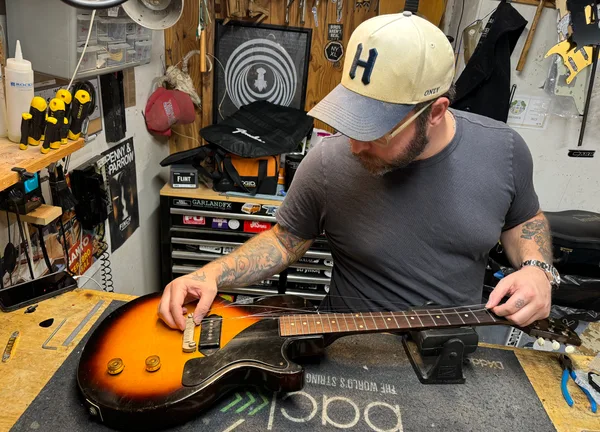
By midafternoon a few days later, after washing the gear and canoe out, a good hot shower with Bronner's Peppermint soap for ourselves, and later a hot chai tea from the hipster cafe down the street and the vintage Gibson Les Paul Junior on our hips, we met up with Clancey in his back guitar tech room at Rockin' Robin. He was up to no good, working on a Strat, which he immediately set aside for the Les Paul and the vintage 1959 P90. We caught up on life, took out the original 1955 P90, admired it, and immediately threw in the 1959 bridge. With everything strung up and buttoned down, plugging it in to an old tweed, there was nothing. No sound or output whatsoever. Times like these, you just troubleshoot. We took everything back apart, checked solder joints, and then I decided to tell Clancey the tiny amber-colored rectangle vintage masking tape that had been put on the P90 at the factory 70 years ago had slipped off when I was first looking it over, and I had simply slipped it back on. If that tape moves a bit and exposes the solder joint on the wires, which then touches the baseplate of the pickup when you put it in, it all shorts out. We gave it a look and it had indeed slipped and chose to keep using the vintage tape to cover it again and just be more aware when we screwed down the dogear, instead of using new masking tape—which we probably should have, but no, we wanted it to be pure vintage, or at least try to get it working.
Through the old early-'60s tweed, the guitar roared to life and you could hear it cranking throughout the entire guitar shop out to the side streets, even. Oh, yeah. We had a late lunch and took off back to the bungalow, for only there, in our home sonic terra firma, could we truly understand what the vintage 8.22 '59 P90 was offering. We pulled up a chair and sat just a few feet from the Deluxe Reverb and got to it. We were able to immediately hear that compared to the 7.61 1955 P90 in the bridge of the '55 Junior, which was more balanced, open, clear, and lovely, the 1959 simply roared in fantastic ways. What a freaking crusher and gusher. Huge mids, a fat growl, a powerful big-legged rock and roll badass, and when you roll back to 7 on the volume knob and crank the amp with reverb, it is gorgeous, sounding like a vintage Telecaster on steroids. Sustain for days that you can milk and control with your hands, and with the tube EP-2 Echoplex, it has that exploding Neil Young "Rockin' In The Free World" thang. The 1955 Junior is responsive and vibey and feels more like a loaded cannon than with the '55 OG dogear in it. We love both pickups. The '59 has the mids out front, less shimmer and treble, but wails, while the '55 is simply beautiful, and you just crank the amp a couple more notches if you want. For now, we plan to keep the '59 in it, since it is too much fun, and yes, we feel the whole reason to have a Les Paul Junior is to light up the skies. We were happy as could be and looked forward to having this as a baseline bar to understand the sets James Finnerty of ReWind was going to send. Duly inspired, we gave him a call.

Feature Interview: James Finnerty ReWind
TQ: Hey now, James. Welcome to the first day of the rest of your life, brutha.
Aha, that sounds good to me! Just minutes before you called, I was out at my mailbox and there was the new issue of the ToneQuest Report. I can't wait to read about the Celestion book; I am a huge fan of their speakers, so I jumped on the web and grabbed a copy. Finally, somebody is covering this—thanks so much. I'm looking forward to hearing the Alnico reissue. There is so little documented history about their early days. It's high time for a book.
TQ: That's awesome. It's their 100th-year anniversary, so it's good to fly the British speaker freak flag. We can't imagine life without their speakers. Scott Ulrichs did that story, and he nailed it, like he always does. I've been in the woods writing a book. Speaking of, I just re-read your book, The Gibson "P.A.F." Humbucking Pickup, again before calling. So good. One of the reasons I went back to the book is because I have some theories about P90s through the vintage years, and have always felt from everything I have owned and played, that there is a gorgeous woody range around 1952 or so. I know their base sound, as well as the mid-'50s having such full-clarity spectrums, like with our 1955 Junior at 7.62, and then late '59 or so, when they started rocking more, into the '60s, where they are very different, more compressed and bright but still solid. From your deep wisdom and experience with these pickups, can you take us through the what and why?
I think you are right on there, as expected. Let me break it down to even fewer categories, with exceptions here and there. Let's look at everything up to 1959, as some of the changes in evolution are pretty significant. The dogear versus soapbar, internally the construction is the same, but the way the dogears mounted to the guitars makes such a difference. With them, you can't raise the pickup without shimming it, or with the factory wooden spacers Gibson was putting in. The neck angles and setups varied widely on those guitars, which is critical, too. Some players would choose to raise the polepieces far higher than the top of the pickup. That all creates a different sound, and when compared to a soapbar, where they sit in the wood and the manner in which they are adjustable.
TQ: Yes, we have always thought dogears have something extra. That top vibrates if it is a good guitar, and they feel that.
You are right, that is an excellent point and many still don't realize. The mounting of soapbars then versus now is even very different. They were often screwed straight down into the wood on a Goldtop or SG, and the routes were very shallow with the pickups bottomed out. Many today are mounted with a metal bracket and springs, with a fairly deep cavity, which, again, changes tones. That is more flexible, but it matters. Think of a Telecaster bridge pickup with a steel baseplate under it—we all know what that does. It changes the voice. Even brass wood screws versus the steel of today. Another difference.
Let's look at this chronologically. We have the early '50s, and then by the mid-'50s Gibson used these very large magnets that are 3" long versus the typical 2½" like you'd see in a humbucker, and they were twice as thick or more. Those I've measured as Alnico 5, from my experience and measurements, and they were probably cast as long bars. The cut on those show they were cut and scored with a saw, which you can see on the ends of a side. They could break it when they scored it. Those are very, very strong, which is a little out of place for the era in '55 or so. Typically, that era has mostly A3's but that was not exclusive, so the A5's were different. With the A3 around then, you have a lower-output A3, very clear, nice, pretty-sounding with a wide frequency response, maybe even a touch of jangle like an old Martin dreadnought jangle. Then you get into the era of the PAF and you see more changes. As Gibson started building the humbuckers, they needed to make revisions to the parts, which were primarily made of P90 parts when they could be, but around 1958 the magnet types in the humbuckers changed. The '57s had the same 2.5" x 0.5" bar magnets that Gibson bought, which were only ground flat on one side, which was rough milled or ground flat so the magnets could sit up against the keeper bar in the P90s. The south face of these magnets was actually contacting the metal bar underneath the coil that the poles pass through. The other polar face of the magnet faced away from the pickup. As the humbucker is developed, that magnet has to fit in between the two coils and the metal parts protruding from each, which means there are now two critical surfaces, not just one. Gibson started using magnets where both polar faces were ground flat at this point, around 1958. You still see some of those magnets ground with one side smooth still used in some of the P90s for a couple more years as they went through the supply. I can't prove it, but it makes sense to me that Gibson realized they were having trouble with the magnets and needed to get some new versions that were ground flat on both sides to fit.
That's probably why we start seeing other magnet types appearing then, since Gibson is buying more magnets, while the A3's were still being used in the P90s. Everything seemed to converge in about 1959, although I have seen some of the old A3 magnets in a pickup used as late as the mid-'60s, but only once. Typically, not after 1959. Gibson ran out of those at that point and used the same magnets for both the 1959 P90 and the 1959 PAFs, which is a big deal. Often A5's, sometimes A4's, but both stronger. It also seems like there was a trend in the wire size then where it was a bit thinner, still 42 gauge. So, we have hotter magnets and thinner wire that we can fit more on the bobbin. Now you were getting some pickups that were pretty bold, stronger in the mids and more rich in the harmonics, but the stronger, brighter magnets complemented that, so you weren't losing treble. There it is, the Leslie West sound. You get a lot of Juniors from 1959 to 1960 with dogears that have a very specific voice. They just plain rock. What a wonderful sound. That was a special period.
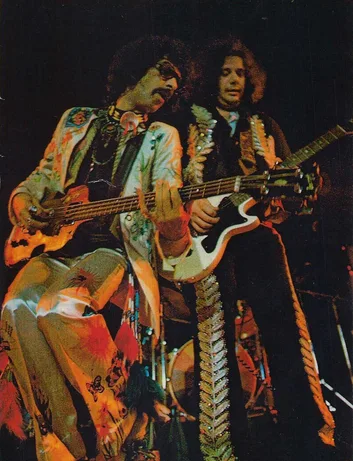
TQ: There is a TQR interview David did with Leslie West that is as good as it gets. He told him that his specific Junior was actually really bright, so he layered the heck out of it and cranked the amps to deal with it.
After mid 1960 or so, Gibson seemed to stabilize their production more, their pickups became more consistent as they got into the swing of things, and they settled into shorter A5 versions around 2.3" or so versus the 2.5", which sound a little different and they seem like they came from another manufacturer perhaps…the alloy structures…but they are different in sound. They look it, too. The last of the PAFs and P90s of that time had pickups which were a little brighter, a bit less thick in the mids, brighter and clearer, and that was steady. A cool example: Think of Tony Iommi's SG before it got modded; that first Black Sabbath album sound was from that stretch. This pickup brightness and "chirpiness" carried on through most of the mid '60s. Brighter, spanky, jangly. Then, when the coils changed from enamel to poly wire [insulation] in the late '60s and early '70s, it got different again. Even the chrome plating on the screws changed a little then.
You can get a funky quack with those, but you have stepped quite a bit away from the big, full, thick sound of the late '50s. I don't think the green dye sounds any different than the red wire dye there; usually a manufacturer will use a different dye to signify a different gauge, but in this case it's not. Maybe they were coming from different manufacturers or that specific manufacturer made the change.
TQ: Tell us about your sets. Was there a guitar in particular that inspired each? And let's talk P90 pickup heights. We have a feeling a lot of players aren't even adjusting their height or seeing how the poles sound raised and lowered, etc.
Sure. I'm not a height-measurement guy. I am all ears with them. With the pickup components, yes, I am detail-oriented on paper, as well as visually. With the vintage 52 ReWind P90 set I am usually sinking the neck lower than the bridge, because on average there is usually not that much difference between the bridge or neck. You have to sink the neck low and raise the bridge to get a reasonable balance out of them, otherwise the neck will be really bold, boomy, and meaty, and the bridge really bright, which some might go for, and that's personal—not my thing, though. On my sets, I have chosen some pickups that have an output difference, so that is less of an occurrence. I often select magnets of the same type that are ever slightly bolder for the bridge, to help balance that even further. I used a couple 52/53 vintage sets to model them; both sets were beautiful, and I have always liked the sound of their magnets. A3's are particularly cool. I kept about eight in total from that time period that were great and selected the favorite pair to model mine. They are extremely clear, jangly, and again, a Martin acoustic type of jangle. Distinctly single-coil and distinctly huge.
TQ: Do they remind you of early Freddie King, that old Goldtop and "Hideaway"? He was a Texan, so we are biased, and in a perfect world, we wish we could all wear a one-piece bell-bottom jumpsuit with silver stars on the legs and rock out stadiums.
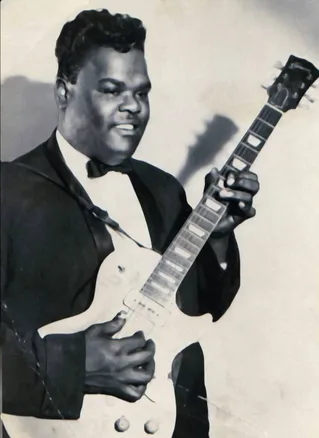
Oh, man. I love Freddie King! Yes, they sound like that. I also really like his humbucker sounds with that 345. The owner who got it after Freddie King removed the pickups and harness set them aside…. I was able to spend time with them and even have photos that show it all. PAFs sure had a range back then, which is why so many of us have chased various sets, looking for what we consider perfect, and still love hearing different vintage sets even today.
TQ: His 'bucker tone through the Fender Quad Reverbs was bright and funky, for sure. It cleared out the first 10 rows. We wish someone had loaned him a Plexi. Imagine that. But we listen to him all the time, even today.
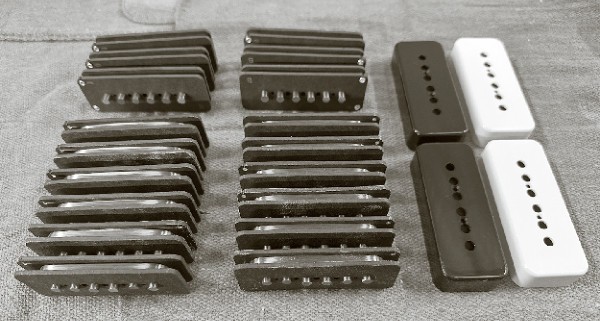
The '59 set was from a pair of vintage 1959 dogear Juniors that were absolutely remarkable. One was owned by a local customer from Colorado Springs, and I spent a lot of time with that guitar at the shop and at his house, often alongside other guitars that we had. That guitar had been converted to 'buckers, and then back to P90, and the original was still with it. I took it as apart as you can without destroying it. It was very similar to another '59 pickup I had acquired from a 1959 Les Paul Junior that had gone through structural changes, where they made it a double-cut and a Special, so it was a disaster. But the neck from it went onto another Gibson that had a bad neck. I was able to buy the original harness from a shop. I still have it and they are both pretty similar. They have a complementary voicing. One is a little bit brighter, and the other a bit more midrangey, so that's where my set originated from—both dogears from Juniors, but I offer them as soapbars and also made as a dogear. Those are the big, mean, rocking machines. Without a doubt, they are my most popular set, most people are going for that and order it from us as a single dogear. They are like a single-coil PAF, that magic everybody dreams of. I'm so excited for you to crank them.
TQ: The Gibson 2024 TV Yellow Special we have is a ringer. That Glaser bridge raised the bar. It will be perfect to listen to them with. Do you have anything new ahead since our feature on your work?
Yes, I do. It is at the point where I am going to draw a line in the sand with everything I have created and learned. I have some revisions to the PAFs I make and am going to give them official changes soonish. The Crème Brulee's have evolved, for example, in the 13 years of production. So, if you see someone with a 2012 set, they are a bit different than something I make now. I will rename things soon and share those distinctions with our customer base. I have been using a lot of vintage wire I acquired and have some newer-stock machined steel parts that are amazing, along with new coil patterns and new magnets, and it is past due to name them. It may take a while, but it is in our future. We should all be evolving, and not just resting on our laurels.
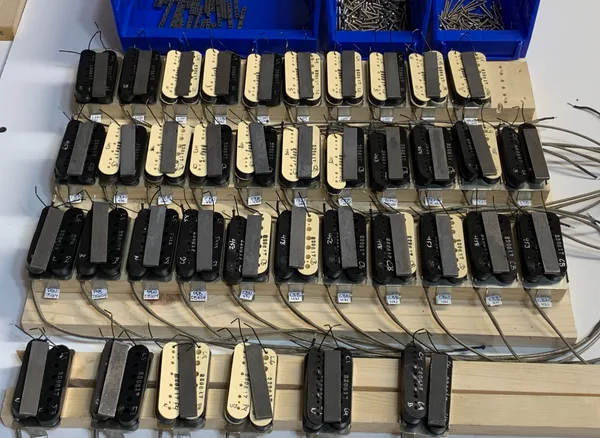
TQ: Are we the only ones who think your '57 humbucker set is amazing? We know customers all rave on your other PAF versions, but to us, they were fantastic, so open and clear—what a range—and when you use the tone knob around backed down around 6 or 7, outstanding. They do things stronger pickups can't do. A heck of a soundscape. We once played a dozen 1959 'bursts all together for hours an afternoon. We even played the Peter Green Greeny 'burst, the African, and others while on adventures. The '57's you make remind us of them, thanks to the clarity. On a positive note, we can share that occasionally, at least eight times, we have come across a modern production Gibson Custom Shop Les Paul that is truly amazing. You just have to look for a long time.
[Laughs.] People get stuck on things. They home in too hard on 1959. Yes, you are right about those. They came from that magic '57 Goldtop we got to study and play, which you wrote about in the first article. Even the '64 set I make with short A5's are some of my absolute best-sounding pickups, but you don't know until you get to play them.
TQ: We sure love you and your work, and really appreciate these calls.
Likewise! These are on their way to you soon. I'm just finishing up the light aging, so they look lovely in that Les Paul Special. Have fun, and catch you when you come up for air!
TQ—Riverhorse
re-wind.net
Ron Ellis P90 Classic Numba Nine?
We recently came back from Montana, shooting a truck commercial. They needed us to play some adventuring, flyfishing Zoolander, and while we were there, we caught up with Associate Editor Scott Ulrichs to share some ales and watch Blackberry Smoke crank up some P90s. Here is Scott talking about the Ellis P90s in his guitar.
Just how much do pickups factor into the tone and feel being delivered from your hands through your guitar and amplifier? We'd equate it to the difference between speakers when swapped out and put through the paces, as it can be that dramatic. (Stay tuned for our recent mind-blowing experience with caps and the difference they can make.) In the case of Ron's P90s in our 2009 Collings 290, it brought the guitar into an entirely new realm. When our friend and tone hound Stephen, who happens to be a wizard with a soldering iron, offered adjectives that aligned with what we heard and felt from the Ellis P90s in the Collings and among a number of optimized Custom Shop Les Pauls, it confirmed our sonic and tactile interpretations: big, bold, clear, and musical with push that is not specific to any one frequency, also known as balance. Much in the same way that we are able to differentiate what a speaker will do when giving it up, compared to when played clean, the same applies with pickups. The way they react to the attack, compress, and bloom is more easily captured and differentiated when the amp and speakers are working a bit.
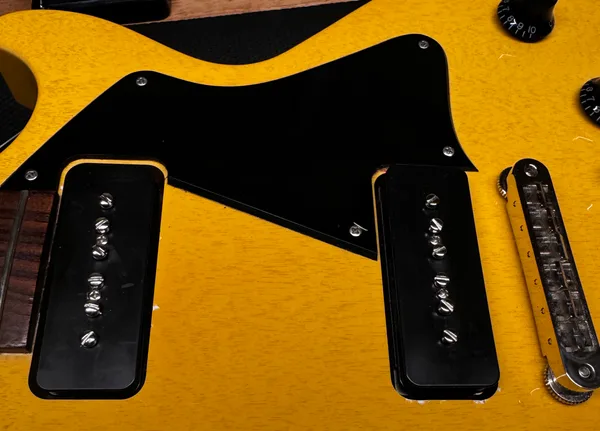
For us, the benchmark P90 is the stock 1956 dogear in our Les Paul Junior. Nothing has compared until this point. Each and every time a P90-equipped guitar comes into our grasp, no matter whether it's a Junior, Special, or other build, that's the way we can quickly determine if we've got a good one. The Ron Ellis bridge P90 is closer, by a fairly large margin, to that magical pickup because of what it does with the note. When we dig in, there's a give to the attack. It's not hurtful, but there's a wide bloom, big blue in the big sky. Like that old '50s dogear, the Ellis purrs and reacts with sustain that holds in glorious harmonic fashion. The woody, immediate character in the neck is far away from any sort of dark mud, so even with the tone rolled way back for jazzy lines, it's just a darker shade of clarity.
For shits and grins, we borrowed a new 2024 TV Yellow Custom Shop 1957 Gibson Les Paul Special reissue. For the most part, we've been knocked out by the Murphy Labs we've played and of course we're talking two very different guitars here, although the early Special is the model that provided inspiration for the 290. To our ears, Collings have a broad sonic range and what some may call EQ headroom in both directions, as is the case with our 290. It simply plays like butta, whereas this particular Custom Shop Gibson with stock pickups is more narrowly focused, relatively weak and lifeless, and a titch honky, and it felt clubby. Perhaps we got a dud, and we'll just leave it at that.
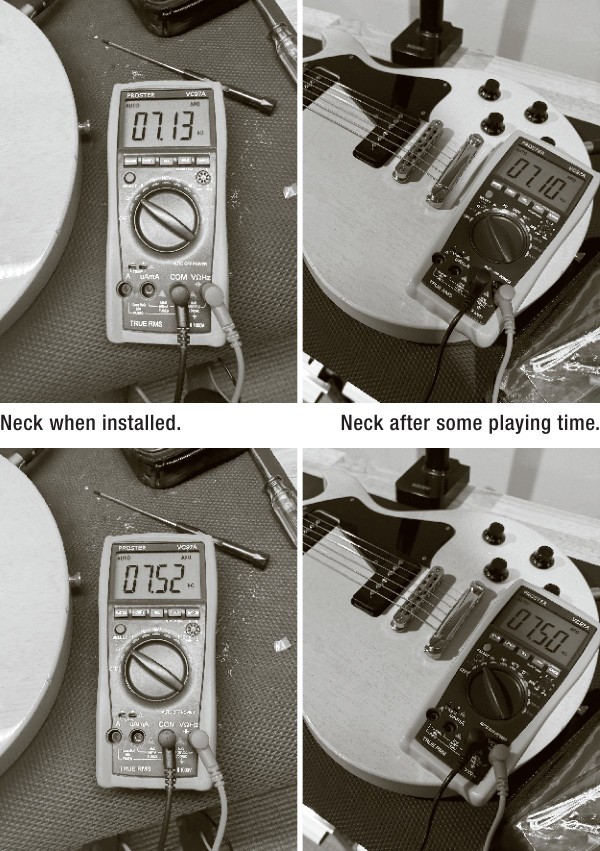
As Ron and Riverhorse discussed, the pickups—again like speakers, capacitors, resistors, strings, and tubes—do break in. They relax, and it's for the better. Greg Germino will tell you to "just play the amp": it will settle in and improve. Not only did we feel and hear that happen with these pickups, but we also saw it as the impedance readings went from 7.13 ohms in the neck and 7.52 in the bridge, when first installed, to 7.10 and 7.50, respectively, after about three or four hours of play time.
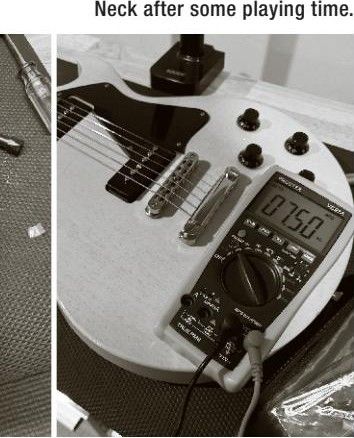
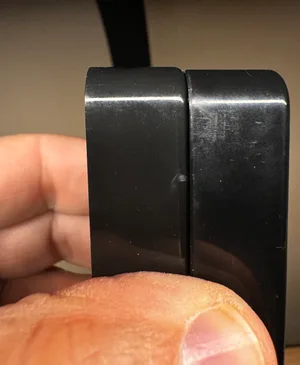
Getting the covers to fit in the Collings 290 proved to be a slight challenge, as the Ellis covers were ever so slightly larger, and no way was the spring going to move them or force them into the cavity. Apparently, too, the spacing between polepieces varies between manufacturers enough that we couldn't simply use the stock covers on the Ellis pickups. Problem quickly solved: Two days later, after a brief conversation explaining the challenge, a new set of covers that had been gently resized showed up in the mail. We opted to use the springs, as opposed to foam, in order to dial in the height, and we are of the same mind with Ron that the springs seem to preserve a bit more sparkle and microphonic upside. In no way were we going to adjust the polepieces that came beautifully buffed, each, set at a height that appeared very intentional, but we're sure we will eventually, as the resonance cast from guitar to string is deservedly unique. These pickups simply kick ass, inspire extended playtime sessions, and make a memorable musical statement. Isn't that what it's all about? —Scott Ulrichs
With things winding down for this issue, we will put the soon-to-arrive ReWind P90s on the future front burner, and let you know that after all the weeks we just spent cranking Gibsons, the P90 greasy joy is alive and well. Stay tuned for round two from the TQR Mother Ship. You will hear us knockin'. TQ—Riverhorse
www.ronellispickups.com