
When thinking about the finest solidbody that's crossed my path, a hardtail '59 Fender Strat with a rosewood fingerboard comes to mind. A pro brought it to a Nashville NAMM show many years ago and generously let musicians try it. Once it was in my mitts, I couldn't put it down for 45 minutes, and even today that specific Stratocaster remains an important benchmark. With this as a useful comparison, let's look at the strat-acular evolution of the PRS Silver Sky, a solidbody that has proved both exciting—and wildly controversial—in its brief lifespan.

Debuting in 2018, the collaboration between Paul Reed Smith and singer/guitar ace John Mayer yielded the Silver Sky John Mayer Model, an overt homage to Leo Fender's solidbody, but with tweaks that made it modern and interesting. In interviews, Smith said the company used a handful of choice '63 and '64 Strats as inspirations, but also retooled every facet of the iconic design from the ground up.
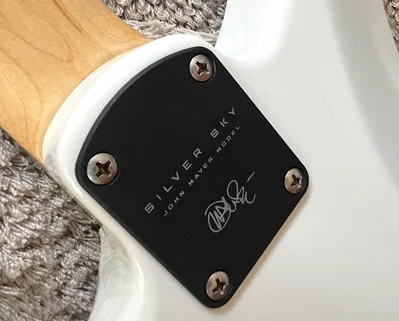
Most radical of all was its 3+3 headstock—an inverted PRS shape on top of a Strat-shaped body. Some players were intrigued, while others were up in arms, wondering why Smith and Mayer would deploy an almost-sacrilegious idea. Conversely, this grenade-lobbing tactic drew everyone's attention and instantly put the Silver Sky on the map.
Concepts
In its early years, the Maryland builder became known for Gibson-influenced solidbodies featuring humbuckers, maple-topped mahogany bodies, and built-in necks. Later, PRS perfected a number of bolt-on concepts, notably the CE and Swamp Ash Special; more recent entries include the Fiore and NF53, the latter riffing on a 1953 Telecaster. These evoke some uncanny sweet spot between Gibson and Fender tones, much like CBS-era Telecasters with Seth Lover's funky Wide Range humbuckers.
Despite the hoopla, there are solid historical precedents for the Silver Sky. While pundits assailed PRS for making a guitar so closely modeled on the Strat, the truth is that so many companies make Fender-style guitars that there isn't room to mention them all. (Even the humbucker heroes at Gibson once dared to suggest a single-coil Jimi Hendrix Signature model—one that drew so much public venom, the guitar never made it to market.) So, the idea of Smith and Mayer creating their own personal vision a Stratocaster wasn't radical—what was surprising was its aggressive, angled-back headstock, almost as if PRS were drawing a line in the sand and daring guitarists to cross it. Even with the outcry, many did.
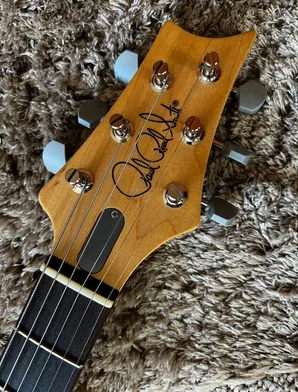
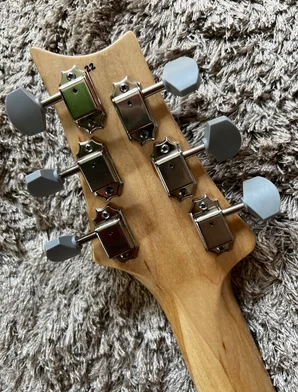
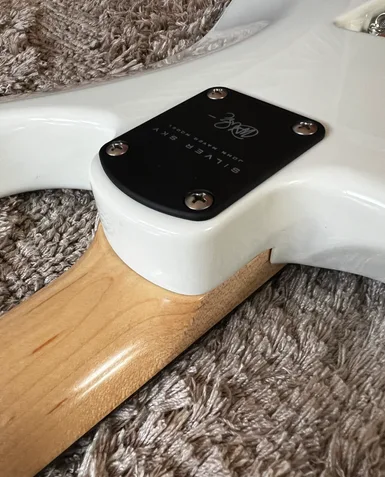
The basic skinny on Silver Sky is that it has a standard 25.5" neck scale, three PRS single-coil pickups, and a 5-blade pickup selector, trem bridge, volume/tone/tone knob array, and Strat-styled input jack and slightly altered pickguard. The Stevensville, Maryland-built model has an alder body with either a rosewood or maple fingerboard, sitting on a 25.5"-scale maple neck with 22 frets, scarfed headstock, and bird inlays. One innovation is its comfortable, rounded heel and easy access to all 22 frets. But the real kicker is its 7.25" fingerboard radius on a meaty, D-shaped neck carve, much like rosewood Strats of yore. Some may fear this rounded, old-school radius would incur fretting-out issues, but PRS solved this on the Silver Sky with its trademark precision setup and craftsmanship. Finishwise, early Silver Skys had a poly finish, while more recent editions use high-gloss nitrocellulose.

In an interview with Great Britain's guitarguitar.co.uk, Paul Reed Smith remarked, "Here's the truth: if you don't have the neck dead-straight and you don't have the frets dead-level and it's not set up right, it is a problem. But if you get all that right, it's not a problem. I still think 'Sultans Of Swing' sounded good. You ever listened to 'Brothers In Arms'? Sounds good to me. I don't know what radius 'Brothers In Arms' was played on, but I'm almost positive 'Sultans Of Swing' was played on a 7.25" radius."
In person, the guitar's neck is straight and smallish frets are perfectly leveled (accomplished without using any Plek process), to the point that fretting a Silver Sky is relatively effortless. While there are other PRS neck shapes I personally prefer (notably the original Wide-Fat, now called Pattern), this JM carve is easy to grab and the perfect launching pad for your guitar work. Really, the Silver Sky is something of a masterwork of intonation—especially when pairing the setup and hardware with a resonant slab of alder tonewood.
On the Silver Sky headstock are six closed-back tuners with groovy silver-grey buttons and locking posts. The game changer comes when you tune the Silver Sky, which is so easy, compared to the tiny buttons of a Strat. Instead of grabbing the wrong peg, as can happen with a Fender, you can tune the Silver Sky with your eyes closed. I was among those who regarded the flipped PRS headstock as a mistake (at first, so did John Mayer), but have revised my opinion. Once you get past the visual design, this 3+3 headstock is functional and, arguably, a logical step beyond the six-on-a-side design. It just works—simple as that.
Built in the USA
To Strat or not to Strat? That is the question. Does it truly quack like a Fender or merely get the visuals right? As with any electric plank, the tone of any instrument is the culmination of numerous factors, including the quality and construction of body and neck wood, hardware type, electronics, neck joint, frets, pickups, and so much more. But PRS nailed something magical with the Silver Sky's three single-coil pickups (called 635JM) and the way they interact.
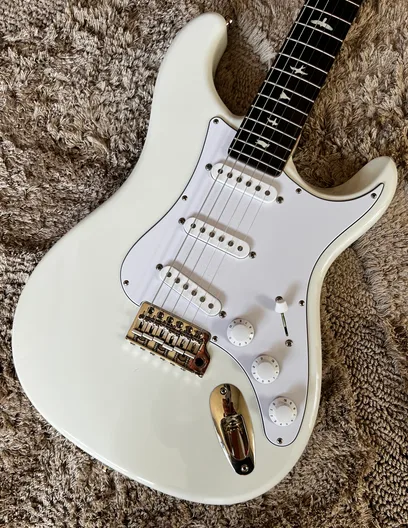
The early Silver Skys captured a certain low-output vibe that exemplifies the best old Fenders—a sound that breathes and lets the sound of the tonewood shine through, vs. a hot pickup that is all magnets and voltage. A few sources say the Silver Sky's pickup output has actually gotten lower over the past six years, allowing even more tonewood and hardware sounds into the aural mix. Either way, every player seems to agree that the Silver Sky sounds like a great Strat. More interestingly, the pickups are especially quiet, even with gain ladled on.
Another departure from old Strats, these pickups are voiced for unwound G strings, while a 60-year-old Fender had its single-coils calibrated for the wound E, A, D, and G strings of the day. In 2018, I got a very early-production Silver Sky to review for Vintage Guitar magazine and wrote that the pickups, "...are voiced to be clear and chiming without brittle high end, and the pickup selector offers noise-free settings in positions 2 and 4."
For a real-world comparison, I recently scored a '22 model off eBay, and it delivers a wondrous, bell-like quack, to the extent that the other guys in my band actually get inspired by it. They want me to spank the PRS instead of my other guitars, which speaks for itself. Both Paul Reed Smith and John Mayer have said that a goal was to create pickups that were warmer and displayed the characteristics of aged magnets—a mellower, warmer vibe—without harsh, trebly high end. Another factor is the staggered polepieces that follow the arc of the fingerboard's 7.25" radius.
As Smith told the British retailer Andertons Music Co., recalling a quote from Mayer, "There's treble in the bass...and bass in the treble."
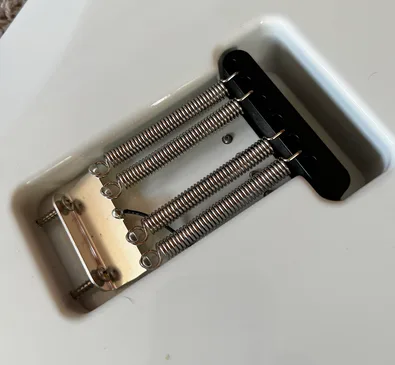
Another feature is its steel tremolo bridge, which comes set up for "dive only" performance—likely stemming from the philosophy that contact between the body and bridge yields a more direct, resonant voice. This is a choice for the player, who can convert the whammy to up/down operation. I've played both Silver Sky trem setups and decided to leave the bar off mine and keep it dive-only, effectively making it a non-vibrato instrument. Again, this refers back to that 1959 hardtail Strat I played at NAMM; there's a certain beauty in leaving the bridge and alder slab connected and working in tandem to produce tone. It's a personal choice for each guitarist.
Another decision point, the U.S. Silver Sky and SE both come in rosewood and maple fingerboard versions, so choose accordingly. Presently, there's quite a positive buzz about the maple boards, but the rosewood is certainly slick and quick. Either way, feel free to bend strings all day long—without fretting out.
The Import SE Model
As popular as the U.S.A. model, the Asian-made Silver Sky SE costs about a third as much (about $849) and delivers an impressive performance. There are differences, notably a poplar body instead of alder and an 8.5" radius instead of 7.25". As Smith explained to GuitarGuitar in the UK, "The reason they did 8.5" on the SE Silver Sky was just to relax the strictness of 7.25" so much. It worked. Nobody's going to complain at all. But we got read the riot act! 'You can't do that!' Because other companies decided it was a mistake. We didn't think it was a mistake."
I owned an SE for a while and it was immaculately built, delivering solid quack in positions 2 and 4, which were also free from 60-cycle hum. Ultimately, however, I opted to flip it and go for a U.S.A. model for its improved neck carve.
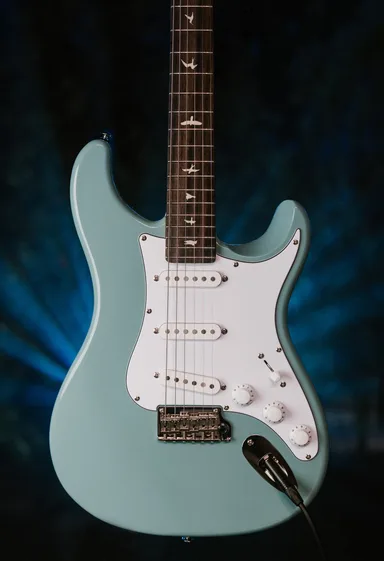
Like so many mid-price guitars, the Silver Sky SE feels like it possesses a chunkier neck than its American cousin, notably around the 8th to 12th frets. Mid-pricers also tend to pack on another pound or two (pick up the excellent but hefty PRS Swamp Ash Special SE for proof). Many players don't mind the SE carve or any associated weight, but it was enough to make me switch. Your mileage may vary.
Final Observations
Six years after its introduction, the headstock of the Silver Sky John Mayer Model really isn't controversial anymore. Despite those initial Internet meltdowns, people have grown accustomed to seeing a 3+3 headstock on a Strat-shaped body and are aware, brand-wise, that it's a PRS. So, mission accomplished there. Considering the Fender Stratocaster is the most popular solidbody guitar in the world and there are models in every price segment, traditionalists can buy a classic-looking Strat and be happy. But PRS has pushed its way into the fray with the Silver Sky and, if you're open to modern tweaks and wicked upper-fret access, it's a serious contender.
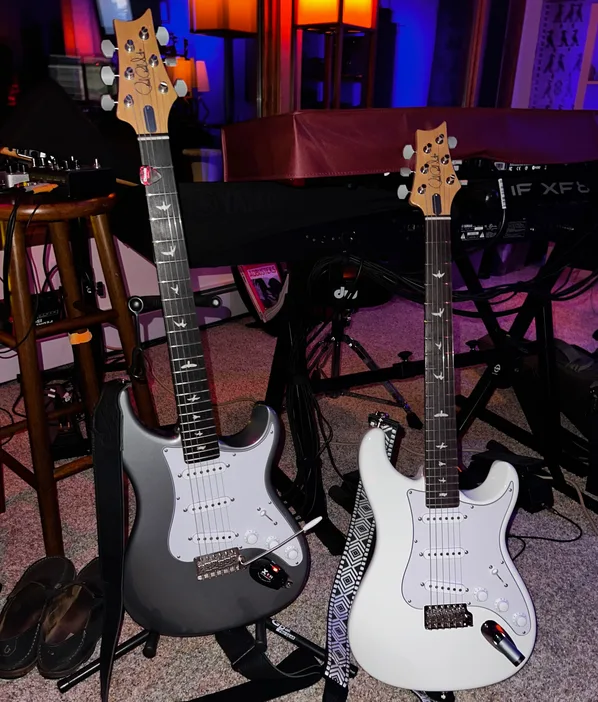
The company's fabled reputation for quality control is another critical factor, particularly the idea that when you take a U.S.A. Silver Sky out of the case, it's probably going to be nicely setup and ready to go onstage. That's powerful incentive. In fact, when I opened my used, eBay-bought '22—which had just traversed the entirety of the United States via FedEx—it was a beast right out of the bag. No setup required.
One last observation about that controversial headstock. When all is said and done, Paul Reed Smith and John Mayer may have the last laugh since Leo Fender's 1949 Telecaster prototype—the so-called "snakehead" design—had nothing less than a 3+3 head. In that sense, the PRS Silver Sky has come full circle. TQ—Pete Prown
prsguitars.com