
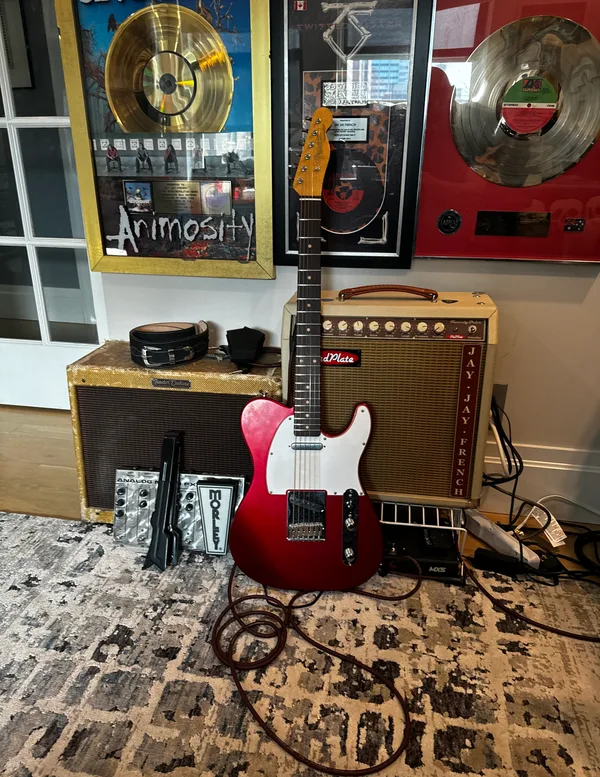
This story is being written (as coincidences go) on the day that the memory of Henry Goldrich, the son of Manny Goldrich, the Manny's Music store founder in New York, is being honored at a concert at The Cutting Room in New York City.
I will be performing a song at this show. Others performing are John Sebastian, David Bromberg, Tom Chapin, Living Color, Carlos Alomar, and many other musicians who came to pay their respects to the man whose musical instrument store defined the entire era of rock and roll — all with stories to tell about how Manny's became their hangout on 48th Street and who more than likely purchased guitars or amps from this legendary store, which eventually was bought out by Sam Ash and then, along with all the remaining music stores on the street, torn down to make way for two gigantic hotels. Music Row, 48th Street, is now a part of New York history, and the fact that the street was never landmarked and saved as a cultural site is, in my opinion, unforgivable. But I digress.
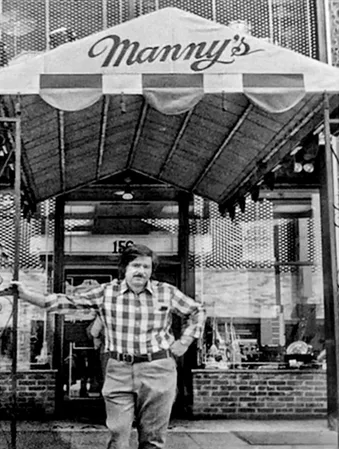
I went down to Manny's on 48th Street to buy my first electric guitar in 1967. I wanted a Fender Telecaster because that was what Mike Bloomfield played on the first Paul Butterfield Blues Band album. The back photo showed him playing one, and this was the album that lit my musical fuse. I wanted to play and sound like Mike. I was 15 when I nervously walked into Manny's that fall afternoon. I met Henry and told him that I was there to buy a Fender Telecaster. I had $135 on me. Henry told it that it was $147.50. He wouldn't negotiate, and I walked out of the store. In those days there were dozens of these tiny instrument stores on 48th Street. Someone was going to sell me a Telecaster. Directly across the street from Manny's was a store called Jimmy's. I walked in and said that I wanted to buy a Fender Telecaster and that Manny's insisted on a price of $147.50, but I only had $135. The salesman asked if I needed a case because he could match the $135 with no hardshell Fender case. I enthusiastically said yes and walked out of Jimmy's with a new Fender Telecaster in a cardboard box for $135! It was a dream come true!
I lost that guitar a couple of months later in a drug deal. (I made the money to buy the guitar selling weed — I was a young entrepreneur!) And, finding the Telecaster to be harder to play than I expected and my friend having bought a Gibson SG a couple of months before, I bought a Gibson SG Special (from Henry at Manny's for $248) a year later.
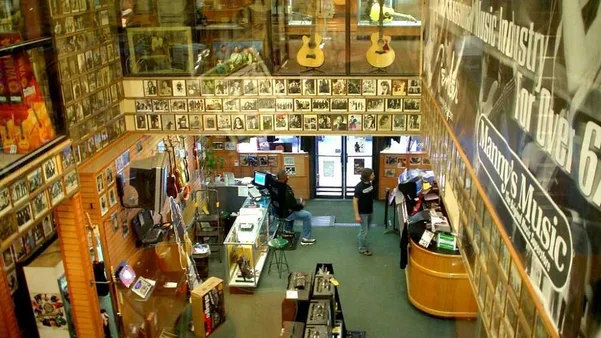
That was the end of me and Fenders. Until… well, I have owned hundreds of guitars, mostly Gibsons/Epiphones and mostly Les Pauls since 1968. I bought my first vintage Les Paul (a '50s Sunburst Jr.) from a drug dealer in Central Park on May 1st, 1970.
I had to have one after seeing Leslie West playing one in a small club called Unganos in July 1969. It was Mountain's second-ever show, and they left for Woodstock the next day. Leslie got a sound that was large and super-heavy. It didn't hurt that he was playing through a couple of Sunn 1000S amps in a small room! After that, I went through many Les Paul Customs (black and white models) and then in 1972 bought a 1953 Gibson Les Paul Goldtop for $300 in cash and a trade of a black '68 Les Paul Custom.
For the next 50 years I became a vintage collector and bought dozens of Les Pauls, ES-335s, and SGs. One day I was offered a 1952 Telecaster, and I bought it for historical and investment purposes but never played it outside of my living room. About 10 years ago I found a dead-mint 1966 Telecaster and bought it, because it reminded me of why I got into playing in the first place. This Tele plays beautifully (I still have it) and is a joy to mess around with.
To those readers of ToneQuest Report, you all know that Gibsons are way easier to play than Fenders (in general), and Telecasters are the most revealing of all the models that one can buy. I am fully aware the greatest players eventually switch over to Fenders from Gibsons (except Jimmy Page, one of the rare exceptions who switched from a Telecaster to a Les Paul mid-career).
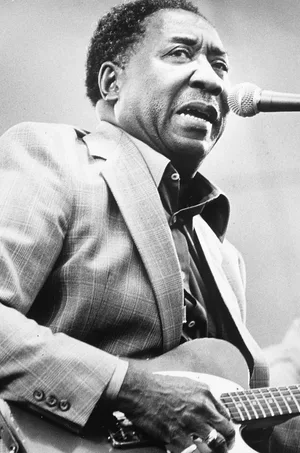
One of my fondest memories however of a Fender Telecaster involves Muddy Waters. Sometime in 1970, Muddy was playing at Ungano's (210 West 70th Street, New York City — today it's long gone). When I got to the club (it held about 100 people, max), it was sold out but the owner knew me and let me in. There were no seats, and Muddy saw me standing and gestured for me to come on the stage and sit on the Fender amp he was playing through. Muddy was playing his trademark red Tele and burned through "Mule Kicking In My Stall," playing the meanest slide you ever heard. Somehow the romanticism of that night has stayed with me all these years.
In 1972 I had the pleasure of seeing Roy Buchanan and his band play at the newly reopened Fillmore East. It was at that show that I began to understand the sonic magic that only a Telecaster can bring in the hands of a master player.
The one thing that Gibson players never fully experience is the connection to a guitar that they can actually work on. Gibsons are what they are. Yes, you can change pickups and bridge saddles, etc., but what you have is basically what you have. Fenders, on the other hand, are made to be able to change parts, especially necks. This, then, depending on one's desire to truly customize an instrument, makes the player have a much more intimate relationship with their instrument.
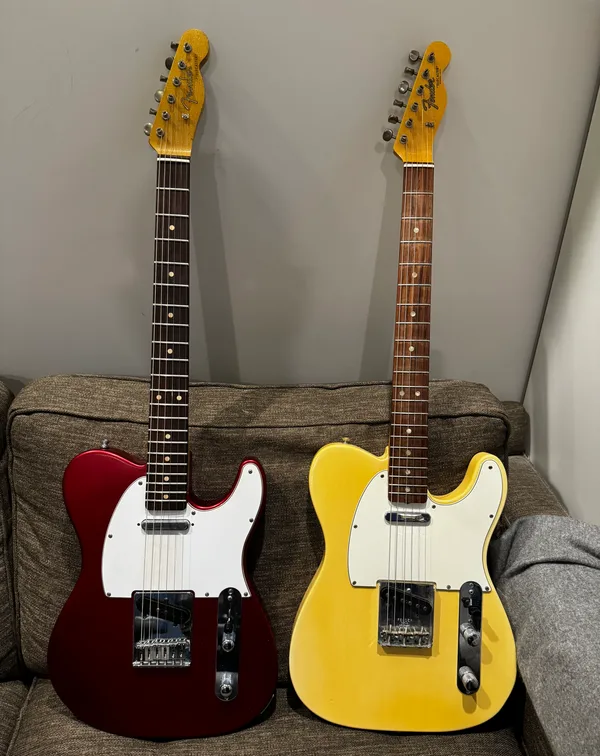
One day, about six months ago, as I was playing my '66 Tele, I started thinking about Muddy's guitar. I thought about just going online and buying a red Telecaster. The more I thought about it, however, the more I thought that doing this was the easy way out.
Then I thought, Hmmm. Maybe I should really work to make this Telecaster something really special, something that had my fingerprints all over it. I thought about building a Red Telecaster. Now, here is where my friends at ToneQuest come in. The late, great David Wilson was always my go-to person for advice on speaker replacement, pedal and pickup replacement and new amp or guitar purchases since I started reading the magazine 20 years ago. David did all the hard work so all I had to do was call. Both David, his wife Liz, and Jason Lollar came to my apartment in NYC several years ago, and I introduced David to some very serious guitar collectors (and collections). David's sudden passing two years ago, however, didn't stop the magazine. Nathaniel Riverhorse Nakadate and Liz have kept this incredible resource alive and well. I contacted Riverhorse (another exceptional tone master) to get his thoughts on where to begin. He turned me on to Cody Gleason from Dallas' Gleason Custom Necks, who took me through the process of body shopping first.
While the purpose of this article is not a sales pitch, the brands selected ultimately are proudly described (I wish any of you good luck on your journey!).
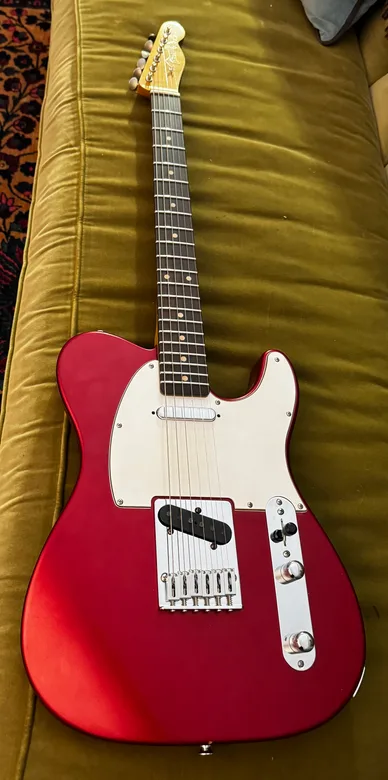
Once a body style and color was chosen, I contacted Warmoth Guitar Products. The luck that I had that day was just that: They had a red body with a belly cut and the right wood and pickup-configuration cutouts. I ordered it with all the wiring harness requirements for the standard Tele setup. The pickguard was exactly the 3-ply white/black/white I wanted and was the super white color (for contrast) against the red body.
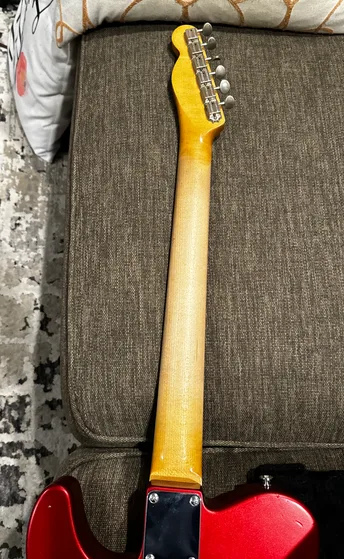
The next decision was the neck profile, color, finish and fret size. This is what Gibson players rarely get to do! Now, keep in mind that I'm a Gibson player, so a shorter-scale Gibson-style neck is what I'm used to.
Cody had all the answers. We selected a quarter sawn Maple, 12"-radius neck, Indian Rosewood fingerboard, '59 roundback neck profile, 21 frets (super jumbo), with no finish, but slightly aged coloration at the heel. The tuner holes were vintage, as well. The next thing I did was contact Dwight Devereaux at TonePros. Dwight had recently ended his association with Kluson but, as luck would have it, had one last set of vintage Fender replacement tuners at the warehouse. Dwight sent them to me.
Next up was the pickup choice. I was recently out in Bozeman, Montana, and had dinner with my old friend Larry DiMarzio. I told him about this project and he sent me some great Tele pickups, the Twang King neck and the Chopper bridge. Legendary fusion/jazz monster guitarist Oz Noy is a neighbor of mine, and he gave me a pair of Duncan Antiquity Tele pickups that he had lying around. I had the opportunity to try both and configure the guitar to my liking.
Jason Lollar and I spoke, and I will be receiving a pair of his Tele replacement pickups this year. What is so much fun about this is that mixing and matching is relatively easy, fun, and connects me emotionally to my guitar.
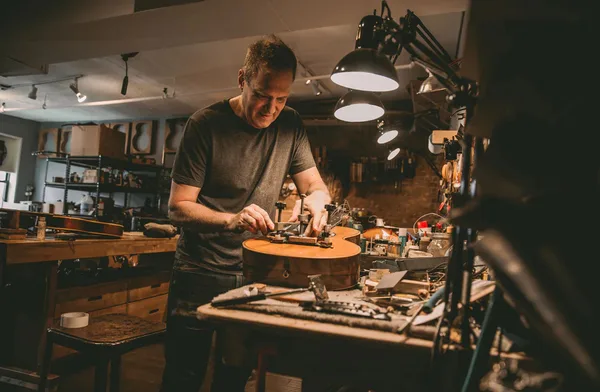
After all the parts were delivered to me, I went to see Tom Crandall, formerly of Matt Umanov Guitars in New York City. Tom has his own new boutique shop in the East Village on Ludlow Street called TR Crandall Guitars. Tom knows vintage and knows me. We discussed the project and I left it in his hands to make these parts come alive.
I am now the proud owner of a "parts" Telecaster, made to my specifications. This guitar sits in my office/studio, and I play it every day. A photo of it will just melt a player's heart. I recently did a podcast with Steve Vai and Joe Satriani, and I sent Steve a photo of the guitar. He had the same visceral reaction that all my guitar player friends have had.
Although Les Pauls are deep in my DNA, Leo Fender did create two perfect beasts: the Stratocaster and the Telecaster. I now have my own "parts-built" Telecaster. One down, maybe one more to go. Thank you, Cody Gleason, Dwight Devereaux, Larry DiMarzio, Oz Noy, and Tom Crandall, and…
Nathaniel Riverhorse, Liz Wilson, Dave Wilson, and The ToneQuest Report.
To make a great Tele, it takes a village. TQ—Jay Jay French
PODCAST: THE JAY JAY FRENCH CONNECTION: BEYOND THE MUSIC
Available now on Spotify, Apple Music & Podcast One
Jay Jay French: [email protected]Twisted Sister: [email protected]
warmoth.com · lollarguitars.com · tonepros.com
facebook.com/GleasonAging/ · seymourduncan.com
dimarzio.com · trcrandall.com