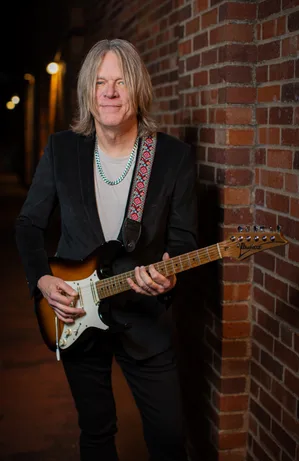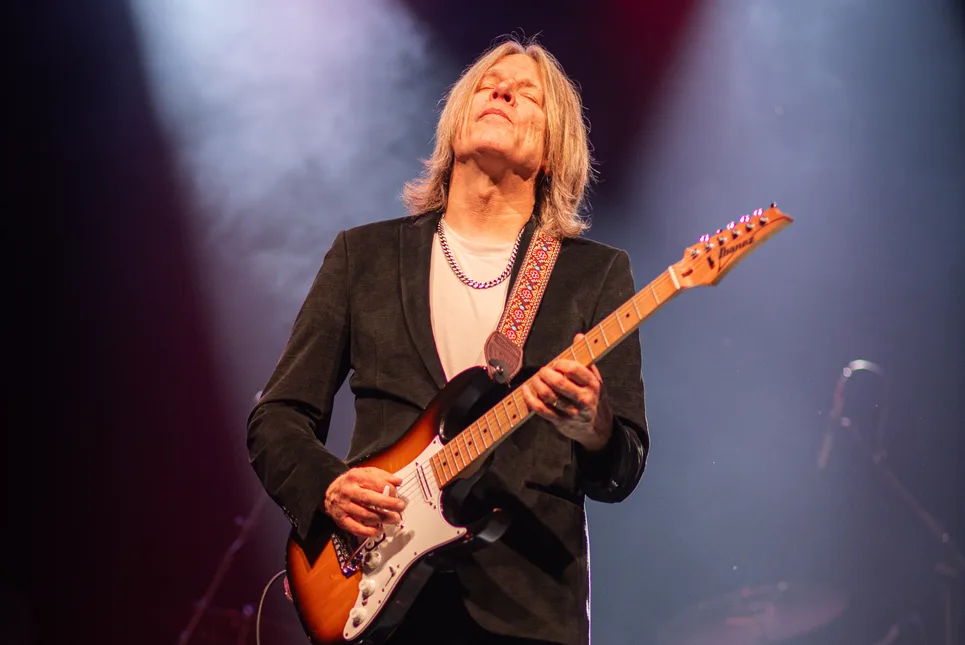
One could listen to Andy Timmons talk about music all day. His passion for it and the humility with which he delivers it is like the feeling of a second grader who wins the playground gym class 40-yard dash by miles and looks back over his shoulder to friends he has beaten so handily, caring little about his dominating performance but quick to fire up the next game of bombardment because the fun must continue. At 63 years old, Andy, who doesn't look his age, is still pushing himself to practice, learn, and expand his knowledge of music and sound, which should motivate us to do the same. For a player and tone chaser at his level to go so far as to, within days of our conversation, test for himself how his fuzz pedal reacts differently to guitars with and without treble bleeds by temporarily removing it from one of his Strats is harrowing. On one level, it's hard to get your head around the idea that Andy Timmons, who often comes up in conversations of having not only a beautiful, but an easily identified playing style and signature tone will follow through on something we discussed, but on another your hope like hell that you've been able to pass along valuable knowledge and not waste his time. Turns out, Andy's experience reinforces that there are no rules and that we often prefer to hear and feel things differently. Upon completion of the experiment, he wrote back, "Actually, greatly preferred it with the treble bleed. Running my current Fuzz Face [Dunlop Jimi Hendrix with BC108 silicon transistors] into a Suhr Plexi on the edge of breakup, it does the cleanup thing way better than without treble bleed." There you have it. If you haven't had a chance to catch Andy Timmons live, do yourself a solid and hit up his website for tour dates. Enjoy!
TQ: It's exciting to have you here. Let's start with somewhat of a curveball. We love hearing you play a Telecaster. We're curious as to why you don't play live or record with one more often? "Headed For The Ditch" rips and has that prototypical Tele sound.
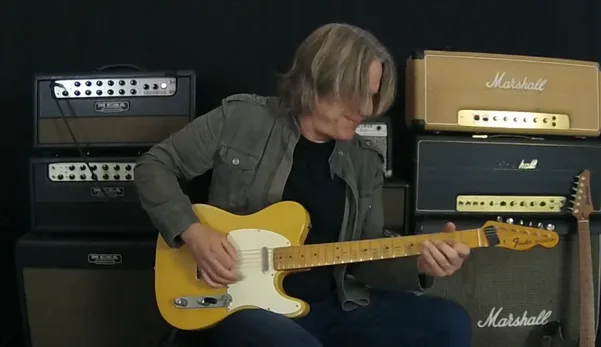
That's a good question, and I'm really blessed to have a great-sounding '68 maple-neck Tele. It's weird because I guess a lot of my main music tends to be a distorted humbucking affair. It's interesting that you bring this up, because I've been a jazz fan since the age of 16, when I began taking lessons. My first teacher broadened my horizons massively, and still, to this day, I love to play jazz and practice it. I can't claim to be a great player of that style, but it informs everything I do in a major way, so I work on it. I was never really able to get a live jazz tone with which I connected, and while I've tried repeatedly, with my main Ibanez AT100 signature guitar, the neck pickup has more of a single-coil voice. Although, if I roll the top end off considerably, it can become quite believable in the studio. It's not an L-5, but I can get it in the ballpark. There are guys certainly doing it more recently, like Julian Lage and one of my lifelong heroes, Mike Stern. Ed Bickert, too, a Canadian jazz player gets great tones with one. I've been having fantasies lately about exploring the possibility of getting into a Tele with a humbucker in the neck location. When it comes to Telecasters, nothing for me is as unique as the middle position with both pickups working. It gets somewhat Gretsch-ish in a way. Whenever I put my '68 in that position, I'll play the "Honey Don't" lick from the Beatles For Sale record. George Harrison played a Gretsch, but to my ears the Tele is pretty spot on. Of course, if you've got a pretty strong bridge pickup in a Telecaster and grind it up a bit, there's nothing like it.
My first was an early '90s Made in Mexico that I got from a guitar store chain called Brook Mays. I had moved back from New York to Texas after Danger Danger [Ed Note: Andy's first commercial band] called it quits. I was looking for gigs and started teaching at the Brook Mays pro shop in Dallas, and one of their other branches burned to the ground. They salvaged what they could, however some of the guitars were covered in soot, others melted and were unusable, but a few made it. There was a Lake Placid Blue Mexican Tele with a flat-mount bridge that they basically gave to me for $25. My buddy and bass player Mike Daane bought a P-Bass and still uses it to this day. I didn't like the Lake Placid Blue, so we tried to strip that off, but it didn't work because it was so baked on from the fire. It was one of the first roasted-neck guitars [Laughs.], but it had a sound to it. There's a track on my very first record called "Farmer Sez," and it's that guitar, which is the only one I've ever named. [Long pause.] So stupid, but it's Valerie Burnt-Tele!
TQ: Ha! Yes, Mrs. Van Halen, One Day At A Time.
Well duly noted on playing one more often. I take this question with a good bit of pride and, yes, there are so many great tones to mine from a Telecaster. I need to pick it up more.
TQ: What vinyl was spinning in your house when you were growing up?
I was so blessed because I have three older brothers, and we're all four years apart. I was born in '63, so my oldest brother was 12. In the early '60s, it was teenagers who were buying records and he jumped on Beatlemania right from the start and bought every record that came out: Dave Clark Five, Yardbirds, Herman's Hermits. As the '60s progressed, my other brothers were buying and consuming music as well, leading to all the classic rock, and for me it literally started from the cradle. My earliest music memory is the guitar sound and solo from "I Saw Her Standing There" which was the flip side of the 45 of "I Want To Hold Your Hand." It's a lovely George Harrison reverb-drenched tone, done with a room mic in a sound chamber. It was the sound of the vocals on songs like "She Loves You" that got me. To this day, I'm still a fan of echo- and reverb-drenched guitar sounds that likely formed from those early days. As the '60s progressed and the sound became more Rock 'n' Roll, with distorted guitars, along came Jeff Beck.
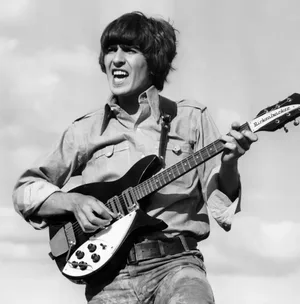
Two of my brothers were big fans of the Yardbirds, and speaking of Telecasters, that incredible "Shapes Of Things" solo [Ed Note: "Shapes" was released as a single and included on The Yardbirds Greatest Hits and also off Truth, Jeff Beck's debut solo album, released in 1968] was impactful. If Jeff Beck only recorded that one track, he'd still be on my Mount Rushmore. The era of the Yardbirds with Beck is just stellar. When he formed the Jeff Beck Group with Rod Stewart, it was incredible, and so, yeah, Beatles and Beck were my foundation.
At that time, too, we only had a large console record player, but around 1973 my mom got this little Panasonic radio for the kitchen. I'll never forget hearing "Goodbye Yellow Brick Road." It was one of the first 45s I got. Something about it was so haunting, and again the reverb on the vocals. All of my records were hand-me-downs and I got my first job in 8th grade in order to be able to buy more music. I had also started playing guitar around that time; a hand-me-down Silvertone, which was standard issue for families in the '60s, it seems. My brothers played a little bit, but I'd sneak into their rooms when they weren't around and pick it up. The first 30 dollars or so that I earned sweeping hair at the Lawndale Barber Shop went straight to buying more albums. My brother worked at Karma Records, and the first two I bought were The Raspberries Greatest Hits and Kiss Alive! That tells you what I was into: power pop and arena rock guitar. I joined my first band at age 13, and we played Kiss, Rush, Ted Nugent, REO Speedwagon, and Foghat covers. We were a power trio, and we didn't even have a singer. Somehow, we got gigs, the first of which was my eighth-grade graduation dance, a terrifying experience because I was playing in front of all my friends. As that era evolved, my tastes grew into a much wider swath. The first teacher I mentioned would have me read music, and he was a big Barney Kessel fan. He'd also play me Oscar Peterson, Poll Winners, and Joe Pass records. That broadened my ears and I just wanted to learn everything that could be done on the guitar.
TQ: Did you spend much time with Stevie Ray Vaughan's music? Your "I Remember Stevie" certainly pays homage to "Testify." What was it about his approach that resonated with you?
I would say that I didn't go nearly as far as so many have, especially after he died. The generation that came up after that really went deep. I'll never forget that pivotal moment when "Texas Flood" came on the radio. At the time, I was a classical guitar major at the University of Evansville, still studying jazz and playing out four nights a week with my rock band, firing on all cylinders. I was driving my 1971 Nova, the least sporty Nova ever made: Beige hard top with four doors and a 307. "Texas Flood" comes on and I had to pull over. It's not that we hadn't heard these notes and phrases. It just sounded so brand new to me. The tone, conviction, and complete power coming through the speakers—and of course then the Stevie Ray Vaughan And Double Trouble: Live At The El Mocambo VHS tape came out years later. It was a special time for him and that band. The hunger they had to get to that next level was palpable.
While I'd learn some of those songs by ear, I didn't necessarily go note for note. I'd take little bits here and there, likely due to laziness and impatience. I was never a great practicer, but I was a diligent player, playing all the time. With all of these influences it's all about "Why do I love this?" and we all get so much by just absorbing, just listening. There's no way you'll be a great jazz player unless you're taking it in on a frequent basis because you love it. If you want to play jazz because you want to sound hip or expand your vocabulary, that's fine, but to really swing, it has to come from a place of authenticity and be in your soul. The same goes for the blues. Josh Smith is a good example of someone who has gone deep. He started as a Stevie guy in his early teens but saw how many were doing it and had to pivot to something different. It's like Pat Metheny, who learned everything Wes Montgomery did, and he could play just like Wes. He realized that had already been done and did something different. They both found their voices, but based upon their foundations. For me, it's the Beatles to Ace Frehley, Jeff Beck, Pat Thrall, Pat Travers. Steve Lukather was another launching point for me. When I first heard Boz Scaggs' "Breakdown Dead Ahead" with Luke, I think "Hold The Line" [Ed. Note: From Toto's self-titled first LP] was out, too, and his command of time, conviction, and intent made a mark. It was those same things that attracted me to both Stevie and Luke, even though they're very different players. Same with Larry Carlton, Mike Stern, Robben Ford, Pat Martino, and Pat Metheny. And of course, their melodic sense is hugely influential, as well.
TQ: You did a bossa nova album, Bossa Hits. How do you approach playing over those more sophisticated changes?
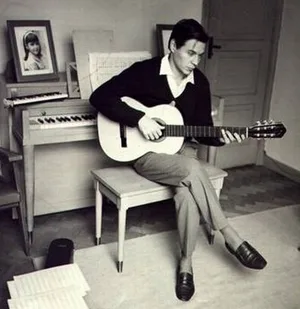
It is more challenging, comparatively, but bossa nova for a rock player is a great intro to those jazz-related harmonies because it's straight eights. All of those Antonio Carlos Jobim tunes are worth learning in order to get inside of them. When I was first learning some jazz, I gravitated towards that style. I figured I could play "The Girl from Ipanema" or "Black Orpheus"—any of those classic tunes. It was easier, but still not natural for a rock player. That being said, it does expand you harmonically. I still practice jazz standards like "Blue Bossa" and "All The Things You Are," as they're a good way to start my day playing over changes. I navigate all music the same way. I might be aware of the key center and a scale that may fit the harmony extensions, but most of it boils down to tension and release. Treat each chord on its own terms where it's less, "I can shred in C over that D minor-G-C progression," but ideally be more intentional with note choices versus just running scales. That applies to everything for me, whether swing blues, bossa nova, or rock. I don't feel proficient at any of it, rather those are styles that feed my thirst for improvement. It's all about voice leading through the changes.
TQ: Practicing and improving never ends, which is what makes this journey so enjoyable.
Yes. However, at different points in my life, I wasn't as focused on practicing as I am now. I was always playing, but not necessarily pushing myself to learn new things. When I was young and studying guitar in college, I was playing all the time and gigging, believing that it would always be that way. Life then starts to happen, and responsibilities grow and there are more distractions that can take you away from your original inspired workflow.
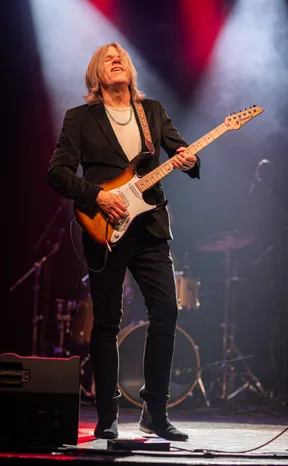
I've been uber blessed to somehow eke out a living doing what I love to do. Life gets busy if you have a family and kids. Unless you're really specifically focused, making time to play every day, it can get away from you. It's now the first thing I do every day before I get bogged down or taken in a million different directions, even if it's all career-related work. I sit with the guitar and practice for at least an hour, dedicating myself to making sure that whatever gift I have, it's nothing if I'm not honoring it and going for it 1000%. Pat Metheny has something to do with this focus. There was a time maybe 15 or so years ago that he was planning to do a guitar camp, which he'd never done before. The camp was to be with [drummer] Jack DeJohnette and [upright bassist] Larry Grenadier, and I happened to know the guy running it. I saw him at a NAMM show and shared that I'd love to attend. He offered not only that I come but suggested that in exchange for my attendance that I could lead a couple sessions. It was about six months away, so I had time.
I hadn't played jazz in quite a while, and if you're not exercising that style like a muscle, your technique, swing feel, and phrasing will atrophy. The thought of playing in front of Pat was the greatest motivator in the world, but also terrifying. He's known for not being easily impressed. I thought, well, I'm not anywhere close to having the guts to play in front of one of my top five heroes. It may not be that obvious listening to my music, but the jazz influence is there, informing everything I play. My buddy Nick, a great jazz player in his own right, and I put together a "jazz standard of the week" club, where we'd get together to practice. Over the first few weeks I realized, man, "I really suck." I used to have some of this worked out, but it's gone, and that's painful when you've heard yourself be better at a point and to then not have it. But after a few months, I noticed some improvement, and that then sparked this whole new way of looking at it. What I started to notice is that I was becoming a happier human, and the outcome of these focused and scheduled sessions made me realize the point to my life. What really makes me happy is trying to get there. You'll get these little presents along the way. The postscript to this story is that the camp never happened, but what an impact it had on my life. I just needed the motivator of playing in front of Pat to do something about it, and that reinforced everything for me.
TQ: Many of us are guilty of practicing what we can already do, in an effort to just get better at that, instead of going through the pain of working through something new.
Well, let me give you a little support here because what you're doing is great, you're playing. Nothing beats fingers on the fretboard. Maybe try this every morning if you can. Put your metronome on 80 bpm and just play eighth notes slowly and deliberately, just running some scales. I'll go through all modes in all 12 keys. What I started noticing is that the ability to do that even for 10 minutes in these days of distraction is challenging. My mind would wander to the 30 things that I'd needed to be doing. This has become somewhat of a meditation now for me, and I really focus on my breathing, as I tend to unconsciously hold my breath when playing.
TQ: Many players do that.
And that hurts you in a way that translates to fatigue. So, now I really focus on long inhalation and exhalation, while staying focused on those slow eighth notes. To do this once is pretty straightforward, but to then repeat it every day consistently is difficult. It's best to not get overwhelmed, but try to incrementally improve your situation. Do the foundational work and then treat yourself by just playing melodically. If it gets consistent enough and you build a little bit more on top of yesterday's little bit more, it adds up. And you have to be patient with that. There were several gigs that I've done recently where I tried to incorporate some of the things I've been working out, specifically one particular idea. There's a tune in our set called "Duende," originally recorded on acoustic guitar, that we've turned into a rockin' power trio thing in E Dominant. I've never been as fluent in diminished phrases as I'd like to be and have always looked at it as diminished from the flat 9, and that's harmonically correct. What's also harmonically correct is the half-whole diminished scale from the root—same notes, but different mindset. Guys like Mike Stern and Robben Ford always talk about it in those terms. Once I started thinking about it and seeing it that way, I'll be damned if it didn't create different phrases for me. The other kicker is that while I'm working these things out, it will begin to creep into my playing, but then I get on the gig, and it vanishes.
TQ: That's the hard part—to jump off the edge when the situation comes.
I heard Michael Brecker address that when asked about it in a clinic. The interviewer asked how he took his new ideas to the gig, and he basically said, "I'm not that guy who can just do it. It takes lots of time for it to show up, but it eventually will." And he's got one of the richest musician vocabularies ever. It's like any language.
TQ: We hear some Return To Forever and Al Di Meola influences.
Ha. Well, I never really owned much Return to Forever music, but I certainly went through an Al Di Meola period. I think it was probably Land of the Midnight Sun, perhaps the first time Jaco Pastorius appeared on a record. It's likely where I got some of that harmonic minor tonality. The fifth mode of the harmonic minor, that dominant chord with a flat 9.
TQ: "Beautiful Strange" seems to have some of that going on.
That one was written the night I saw Jeff Beck, for the first time, in 1999. I came home and began work on it. I play some of it with my fingers, but that's a whole other conversation about life-changing moments—seeing Jeff Beck.
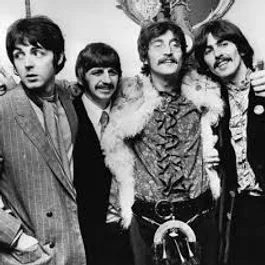
TQ: Let's jump to your Andy Timmons Band Plays Sgt. Pepper album. What stood out within the music? Was it all pretty much there in your head and you simply created Andy Timmons-arranged versions?
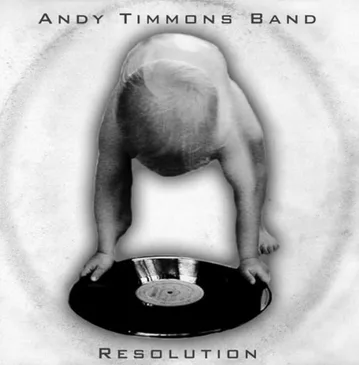
That was a really fun project but also a bit of a stressor in some ways. It didn't start out as something we planned to record. Our previous record, called Resolution, was the first record we did that was a product of what we began calling our "tone quest." It took a couple years to get to a point where we felt good about it, and we took that knowledge to find the right sounds for each track. At the time I was somewhat burned out on the whole guitar instrumental format. Steve Vai had said to me, when we were recording the first album on his Favored Nations label, that he "could really hear my fingers on the frets." It was in reference to a song called "Falling Down," which we recorded live, no overdubs. Just hearing that compliment from an older brother figure and friend led me to think that maybe I should do an entire record like that. It got me excited, but I had to reinvent how I was presenting the music. How could I accurately represent the music, because that will drive chord melody and I'd have to carry the song differently, as one may do in jazz. I became a fan of writing that way and arranging covers that way. We had started playing "Strawberry Fields Forever" and were on tour in Italy where it started resonating with the audience. My promoter suggested that next time we come back that we should do an entire night of Beatles. My immediate reaction was "No way!" But that's the worst thing you can say to yourself. Fortunately, the seed was planted, and I was able to push past my initial negativity. I then worked on "In My Life," and it became somewhat of a hobby. How many Beatles tunes can I arrange for solo guitar? The next one was "Lucy In The Sky With Diamonds."
It got to the point where one day I thought it would be cool if I just did the entire Sgt. Pepper album just for me. I didn't reference the record, but rather did it all from memory because I wanted to have the arrangement be what I hear in my head when I think of that song, and trust me, I've listened to as much Beatles as any human possibly could. It's been my security blanket my entire life. I hear a track and it's all in there. Interestingly I'm not a huge fan of Beatles covers in general. Too often it seems they're reinvented into something that strays too far or they're simply a multi-track of what already happened, so I had to have it be unique in some way, while paying homage to the original song, all with no overdubs, which was the key to the arrangements. I had to express what I hear in the foreground to what's happening, whether a string line, a vocal, or the chicken sound effect on the Sgt. Pepper reprise out of "Good Morning, Good Morning." It was a game, and while recording what was to be the next Andy Timmons Band record, Theme From a Perfect World, we had a couple extra days come available, due to a scheduling change.
My engineer said, "What else you got?" My drummer at the time, Mitch Marine, said, "What about those Beatles covers I hear you dabbling with?" Alright, so in two and a half days we did the whole record. The biggest challenge in a power trio is with intonation. We didn't hide behind any double tracks.
TQ: Do you happen to recall what amp and pedals you used to get those saturated lead lines in "She's Leaving Home?"
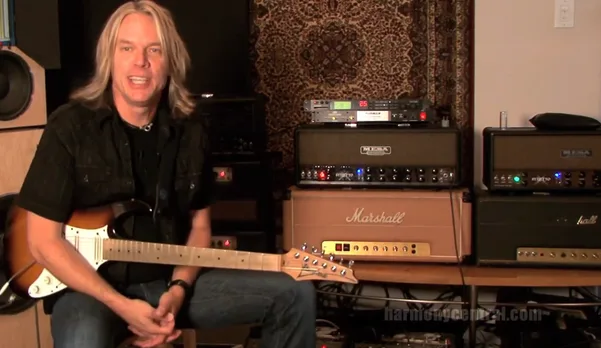
Absolutely! For Sgt. Pepper, we set up four amps, the same I used for almost every track on Resolution: a '68 Marshall Super Lead and a '79 Marshall JMP, along with two MESA/Boogies. Almost Eric Johnson-style, but not quite. The amps are set to run loud but clean, and the '68 circuit stays cleaner as you turn it up, compared to the '79. I fed a three-knob B.K. Butler Tube Driver, where I think Eric uses the four knob Chandler with the wall wart, into a Framptone A/B box, which then split to two EP-3 Echoplexes to feed the Marshalls. I also used two Mesa Stiletto Stage 2s, which are replicas of my Plexi and JMP combined. Those were fed by two Deluxe Memory Man pedals, each set to a dotted-eighth quarter, but not in time, meaning the equivalent of 500 and 375 milliseconds on both rigs. The beauty of those older Echoplexes and Memory Man pedals is that they're much softer on the repeats, and the way they feather together makes it sound like reverb. All four amps were going at all times, and if memory serves correctly, I ran the Memory Man pedals into the front end of the Mesas, as opposed to the effects loops. The cleaner sounds at the top of the song were the same amps and delays with a Keeley-modded Blues Driver. [Ed Note: Now available as Andy's signature pedal, the Keeley MK3 Driver.] That's my go-to pedal for slightly broken-up neck-pickup clean sound, and the saturated lead lines are full-up guitar volume from the bridge humbucker. There are treble bleeds in all of my main guitars, so I can retain the glassy top end when rolling the volume down. The four amps fed four of my all-time favorite recording cabinets, which is a MESA/Boogie Rectifier 2x12 with Vintage 30s. We had all four 2x12s set up in the neighboring guest bedroom, to help with volume.
TQ: The saturation also came from the Tube Driver hitting the front end of the Marshalls?
Yes, whereas with Eric, he'll use his Tube Driver more to boost a pretty driven Plexi, my Marshalls are set cleaner with more push happening from the Tube Driver. I wanted everything to just be there where we simply put up a 57 [Shure SM57 microphone] and not touch a knob. With all tones I think we hear in our heads what we hear from our heroes, which is a combination of our favorite tones, whether Eric, Stevie Ray, Hendrix... Name your hero, and that shapes our taste for what we're going for. And Eric is one of those guys for me. Certainly, and inarguably, he's achieved some of the greatest guitar tones ever, whether live or in the studio. His ethos influenced our Resolution record. That was the other thing: We didn't EQ any guitars on the Resolution album. Mike Daane's [Engineer and ATB bass player] approach was no EQ, just guitar, amp, cab, and mic. No plugins and as pure as possible. This was us really going down the tone questing path, and it became way more important than it had ever been.
TQ: Your Andy Timmons signature Ibanez must be about 30 years in production.
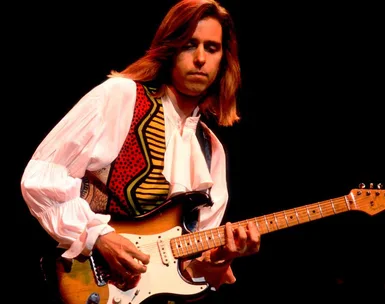
Yes, well on Valentine's Day this year, it will be 32 years, as the first one was made on that day in 1994. Isn't that funny? You don't think of that guitar being vintage, but here we are. I guess I'm vintage right along with it. [Laughs.] It's been the one. I own a good number of guitars, but I've just played this one the most. Every guitar provides the opportunity for a relationship, and I'm fortunate to have had this one for all this time. It's interesting, as I have others that are the same model and they're all slightly different. They all feel great, but that first one has my DNA in it, so I'll keep playing it until it disintegrates, I guess.
TQ: When we met, you had just picked up an incredible-sounding black '63 Strat, and that night may have been the first time you played it live. Playing a vintage Strat must be a very different experience when compared to your main AT100. How do you approach it?
Every guitar has certain things about it that will inspire you to play a certain way. They all have stories and a feel, and you have to learn the dance—what wants to happen between the player and the instrument. What can you get out of it? One of the main differences for me has to do with the neck. Is it comfortable, and can you get a wide variety of tones? I have four vintage Strats. The first one I got years ago is a '65, and it sounds really good. The bridge pickup is very bell-like and clean, while the neck tends to be a little muddy. The second I lucked into is a '60 hard-tail. That guitar is on several songs on Theme From A Perfect World. We did a Strat shootout for a song called "On Your Way Sweet Soul," the closing track, a pretty ballad and I had a slightly broken-up Stevie Ray, Hendrix neck-pickup vibe going. I asked all my friends and folks that I knew that had old Strats to bring them to the studio so we could hear them all in order to find the one. There were 20 in the studio that we went through and never found it. Sam Swank, my friend, who happens to be a great guitar player and luthier, who didn't know this was going on, called me out of the blue and said, "Hey I have this Strat in the shop you should check out." It was owned by a client who had it in for some work. He asked the client if it was cool if he brought it over, and he was. When Sam got there, he was completely oblivious to what we were doing, and it turned out that the guitar he brought was head and shoulders above the others. So much of what we all want out of Stratocaster was happening. The neck felt great. I'm sure the hardtail affects the tone, comparatively.
TQ: Was that the only hardtail in the mix?
It was, and so we ended up using that one on the track, and here's that thing, man: If you find the guitar, even if it's a new guitar, that feels and plays perfectly for you, don't just look for another one like that '60 hardtail, because it's not going to be the same. We all know the stories. Guitars can be one serial number away and present an entirely different experience. I went to Sam to see if there was any way that his client would consider selling it, as I didn't want to give it back. Luckily, the owner was a collector who had plenty of guitars, and I think he enjoyed knowing that it was going to be played a bunch and recorded. It ended up on a handful of tracks on that record. I had always liked the look of Eric's '54 Strat, Virginia, so around 1990 I put together a Kramer with Chandler or Schecter parts and tried to relic it. However, it was initially really poorly done. [Laughs.] We kept the back of the neck unfinished, which I've always preferred, as the finish can get gummy to me. We ended up using that neck for the '94 Ibanez prototype. The short of it is that I'm really comfortable on a Strat-style guitar. The neck on the '60 has a little narrower profile. Not thin, but smaller, compared to the baseball bat neck on the '63 you mentioned, which also feels amazing and sounds different. They've all got a thing.
TQ: Maple boards vs. Rosewood?
Well, my main AT100 is maple but I love the sound of Rosewood. For whatever reason, there's something more intimate about maple. I feel more connected to that material, especially in the delicate moments. I am more experienced with it, so that could be part of it. But the fourth old Strat is a '65 refin and it has a rosewood board. The missing piece in my collection that I'd love to find is a maple neck '50s Strat. Maybe someday, but you know, they're a bit pricey. [Laughs.] Eric Johnson is always trying different Strats, and he had a '54 that he was letting go and it was in a shop in Austin. I took a '57 that belongs to my friend George Fuller, at the Guitar Sanctuary, down there to get a sense for how they compared. Obviously a '57 is going to be very different than a '54. I played both back-to-back, and the '54 did sound really good and the neck was warm, felt great, but they wanted $70,000, and you know, that's quite a chunk of change. One day maybe I'll find the right one, as this one wasn't a soul mate. For 70 grand you gotta sell your cat and a couple of kidneys. It was not meant to be. I actually spoke with Eric later about it and he said, "Yeah, it's probably for the best." [Laughs.]
TQ: He sold Virginia, his most famously used 1954, right?
Yes, he did. I don't want to go on at length here, but I have strong opinions about the situation. He had fallen with the guitar and was convinced it didn't sound the same as it had, so he let it go. He's still searching for the replacement. The guy he sold it to won't sell it back to him, which kills me.
TQ: Do you think he regrets selling it?
Oh, 100%. I can't speak for Eric, but yeah, considering he's still searching for the one that fits the bill, I'd assume so and it makes me a little sad for him. He's gonna make great music on whatever instrument he picks up.
TQ: We can tell that you gravitate towards his tones and lines, and it's enviable that anyone is able to do that. Where it's different is that with you it's a nice blend of clean, clean with an edge, lightly driven to full-on gas, where it's all just varied degrees of the same core tone. With Eric, it's very different between his clean Twin and overdriven Marshall tones.
Absolutely. They're very different.
TQ: When dialing in those tones, you've mentioned starting with your amps set loud, but clean. Are there times where you'll push the amp a little more and then use the pedals with volume up and gain low, just to saturate things a bit?
It's gain staging with pedals for me, at least as far as how I've approached it for the last 15 years or so, maybe 20. It started when I was doing a clinic for Anderton's over in the U.K. I had the privilege of having my good friend Daniel Steinhardt of the GigRig there. He brought Dave Gregory from XTC with him, so I have these two great sets of ears in the audience, meaning the pressure was on to play well.
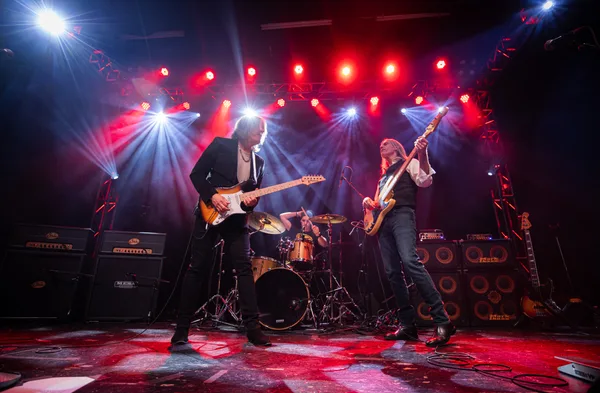
They had a MESA/Boogie Lonestar there for me, which I was using at the time, but the effects loop wasn't working. Now I'm in trouble because echo is part of my sound. It's not an effect. It's basically on all the time, and I gotta have it. Echo into distortion doesn't work for me at all, so I couldn't use the distortion channel on the amp. There was a pedal on my board that I hadn't used much, which had just come out, called the Angry Charlie, by JHS. Based upon his knowledge of my tones, my buddy, Brian Meader from the Guitar Sanctuary, thought I would really like it. But now I need a lead sound that would replicate what I was doing with the Lonestar on the lead channel. That channel isn't overly saturated, but it has a nice fat sound that I can hit with a Tube Screamer or the Xotic BB Preamp just to kick it over the edge and thin out the bottom, as the Lonestar is pretty tubby. So, okay, now I have to use the Angry Charlie and it does have enough gain to where I can get a good lead sound all through just the clean channel. I play the gig and it goes really well and for some reason felt like I had more control over my lead playing. I wasn't lugging as much weight behind me, compared to the way the Mesa was overdriving, which can become inhibitive sometimes during the more dexterous parts you're playing. It made me think again that I had more articulation and control and immediacy if I'm using gain in front of the amp and the amp as a clean platform. I've stayed there and not gone back.
TQ: Do you occasionally crank up an amp full blast and then just use your guitar volume for all of the clean to mean tones?
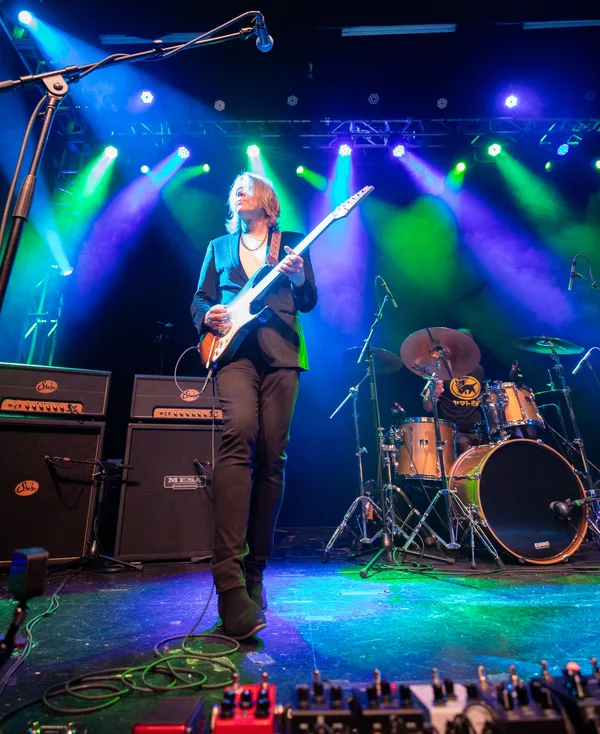
Surprisingly, I haven't spent much time doing that. I can be a creature of habit and will work really hard towards getting a tone, and I'll stick with it if I get there. But at the same time, I do know that yes, if I'm going to get a good Fuzz Face tone, the Marshall has to be working. The fuzz has to feed something that is already getting there. I have done a little bit of that, and it is glorious. There's an amp I'm using now quite a bit that John Suhr makes, called the SL68. His circuit is really meant to be the EVH thing, pretty gained up. It's got a "power soak" on the back, and it works well like that, but I'm using it more as I now traditionally do, which is loud but pretty clean. It sounds really close to my '68 Super Lead.
TQ: Where is that, like 4 on the volume?
Yeah, I'd say that. And that's a good volume. Luckily in my studio upstairs I have a separate room where I can isolate the cabinet and it's soundproofed, but the neighbors are hearing me, no doubt about it. [Laughs.] I've been in this house for 30 years, and luckily have not had a complaint yet. Volume is necessary for certain tones, but that's also the beauty of using a clean platform and pedals. You can get this large portion of the sounds at much lower volumes.
TQ: Do any of your Strats not have treble bleeds in them?
No, and that is a thing, too, with Fuzz Faces.
TQ: It can be. When we met, I asked you about it because general consensus, especially with vintage germanium-transistor fuzzes, is that they just want to see the impedance from your passive pickups—no buffer, no treble bleed—which often make it too bright, shrill, and edgy.
That's the beauty in all of this. I'm still learning and likely could spend a little more time on the forums digging and building knowledge, and maybe I need to. [Laughs.] I'm not that fluent with fuzz knowledge, and it's something I really want to learn more about. When I get it right, it's otherworldly, but I don't get it right that often. I'm still trying to find the best way to do it.
TQ: It might be fun if, perhaps, one of your Strats didn't have a treble bleed circuit, just to see what you hear and feel with an old fuzz. Such a simple change would make it easy to go back if you didn't like it. Same goes with treble boosters: They don't like anything in front of them.
I do have a '64 Vox AC30 that would be fun for experimentation. My Brian May amp.
TQ: Brian's AC-30 tone was very wooly sounding. Check out the old Star Licks video from 1983, you can really hear why he needed a Rangemaster. With your AT100, how much pickup tasting have you done over the years, if any?
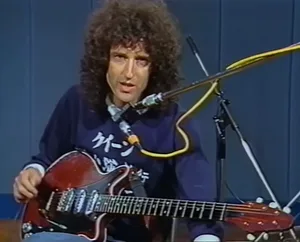
I'm a creature of habit, so if it works, I don't touch it. The AT100 originally had two DiMarzio Cruisers in the neck and middle, which I had no experience with, and the guy at Ibanez building the guitar suggested that I may like them. I knew I liked the Seymour Duncan Jeff Beck humbuckers, and that's what was originally in the bridge. It stayed that way for the first 15 years or so, at least. There was another guitar that I did with Ibanez, called the AT300, which did have a rosewood board, and that's the main guitar on Resolution. It has a mahogany body with the pickups mounted straight into the wood, same Cruisers in the neck and middle, but in the bridge—since they wanted a single source for the pickups in order to more cost-effectively produce the guitar—they asked if I'd be open to collaborating with Steve Blucher at DiMarzio in order to come up with a pickup. The AT-1 is the result of that collaboration. During that time, I still had the JB in the original AT100, and this is a true story: I began to prefer the AT-1 for its highs, lows, and sweetness, which are what we dialed in together.
Interestingly enough, I was on my way to do a clinic for Music Villa in Bozeman, Montana, I had the thought that this may be awkward because Larry DiMarzio will be there and wants to record the gig, and I've still got the Duncan in the AT100 I plan to play. I didn't want to pull the JB as it's original to the guitar, and I guess I'm a little superstitious or sentimental in that regard. About a week prior to the clinic the JB pickup died. I don't know what happened—it just stopped working, and so I literally flew out there and told the tech that I needed to swap out the Duncan for the DiMarzio, because I had no choice. I still have the original JB and probably should have it looked at. Anyway, that all happened in somewhat of a karmic way, and the AT-1 has been in there ever since. I'll also point out that the Cruiser pickup in the neck in my original AT100 is actually a bridge Cruiser. That wasn't an intentional decision on my part, but rather at the suggestion of Bill Cummiskey, who was at Ibanez at the time. Arguably, a big part of my tone is that bridge pickup in the neck position. People ask all the time why I prefer it, and the answer is that it has always been that way. I had never heard the neck Cruiser in the neck position. About five years ago, I did try it and liked it. It was cool, and I left it that way for a couple years. Eventually, I thought that maybe there was something to how a pickup ages, so I went back to the original pickup and played the opening riff to "Electric Gypsy," and there it was. I can play that riff on any guitar, and it will sound close, but not exact. When your ear is used to something and feels a certain way, it feels like home and why it's back in there.
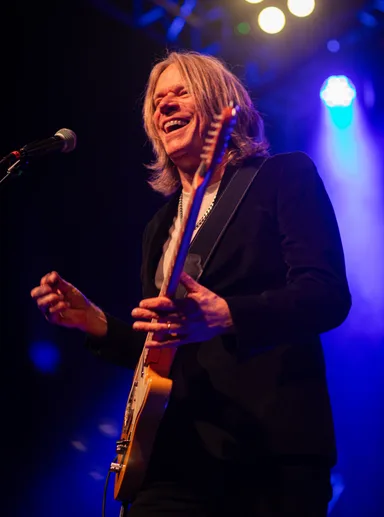
TQ: Is the bridge Cruiser just a little hotter, reads higher?
I don't know, and I like somewhat that I don't know, but at the same time perhaps a little embarrassing. [Laughs.] I imagine it's a little hotter.
TQ: It sounds as if you're currently leaning towards your two Marshalls and the Suhr for amps. Are there any newer amps that you've stumbled into these days that are doing it for you?
John Suhr and I are actually working on a signature head together and I think the prototype will be done relatively soon, although the timing has been a little uncertain, and I'm fine with that. We're about to get down to the R&D of listening in a room and tweaking as we go. My idea for that amp is to have it primarily as a clean Marshall-like platform. I was very fortunate that I was able to recently take home a '55 Bassman. There's a shop out in Weatherford, just south of Dallas, called Craig's Music. I was in the market for an old Pro Junior, because I had heard that Jeff Beck had famously used one on the Emotion & Commotion album. He'd have a Marshall in the cutting room, but a Pro Junior in the control room, and they recorded both. If it's good enough for Jeff... I get there and it's vintage amp heaven, a huge room with all these Voxes and lots of tweeds—and I had never owned a tweed amp. I had my '60 Strat, and I plugged into a couple of the Pro Juniors, but the older ones were enticing, so I plugged into the Bassman, hit a chord, and it was just like, why, why is this so great and otherworldly? It took me a minute to reconcile with myself that I was about to spend more on something that I had not planned to, but that's how it goes. I recall that I had played through another tweed at a clinic in Washington, and they had a '50s Deluxe, and at the time they were asking $2,500, which was a lot of money for those at the time. I plugged in, and it was so obvious as to why. It was amazing, and I regretted for years not trying to figure out a way to go home with that amp. With the Bassman, I just did it. It's in the studio now, waiting to get some recording done.
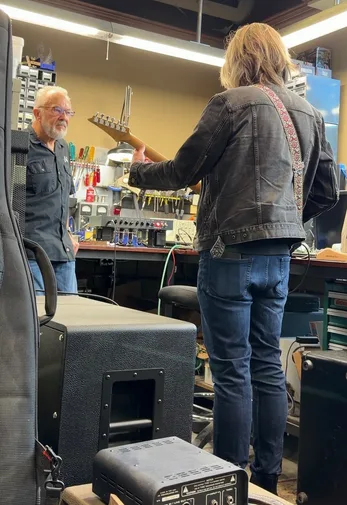
TQ: 5D6 narrow panel, beautiful. Original circuit and speaker?
Yes, and as far as its history, it belonged to Delbert McClinton's guitar player for many, many years, James Pennebaker.
TQ: He's a really fantastic player and longtime friend of ours here.
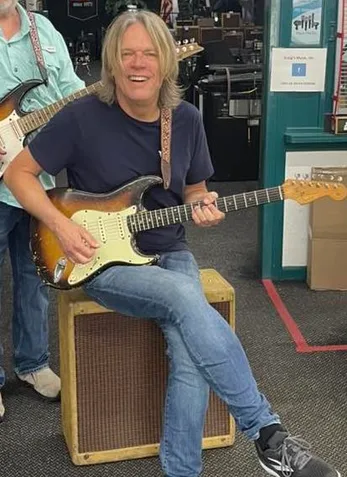
Well, tell him that if he ever wants his amp back, I have it. It has his name written on the back panel and it has a vibe, man, it really does. Please give him my best and let him know that I'm the guy who has it, and unlike the guy who won't sell Eric back his '54, if he ever decides he needs his amp back to let me know.
TQ: Will do. Plugging into an unfamiliar amp is immensely enjoyable, and Matt Schofield and others talk about finding where the amp wants to do its thing. Do you have an approach to discovering where an amp wants to be set?
I love that you brought up the Matt Schofield thing because he's got one of the greatest tones out there, and I've gotten to know him a little bit. I went to a clinic that he did at the Guitar Sanctuary, and he walked through his approach to finding the spot with each knob where it sounds the sweetest. It was so cool because I had never thought to do that. I'll definitely tweak as much as I think I need to in order to find the sweetest clean tones, but I don't really have a dedicated process. You just know what sounds most pleasing from a good base, neutral standpoint.
TQ: The Andy Timmons Band goes back 30 plus years now?
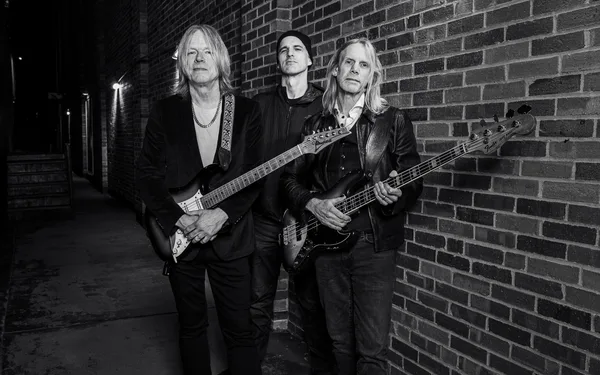
Yes, Mike Daane on bass and Mitch Marine, our original drummer, and I started the band in 1988. Mitch is in L.A. now and has played with Dwight Yoakam for many years. Dan Wojciechowski played drums with us for some time and is in Peter Frampton's group, and he now lives in Washington state. Since 2008, we've had Rob Avsharian, an incredibly versatile, amazing jazz drummer, and he rocks as hard as anyone. We're all very blessed to have a long-running relationship.
TQ: With different drummers, how does that inform your playing style and how you adjust, given how much of a signature a drummer puts on any band.
It's everything! I'm extremely picky. It's funny Mitch, Mike and I met at a jam session in Denton, Texas in the late '80s. It felt great and we decided to form a band. Sometimes you don't know how great a player is until you find out that it's not normal. [Laughs.] I was young enough, mid-twenties, and just figured it sounded right, so we just went for it. He and Mike Daane are two of the most unique and special players that I've ever encountered. Mitch has plenty of Mitch Mitchell, an incredible knowledge of world music, and plays the best shuffle ever. It's why he works so well in Dwight Yoakam's band. He's the only drummer I could have done the Sgt. Pepper record with. For somebody to understand Ringo, why it's so special, and be able to have the feel but with a modern sound... there are very, very few, and I don't want to say nobody, because I don't want to insult anybody who feels that they play just like Ringo, but it's that special. Dan is world-class and can play anything. He toured with me when we were out with Olivia Newton-John and also LeAnn Rimes. As an interesting aside, all of the Andy Timmons Band members are from the Midwest. Mitch is from Illinois, Woj, Rob, and Mike Daane are all from Detroit. I'm from Indiana, and there are influences in different parts of the country, as well all know. When writing music now, I'm doing so with Rob in mind. I'll have him throw down a groove at soundcheck and I'll record it and write around what he put out there. Starting with a flavor that's more him is natural and the results have been incredibly satisfying. Left to my own devices, I hear what I hear, but this way it gives him more freedom and input, and I think this next record is going to be really strong and fresh because of that.
TQ: Nice, when are we likely to see that released?
I'm working on two records. One is a collection of solo pieces called the Outlier Nocturnes, which has been fun to record. I'd written all of these tunes through the pandemic, and I was obsessing over Chopin at the time. Ten of the twelve tracks are complete, and for all intents and purposes they're simple little solo pieces, but we really worked on the tone and the details to make it sound special. I'm using my Halo and the Keeley Nocturne, which was the result of me wanting what the Halo does, but without the crosstalk of the echoes—in my head, the best of what EP-3s and tape does along with the Deluxe Memory Man modulation. I now have a better iteration with the Halo of what I always had running two delays, but that got me thinking that because reverb is just a series of delays in combination, that perhaps we could get similar sounds without that crosstalk, and we did it. That's the Keeley Nocturne.
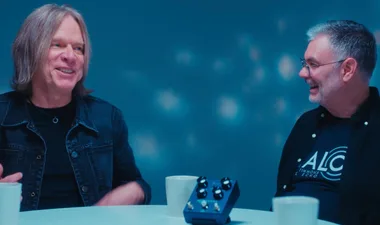
TQ: Amazing pedal. We fire it up all the time with non-reverb amps. It's fun to experiment with the wet/dry mode when running two amps.
And I've historically not been a reverb guy. Rather, I got those sounds with multiple echoes, as it always sounded better to me. It's undeniable what a real plate reverb can sound like. I was convinced that once I heard Mike's actual plate that all of these pedals that were designed to sound like that were modeled after something other than a real plate. [Laughs.] [Ed Note: Mike Daane has the original plate reverb from Austin City Limits, as mentioned in the April 2026 issue of ToneQuest Report.] Nothing was really doing what those pickups do and how much original sound is in the reverb. You're thickening the sound because there's original signal in there, but the Nocturne is not a digital replication, but more of a ghost. That's the thing in working with Robert Keeley. So much of the work comes down to being in the room with somebody, because not only can you both hear what's happening, but also feel the same thing. Attempting to verbalize sound can be really tricky. When they came down to the studio to actually hear what was going on with the spectrum analyzer, it all came together. Each side of the stereo sounds a little different, which is very noticeable when running that way. Van Halen I and II... that's the sound, that hard-panned reverb. So much magic, along with Eddie's gift.
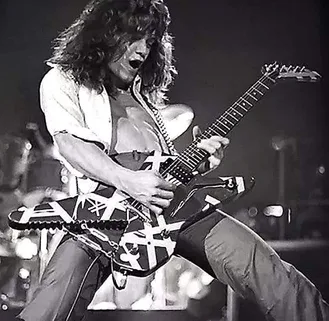
TQ: What amps did you use to record the Nocturne album?
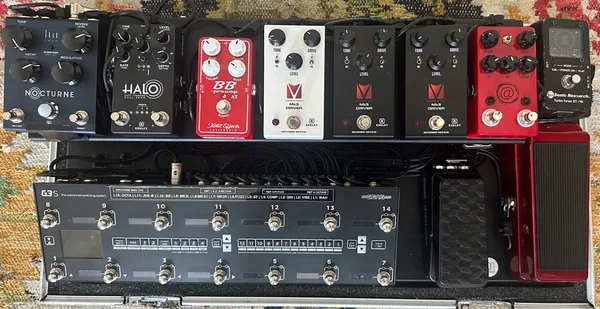
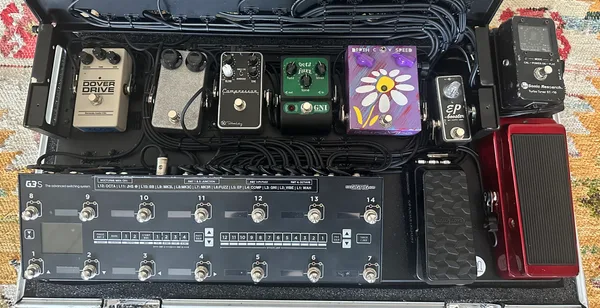
Everything is running into both Marshalls panned left and right in stereo. It starts with the Nocturne, but I'm feeding the Halo into it. It's otherworldly when running those two together. I've still got my original Keeley-modded Blues Driver in the mix, as that's just a special pedal. The Mk3 is an incredible iteration of the Blues Driver and more versatile, as we were able to tame the low end with germanium diodes. It changed the gain stage quite a bit. I'm using that for my gained-up neck pickup lead tone. The age-old problem of getting a great lead tone on your bridge pickup can invariably lead to a muddy-sounding lead tone when you move to the neck, unless you like a really bright lead tone. Then that's a different story. What I do now to combat that is to run the germanium diode circuit in the Mk3, set for mild gain, volume, and tone about halfway up, and that goes into a pedal like my AT Drive JHS, their version of the Angry Charlie. It's instant neck-pickup clarity and beautifulness. I just have separate patches for bridge and neck lead sounds.
TQ: Have you heard Robert Keeley's new tube-driven Clovis overdrive?
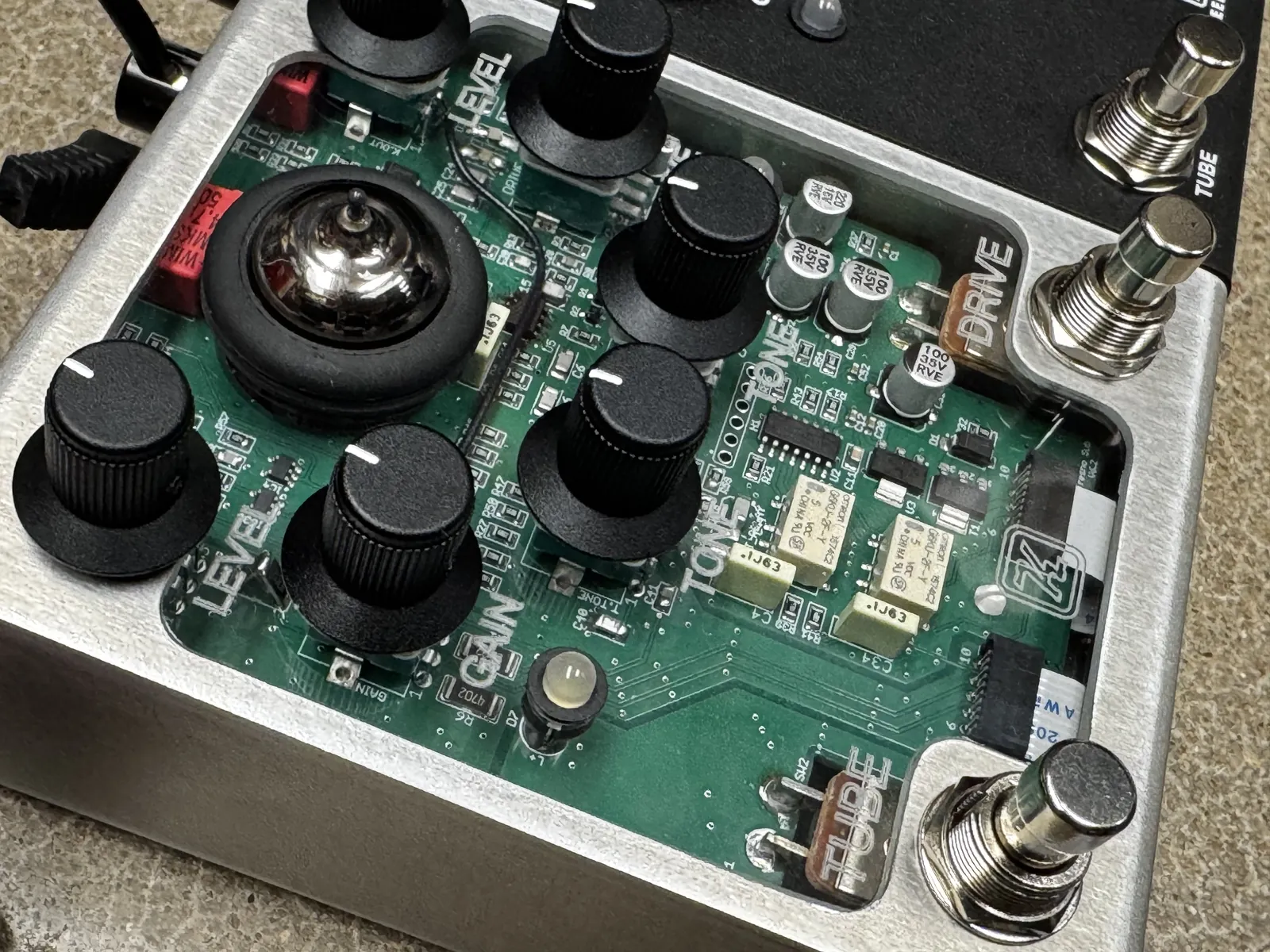
Yes, I've played through two different circuits, and I'm not sure which they've ended up with. I was really fond of them, one of the circuits especially. I'm scheduled to be there soon for a visit, and I'm sure we'll get together on that, and I'll learn more about what they have in mind. It's exciting.
TQ: You have a European Tour coming up. Other than cultural diversity and excellent food, what are top of mind, as far as what you look forward to?
Well, those two things are what make those tours fun, no doubt. I'll be taking two of the John Suhr amps that we're working on, and I'm looking forward to touring with these Marshall-style circuits. I've only been touring with the Lonestars since 2005, and again they've done a really good job, but it's a whole other level that I'm getting with these modded SL68s.
TQ: It's amazing how rarely players talk about the beauty of Marshall clean tones.
Dude! If you listen to my Resolution record, there's a song called "The Prayer And The Answer" and I thought for sure it was going to be neck-pickup Strat, a Stevie Ray-inspired Fender tone, and we had all these great old black-panel amps, and they just weren't doing it for that song. Mike said, plug into the Marshalls, and that was it. It has such body and clarity, that high plate voltage—it's glorious.
TQ: Are you all experimenting with different-size bright caps on Volume I?
No, I believe there is a version two of the SL68 where you can switch cap values, but whatever he's done with this mod is just perfect for me.
TQ: What epiphany moments have you had over your career, as it pertains to getting great tones.
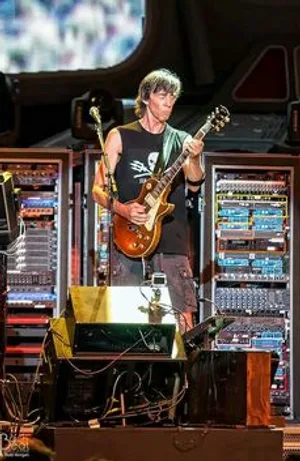
I'd have to confirm what we discussed earlier and say that finding a way to control the gain by staging it with different pedals that all complement each other was my biggest discovery. It allows me more flexibility than if I was just cranking the amp and rolling my volume up and down. I grew up with the latter way of thinking that it all had to come from the amp, as I really didn't have gain pedals growing up. So, it was a bit of a flip of the switch, and I've been there ever since. As I'm getting to know the fuzz circuit and finding that sweet spot on the volume knob to back down the gain to get that cleanish Hendrix sound from the fuzz is otherworldly, and I'm really digging that exploration as of late. Let's see, what else? I do recall finding my happy place when I was younger. There was a while there in the '80s when I felt pretty good about where I had gotten. I had a Tom Scholz Rockman in front of a Music Man HD65 with a 15". But then I bought what I recall was a two-rack space multi-effect from Ibanez, I think the 8202. It had chorus, flanging, and all that, but it also had echo. That Rockman with the Scholz 300:500 ratio tucked back in echo into a longer delay was it. If I played clean through it, I felt like I was Pat Metheny and then all these glorious sounds that I'd been wanting to hear were starting to happen, even though it was in this somewhat lo-fi way. It felt like I was finding my voice. I attended the University of Miami from 1983 to 1985, and I didn't have a cart for my amp, so like many, I managed to come up with a grocery cart from the local Publix across the highway, and I'd use that to cart my stuff around. I'd leave it all set up in the cart, and others would come by, hear me play, with comments like, hey what is that sound? It's still kinda my sound today. [Laughs.] Whatever we could do to get close to this magic studio-produced sound we heard on records. That was the beauty of the Rockman: You'd plug it in, and it was "Oh, my God, that sounds like a Boston record."
TQ: Tom Scholz was inventing effects that he heard in his head for that first album. We're still working to nail those "Hitch A Ride" lead lines. It's tough.
And that first Boston album still sounds amazing—it doesn't age. Incredible on so many levels, although I'm not sure he's ever really divulged how he did it. You see photos of 1176s and probably a version of a Power Soak and whether a cocked wah or, I think, in his case, perhaps just EQ, but "Hitch A Ride" is a work of art. I did a version of David Bowie's "Heroes" years ago and went for the lead section as a combination of Mick Ronson and Tom Scholz tone as Mick would do the cocked wah thing. I had the tone dialed to imitate Mick Ronson on "Moonage Daydream," and I quote the "Hitch A Ride" solo because it's kind of the same tone. It was driven by a particular emotion. I played a Les Paul for authenticity's sake. And major kudos to Tom Scholz—what a friggin' genius, and c'mon, he wrote all that music, engineered the record, played all the guitar parts. It's just insane. TQ—Scott Ulrichs