
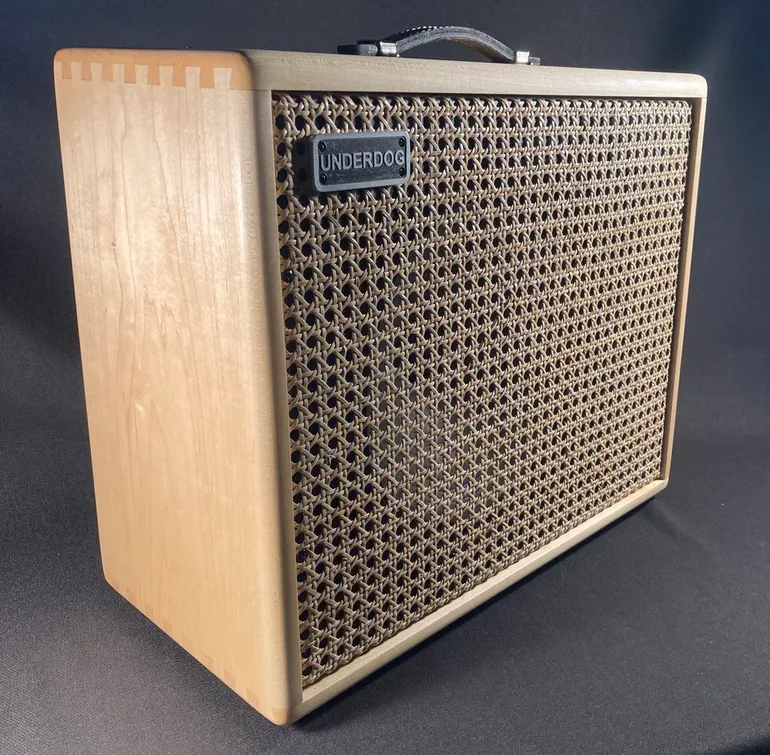
Dylan Kennedy's work begins with a deep, almost restless passion for tone—an obsession shaped by years of chasing the subtle details that make an amp feel alive in your hands. That energy carries into every Underdog Amp he builds, where inspiration isn't just an idea: It's the driving force behind each decision and each component. For Dylan, it's not just about recreating Leo's designs. It's about creating an instrument in its own right, something that responds, breathes, and pushes back in all the right ways. How better to profile Dylan's work than to have our good friend Ryan Wariner plug in. Ryan, a tone hound of the highest order first appeared on the cover of Tonequest Report in November 2023, and we went deep. It was just prior to him going on the road with Ann Wilson's band Tripsitter. We discussed the conundrum of choosing a stage rig, given the number of options from his quiver that would easily fit the bill. It was then that we decided to catch up down the road to see how it all played out. Here we are some two-plus years later. The touring band is now Heart, with Nancy Wilson joining Ann's band in 2025, with Ryan filling the enviable role of ripping through so many of those classic Roger Fisher and Howard Leese guitar-driven songs. A discussion with Dylan on Underdog Amps follows.
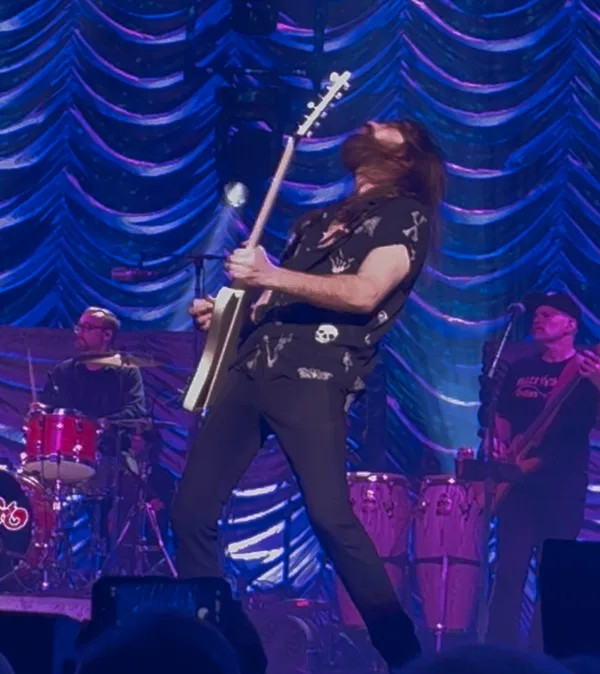
TQ: How's it going out there on the road?
Fantastic! The shows have been fun, the weather is nice, the Mexican food amazing, but not much is scheduled for today, so it's a perfect time for this call.
TQ: Any guitar safaris happening?
We've done a bunch already, and it's that time on the tour where everyone is just holding tight, as we're going home soon. Although our drummer was just considering yet another snare drum that he found, but he's already bringing three others back and would have to ship this one, so it may not happen.
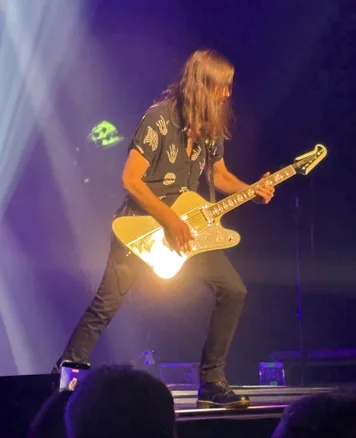
TQ: Where do you think the guitar market is right now? Any softening within the vintage sector?
I think so. I think there is more sitting around for longer. The big stores that want to dictate prices, like Carter [Vintage Guitars, in Nashville], where it seems they want to be the pillar, in terms of setting the pace, are holding strong, but it does seem like things aren't moving as quickly as they were a couple of years back. I've only been hunting amps recently, so take my response with a grain of salt. Back in August, on my birthday, I happened to find a '73 Hiwatt 100-watt DR103 that I've been wanting for some time now.
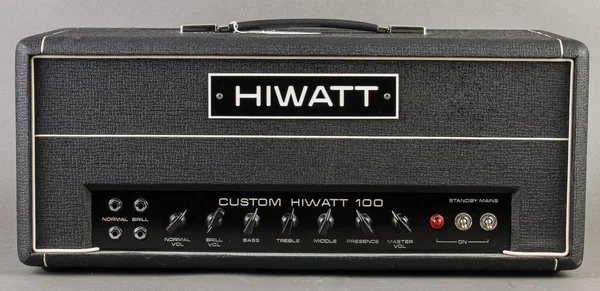
I have a 50-watt that's one of my favorite amps, and for some time I've wanted to add the 100 to my collection. Carter has a '73, the same amp that's been sitting in their room for months. They're asking $4,500, and I found mine in San Francisco at a place called Real Guitars for $2,700. It's a cool legit older place that's been around. That new-to-me Hiwatt does have a couple things, like a hole drilled in the back for what looks like possibly an effects loop, but if I sent you a picture, you'd almost think it was new. Outside of that hole, it's mint.
TQ: Did it have old glass in it?
It did, and of course the original transformers. I didn't even look inside the chassis. I saw the Partridge stickers on the transformers and that's all I needed to know. I'd love to find matching 4x12s for both Hiwatts. Those things sound great with Celestions, but more Marshally.
TQ: You're looking for cabs with the original Fane speakers?
Yes, I was hoping to find one out here on the road so that I could just throw it in the bay and drive it back to Nashville. Austin Vintage has one right in the range I'm looking, but I don't want to ship it.
TQ: Check out the new Fane Crescendo AE for higher headroom. They may work for you if you find an old cab but no speakers.
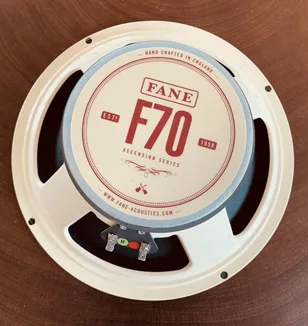
Wow, I didn't know Fane had a new Crescendo out. I think Gilmour used Crescendos in his Hiwatt cabs, and I've heard good things about the F70 that they came out with a few years ago. My buddy Steven, an up-and-coming, amazing player here out of Nashville and likely the next guy that everybody flips out over, has a 2x12 Fryette cab with those F70s. He plans to bring it over so we can blast the Hiwatts through it. Todd Sharp has the 100 right now, and he's interested in hearing those, too.
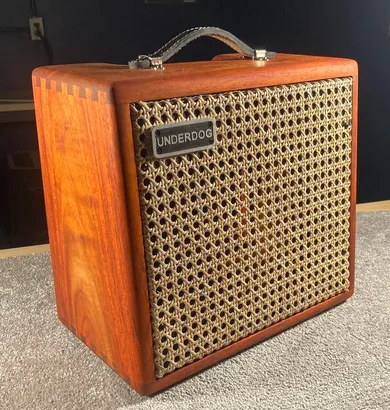
TQ: You spent some time with Dylan Kennedy's amps, one being his Underdog OG, a 5E3 Fender Tweed Deluxe-inspired circuit, and the other being what he calls the Pup, based upon a 5F1 Fender Tweed Champ.
Yes, and my friend Derek Garten, a studio engineer, producer, dog-eared kind of person here in town, came over and he listened to them with me. His comment as he was leaving was, "I might need to buy one of these for my studio." The OG is the one that really stood out for him.
The Pup is great and does exactly what a good version of those do, but it can be a bit more of a single-sound, one-trick deal. Although something about those old four-hole Tweeds that is often overlooked is the usefulness of the padded input.
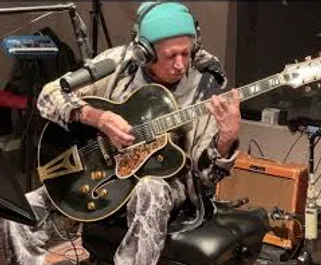
I learned from my buddy Ryan [Bullington], who has been the guitar tech for Ron Wood for the last year, that Keith often plugs into the 2 input on his smaller amps, just to take some of the "rizz" off. Ryan was in the studio for the making of the last Stones record, and he witnessed it.
TQ: Makes sense. We've been doing a little of that with our lead-circuit Plexi Germino lately, bridging the two high inputs and plugging into the lower Volume I input. It does round it out and takes away some of the zing. It works great with a Strat or Tele.
Interesting. I've never tried that and will when I get home. One thing I'll say about Dylan's builds is that they come stock with Alnico speakers. He loves them in these circuits and mentioned when he dropped them off that he doesn't like anything but Alnicos, that compressed breathing thing. I believe he's using a 30-watt Amperian speaker in the OG.
TQ: We'll definitely ask him all about it.
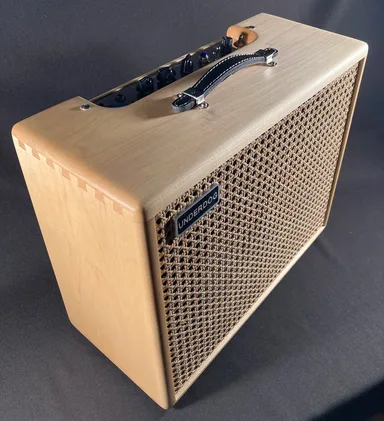
The 5E3 Deluxe OG build reminds me a bit of my Lazy J amp. It seems to have a similar feature set, although the Underdog does not use 6L6s like the Lazy J. Both have negative-feedback controls that allow you to clean it up, tighten it up, have it lean more "black panel" if desired. Man, I really liked it and could see using the OG quite often. I opened them up to check out the inside of the chassis, and it's a nice quality build.
TQ: When trying out an unfamiliar amp for the first time, how do you go about it? Do you grab a specific guitar or perhaps one single-coil, one humbucker?
I definitely will use different guitars to see how the amp responds, but I start, for better or worse, with the preconceived notion that a Tweed Deluxe has a perfect complement in the Telecaster, even if a lot of guitars sound good. It's the same for me if I'm playing an old Marshall for the first time; I'm likely to start with a Les Paul.
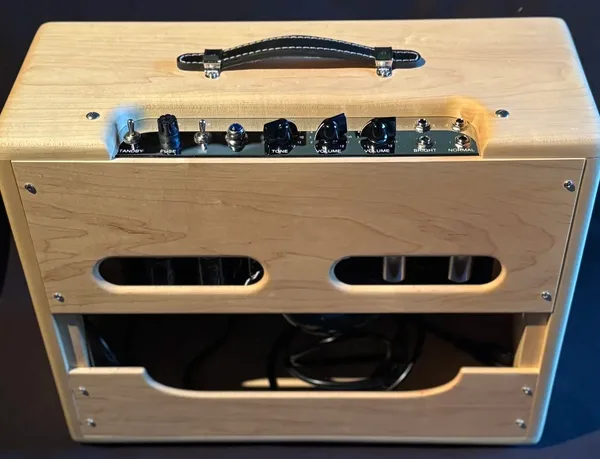
That's the first thing I did with the OG, as I know what that sound and feel will be with the settings I like to use. I set the knobs where I do with my old 5E3. For me, the Champ circuit doesn't really do its thing until you turn it up to about 7, which is the same thing with Dylan's Pup. Once I've gone through the amp with single-coil guitars, I switch to humbuckers and find the point where the amp tops out. With the Pup, I started with a Strat, as I always think of a Champ as a really great Strat amp. Part of that comes from Greg Martin. I grew up hearing him play his '57 Strat through a Champ and remembering that that was the perfect sound. There was a track recorded with a Strat and a slide into the Champ and it made an indelible mark as to how great that combo is. I didn't have a ton of my guitars with me, as most are in storage while we're back and forth with tours, but I did have my Les Paul and both of my Nachos, a Tele and Strat, which are pretty great examples of newer guitars shooting for the originals.
TQ: Did you happen to A/B Dylan's amps with your or your dad's vintage Champs and Deluxes?
I didn't—rather just listened to them for what they were, and I have to tell you that I was really impressed, not that I didn't expect to be, given who Dylan's dad and granddad are [Gordon Kennedy, dad, and the late Jerry Kennedy, granddad]. I'd put both in the upper end of those styles of amps, and I've played a ton of them. I think I liked his stock bright channel on the OG best. It just sounded right. It could go bright but didn't have too much of the sag thing, where it just caves too early. It was definitely in the target zone of what the good ones do.
TQ: Is your amp stage rig with Heart still the same as the recent Rig Rundown with John Bollinger [Ed Note: February 2026, where Ryan is running a 1973 100-watt Marshall Superlead with the original Jose Arredondo mods.]
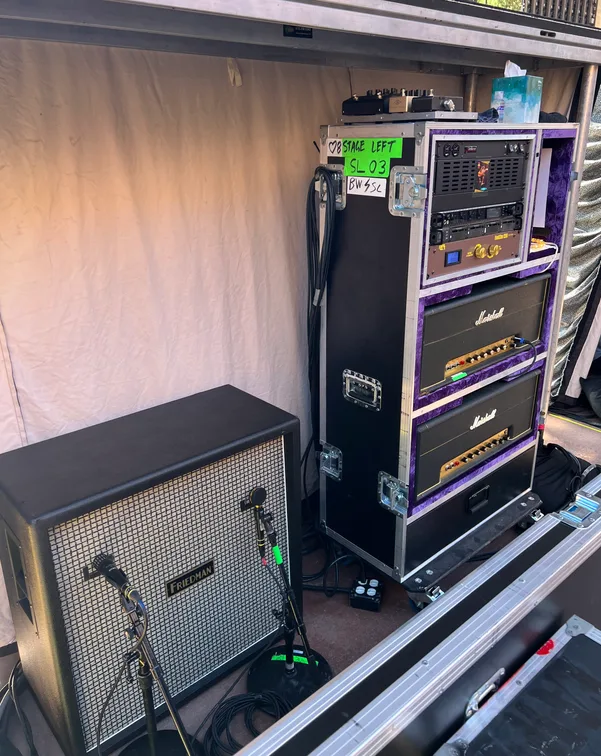
Yes, I think we shot that after I had already switched from my 4x12 Kerry Wright cab with G12-65s to my Friedman cab with Greenbacks. The biggest change from a couple years ago is that I went to vintage Marshalls and Greenbacks from the Bogner and 65s.
TQ: And you're pairing up the Greenbacks with Vintage 30s?
Yes! The Guitar Center here in Nashville is the best other Guitar Center, with the one in Los Angeles being at the top, and that's where I found it. They have a big platinum vintage room here and that my buddy Tony [Higbee] runs. I have bought vintage gear there in the past, and my dad bought a '54 Strat from him the other day. He's got all the cool boutique stuff in there, too, and he's the one who got me into the Bogners in the first place. My friend Jay [Baskin] and I went in to check out some of the new smaller-builder amps and ended up playing a few, all of which were pretty cool, but nothing either of us had to have. The best we played that day was an older Marshall Silver Jubilee, but it was the 4x12 Friedman cab that blew us away. Tony always orders them with the checkerboard cloth, which I love. We were sitting at lunch afterwards, and I said, "Man, that cabinet sounded really good with everything we threw at it today." Jay is also a tone freak and high-level touring guitar tech. He was with Matt Bellamy, the guitar player from Muse, for years and did a stint with Richard Fortus when he toured with Guns N' Roses. He knows what's up, and as we were walking out of the restaurant, he said something like, "You know what you said earlier about that cabinet? Yeah, I can't stop thinking about it either." My reply was, "Good, we should go back and buy it." Tony, who is always very accommodating, let us know that he just got a couple new ones in and that he'd go grab one for us from the back, and we both immediately said, "No, no, we know what this one sounds like—we'll take this one." You know how it is. It's probably because some kid was blasting through it for a couple hours on a Saturday and it was starting to really break in.
TQ: Are the Greenbacks and Vintage 30s in an "X" pattern?
No, the V30s are on the bottom, where Dave [Friedman] likes them. I think I've heard him say something like, because the V30s are 101dB and the Greenback 97dB, that having the V30s on the bottom helps with the perception of volume difference not being as obvious. Our sound guy, Gary, is only putting two mics on the Greenbacks with Heart. I do like V30s with Marshalls. It's got a sound: Slash and Steve Stevens. For some of the tighter, more rock sounds, a Vintage 30 is great. The Heritage 65s can sound a little dark to me, and I wanted that prototypical Marshall sizzle on top, and the Greenbacks give you that Jimmy Page sound.
TQ: Tell us about your main amp, the ’73 Marshall 100-watt Superlead.
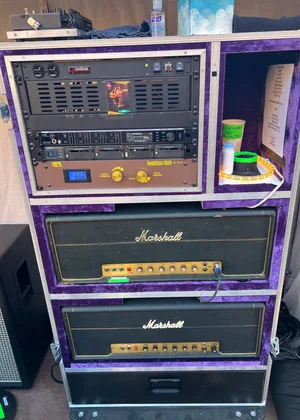
Yes, that and my backup, a 1970 Superbass head have both been modded by Dave Friedman. He did the classic Jose [Arredondo] mods, originally on the '73 years ago and more recently on the backup. It's got an extra gain stage via an additional 12AX7, but only if you pull the knob out on the push/pull pot. With Heart, I'm playing it as a stock Marshall, no extra gain. I just use the Klon to gain it up when I need it. By the way I only like to hunt Marshalls with issues, whether a drilled hole and a bunch of changed caps, so that I can be okay about modding them. As long as they have the original output transformers and the mustard caps, I'm good. I'd never think to modify an all-original, stock Marshall. The 1970 Superbass had a replaced power transformer, so all was good there. The '73 is a 4-input 100-watt, and the Jose mod adds the one tube, which Frampton uses all the time, with his pulled for the extra gain. There is also an old-school pre-master volume added, and the channels are always jumpered internally. I run the master up really high, just touching the top of 8, so it's not really impacting things much. I had it a little higher and the sound guy was like, "We gotta turn it down just a touch." [Laughs.] Then I have the channel volumes at like 3, 3-1/2.
TQ: That's it? They're pretty crunchy when you're just straight in, no Klon.
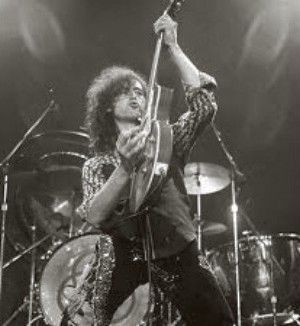
That's it. Yes, and I'll edge Volume I, the bright channel, up a little more as I want the top end to have that signature Marshall thing going. I'll always go for that top-end "Jimmy Page" zing.
TQ: We figured you were running the amps around 6.
No, maybe 3.5 on the bright and 3 on the normal. Both amps have old-school effects loops, not buffered or anything like that. We run the Strymon tape echo through those, but it's nothing modern or fancy. Dave did that first one, and it just came back so great. Having that master volume for certain rooms really helps. It feels more old school 4-input Marshall, compared to the later-'70s master volume, two inputs.
TQ: Clearly, it has plenty of gain in stock mode.
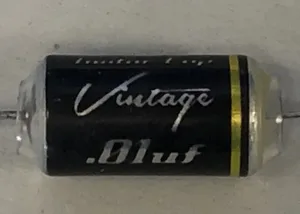
Yes, and the '73 has a bit more than the '70. We had a problematic gear night during one of the first shows of the tour, and it took a minute to track down what was up. We ended up on the spare amp, even though the issue was not with the main amp. Bryan [Ryan's tech] switched me over, and one of the first things I noticed was that the '70 is just a little cleaner. It could be that the B+ [bias] of the '73 is a little higher, or perhaps just the difference in output transformers. Another point of interest on those: There are two different values of capacitors that Marshall used during that era for the Presence knob, as did Jose. Early days, it would most often have a .1µF cap, which is really zingy and bright, and then around '72 they went to .68µF, which is what Dave used in my amps. It dips down the frequencies that are no longer attenuated, thus letting more of the upper mids through compared to just the highs. That way I'm able to run the Presence knob on 8. It's a bigger difference than I expected it to be.
TQ: Do you have a bright cap on Volume I?
Yes, I like the big value one, I think it's 4700pF. With the internal jumper and blending in Volume II fills it out and I think having the bigger .68µF on the Presence also helps balance the highs. You're in effect attenuating less of the mid, low mid frequencies with that larger cap, so more of the full frequency is coming through when the amp volume is set lower.
TQ: And the Gibson Les Paul you're playing is a Collectors Choice #30 called Gabby? Tell us about that and the first Collectors Choice you have, which was #16 and based off Ed King's Redeye.
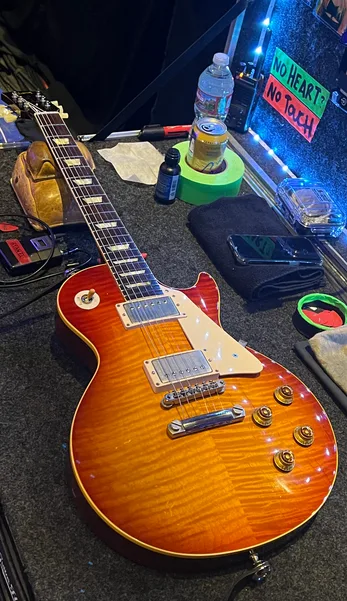
My number one and favorite Les Paul I've ever owned is the Ed King. It hasn't happened yet, but we were discussing the potential of the tour extending to European countries and possibly as far as Australia, and it was concerning when thinking about traveling with it. Jay, the same person who helped me find the Friedman 4x12, has a historic from the early 2000s with Tom Holmes in it. I think it's a 2003. When I was in the middle of my Les Paul hunt for the best I could find, I'd use his as the benchmark. That was the one we always tried to beat. When I'd go into the studio to record Les Paul parts, I'd borrow his guitar, so we knew what we were looking for. When we found the Redeye, it was immediately apparent that it was a really good one and, on some level, it became the new standard for us. That guitar now also has Holmes in it. I had the finish redone, as the early versions of that guitar with the Redeye were really pretty poor. They've since modified that finish to look more like the real Ed King guitar that Jason Isbell now owns. I'm never going to check this guitar with an airline ever, so it was back on the hunt for another Les Paul. I focused on the same era as the Ed King, but I was open to whatever may have come my way. One day, I walked into Corner music, the local Nashville store that has been open since the '70s—where I got my first Strat when I was eight. That store has been very formative and important to me. When I was a kid, they had a Van Halen Music Man hanging on the wall, and even though I was only 12, the sales manager, who has become a good friend of mine, would always take it down and let me play it, knowing full well that I was not able to buy it. It's close to my house and I'm in there almost every week buying strings. That day they told me that they had just taken in a collection from a widow who was selling off her late husband's guitars. They mentioned that there was a pretty cool Les Paul if I happened to be looking for one. We opened the case and there it was: a Gabby Collectors Choice. It's within a year of my Ed King. Those Collector's Choice series were somewhat the Murphy Lab of that era. Gibson made a couple hundred of each one and moved on. It dated to '14 and mine's a '13. The geometry feels very one-to-one with my other guitar. It had more red color to the 'burst than the Ed King.
TQ: Who is Gabby?
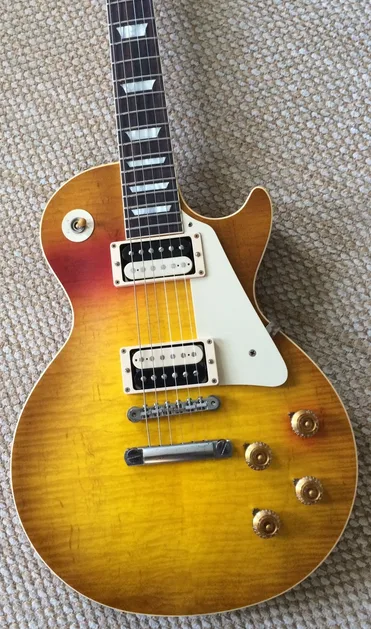
Gabby is the name of the guitar. However, I'm really not sure what the story is. [Ed Note: According to online intelligence, Gabby stands for Gibson Appraisal Burst. It was owned by the same person for 50 years, and when he was ready to sell it, he reached out to Gibson. Because Gibson doesn't do appraisals, they referred the owner to Vic DaPra, a renowned collector and vintage expert who, upon seeing photos, said, "I had to have it because it was among the finest examples of a 1959 Les Paul Standard that I had ever seen." From there, it ended up with Ronnie Proler for a period of time and is now in another private collection.] It felt right, they spoke with the owner, and we worked out a deal. This guitar is now my road guitar. Acoustically, it's about the same as the Ed King, and weight-wise it's also about the same. The neck may be just a tiny bit smaller down by the nut, but it's close. I mentioned to Jeff Senn one day that I wished that it wasn't so red, and he said, "Well, you're home all summer, just put it out on your back deck in the sun." So, during the summer of '24, when we were home while Ann did her cancer treatments, I'd drink coffee and just have it out there. I did that every day for weeks, and it completely changed that guitar. And I'd take it inside if I had to go out, leave it in my room, and when I'd get back, open the door...and oh, my god, the offgassing smell of the lacquer filled the entire room. It was clear that it was working.
TQ: It was shrinking the lacquer?
Yes, and one of the huge upsides for me was that the flame on the maple cap popped far more than it had previously. I'll send you the before and after because it's like two different guitars, aesthetically. I did kinda screw up because I didn't cover the fretboard and the sun bleached the rosewood, too. I took it to Dan Strain of Danocaster because I knew he could do something about that. He had me drop it off on my way to lunch and told me to come back afterwards, and of course when I picked it up, it was back to its previous dark Brazilian-like color.
TQ: Do you know what he did?
It was some kind of stain and only took him two hours. He wouldn't even let me pay him. The serial number on that guitar is #007, which is cool because I was a huge Bond fan growing up. I just own those two Les Pauls right now, as I feel like I've got two really good ones.
TQ: Did you do anything with the harness?
Yes, the engineer I mentioned in the context of our chat about Dylan's 5E3 Underdog OG amp put RS Guitars harnesses in a couple of his guitars and he really likes them, so I decided to go that route. It works very well in that guitar. The only thing I have to do is change out the knobs, as they look off in color. I'm going to try to hunt a better shade of gold for those.
TQ: Did you go with .022s in both, or perhaps a .015 in the neck?
Yes, I did the classic woman tone they offer, which is .010 in the neck and .022 in the bridge and love it.
TQ: We know you've been through the whole gamut of Klons and Klones and are constantly shooting them out, in a search for what you like best. Where has that journey landed you?
Well, it's funny you ask about that because there's a new pedal that I'm using in that traditional Klon spot and one of the big elements of change to my rig recently. We'll have to save that for another day, as I'm not able to say much about it at this point. It could make for a fun ToneQuest deep dive when the timing is right.
TQ: Sounds good. Specifics aside, are you just kicking that on if you need a little push over the edge, some additional sustain?
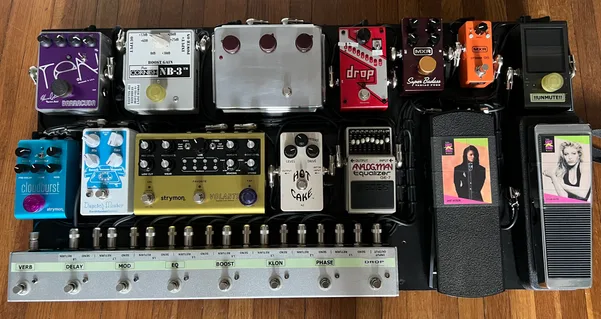
Exactly. This style of pedal is on for more of the show than it's off, and I live and die by the gain knob. Some players only like the gain down, volume up, used as a boost. Others, like Jeff Beck, would run the gain up around 1 o'clock, and Frampton will run it up there, too. While I have mine on most of the time, if you see me in any videos messing with the board during the show, it's most likely to adjust the gain knob. I'll turn it up for a certain song, maybe up to 11 o'clock, and then I'll change to a Gretsch, and I'll turn it down to 9 o'clock. I never turn it all the way down, as I like having the diodes' influence in the mix. When we end the night with "Barracuda," I'll gain it up to 12 o'clock. TQ—Scott Ulrichs
nancywilsonofheart.com