
When the music is your special friend, dance on fire as it intends — Jim Morrison
At the ol' ToneQuest Report, we just can't get enough of tube amplifiers, new and old. We imagine that many of you holding this issue in your hands feel the same. There's just something about the lore, the legacy and tradition, the aesthetic, the heat, and the warm tubes that cast that purple hue.... Speaking of which, there are many variations, such as violet and amethyst, depending on the proportions of the two primary colors. Purple has the balance of red's stimulation and blue's calming properties. What variant of purple do your EL34s glow? This month our quest for tone again finds us swimming in the waters where small amp builders craft their way, and this time it's alongside Chris Benson of Portland, Oregon.

Many of you are likely already familiar with Chris and his amps, so we'll deviate a smidge here and suggest that a little time with the many good interviews Chris has already done will cast a bright light on his backstory so that we can spare him the repetition and jump right to the heart of the matter. If you do go there, you'll hear and read about how Chris got his start; however, you won't find long-winded, self-aggrandizing commentary as to why Benson amps are so highly sought-after and demand is so lofty that they had to shut down their direct orders due to a five-year-plus backlog. Instead, you'll find humility and someone more interested in spending thousands on a vintage Neumann U67 microphone than on a nice car, and who has grown Benson primarily through word of mouth.
It all began based upon a friend's suggestion that he start an amp company, rather than continue to frame houses and work as an amp tech at Verellen Amplifiers and Old Time Music in Seattle, where, during his tenure there, the hours were unknowingly filled with R&D. Taking mental notes on what he saw, liked, and disliked in other circuits is reminiscent of Mark Sampson's journey as amp tech-turned-designer. That same friend provided the seed capital, and jumping ahead 12 years, Chris has had so much success and burned the candle at both ends that he did what a soul in need of down time does: take a sabbatical from the daily operation. We initially spoke with Chris prior to his time-away announcement but decided to give him space and hold off the conversation until he was back.
Would the new Monarch Reverb+ make us smile the way it did when we first plugged into an original 1x12 Monarch Reverb combo seven years ago in Burbank, California, at L.A. Vintage?
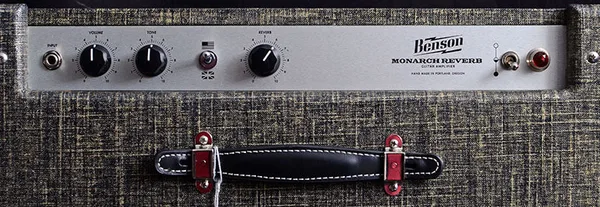
Our anticipation and excitement were as palpable as the amp. It was slated for time at TQ, and Benson worked through the build queue last winter and the early spring of this year. So, the answer to the above question is a resounding "Oh, yes, it does, every day that we fire it up."
TQR: Glad you're here with us, Chris! What vinyl did you wear out in your youth from your parents' collection, assuming they had vinyl?
Ha! Well, they didn't really have any vinyl, though they did have some cassettes. They listened to the Beach Boys and the Beatles, so that was the first good music I was exposed to. In high school, it was Jimi Hendrix, Bob Dylan, Led Zeppelin, Rage Against The Machine, classic rock, and modern classics—rock and roll, for the most part.

TQR: Would you say that those initial musical influences still play a significant role in what you like today, and have there been artists that have blown you away in recent years that help frame your sensibilities for what you hear and translate into how you voice your amplifiers?
I would say that I definitely still pull from the sounds and inspirations that were there in my early days. Unfortunately, I don't listen to too much new music. Some new things occasionally strike me, but I've found that I've gotten really picky. I guess I've just gotten old and grumpy [laughs]. I do find new things, but I find that it doesn't stay with me for more than an afternoon. Maybe I'm too busy and just can't keep it in my head.
TQR: If someone pinned you down and said, "Okay, Chris, who are your top five influences?"
Ooh, man, let's see. Neil Young, The Band.... I like indie music, too. There's this band from Massachusetts or DC, depending on how you look at it, called Karate. They're like an emo jazz band, but to my ears, just fantastic guitar tones. I've always been drawn to power trios. I don't tend to like a lot of layers, in favor of just a guitar, bass and drums, just to see how they fill space and interact. It's probably why I like Jimi Hendrix so much.

TQR: You recently stepped away from the day-to-day operations, in which you were effectively running Benson amps, for some "Chris time," or "animal time," as we heard you refer to it. What precipitated that move, and did it go as you expected?
Yes and no. Part of the intention with the sabbatical of sorts was to get my team to step in and take over the things that I normally do. They are fully capable, and they have. The part of it that didn't go to plan was that I was supposed to be away for two months and not think about the business at all, but about a week into it we had a big freeze in Portland and pipes burst at the shop. I used to be a carpenter and handyman, and I immediately had to come in and show them how to shut off the water main, fix the drywall, and all that came with that so we could get back online and pay some bills. From there, little problems kept coming up, so sooner than I had anticipated, it became clear that they were able to take on what I had hoped, and I was feeling more rested. We have a very busy spring planned, so I'm coming back and will be present again, but maybe not in the same capacity as I had been previously.
TQR: It had the intended effect. That's good to hear.
Our social media is something I've been running since the company started, and I was able to hand that off. We launched a new product this morning, the Germanium Preamp pedal. Those days are typically pretty stressful, but I hardly had to do anything, which is scary in some ways, but very nice. I typically spin out on new product release dates as the comments come in. You read through and find those that may not be stellar, and you start questioning your life [laughs].
TQR: Gotta put the noise to the side. Those who create music, whether melodies or lyrics, often describe the experience of the writing as something that just came to them, almost like gifts. You mentioned Neil Young and Dylan; both said as much. Would you say that it's similar for you with new circuit design or product ideas in general?
Nowadays, I'd say yes, but it's a bit more micro than that. I'm never just sticking tubes and wires together for no reason. I'll typically have a vision and idea in mind. What ends up happening is that an approach will come and it's often in the shower or after a night's sleep where those ideas are channeled. I'll be frustrated with something, and the answers are often revealed when I'm not thinking about it. And on the other side of the coin, I think it's my refusal to not think about it that often leads to some of the innovation. There are problems that we solve as a team, and I often want to be the guy that finds the answer first, which is dumb, as it's all analog and it's all been figured out already, but there are new things and approaches that you can try.
TQR: We've spent about a month with your relatively new Monarch Reverb+, which expands upon the original Monarch Reverb. Is that arguably the amp that started it all for you?
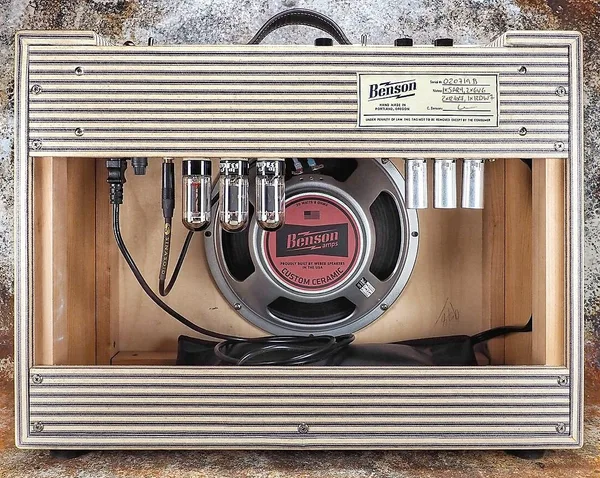
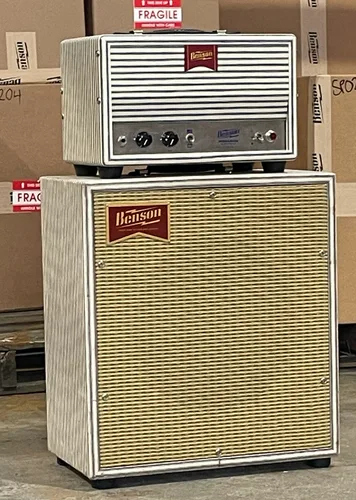
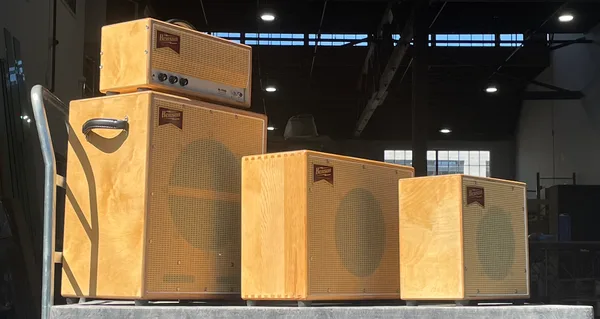
Yes, although the original was a mini stack, 15-watt head with a 1x12 cabinet, no reverb. That was the first Benson product, the first thing people saw. I had that design a couple years prior to starting the company, and it's how I was able to get the capital investment to start. That amp was the calling card.
TQR: It's a special amp, and one of the things we like to do is crank it to 10 on the 1-watt setting and try to touch the guitar so lightly that the sound and feel is clean, where the slightest move to more attack will break up the sound. Deliver more energy and it grinds and blooms. It reminds us of experiences with amps like Trainwrecks, where it's all touch sensitivity, clean sparkle, and unmistakable power tube saturation. The Monarch's got that great Plexi spongy sag, too, across all the different wattage settings.
When first designing the Monarch, I did take some inspiration out of the Trainwreck design, as the trick with the Trainwreck was the touchiness of it. At a certain volume, when they start to break up, the broken-up sound is not much louder than the clean sound, so that you can control it all with your touch and volume knob. He [Ken Fischer] did that in some interesting ways. There are actually a couple '90s MESA amps that do something similar, possibly unintentionally. My goal was to have the transition into distortion not be harsh and not a whole lot louder than the clean tone so players could be really expressive with it.
TQR: We have heard you mention previously, too, that perhaps some of the inspiration for the Monarch came from a Divided by 13 amp. Which amp was that?
The first boutique amp I ever saw or played was a Divided by 13 JRT 9/15, the one where you can switch the power section with different tubes. It was owned by a friend of mine, Dan Phelps. He's a guitar god and we're still great friends and play in a band together. That experience opened my eyes to how people pay attention to guitar tone and that there's this whole world of other designs that guys like Dan get nerdy about.
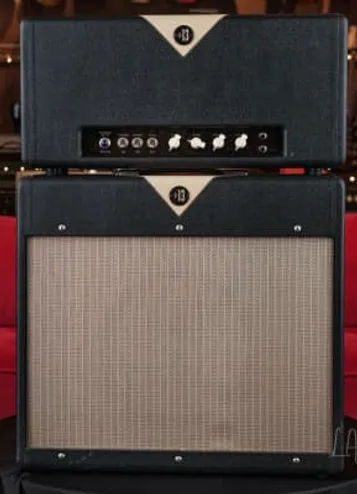
What I specifically took from that amp was the idea of a mini stack, a little head and 1x12 cabinet, which inspired the first Monarch. I really liked that form factor, as you could use the head with any cab and vice versa. It looked cool onstage and had a smaller footprint than a combo.
TQR: It's somewhat ironic that you likely sell more Monarch Reverb and Monarch Reverb+ combos than heads and cabs.
We do now. Players aren't using as many mini stacks, and they want reverb. It's challenging to put reverb in a smaller head. The proximity of the tank to the power transformers creates compromises with hum. We started doing combos and likely will phase out the Monarch head/cab. We have many products, and something's got to give.
TQR: The Monarch Reverb+ is updated from the original in a couple ways, one that moved the tone stack from a US/UK switch to Treble and Bass, which makes it infinitely more flexible. And, you took inspiration from your other amp designs like the Chimera and Vincent by introducing power scaling with a 6L6 tube. We're curious how that came to be and why a power tube to regulate the voltage.
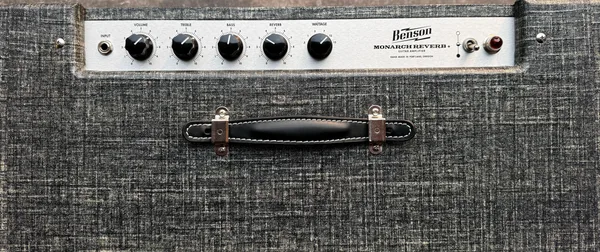
We decided to use a tube because I didn't want to lose the sag element that you don't get from using a MOSFET, which doesn't really have any internal resistance. We wanted to drag the current going through the amp through a tube plate, which has inherent resistance. It helps maintain that sag, so it was primarily a sonic decision. A 6V6 would have worked perfectly fine, but the 6L6 has a little bit more current capability. We could have also used an EL34 or 7591, both of which would have pretty much done the same thing. We haven't really gotten into the weeds with rolling NOS tubes in the power-scaling circuit, and we know which tubes seem to work well with this application. It's a very non-traditional use for a power tube. However, there are some old tube amp designs that use them as pass elements in power supplies and screen regulators, which is where we got the idea. There was an old Standel amp that used a power tube to regulate a screen and I figured we could make it variable. We tested the concept in 2020 in the Vinny Reverb, and that worked great. We then did it in the bigger amps, too, the Chimera and Vincent, so we knew it would work with the Monarch. It has a proven track record over time now, and it's very stable.
TQR: It makes the amp very versatile, because unlike some post-phase-inverter master volumes, which can work well, there is always a bit of trade-off. At the 15-watt setting, the 6L6 is effectively not regulating any of the voltage, and yet the feel of the amp is still there.
Yes. However, I have a friend who played a Monarch Reverb for years, and he gigged and demoed that amp a bunch. I sent him the MR+ and he does demos on YouTube, called Demos In The Dark. Without me telling him, he called me up and mentioned that to his ears the 15-watt setting was a little different than the original amp and that the 12-watt setting was closer to the original in sound and feel. He's correct, in that the MR+ is a little stiffer at 15 watts, and as you mentioned, the 6L6 is doing very little, which is good if someone likes solid-state rectification. It's still squishy, as it's a cathode-biased tube amp.
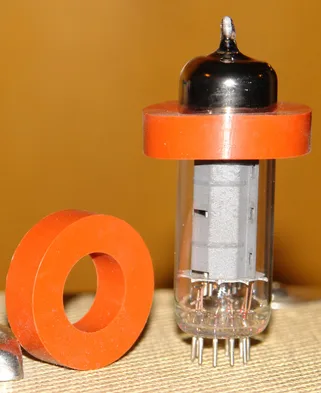
TQR: As can be typical with current tube production, we cured a slightly microphonic 6L6 with tube rings.
Any current/modern production tube will do that eventually. We find that the bigger, thicker Tube Damper Rings that you can get from Eurotubes are really good to help with microphonics and more importantly to extend the life of any tube. We highly recommend those, and they work much better than the smaller rings, trust me.
TQR: In the early days with the Monarch Reverb, you were sourcing Mercury Magnetics transformers, but have moved to arguably the hottest transformer builder going, and that's Bryan Sours at Soursound. To your ears, how do they differ and what do you specifically like about them?
Well, transformers are different from design to design, and for the most part. And by the way, I think the Mercury transformers still sound very good. I honestly think it's the materials and the build with the Soursound that make the difference. He's using paper tape wound, paper bobbin, and that just has an inherent sound. You can hear it. It does sound better to my ears than the plastic-bobbin-built transformers. Bryan did a lot of homework on the dielectric material, and he just makes a really good product. I have this little box where I can A/B output transformers specifically, and unfortunately or fortunately they make a way bigger difference than most people realize. I didn't want to believe that for a long time because I started pretty poor and couldn't really afford the good stuff. I was pulling out old organ transformers and garbage-type stuff and trying to convince myself that, "Hey, this sounds as good as a Tweed Deluxe." Good output and power transformers just make a huge difference, and it's really the core sound. It's hard to describe, as you have to talk like a hi-fi nerd. I would characterize the Soursound product as a little sweeter and less congested-sounding in the midrange. That translates into it sounding a little more open and honest. I had other team members listen without knowing which was which and they all picked the Sours. Having said all that, I have the Mercurys in my personal amp, and I wouldn't say I'm missing anything [laughs].
TQR: It's funny how we here in this community love to dig into the minutiae. I think it's just about the fun with it all.
Right and I think it's human nature, too, that if you hear any difference, you usually assume it's a good one and then you may fall out of love with it in a week or a month, which is something you have to contend with as a designer—which is why it takes me a while to design things. During that process, I'm continuously thinking, is this really cool, is this really better, or am I just fooling myself because I'm excited [laughs]. I mix records and love pro audio, and the biggest obstacle to that is being in the right frame of mind to do the work. You have to be in touch with what's going on in your brain so as not to let yourself be fooled by yourself. It's that schizophrenic thing. It's like when you're recording a guitar take for a record. If you're not thinking about the right thing, it might not be what you're looking for. And while you have all the mechanical ability to play the right notes, if the psychology or feel is off for some reason, it doesn't work.
TQR: It's a fine line when marrying the right intention and focus while removing any thinking at all.
Yeah, sometimes you have to distract yourself. I've actually put the TV on in the background when recording guitar parts so I cannot be thinking about what I'm playing, and it can go better that way [laughs].
TQR: Back to the A/B with transformers, some of us here—and I'm sure this is the case with our readers—are really adept at hearing differences between pickups, tubes, and speakers with some time in between the back and forth, where it's not a quick A/B situation. Riverhorse is excellent in this capacity, and he takes copious notes along the way. How do you draw conclusions if the feedback is not immediate?
To me A/B'ing is everything for sure. I have an interesting story along those lines with speakers. A little while back, we were testing a bunch of 12" speakers from Weber, Warehouse, and Austin Speaker Works, in order to figure out which worked best for certain amplifier and cab applications. To do the test, we set up two identical speaker cabinets right next to each other in the room and we loaded each with the different speakers.
As we worked through the test, I started to hear that one of the cabs had a certain consistent characteristic to the sound. No matter what speaker was in each, the cabinet sound was coming through. What we realized, once we moved the cabinets, was that it was room placement that was creating the differences in what we were hearing. It must have been something about the room nodes, interference and the way the sound waves were traveling, but the placement in the room was the difference. So, the conclusion is that when you're A/B'ing speakers, you also have to A/B room spaces in order to effectively triangulate your conclusions.
TQR: We've seen Jupiter and SoZo coupling capacitors in other builds of yours, and today it looks like it's Mallory 150s across your whole line. We're curious about your tone cap journey.
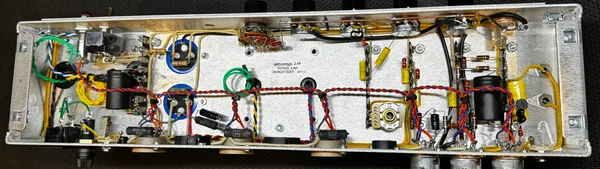
Obviously, all the caps sound different. Anyone who is paying attention can hear the differences, in my opinion. I know I sure can. I love the sound of the Mallorys, and they're consistent. I've never had one fail in any of our amps.
TQR: With tone caps in general, what kind of tone differences are we talking about?
The differences are more noticeable as the amplifier gets overdriven. As the capacitors are responding to more squared-off waves, that extreme behavior is where the capacitor response comes to light. Two caps may not sound that different clean, but once you start overdriving them, it does make a big difference. The check is the distortion characteristic.
TQR: Have you rolled a bunch of NOS tubes in your amps, and are there plate voltages that we should be careful with if we do so?
I love old tubes. I have a pretty big collection of them. I'm also a control freak [laughs], and I designed the amps around the JJ's [JJ Electronic], which we use everywhere. You can compensate for the differences with tubes in design—yes, you can use NOS tubes and it will sound different. You might like the difference, but we don't think it's necessary because the circuit design makes more of a difference than the brand of tube you're using, in my experience. A difference in tubes—say, black plate versus grey plate—can be accounted for by changing a resistor. I do prefer NOS tubes in vintage amps. I think that's where you can hear the bigger divergence. I have a Tweed Deluxe, and I would never throw JJ's in it and pretend that it sounds the way it's supposed to. I would definitely put RCAs in that amp, but my stuff is designed around modern tubes, to make it easier on the customer and player. If you're touring through Nebraska and need tubes, you're going to find what's available today.
TQR: The Monarch 1x12 combo is much larger in cabinet size than, say, a Tweed Deluxe or a Deluxe Reverb. How much experimentation went into optimizing the dimensions, materials, baffle, etc.?
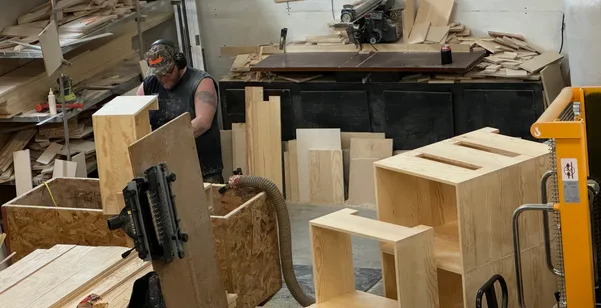
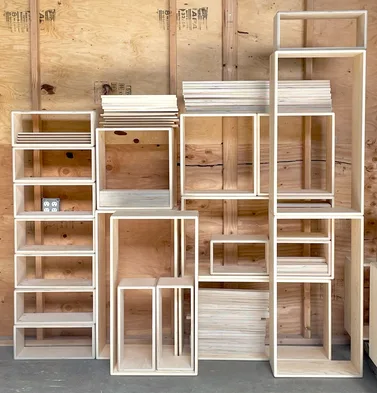
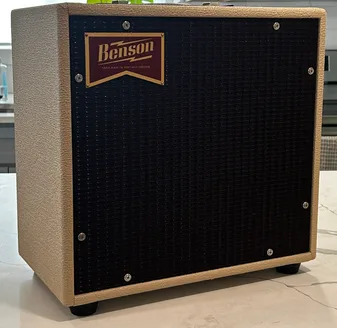
We spent a ton of time on that. The cabinet design makes a huge difference in the sound of an amp. When we started doing the combo version of the Monarch, we spent a while with different thicknesses of pine and where to place the speaker in the baffle, because that makes a difference, too. You put a speaker directly in the center, you'll get some standing waves, so you have to offset it a little bit. How much you enclose the back of the cabinet...wow, you talk about tuning. Half an inch makes a difference in the sound. It's a huge deal that I don't think too many people realize. You can get a little 1x10 combo to really punch in the bass if you get that tuned correctly, so yes, we spent good time on it and came up with something we like. With each amp it's that way. Lots of experimentation with wood, dimensions, and especially with how much to close the back panel. We settled on 5/8" pine, which is our standard now. We laminate it ourselves. We get 3/4" clear 1x4's and laminate them up, run them through a planer, and mill them down. The smaller combos and the bass amps are Baltic birch.
TQR: What are you hearing when describing the differences?
Baltic birch is a little tighter and far less responsive. The softer pine has much more resonance. I think of cab design a lot like acoustic guitar.
TQR: You and Mark Bartel.
Yes, I know Mark well, and we definitely share a similar ethos there. With an acoustic guitar, everything matters. Cabinet dimensions, materials, and thickness all play a role, especially with pine. Baltic birch just doesn't resonate as much, so it's a little harder to screw up.
TQR: You ended up with a custom Weber speaker, a 30-watt ceramic in the Monarch, which replaced what had previously been a Celestion G12H Anniversary.
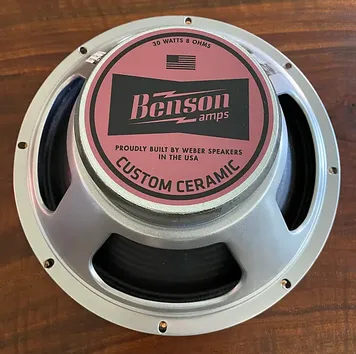
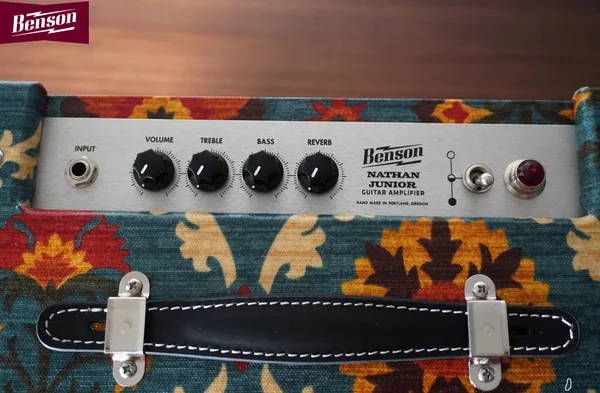
Right. We were looking for something slightly darker with just a little bit more roll-off. We wanted something just as loud, as we liked the loudness of the Celestion. The Weber is a bit softer, where the Celestion is pretty punchy and possibly too much for this application. Part of my design intent is to build up harmonics in the treble frequencies, and this is a big thing in amp design, where you basically roll off all of the bass, work the treble frequencies more, and then you add bass back in at the end, so you have a very even harmonic treble mixed together, which is how the KLON Centaur works, by the way—same principal. Part of our intent with the speaker to roll off some of the high end is so we can get rid of some of the power amp hash frequencies. The best place to do that is as late in the signal chain as possible, and we found that we were able to get a little bit more harmonic distortion, make it a little brighter in the circuit, and then roll off some of those frequencies with the speaker at the very end. It's one of those two-percent things. We tend to use darker speakers across the line. The Nathan Junior uses a 10" Greenback and that skews towards dark, as well—all for a very good reason! We have folks plugging their Monarchs into EVs and the like, and it's really not a good match for our amps. I love those speakers, but the speaker choice is very intentional to be complementary.
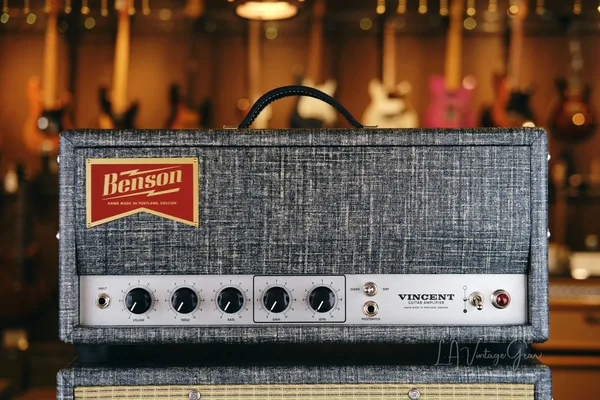
TQR: We have to talk about your 30-watt Vincent because it seems entirely unique. You took your 1-watt Vinny and are using that entire amp as the preamp for the larger power amp. Where did that idea come from, and am I describing it correctly?
That's exactly right. The idea came from something I really wanted, which was to get power amp distortion at manageable volume, and there have been approaches from power scaling, attenuators, to speaker isolation boxes to do the same. Players want to crank amps and a screaming pentode or kinkless tetrode is the sound of a guitar amp, in my opinion. I've never liked preamp distortion very much, and I really don't like most overdrive pedals, so trying to figure out how to get that sound at a reasonable volume got me to thinking that I've got this Vinny, and players really like the breakup characteristic. Why don't I just run that into a load inside the amp?
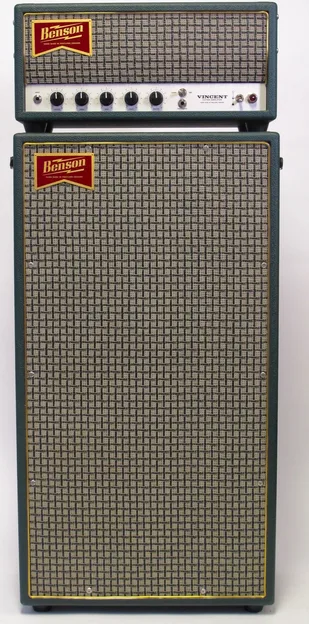
It's a 1-watt load, not a big resistor—not a whole lot of heat to dissipate. I could then tap that and get power tube saturation from this slammed EL84 in the Vinny section at any level. I made it channel-switching, as well, which, if you want just the massive cleans of the 30-watt EL-34 Chimera circuit, you can bypass the Vinny section altogether. It works. That design took a long time to really dial in. The big challenge there was getting the dirt channel to have a complementary EQ response to the clean channel, while remaining smooth and feeling like a Vinny. We did some weird tricks in that amp to get there. The Vincent is my answer to power scaling and attenuators [laughs]. I call it a "Russian nesting doll" amp, because you've got an amp in an amp.
TQR: Any amplifier company today has to listen to the demand of the market, and clearly the trend today is that stage volumes are coming down. Is this why we see 1-watt and 5-watt Benson amplifiers? I understand Nathan Junior gigs with his 5-watt signature amp all the time.
I don't know what live shows are like across the country, but in the Northwest the general stage volume has gone down, for better or for worse, and I think with that, the sound quality has gotten better. People are much more educated about mixing at venues, and whatnot. If you're a power tube guy like I am, it can be challenging. There are not that many rooms I play where I can turn a Monarch all the way up, even in Portland, anymore. I try not to play those rooms where I can't turn it up [laughs], because I like loud. And yes, players gig with the 5-watters all the time. Generally, the monitors are pretty good, and I am seeing less and less volume with a better overall mix, where it's not hurting your ears, and it often sounds like a mixed record.
TQR: Aesthetically, your amps look badass, and while you offer traditional Tolex covers, your premium, fabric-based coverings, like the one called Night Moves, looks like lacquered linen.
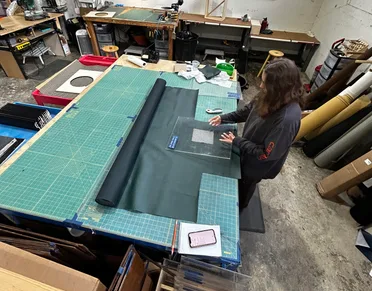
This is about the only piece of IP [intellectual property] that I try and hold onto, because I have other amp companies ask me what I'm doing. We have a process to finish fabric that I think we've perfected over the years. Our wrap team is so frickin' good. They're extreme-level craftspeople and it's mostly cotton prints. The Night Moves fabric is called gilded linen or a glazed linen, where the paint is scraped over natural linen texture. We get the fabric, glue it on, and go through our finish process, and I'm really happy that we started that way. Some people like Tolex, and Tolex makes me a little sad. It's weird to throw a bunch of plastic on an amp if you think about it. It's a musical instrument.
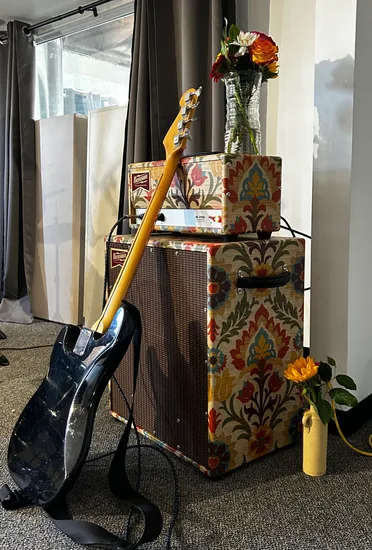
TQR: Right. We've always loved Tweed amps and there's an old '57 Tweed Vibrolux in town, where most of the tweed is gone and what's left is all ripped up, and it just looks fantastic.
I have seen touring bands using our amps, where they decided not to get road cases for them, and to see one of our amps with wear on them, with the fabric worn off the corners. It's so cool the way they look with a little beating. We did take a lot of inspiration from Tweed Fenders, my first love. When I went to cover my first amp, I went to the fabric store and got something that was heavyweight canvas, which was the only thing that was somewhat close. I did a poor job on the first one, but it's fun wrapping with fabric.
TQR: We assume this led to working with Pendleton and the custom covers? They look unique and fantastic. And might they be available again at some point?
Yeah, maybe. It was an official collaboration we did with Pendleton and that took lawyers and a structure for royalties. The contract just ran its course. We explored just making more Pendleton amps under the Benson name and they informed us that we couldn't put the fabric on the amps unless there was a contract in place. We did it for two years, and the way we finished those amps was very time-consuming because we treated it with this special shellac that we made here out of moonshine and the little flakes that you buy. You have to pound it with a hammer and put on several coats.
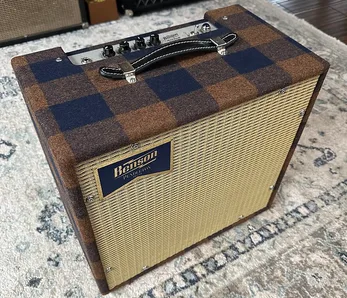
We decided for now to just have it be a special project.
TQR: There are many touring musicians playing Benson amps on big stages. Nathaniel Ratliff comes to mind, and we recently saw Benson's post on Instagram that Dweezil Zappa and Daniel Donato took delivery of Monarch Reverb+'s. What's the story there?
Yes, I've known Dweezil for five or six years now. He's a really neat guy. He invited me to a show when he was through town. I brought him a preamp pedal, and he ended up using it in his rig immediately. I think he may still be using it as one of his core drive sounds. He likes the way it clips. He reached out a couple of months ago because he saw something we had put out about the new Monarch Reverb+ and was interested. He ended up buying one, his feedback was extremely positive, and I think he's potentially planning on touring with it.
TQR: Talk about a guy who is constantly changing up his rig—an amazing player who has great ears and knowledge about how to get his dad's tones.
And he's a real tone hound. I get why he does the digital Fractal thing, because he has to replicate so many different sounds when playing through Frank's catalog. It was really nice to hear that he might take our amp out. With Daniel, I think he played one at a music store and messaged us, raving about the sound. I think his amp is to him by now, but I know he's on tour, so I'm not quite sure he's had a chance to play it yet.
TQR: If there is a challenge with Benson Amps, it's that the market demand has historically outpaced production, which is testament to how highly sought-after your amplifiers are and obviously a good challenge to have. You scaled the company to 18 employees, and we've read that you hope to not have to get any bigger. How do you balance that so you're not constantly backlogged?
The market doesn't necessarily think this, but we have tried to grow. We've actually doubled in size over the last couple of years in order to meet demand, but we still have difficulty keeping up. There are a couple ways you can tamp down demand, because it is a real problem. One of those is to raise prices, which I don't want to do. I want musicians to be able to afford our amps. They're not cheap, but it's an aspirational thing to save up for. I would think that most could afford a Benson. You may not be able to afford a Dumble or a $10,000 amp, but four grand.... Hopefully, someone is able to save up for that eventually. It's honestly been difficult. We have a list we've been working off for direct orders that's been closed since 2021, and at some point that list will run out and we'll have to open up direct orders again. I have no idea what that's going to look like. It's honestly a little stressful to think about. I realize that this is not the challenge that many businesses have, but it remains an issue if we don't want to raise prices. Our marketing is primarily word of mouth. We don't really take out any advertisements in magazines. We do post on social media, as that seems to be the way.
TQR: What part of the "Who is Chris Benson and what motivates him" has not yet been told?
Hmm. That's a tough question. At this point, I realize that I could probably reverse-scale the business, sell off the factory space, shrink the company down to just me building amps in my barn, still make a good living, and live stress-free. I would not do that, however, as it's important to me that I'm able to provide my team with a decent job and benefits and all the things that come with working for this organization. I have a really amazing staff and a great deal of respect for what they do. That is a major driver for me. These people are special.

I've heard it said that we're a hyped company, whether pedals or amps, and that's really not the intention. We're just trying to make a really good product, carrying out the vision of not compromising on sound or build quality, and I really like where we are. TQ—Scott Ulrichs
bensonamps.com