
We soldered in a few of our favorite pickups to explore and celebrate, as well as checked in with a couple legendary builders to get their wisdom on what Jazzmaster pickups are and can do for you when done right.
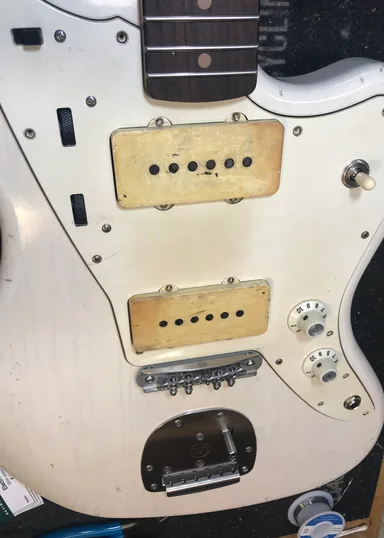
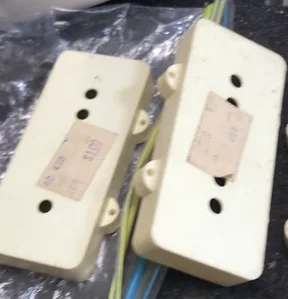
And a special thanks to Bart Wittrock, owner of Rockin' Robin, who pulled out a Ziplock stash of actual vintage weathered creamy 1960s Jazzmaster pickup covers he had bought for a dollar each decades ago, and told us to take what we needed and have fun. How cool is that mojo? We get by with a little help from our friends.
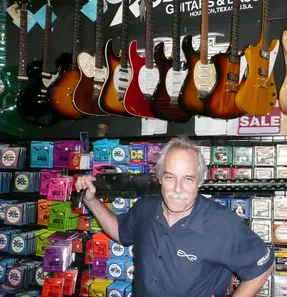
Jason Lollar on Jazzmaster Pickups
The Jazzmaster uses a shorter magnet than any other Fender Pickup, with the exception of a similar pickup made for the Model 400 Lap Steel, and it has a combination of the shortest and widest Fender coil made. This makes the length of wire going around the coil of a Jazzmaster much longer than a Stratocaster. Jazzmasters and Strats have about the same turn count, but the resistance for a JM reads much higher, typically 8K compared to 6K. Think of a pickup as an electrical generator where every loop of wire adds power to the output of a pickup, up to a point. The output of a Jazzmaster pickup is similar to a Strat or Tele, but the signal is much fuller, so it may seem like it has higher output. It does have more bass and mids, which will overdrive an amp a little more, but it's not like switching to a humbucker. You can get a far sweeter tone out of a Jazzmaster neck pickup than other Fender guitars.
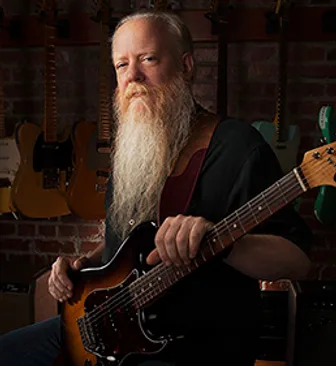
Lindy Fralin on Jazzmaster Pickups

From the name, the design and with what little insight I may have about how Leo Fender did things, it seems he was making a Jazzier sounding pickup. A shorter magnet and a flatter, wider coil both will lean towards a darker, rounder pickup. There is a great video of Joe Pass playing a Jazzmaster and getting very "Jazzy" sounds. Lucky for us he put them in a very "Fender" sounding guitar so they will do much more than just jazz. They can crank out rock, surf and blues. The older Jazzmasters were wound in a wide range of outputs, as good turn counters were not available to them until 1964. We have listened to a lot of them and found what number of turns sounds the best to my ears. As always, my goal in Fender tones are solid sounding treble strings and bright wound strings. Also, a balanced set for the neck and bridge. We also have a hum-canceling set that is a favorite of many. For vintage pickups, I still do the re-winds myself because I like repairing them when I can and rewinding them when they can't be repaired. It's a sense of pride to keep these old instruments as original as possible.
Fralin Standard Jazzmaster: Neck 7.19 Bridge 8.4
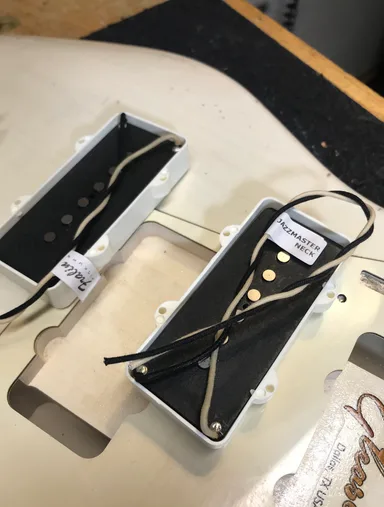
These Fender tones are where we have always felt Lindy really shines. The neck was glassy with a gorgeous clarity and the bridge had a wonderful sweetness, thanks to his 5 percent overwind to give it some balance. So chimey, harmonically complex, open, airy, beautiful, classic, pure, surf city, and traditional. These are just plain stellar.
Fralin Hum-Canceling Jazzmaster
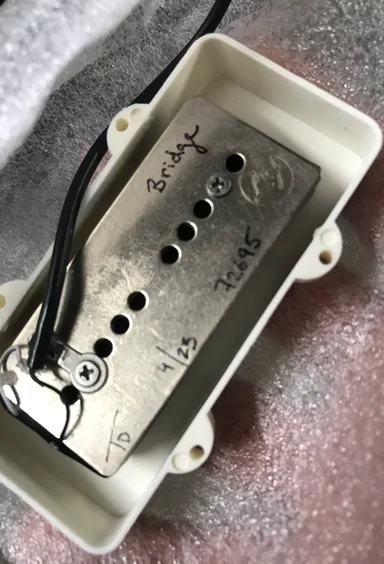
These were more in the mix and up front, while still retaining classic vibes, although the treble felt more rounded off to us, which can be a great thing on some JM guitars. They were dead quiet, with none of the wild and rowdy 60 cycle hum present at all. Well done. We would use these in a heartbeat for gigging, especially in bars or theaters with light shows, and studios.
Lollar P-90s for Jazzmaster

Oh yea. Lollar's 50s wind P-90s are the shizzle, so this in the neck of a JM is lovely. Big, fat, woody, and silky with strength. Especially in a large offset JM body that gives it such fullness. The bridge was rocking and rumbling, lots of swagger and some Pete Townshend, The Who vibes. We dig it for a twist on traditional that is killer.
Lollar 2013 Standard Jazzmaster: Neck 8.42 Bridge 8.95

Jason has such a full-bodied and robust style in his work. These are strong, rich, gloriously huge with wonderful mids and a creamy top end. Ours are wound pretty stout, and Jason offers sets that move either direction, as always. What a darn joy to unleash and play. The sustain was impressive, too. They can hang with fuzzes even.
J. Mascis Neck 8.05 Bridge 8.22
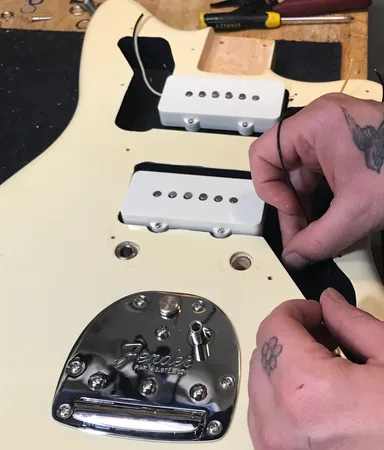
For the money, these are great and as we said before, powerful, and chunky. They won't do what the others do for clarity and sparkle, however. But a surprisingly cool pickup, especially in a Squier. Our favorite Squier stock pickup we've played in ages.
Rare Fred Stuart: Neck 6.02 Bridge 6.94
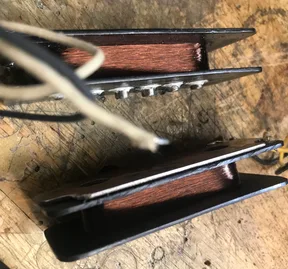
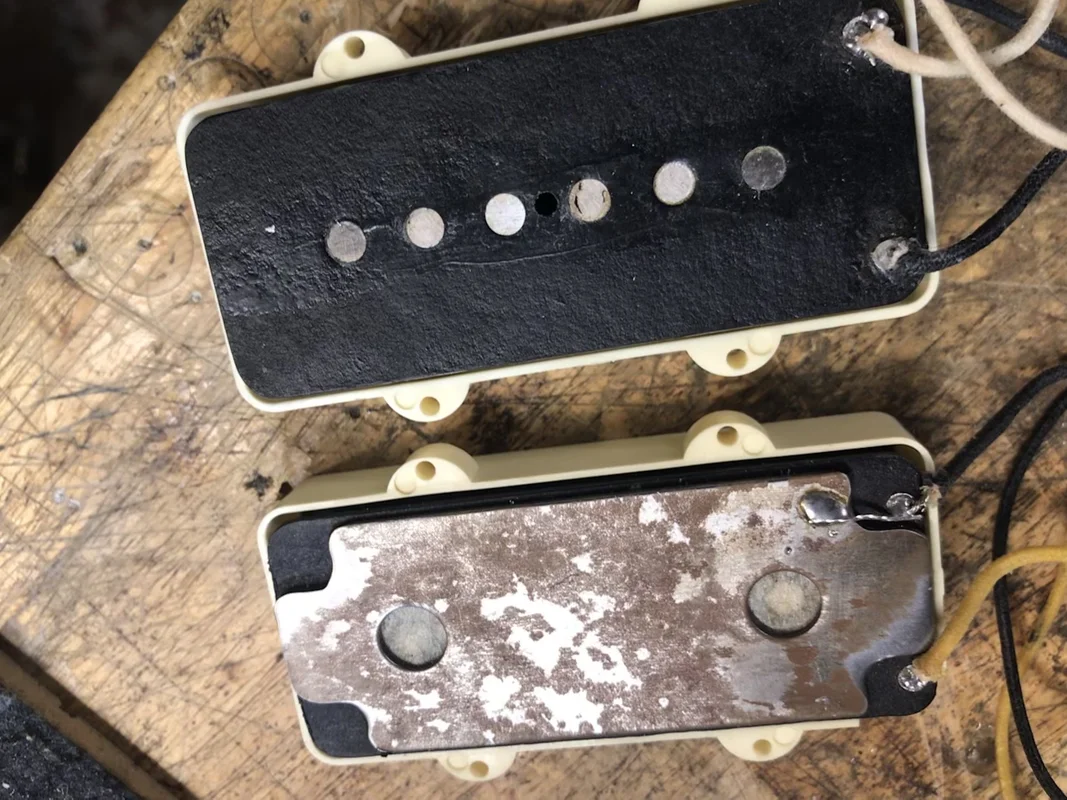
Fender Custom Shop Master Builder Fred Stuart was the man who helped bring Jazzmasters back to production at Fender by finding all the old tooling in their warehouse and getting things rolling. His pickups are underground favorites of many players, although we have never seen any other Jazzmaster pickups he has made out there. He made these for ToneQuest about ten years ago. They are unbelievably Strat sounding, yet almost like a vintage hollow body, and the neck pickup was once described by TOR founder David Wilson as vivid as a Sonora Desert sunset. Fred put a steel plate on the bridge pickup and used a Tele magnet so it would crank out vintage Telecaster vibes, and it sure does. These are underwound and like it when you goose the amp up a bit more. We wonder if he has made any more. We were unable to reach him for comment but are guessing these are one of a kind. Gorgeous.
April 1964 Vintage Fender Jazzmaster Set: Neck 7.97 Bridge 8.312
We bit the bullet on these, couldn't resist throwing down big time cash for them to a seller in Missouri. We needed to hear true vintage examples alongside everything in both guitars. The pickups were made four days apart. The bridge was wound by Abigail Ybarra, and had orange copper wire, while the neck was purple. 1964 was a time of transition for Fender, and they switched to plain enamel from Formvar and from all black flatwork like ours to light gray. The era of 1962 to 1964 is when Fender notoriously wound some of their hottest pickups. They sounded wonderful, the neck was out front and strong, like a huge Strat in a Deluxe Reverb cranked to 8. It hit the amps hard. We'd like to hear a more underwound vintage neck, too, but our wallets were empty, yet it was worth it.
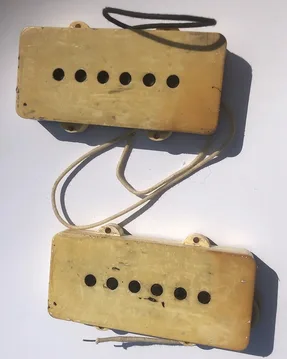
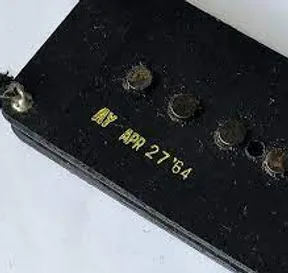
The bridge was spanky, sassy, and could easily crank out the famous instrumental "Rebel Rouser." We love them. They are RWRP. Unfortunately, the middle position was out of phase. We could just swap the leads, but we sent them out to Jason Lollar to look them over for us. They didn't have the sweet silkiness of the Lollars or Fralins, but the exceptional woody vintage clarity was thrilling, my lawdy they just rock. Killer. Here's what Jason said when he got them.
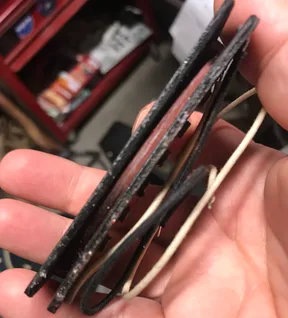
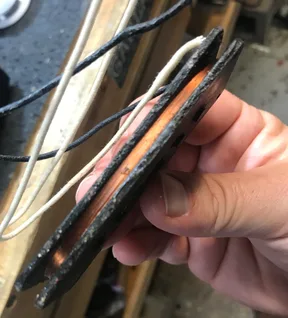
"The coil wire is plain enamel, and the color does vary from purple/black to more of a chestnut color, so the coils look right, they were wound off different spools which accounts for the color variation. The magnets are correctly oriented—one is south the other north, but they hooked the lead wires up incorrectly, the coils are RW from each other. The ground lead on Fenders is always the start of the coil and the hot lead is the outside of the coil. They hooked the ground lead on one to the outside of the coil. On the one they hooked up correctly the black lead is almost broken completely off and is only hanging on by one strand, so I put a new black lead on that and correctly reversed the other one. Crank 'em up! And check out this new model we are releasing soon, no one even knows about it yet, I'm sending you a set we just wound for TQ, our 1963s."
Lollar 1963 New Production Jazzmaster Pickups: Bridge 8.61 Neck 8.66
"Mike from Lollar was talking to our friend Jeff, a local repair technician, about the '63 Jazzmaster Jeff owns. He loves the tone and was wondering what could be done to reproduce that particular sound. When he brought it in, we compared it to the '58 Jazzmaster we have in the shop. The tone was noticeably different. Not better or worse, just intriguingly unique. Everyone in the shop agreed that there were some very desirable qualities in the '63. It sounded distinctly more mellow. It also had a great, almost acoustic-like quality that worked well for balanced strumming. We examined the pickups, got measurements of output and gauss levels, and basically did everything we could to see what made them tick. One obvious difference from previous Lollar Jazzmaster pickups was that the poles were flat. The JM pups we have historically made are radiused. Also, it was clear that the magnet strength was a little less in the '63 set. So, at first, I wound a flat pole set with different magnets than we normally use and tried to get as close to our target as possible. We all listened to the first prototype set and the vintage '63 JM set side by side with an A/B switch. They were super close, but our neck didn't sound quite as wooly. I made another attempt at winding the neck with a slightly higher turn count than before. After hearing version 2, we were all instantly thrilled with the results. If you closed your eyes and listened to them being played side by side, you couldn't even detect a difference. Mission accomplished! We're very happy to have a different variety of pickups to offer, and especially for a model of guitar that has been rapidly gaining so much popularity and appreciation over the years. Hopefully everyone will enjoy it as much as we do."—Kevin Moe
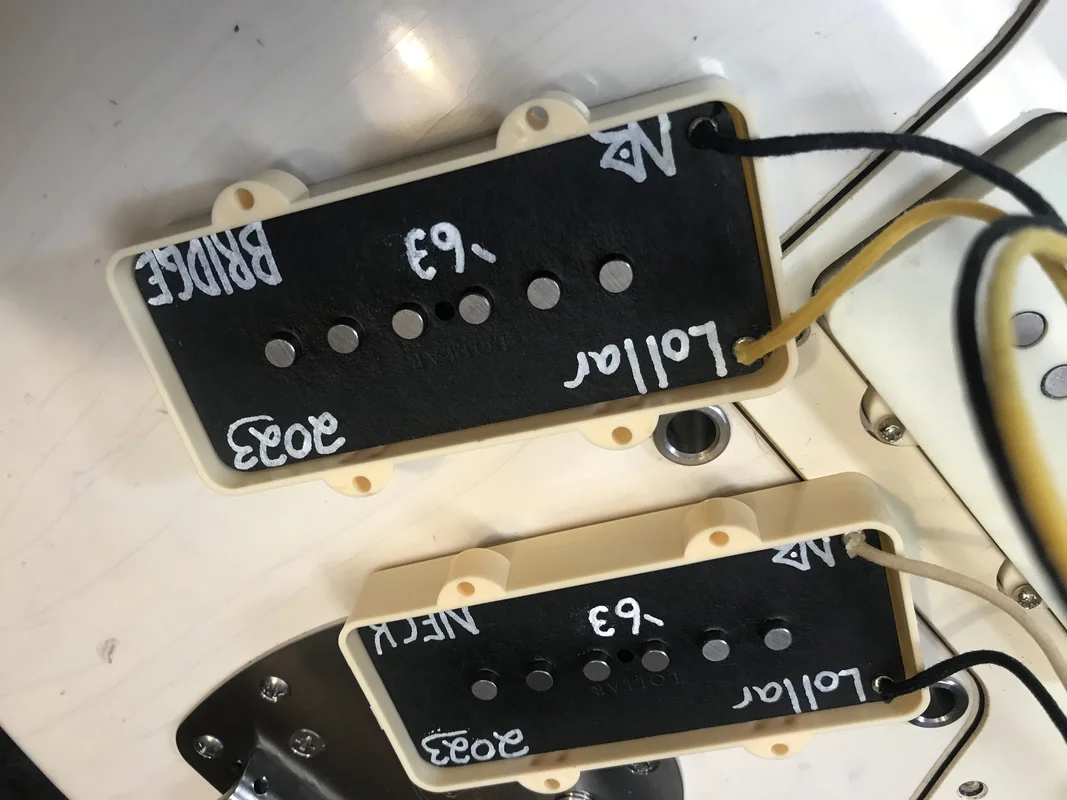
This set is oh, so full bodied and perfectly balanced with a pristine rounded top end that reminds us of a great vintage Broadcaster bridge pickup. Fendery, with a serious strength of studio quality fidelity and a pleasing authoritative low-end thump when paired with a set of Gabriel Tenorio hand-wound 11-50 pure nickels. Chords with a shot of tremolo from the Deluxe Reverb are sublime. We even dig these for funk ala James Brown and reggae grooves.
A wonderful new set and flavor from the Lollar shop gurus. Quest forth... TQ—Riverhorse
Instagram: @premierguitarrepairfacebook.com/GleasonAging
masterybridge.com
lollarguitars.com
fralinpickups.com
fender.com