
"When we try to pick out anything by itself, we find it hitched to everything else in the universe."
—John Muir
Shake it, don't break it. If ever there was a mantra around here these days, that's it. Life is quite a ride in the ever-brief time we are spinning around on this magical piece of dirt hurtling through the ether. Heading into fall and the holidays, perhaps you find yourself in a funky groove. The morning alarm clock, just plodding along to whatever your gig is day in and day out. The cliché food groups of Stratocasters and Les Pauls scattered around you. We'd bet a chunk of hard-earned cash you even have heaps of unloved, uninspiring pedals sitting in drawers. Sell them. Oh, there is a simple cure for this rote and menial, and we've encouraged you a few times. Homegrown is a good thing. Rolling your own, baby — stretching your wings with a whimsical guitar build that takes you out of your usual romps. Don't worry about a thing, just grab a few parts and viola'. Our guts are always right, so trust yours. Listen to the emotions swirling under your breastbone, and when you find a vibey body or neck that speaks to you get to it. Create something special.
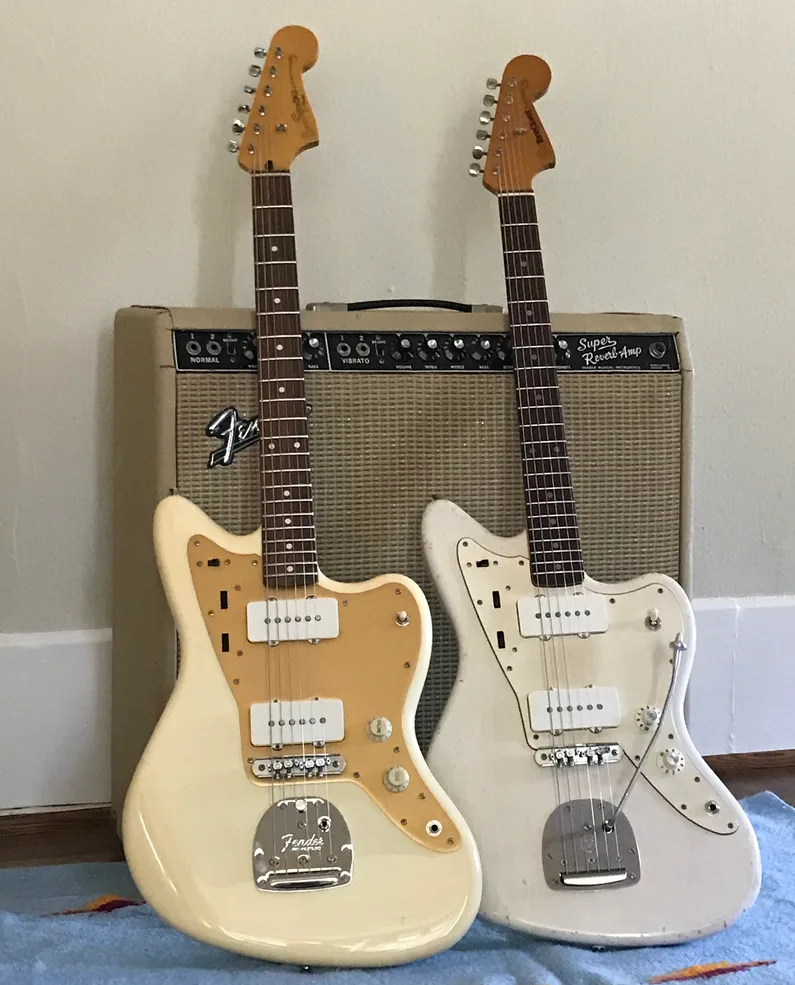
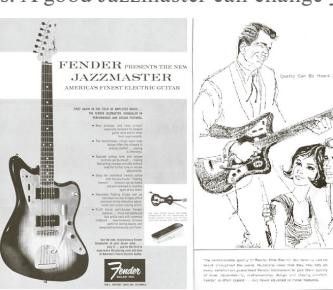
Why a Jazzmaster? For decades, our life consisted of chasing waves to surf around the world alone when we weren't cranking guitars and playing in bands. From Mozambique to Peru, Fiji to South Africa, and all points in between. Our gig was as a staff writer for a fancy California surfing mag. Getting paid to surf is about as wonderful as getting paid to play music. We always wondered if the cops were going to show up and tell us we were having too much fun, the jig is up. But they never did. Eventually, we found peace with water. We just woke up one day and realized we had done it, followed the muse, and were satisfied. The surf world is as radically small as the music world, and studying the early days of it, we'll admit we have always been cosmically inspired when we hear Ventures tunes and other groovy sixties instrumentals pouring out of the vinyl album turntable speakers, or even on a short-wave AM radio while sleeping on a cliff in El Salvador. Surf music rules. It is so good for the heart, can keep you young, let alone puts a mile wide grin across your face. And we'll count Link Wray in there with his whoopass tune "Rumble," too. You could choose a few likely guitars for surf grooves, but our money has always been on the dark horses in life, the underdogs who come from behind and leave the rest of the world in their taillights. A good Jazzmaster can change your stars. And let us announce it right here, right now, there is NO Fender clean as remotely as amazing as a Jazzmaster neck pickup. There is nothing even close. It is supreme.
We decided to find one of the most secretly hallowed underground cheap thrill versions of the Jazzmaster, and also build our own wicked custom ToneQuest Jazzmaster using the finest parts known to earth and tell you a story or two of what happened once the dust settled on our pair of guitars. We had no idea the ramble would take us from Dallas to northern Minnesota, southern California, Oklahoma, Virginia, Missouri, Washington, an island in the San Juans, and back home to Texas. But that's what happens when you go full-bore in life. When you go the distance and trust that leap of faith over the Grand Canyon of tone, you get handsomely rewarded. And yes, you bet your ass there is always plenty to learn along the way.

The Squier J. Mascis Jazzmaster
Fender's Worst Kept Secret
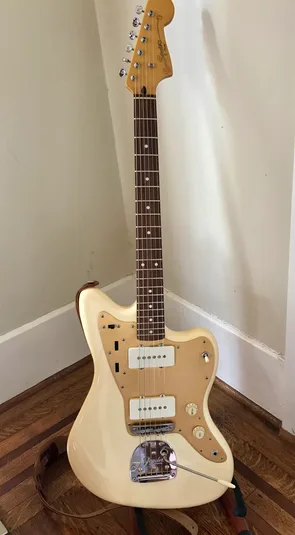
In 2013, we got a phone call from our Publisher Emeritus, David Wilson. He was quite fired up about the J. Mascis Jazzmaster, and he let us know that we, of all people, since our truck floorboards were filled with beach sand and there was surf wax on everything, needed to buy a Squier JM asap. David and I were the closest of friends, and those of you who have read ToneQuest for a while know him as your own family, too. Rarely did a day go by without us talking guitars and life, let alone all the gonzo hangs we had through the years. But I didn't get around to grabbing one until now. They were made in China, and that alone could keep some who chase logo tone away from having something special for low dough. The necks are talked about often as being wonderful, and some players hack them away from the guitar and use it on their fancier builds. The bodies were made of basswood. Think that's not a good call? Guess again. There's nothing that special about alder, although it can be more than decent and get the job done. Alder was viewed by western loggers as a "weed tree" that grows as much as fifteen feet in five years. It is extremely workable in terms of accepting stains and finish and it resists splitting apart when used in furniture. Leo Fender chose it to replace swamp ash because it was cheap and plentiful. Basswood is an exceptional choice for solid body guitars, yet still considered inferior by the usual fools who couldn't play their way out of a wet paper sack but prefer to talk about guitars all day on the internet. Around here, we like to play guitars. Remember that "Frankenstrat" that Eddie Van Halen changed the guitar world with? That was basswood. Basswood has a beautiful midrange, which is where the juju is in a great guitar. Keep your mind open and use your ears and heart to judge everything. Basswood. Now you know.
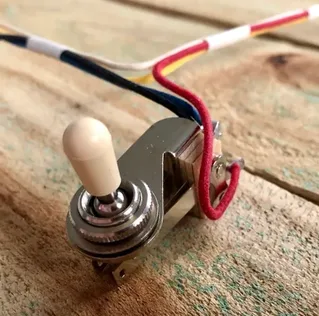
We found a used Squier J. Mascis JM in Oklahoma on Reverb for just a few hundred bucks, and the seller even shipped it in a Gibson gig bag. At the time we bought it, Fender seemed to have discontinued them, but we see them selling as new again. The earliest versions had Laurel fretboard wood and were a rich chocolatey velvet along the chunky frets. We don't know how the new ones are, but our move would be to find an older one, like we did. When it showed, we changed out the input jack, which were infamously lame, along with pulling the lightweight tremolo plate and putting in a heavy-duty official Fender replacement for more sustain, changed out the Gibson style bridge for a Mastery Bridge which took some drilling, dowels, and glue, as well as soldered in a new Switchcraft three-way selector and set it up for Gabriel Tenorio handmade pure nickel 11s. The stock pickups are surprisingly cool, and no matter what they claim, they look and sound like P90s to us. We tried a few great pickup sets in it, and you'll hear about that and the Mastery Bridge in a bit.
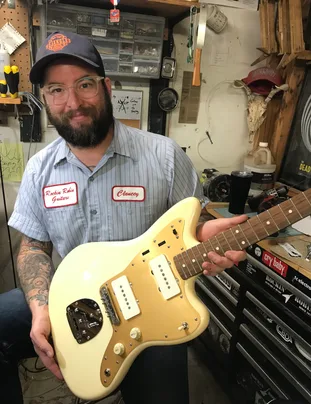
The neck is reportedly a big C, yet we didn't think it was large at all, rather a nice C shape with a decent satin finish, with a 9.5 radius. Simply put, this guitar kicks ass for just a few hundred, and looks cool aesthetically. It is worth every cent, and in reality, they should cost two to three times more. It is that good. Did we need to make all the upgrades? No, it's great without them, but yes, it is even greater now, and that's what it's all about. The word is out, and most of these older ones get snatched up by great players. If you ever wanted to get your Jazzmaster groove on without breaking the bank, this guitar will just plain steal your heart and you'll have a natural ball cranking up the reverb and turning it loose.
The ToneQuest Custom Southern Jazzmaster
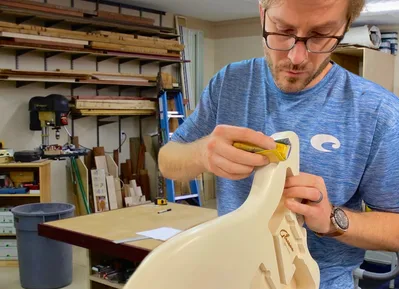
We dig cream-colored guitars as much as a good vintage sunburst. Knowing this and how we like basswood when it's a particularly well-selected and harvested piece, a simple late-night call to our friend Cody Gleason of Gleason Finish and Aging sealed the deal. Cody has done quite a few necks for us, and through the years we've worked together to make our favorite neck profile. He starts with a giant "Boat Neck," and then slowly but surely hand-rasps a perfect soft V into it that tapers to the 12th fret. We've named it The Riverhorse neck, and it is magical on all of the guitars we've built together, no matter maple or rosewood.
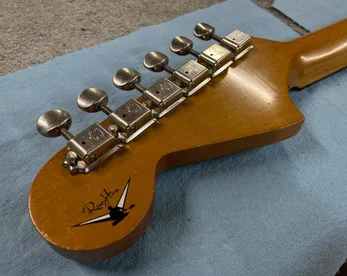
We ordered the body from Warmoth, called John Woodland at Mastery, then Lindy Fralin and Jason Lollar for their wisdom and pickups, and even put together a custom vintage harness, along with all the other parts like vintage repro tuners and tone knobs.
Larry Pogreba sent us a woolly mammoth bone for the nut, and you know that was too cool. Mammoths went extinct about four thousand years ago and were here as long as twenty-thousand years ago, so that is a true vintage bone. With all the parts procured, we'll let Cody tell you what he did.
Cody Gleason Delivers the Supreme Goods
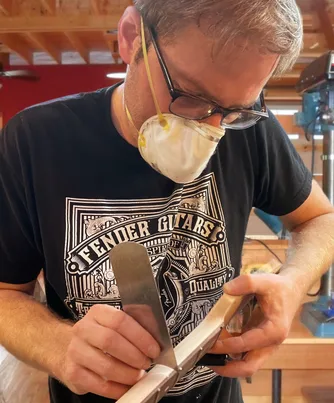
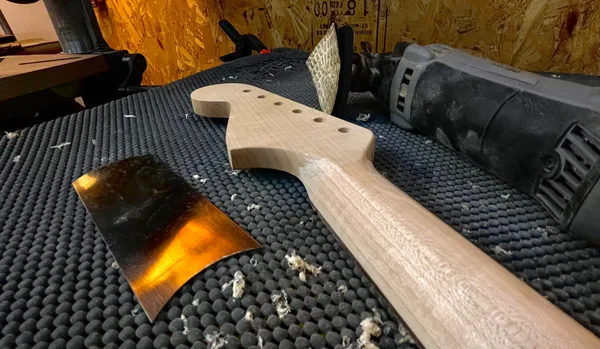
After receiving the parts from Warmoth, the first thing I did was prepare the neck for finishing, since that typically requires the most prep work. We ordered a Fatback profile (a huge baseball bat-shaped neck) so that I could carve Riverhorse's signature V-C profile. On the back of the neck, I marked off the areas with masking tape where material would be removed. Then I used a combination of wood rasps, cabinet scrapers and sandpaper to get the shape right. Once the shape was achieved and smoothed out, I proceeded to roll the edges of the fingerboard with a razorblade and burnish them with a small screwdriver. Finally, I filed the fret edges back flush with the fingerboard and dressed them to remove any sharp edges or burrs. Once all of that was complete, the neck was ready for final prepping.
I sanded the neck and body up to 400 grit, and the finish work began. The neck was first stained with a wiping wood stain that both colors the wood and acts as a conditioner, which allows the following step to be performed easier, sealing the wood. The body and neck were both sealed with a thin lacquer-based vinyl sealer that protects the wood from moisture and allows for easier sanding to prepare for the next step.
After sealing the neck, I sprayed 1-2 light coats of my Vintage Brown base color, which is a thinned lacquer that is toned with finely-ground, non-fading pigments. Once a uniform color was achieved, I began the process of spraying my clear coats. The first 2 or 3 coats of lacquer were toned with an aniline-type dye stain to fine-tune the color, and the remaining 4-5 coats were just clear nitrocellulose lacquer. I thinned these coats 1:1 with lacquer thinner to minimize build-up so that I could lightly sand with 1000 grit sandpaper in between each coat. I find this to be the best way to achieve the thinnest finish possible, which I believe allows the guitar to "breathe" and resonate better.
After sealing the body, I sprayed it with a white pigment called "Bleachtone" from Mohawk that allows me to easily control the level of transparency to the color by diluting with thinned lacquer. This is important, because white is one of the hardest pigments to thin and will often appear blotchy instead of the nice uniform white color I was aiming for. Once the color and desired level of translucency is achieved, the body is once again sealed to protect the color. I again began the clear-coating process by adding a small amount of toner to the first couple of coats to give it that subtle, creamy vibe and proceeded to spray 4-5 coats of clear lacquer, sanding between each one with 1000 grit sandpaper.
After applying the final coats of clear to the body and neck, I let them sit for a few weeks to cure up nice and hard. I used this time to age the nickel tuners, carve the nut from a large piece of wooly mammoth tusk that Riverhorse had sent to me, and craft the custom "ToneQuest" waterslide decal that was to be used on the headstock. Once the body and neck passed the "fingernail test," where I gently push my fingernail into the finish to see if it leaves a mark, it was time for the final top coats.
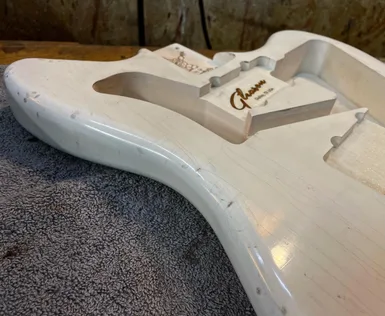
This is where all of my prep work pays off. A fine finish can be achieved with little-to-no wet sanding if the prep work is thorough, the spray gun is dialed in, and the lacquer is mixed properly. I like to use an old-formula nitrocellulose lacquer for this, which was used by a certain "big-box" American guitar manufacturer for decades before they moved on to a new, faster-curing formula. I find the old formula to be a wonderful lacquer for top coats because it lays down flat and leaves a gorgeous piano-type gloss finish right from the spray gun. It also ages much easier than the newer formulas due to the lack of plasticizers, which are added to the new stuff to make the finish softer and more flexible, thus "preventing" the aging process.
Once the final top coats were sprayed, I let them cure for another two weeks before I began aging the finishes. Most people don't realize that in order to achieve a realistic aged finish, the finish must first be brought to a "showroom quality" finish — the same way all of the vintage guitars probably looked when they were brand new. There are no cutting corners here, we're literally taking a new guitar's finish through a similar journey that a real vintage guitar goes through. We're just doing it much faster and with deliberate aging techniques.
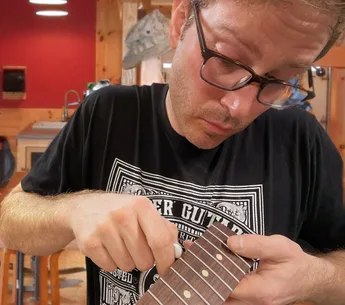
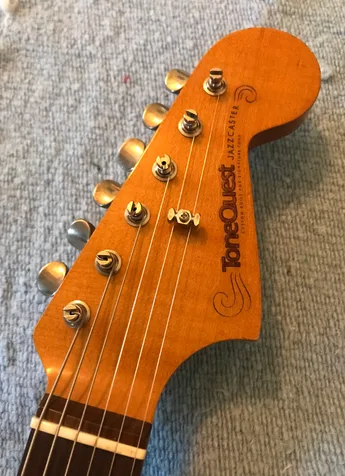
After the body and neck were aged, I installed the tuners, nut and decal to the neck and shipped everything off just in time for Riverhorse to leave for three months on some epic fishing excursion, which I must have misplaced my invitation for. [Laughs.]
This project was especially fun for me because Vintage Blonde, also known as "Mary Kaye Blonde," is one of my favorite colors on a guitar, and I had never done that finish to a Fender offset before. The slightly off-white tone and the subtle way the grain shows through the finish seem to exude a sense of honesty and class, telling everyone around that "there's nothing to hide here, I'm only here to rock" ...and I am one hundred percent certain that Riverhorse will make sure that it does.
Mastery Bridge: John Woodland
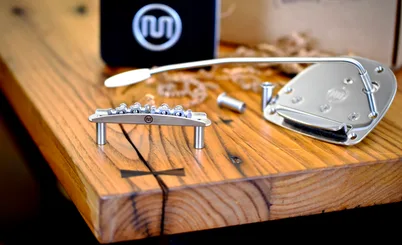
We caught up with John Woodland of Mastery to tell us about his path with guitars and eventually creating the Mastery Bridge.
TQR: Hey now Minnesota, so good to catch up. We are thrilled with the pair of offset M1 Mastery bridges we had shipped down here and the OMV Vibrato/Tremolo plate and arm, too. We'll talk about them in the reviews for the pair of Jazzmasters after this. We know all of this started for you back in 2007 or so when you saw the need for replacement bridges and began designing your own. What an endeavor that must have been. You were repairing guitars for years, but the success of Mastery has most likely taken up the focus of your time these days. Tell us about those initial design days and how things took off from there, as well as about the materials and even the patent process.
I had been repairing guitars for about eighteen years, when I did the first drawing for the M1 bridge. I went to Red Wing Technical College and had apprenticed under Roger Benedict building guitars and moved into repair. He passed away suddenly. I had to figure out what I was going to do. In the Twin Cities area, I was building a reputation for my work as a nineteen-year-old kid working on guitars professionally. I was doing work for The Replacements and Soul Asylum, some punk rock style groups around here. I'd also been working at Willies American Guitars, doing repairs, which is a great shop. I grew up in a small town but was always surrounded by guitars.
The first time I saw a Jazzmaster I was fascinated by it. It seemed like such a cool instrument. It was like when you first see a burst or a Paul Bigsby guitar, you'll have these moments in your career. Roger, my mentor was a big fan of Jazzmasters, too. There was a photo of him playing a Jazzmaster in the 1960s with his band. There was a guy named Sherwin Linton, an old country guy local to the Minneapolis area. He played at this bar called The Flame Café in the fifties and sixties with artists like George Jones, Faron Young, and a great assortment of people. Sherwin was kind of a local music celebrity. He bought a Jazzmaster in 1958, and he was the first guy who came into the shop when I was nineteen and showed me things you can do on a Jazzmaster that you can't do on other guitars. My interest in those offset guitars really started there. After eighteen years of repairing them, I kept having the constant issues of setting up the classic design and sending them back out on the road with touring bands and they'd always come back with everything falling apart.
Mastery Bridge was really just one repair. At that point I had repaired around fifteen thousand guitars. I met Jeff Tweedy in 1996. We became friends and I worked on a couple records he was involved with. Jeff was another guy who was really into those guitars, and by then I had pulled together enough cash in my twenties to buy my own, which was a 1963 Jazzmaster. I brought it to Memphis to a studio to work on a Golden Smog record.
TQR: Golden Smog! We haven't heard that name in a while. Very cool.
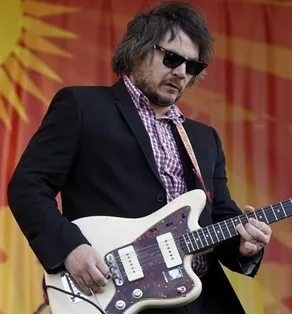
Right! Jeff was doing all sorts of crazy things with my Jazzmaster like turning the reverb on 10 and doing feedback loop tracks with a small Princeton amp, playing behind the bridge, and other seemingly radical approaches. There was a moment there seeing him play this way and realizing how special Jazzmasters can be. All of the harmonic overtones and the range of things you can do with them because of the top loaded design and vibrato. But I was still running into continual problems with the guitars and setups.
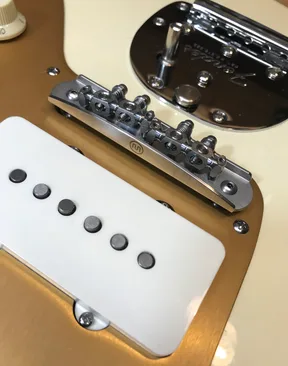
I drew out a two-saddle bridge with four intonation screws that were offset from the center so the strings wouldn't make contact with the front or back of the screw. One thing I noticed is that from a consumer end, players who had changed the strings weren't centering the bridge like they should have. The only contact with the strings, the saddles, and the posts, are the bottom tip of two mounting posts on the old design. Mounting posts that would fit the diameter of vintage Jazzmasters thimbles was another thing I sketched. Keep in mind that this was in 2007, and Fender only had two Jazzmasters in production.
TQR: That was Fred Stuart down there, who found the original 1950s tooling in the Fender warehouse and brought them back. Pretty much single-handedly. His pickups are amazing, too. Good luck finding them, though. There is a set he made here out of Telecaster magnets, and they are very different from anything we've ever seen. Super tall and the bridge even has a Telecaster plate under it, the neck doesn't. They are really low wind, and just gorgeous.

I met Fred once and got to sit down with him for quite a while. It was memorable. In the late 1990s I started keeping a journal specifically for Jazzmasters. I would notate pickup outputs, and the details of neck shapes. I was fascinated with the differences between them. Ultimately, I was trying to understand what it is about these guitars that make them sound so special and feel so good in your hands. I've never actually told anyone about the journals. My approach is as a student of the guitar. I think the term Master Luthier is flawed. I think there is always something to learn. Even after thirty-plus years and doing this professionally, there is more to learn. Guitars become very boring once you think you know everything about them. I enjoy doing historical research to dig even deeper. Like you at ToneQuest, studying everything to the utmost detail. Even with all of the "technology" on the internet, let's agree there is a difference between knowledge and information. I think that to make a single guitar product successfully, you need to know how the guitar works as a whole. I grew up in a time without computers. I didn't see thousands of photos and how-to videos every day of instruments. I didn't see that information. I had to seek it out, on thousands of different guitars over years of being on a workbench. I think that when you do that, you gain something more valuable than information. You gain knowledge. You are with the instruments in all applicable senses. You also learn guitar behavior. When I was doing research at C.F. Martin, I started combing through all the employment records. I was mainly trying to look for when John Deichman was hired and how he worked himself up in the company. When he was nineteen, in 1912, he brought Frank Henry Martin a violin that he made. That's what got him hired. Shortly after that, and as a direct result of the Panama Pacific International Exposition in 1915 that lasted nearly all that year, steel string guitars were brought to the mainland and Hawaiian music became popular almost immediately. Deichman himself was a fan. There was a huge demand for ukuleles and steel string instruments all of a sudden. Nearly every dealer was calling on Martin to make steel string instruments and ukuleles. The company hired a ton of people and was quickly trying to meet up with demand. Frank Henry abandoned the X-brace design at first, and used a more reinforced fan-brace design, intended for steel strings. Eventually, the X-brace design was applied, and Martin slowly transformed the majority of their line into steel string guitars. Then, came the Great Depression, and the employment records show that their work force was greatly reduced. Guess who got to stay? It was the best workers they had. The ones who had been sitting at the bench the longest. The ones with the most knowledge. By this point, Deichman was factory foreman and all of the things we now associate with a steel string flat top was done then. A 14-fret neck joint, a solid headstock, a pickguard and belly bridge. Part of it was timing, but a lot of it was that the small workforce they had making those instruments had a great knowledge of them during that period. Perhaps that's a relatable explanation of information versus knowledge in this industry. There were two times in the last century that Martin could've gone bankrupt. Had they not embraced the steel string movement during that time, and later on in the 80s, when Frank Martin, who didn't care at all about instruments, was running the company. He was adopted, you know. The bloodline stopped at C.F. Martin III. Not many people know that.
Designing the Mastery Bridge only took me about twenty minutes to hand draw it out with a paper and pencil. But it took some twenty years to figure out how to do that. Some prototypes were initially tested using different alloys. The designs changed some after the first three bridges or so. The process takes so much time to go from a napkin drawing to production. Nels Cline first joined Wilco in 2007, I think. In early 2008 I called Jeff to get Nels' number since I knew he loved those guitars. Nels got the third Mastery Bridge ever made.
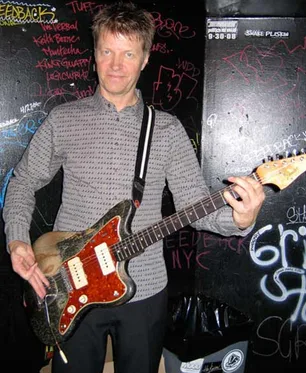
The string spacings were off and the saddles weren't even plated. The posts were made of brass, they might have even been aluminum. I went to the Dakota Jazz Club, installed it in his guitar, and did a quick level and crown on the frets. He played it that night and loved it, and even thanked me for the work from the stage. So, I started making bridges for Nels with no intention of ever selling them. This was just a repair for me. A fix. Nels gave them to Sonic Youth, and all of Wilco started using them, Sean Lennon, Bill Frisell, and others. Nels at some point said that I had to make this available to people. It had never crossed my mind to sell a part for a guitar without being there to work on the entire guitar. I was really scared to go through with it. It was a little nerve wracking at first. A friend made a website for me, and we put some videos on it. Things immediately took off. Which was so overwhelming. Suddenly, I had all these orders and was backlogged. I even hired my babysitter to help me package stuff and was working endless hours each day. It was crazy.
Timing is critical. My mother had her own small nursing home business for senior citizens and was kind of an entrepreneur. I watched what she did, and knew I wanted to start my own business, which would obviously be in guitars because that's all I knew. I remember taking the bridge out at dinner with a friend and showing it to him, thinking, I could possibly make a future with this, and it could help a lot of people. In the journals I mentioned I even have the waiting lists, from when people would email. I wasn't comfortable with taking any customer money until I could send each order back then, which could take a few months, and I'd promise to call them when it was ready. And that's how it all started. We've never even taken an ad out and have always sold direct. The traditional model back then was more so about building a dealer network, but we didn't go that route. I applied for the patents and eventually got those. At first it was a learning experience, and a design patent takes about a year and a half, while a utility patent takes a few years. We could definitely have a whole different conversation about ethics in the guitar community.
TQR: Ahaha...yes, we could. Since you were such a part of the amazing Bigsby book, care to tell us more? Very few have addressed it and there are plenty of thoughts here. Many people feel that Bigsby's 6-inline tuners were the "inspiration" to others.
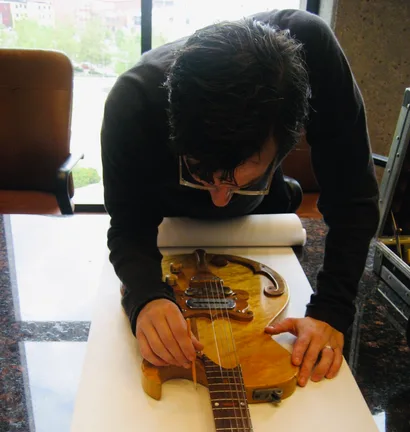

My curiosity with Paul Bigsby started after reading a few paragraphs in a book I bought in the eighties, written by Tom Wheeler, American Guitars. All of the country-western music I was taught growing up, many of those artists used Bigsby Guitars or Bigsby modified guitars in the late forties and early fifties. There was little information out there on Bigsby and this fascination developed in me to try and discover more information on who he was. Even later on, with the development of the internet, there was really not much information available about Paul Bigsby, and what was published was largely inaccurate.
There was, however, sort of this "Bigsby Mafia," which was a small group of people that spoke to each other over the phone and shared photos through the mail of things they discovered researching Bigsby for decades. It was kind of like the "blues mafia" I guess... you know, like the people that were researching Robert Johnson and other blues figures for decades. I became a part of it. At one point, I found Paul Bigsby's pickup winder which was this really archaic machine he made out of his wife's sewing machine. Bigsby hand wrote pickup production notes on the plywood base, and at the time, it was the only dated production record we could go by in trying to calculate how many Spanish guitars he made. To fund my research trips to C.F. Martin, I sold the winder to Fred Gretsch as Fred owned Bigsby. Fred really admired Andy Babuik's amazing Beatles Gear book and commissioned him to write the Story of Paul Bigsby book. They contacted me and I remember Andy asking me, who do I need to help complete this book? Because he was getting very frustrated early on at the fact that this Bigsby mafia would not share any information. Like, that would be a sin, to go outside of the group and share information. I really felt the story needed to be published.
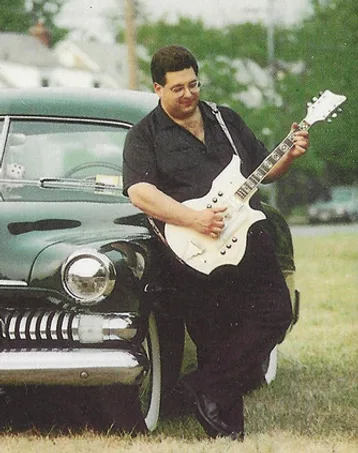
There was one person, his name was Bob Guida, and he was the utmost authority on Bigsby. He ran a funeral home in Queens, New York. He wasn't really in the guitar community as we knew it, he was this person who quietly researched Bigsby and had collected information on him for decades. It was crucial to get him involved to really tell the story. Initially, he refused to do it and I remember calling him once and yelling at him that if he doesn't do this, the information could die with him. Long story short, he agreed to do it and along with Bob, Mary Bigsby, Deke Dickerson and myself, assisted Andy for the book. Andy did a terrific job and I remember Bob calling me after the book was done and thanking me for yelling at him that one day, and that he was so proud of the book. He had a heart-attack and died a few days after I spoke to him. It was shocking to me.
All those years I spent researching original source material at Martin Guitars, all of those years studying Bigsby, it really laid out a blueprint on what it takes to have a successful business in the guitar community. It taught me the old way of manufacturing. It taught me that brand loyalty was built through the product itself. That you're only as good as the last product you shipped. Bigsby taught me that in electric guitar design, wood follows metal, and plastic follows wood. That ethics in design matter. I realized it wasn't "traditionalists" that designed the guitars we love today. From the evolution of the steel string acoustic in the mid-teens through the 1930s, to the development of the solid body electric guitar, these people had no blueprints. They were the first into battle. The design ideas were radical at the time. What we consider great now was ridiculed by some in the past. Even the idea of using steel strings on a guitar was looked down upon at one point.
My life has been surrounded by guitar since I was born. Even as a child, I had a hard time sleeping if a guitar wasn't in the room. The journey has been exhausting at some points, but I feel a responsibility in helping guitarists, even in just a little way.
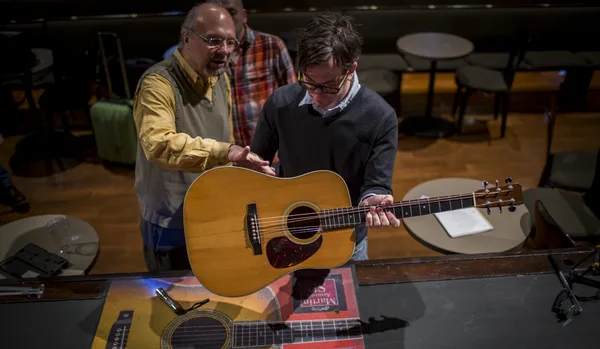
I had just finished a couple years of working on the Paul Bigsby book around the time I started Mastery and I remember a rep from Fender laughing at me and saying they made 400 Jazzmasters a year and that I'd do nothing with the bridge. The Jazzmaster was always my favorite Fender model. It had been dismissed by many for decades.
Bill Frisell was very encouraging to me early on. He felt the bridge would make offset guitars popular...like, to the mainstream guitar market. It took a long time to realize he was right.
Now Fender has some twenty Jazzmaster models made in various countries and so many small builders have switched to offset designs. It's been really interesting to watch, and I love it, because I love those guitars.
TQR: We agree, it has been wild. From here in Texas, where we have watched endless millions try to grab a Strat and dream of being yet another Stevie Ray copy, so exploring these offset guitars has been a joy. Didn't you work at Martin, too?
I worked with Martin for years but wasn't on the payroll. I spent six or seven years there working closely with Dick Boak at C.F Martin, helping them with the archives, and designed six guitars. That was before the museum opened. The history was interesting to me. I dug deep with the reading. It's an entirely different long story, ha.

TQR: Nobody admits how personal it is to set up a guitar. Everyone plays differently. We were hanging out with Joe Glaser in Nashville at his repair shop and the funniest thing happened. A guy walked in looking really freaked out, interrupted our banter, and asked Joe to "Set up this guitar like Jesus was going to play it." There was a long pause, and Joe said, "I think I know just what it needs." Joe didn't miss a beat. The guy dropped it off and left. What the heck? We spent another hour all theorizing what Jesus would have for a setup, as well as Gandhi, Buddha, and more. Guitar setup is such a strange world...simple, yet bizarre. That moment sums up all the shit you guys have to deal with. Guitar luthier often equals therapist.
That is hilarious! Joe is phenomenal. He is a luthier I really look up to. That's a classic story. I remember a customer who brought in a guitar to me and said we couldn't touch it, only look at it, that no one had ever touched it. I asked him how they made it without touching it. So funny.
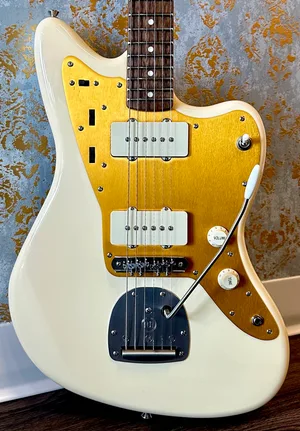
TQR: Can you explain your thoughts and wisdom relative to your choice for solid brass saddles and the proprietary hard chrome on them as well as your string trees? You definitely use thicker metals, and the fulcrum plate is full contact, which in our opinion allows richer harmonics and overtones that inspire us.
Early on we tried different alloys for the saddles. From a repairman standpoint, the whole concept for all the offset hardware was functionality. I wasn't going into anything thinking about tone, which is not what readers of TQR might expect. I was just trying to fix them. I remember someone telling me how much better they sounded acoustically, and was surprised, so that was an eye opener. I hadn't been trying to create a specific sound. I was trying to not have the guitars fall apart, especially when they were being thrown around on stages. It was a happy accident. We did try various alloys with Sonic Youth, and Thurston Moore was certain brass was the best, and it makes sense. On a standard classic design, each string has around fifteen pounds of string tension on the saddle. On our two-saddle design, there is around fifty plus pounds of tension on each saddle. As Bill Frisell said, it accentuates everything that is good about the guitar. The mounting posts on the original classic design were a floating bridge, which would only contact the bottom of the two heights screws. With my design, the posts fit the diameter of the thimbles, giving more string energy transferred from the strings to the body. Use an old bridge and then ours, and play a full E chord before and after, and see what you think and hear. You can feel the resonance of the guitar, alive in your hands. The vibrato was a whole other beast. The old vibratos had very thin bodies and fulcrum plates. On a lot of them the body plates would cup after a period of time. We used a thicker body plate to prevent that from happening. A lot of making guitar hardware is understanding guitar behavior, how they act and react to certain things. We use flush mounted screws on the body plate, too. The strings aren't hitting the fulcrum plate screws anymore, which used to be an issue on the low E strings, commonly. That vibrato took a year or so, I came up with so many different versions. Mastery designed the arm housing system. We machine them out of a single block of stainless steel and the idea for the string plunger came to me from my coffee maker, where it knows how to stop the drip out of a machine. One morning I grabbed my coffee and realized that was the way to go! I sawed a Jazzmaster and vibrato in half to study it even deeper and see what was going on internally. I wondered why they would put two tabs in the fulcrum plate, and guessed it was to save metal. On the two-tab fulcrum plates the string plate lifts against the fixed fulcrum plate because of the weight distribution, so I knew I wanted to make a fulcrum plate that went all the way across. I realized how inconsistent brake forming was, too. So, we machined out the string plate and the fulcrum plates to have edges that marry themselves together, so they aren't lifting, and the consistency is all there for performance, and can be there for decades ahead. The valve spring was really important, too, and we worked with a prototype with high carbon steel, which is definitely the best, because it returns to zero much better, and we compress all of them, since there is a break in period with springs. It is measurable, how valve springs settle in.

For the tremolo arm, I went to Wilco's loft and took measurements from some thirty vintage Jazzmasters and studied them. The brake form of all the tremolo arms was interesting, and we calculated what I feel was the vintage spec. The thing with product design is you have to think in terms of the guitarist and how they operate the instrument through time, in various playing scenarios. That's how we came up with our UFO tip, and hopefully your fingers rest perfectly in there. Even the brushed stainless finish and sanding was a focus. What I definitely found was how the thickness of the metal directly affects performance. Thin just didn't work, which was crucial. Hopefully these products will outlive me.
TQR: With all of the Jazzmasters you have worked on and played, were there any that stood out as amazing?
You work on so many instruments it can be a blur, especially with Fenders. But Nels' WATT is definitely a very special guitar. Everything about it is. It is truly played in. It is actually a 1960 and was Olympic White originally but there is this strange translucent black and purple under there, with Mike Watt's name carved in it a few times.
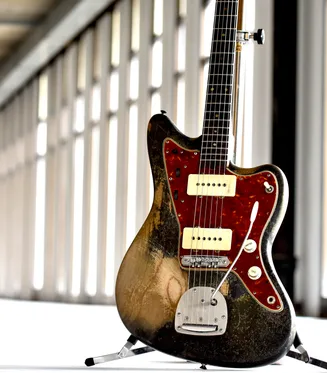
Nels uses all of our components on it. One of the times I refretted it I had to build back the entire fingerboard from all the extensive playing wear. When I started working for Nels, he had me do fifteen other Jazzmasters before he even let me work on that one. That's actually where we got the name for Mastery. When I was working on those early guitars for Nels, I sent him an email saying I would do everything "Jazzmastery" on the guitar I was fixing. We had called it Bridget, but I chose Mastery. I remember everyone at Willies thinking the name was awful, ahahaha! Nels has been such a big part of all of this, it's been amazing.
The Birth of the TQ Jazzmaster

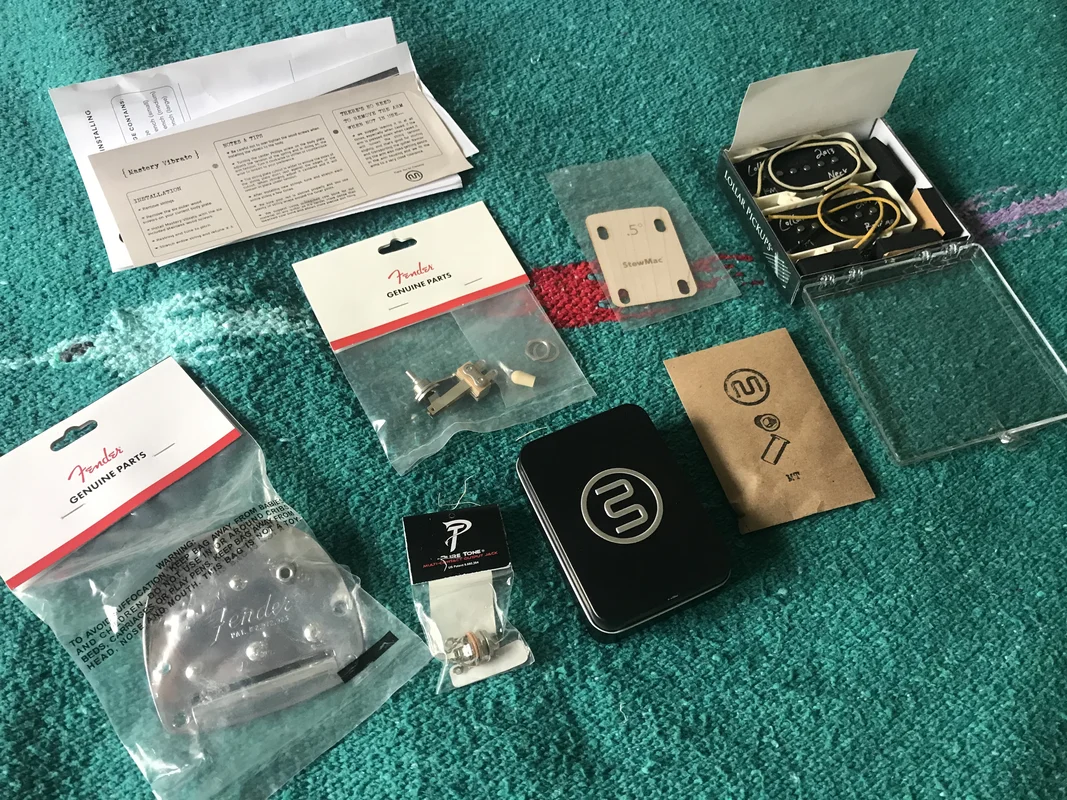
Once everything rolled in from Cody and we were home from the road again, we placed everything out on a favorite turquoise colored Mexican Thunderbird blanket to get a feel for the build. Lo and behold, the Fender licensed pickguard did not match the body and pickup routes. A couple phone calls later, we learned that Warmoth JM bodies have tweaked bridge pickup carves, meaning they moved them just a bit forward to have just a wee less treble from that pickup. We were not amused, and it turns out that the only pickguard that fits it comes from where else? Warmoth. Add in plenty for shipping the pickguard, too. What a bonus treat. It's all about the fine print. So, we ordered up and kept moving on down the road, laughing and cursing at the same time.
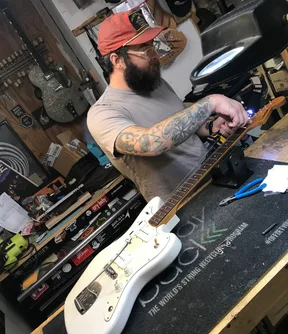
On a hot Texas afternoon, we ran down to Rockin' Robin Guitars Shop and holed up in the back shed so Clancey Compton could work his magic. Slowly but surely, he drilled and filled posts, neck holes, filed the nut, soldered in the harness, added a Stew Mac .05 wooden shim we brought along for our favorite neck angle, and then Clancey set it up to the thousandths of an inch specs he already knows we love on our guitars.
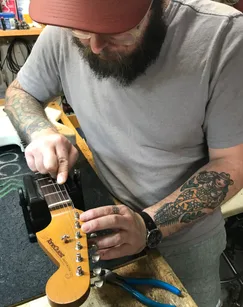
Right as he finished up and a crowd gathered around marveling, an E chord was strummed with the Jazzmaster still resting on the bench, and the guitar flat-out THROBBED, ALIVE and KICKING, VIBRATING from the top of the headstock all the way to the lower body bout. Oh, you are that guitar. We figured you would be. Awooohoooo!

As I handed the guitar back to Clancey to button down, the phone rang and it was Sonny Landreth, up the street at a coffee shop near the theater he was set to play that evening. Sure, Sonny, we'll come get you now, let's hang and catch up, see you in ten minutes, be ready. Sonny let out a howl as he hopped into the front seat of the truck and had to grab the TQ Jazzmaster to get in. "Oh, yea! What is this neck?!" he asked. Oh, that's the same one Cody carves in for all our builds. Then Sonny looked down at the wooden Louisville Slugger bat along the floor of the passenger seat and raised an eyebrow when he saw it. "You play baseball, Riverhorse?" We let him know we prefer not to, since we are a tree-hugger bass fishing Mother Earth loving fuzz face cranking peaceful hippie of the highest order, but if someone were to try and take our Jazzmaster.... why yes, we would step up to bat. That made sense to Sonny, and he agreed.
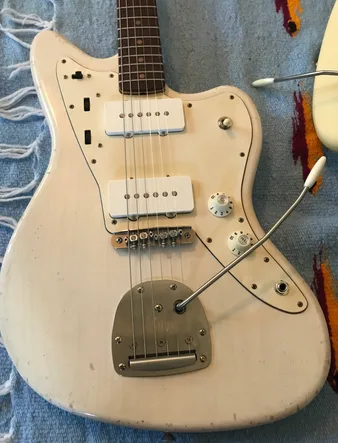
Time is a strange thing. We ran by the bungalow and Sonny played the Gibson sunburst Les Paul loaded with Ron Ellis humbuckers plugged into the 1959 tweed GA-40 with the Milkman Reverb Tank and harmonic tremolo on. We even pulled out the one-of-a-kind tenor resonator electric Larry Pogreba had made for us a couple years ago, since Sonny has a 6-string resonator from Pogreba he's used for years, too. After enchiladas with salsa verde and Topo Chicos at the favorite Tex-Mex café down the block, with stories of Bob Dylan, Dr. John and some off the record ToneQuest adventures tales, we headed to the show, where you know darn well Sonny melted the place down. There is something indescribably magical about his playing, every person in the place, all the way up to the packed balcony, started shaking everything they had, and didn't stop until his last encore. Backstage, Sonny opened a bottle of red wine, and we shared a glass, wished him well on the rest of the tour as he headed to meet up with Clapton for a festival, gave him a big ol' Texas bear hug and told him we loved him, see him next time around.
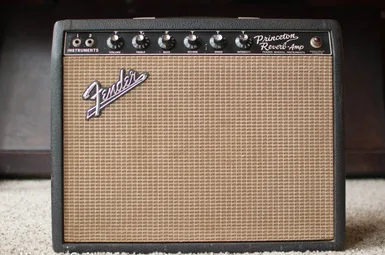
By morning, with a double caramel espresso and a dollop of organic sweet cream and honey in a ceramic cup by our side, we sat down with the Jazzmaster to finally spend a few hours together. The blonde Super Reverb and our twenty-year-old Evidence Audio Lyric Cable were all we needed. We threw the Super on 4 with a good dose of verb and just a hint of trem set truly slow on 2 for speed and 3 for intensity and explored the single notes and rich chords for a few minutes. It is heartbreakingly beautiful, how shimmering and gorgeous the notes from a stellar JM can be. There is the widest glide organic and woody bloom and clarity, with a harmonic content that pours through the room and blooms. The Mastery Tremolo with the UFO feels so right, and to gently dive and lilt with it, the chords tremble and rise. The trem bar in your hands feels like a cloud floating by as you lie on your back watching them, it is that silky sweet to play.
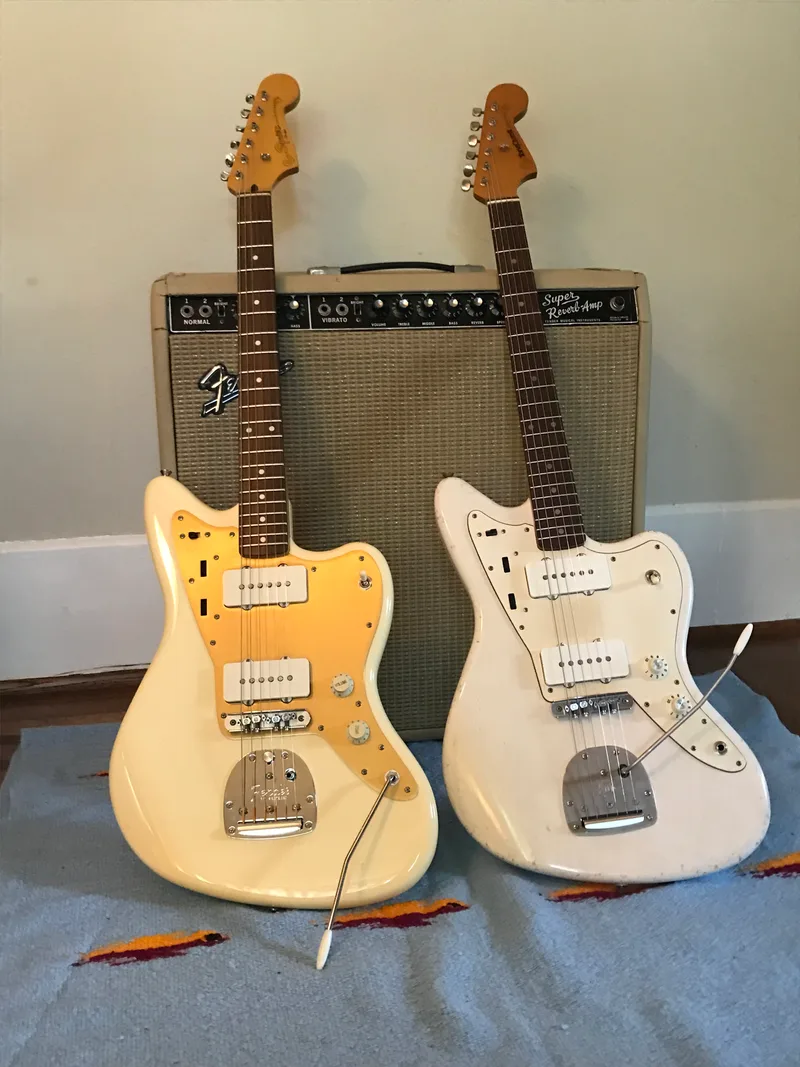
Moving from the neck to the bridge, and kicking the Super Reverb up to 6, the guitar sounded endlessly vintage, just buck wild and vocal. My lawd. Think of the intro to the Hollies' "Long Cool Woman In A Black Dress" for rhythms, and The Shadows' "Apache" simply floored us, we couldn't stop smiling. "Saturday night I was downtown, working for the FBI, sitting in a nest of bad men, whiskey bottles piling high." As much as we are enamored with a sunburst Strat we've had for years that everyone says is the bar, mining the cleans from the ToneQuest Jazzmaster has both stunned and mesmerized us. We're sure there are plenty of them that are just so-so, or pretty good, but when you hold a guitar in your hands that brings out everything in the deepest recesses of your creative heart, it is game over. How rare are those moments. This guitar even does Gilmour/Pink Floyd louder and prouder than believable. Phil Taylor, are you listening? Get David one of these and turn him loose. We can't wait to hear the album. Ultimately, Jazzmasters ask artists to bring their best game, as pure as can be, and we are all better for it. Late at night, if you look up at the stars from your backyard, whoever you are, wherever you are, you will see us up there in the ether, with a vintage tube Echoplex and our Jazzmaster, floating across the constellations. The truest Milky Way of tone there ever shall be. We might never return to terra firma again.